
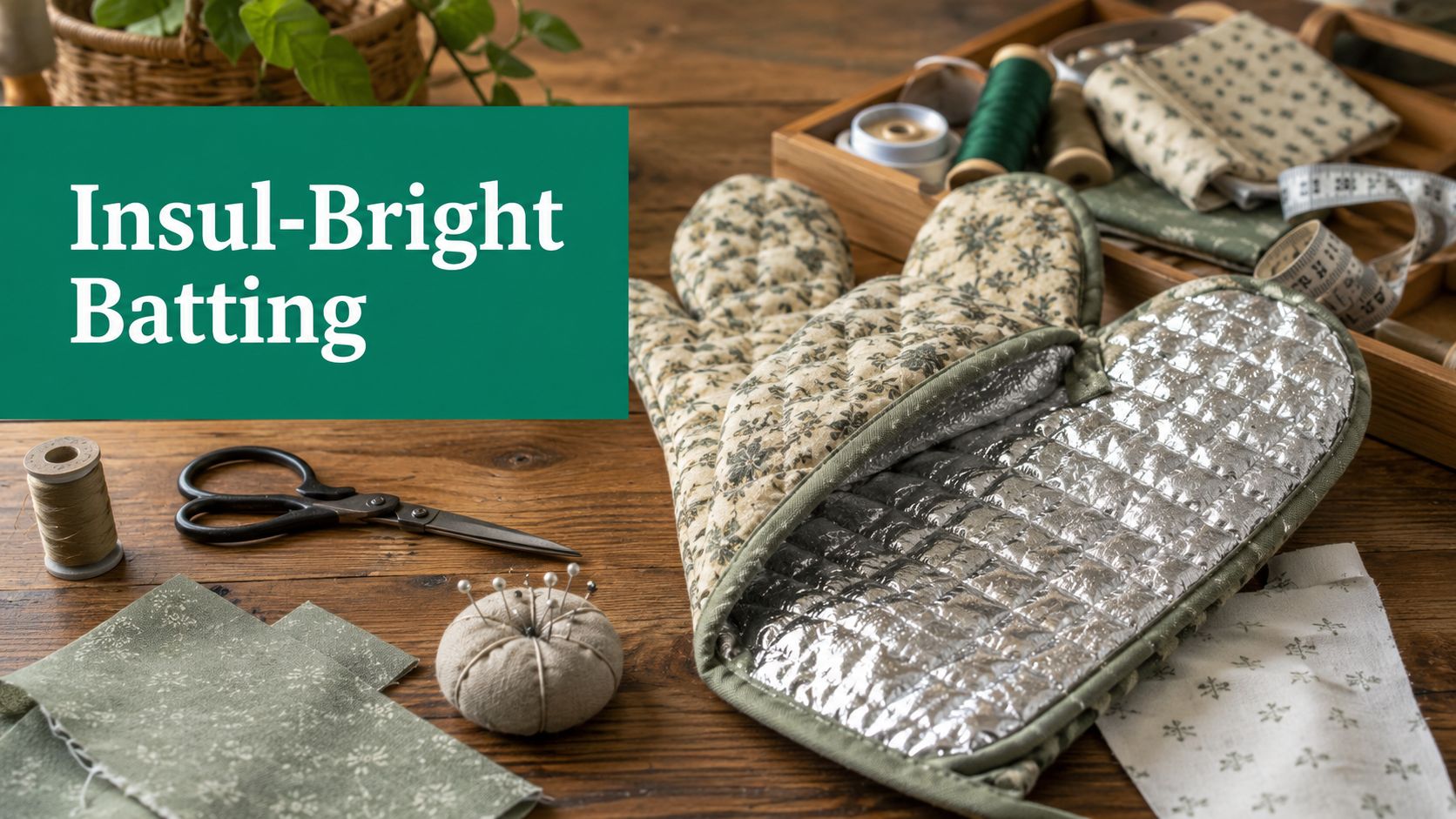
Insul-Bright is a specialty thermal batting made of polyester fibers and a reflective metalized film, designed to insulate projects by reflecting hot or cold energy back to its source. It's sold for makers in 22-inch widths and wider bolts such as 45 inches by 40 yards, which makes it useful for both one-off gifts and repeat production runs.
Most tutorials stop at “use it for potholders.” That misses the core question: how do you make an insulated project that works well and still feels polished, soft, and gift-worthy? That's where fabric pairing matters, especially if you want the comfort of minky without turning the sewing process into a fight.
Insul-Bright thermal batting works best when you treat it like a functional layer, not a stand-alone shortcut. Use it when temperature control matters. Pair it with the right outer fabric, stabilize your layers carefully, and respect its limits.
What Is Insul-Bright Thermal Batting
Insul-Bright thermal batting is a specialty batting made for projects that need temperature control rather than the loft and drape you'd expect from regular quilt batting. It isn't there just to add softness. It's there to help hold heat in, block outside heat, or buffer cold, depending on the project.
It has a practical place in sewing because it combines a soft batting layer with a reflective layer. That gives you more function than standard batting when you're making oven mitts, trivets, casserole carriers, lunch totes, or other utility pieces.

One reason it keeps showing up in sewing rooms is simple. The broader thermal insulation market was valued at USD 71,851.2 million according to this Insul-Bright thermal batting market overview, which gives useful context for how established heat-management materials have become across both industrial and consumer use.
What makes it different from regular batting
Regular quilt batting is chosen for warmth, loft, stitch definition, or drape. Insul-Bright is chosen for function.
That difference changes how you should consider it:
- For hot projects: It's commonly used in oven mitts, pot holders, and trivets.
- For cold projects: It can also be used in lunch bags, cooler inserts, and similar carriers.
- For utility sewing: It shines in items that need thermal buffering more than softness alone.
A good insulated project doesn't just look finished. It behaves predictably when heat or cold hits it.
If you're still comparing batting types in general, this guide to what quilt batting is is a helpful refresher before choosing a specialty option.
For cold-use inspiration beyond sewing circles, it also helps to look at how businesses approach packaging for chilled goods. The materials differ, but the design logic is similar: insulation works best when the whole system is planned, not when one layer is expected to do everything.
How Does Its Unique Structure Work
Why does Insul-Bright behave so differently from standard batting once you get it under the presser foot?
The answer is in the build. As noted earlier, Insul-Bright combines polyester fibers with a reflective metalized layer, and those parts do two different jobs at the same time. The fiber layer slows heat transfer through contact. The reflective layer sends radiant heat or cold back toward its source. That combination is why it performs like an insulating layer instead of a loft-only batting.

What the fiber layer is actually doing
Polyester fibers create small pockets that slow direct heat movement. In a potholder, that helps reduce how quickly surface heat travels toward your hand. In a lunch tote, it helps slow temperature loss instead of letting the outside fabric take over immediately.
That buffering matters more than many beginners expect.
A reflective layer alone would not give the project enough body, and it would not sew as cleanly inside a quilted stack. The batting gives structure, spacing, and a little forgiveness during construction.
What the reflective layer adds
The metalized film handles radiant energy. That is the part that makes Insul-Bright useful for both warm and cool applications, provided the rest of the project is built well.
The biggest mistake I see is expecting the reflective side to do all the work by itself. It works best when paired with stable outer fabrics and a sensible lining. For a polished insulated project, especially one made with premium minky, the fabric pairing matters as much as the batting choice. Minky brings softness and a finished look, but it can also trap bulk and shift while sewing. A woven cotton lining next to the Insul-Bright usually gives better control, then minky can sit on the exterior where it adds comfort without fighting the insulated core.
Why the layers hold together well in sewing
Needle-punching keeps the materials integrated, so the reflective layer is not floating around as a separate sheet inside the project. That makes cutting, quilting, and turning much more predictable.
You still need to respect its personality at the machine. Insul-Bright has more body than regular batting and less drape, so it behaves better in projects that benefit from structure. In minky-lined bottle carriers, casserole cozies, and padded lunch bags, that firmness is useful. In soft drapey accessories, it can feel stiff.
Material width affects planning too. If you sew insulated items in batches, working from batting by the roll for repeated project cuts reduces piecing and keeps your layers more consistent from one item to the next.
A well-made insulated project is really a system. Insul-Bright handles the thermal job best when the surrounding fabrics support it, and that is exactly why pairing it thoughtfully with minky, cotton, or other premium textiles makes the finished piece look better and perform better too.
What Are the Best Projects for Insul-Bright
The best projects for Insul-Bright are the ones where temperature control is part of the job. That sounds obvious, but it rules out a lot of decorative-only sewing.
The strongest uses usually fall into two groups: heat-handling kitchen pieces and cold-buffering carriers. Both benefit from the same reflective behavior, but the design choices around them differ.
Which hot-use projects make the most sense
Classic kitchen sewing is still the natural starting point.
Good choices include:
- Oven mitts: Better when layered with other fabrics that improve comfort and grip.
- Pot holders: A reliable use because the shape is simple and the purpose is clear.
- Trivets: Useful where a flatter, more structured thermal barrier helps.
- Casserole carriers: One of the most satisfying applications because the insulation is doing real work over time.
These projects reward clean construction. Good binding, dense quilting where needed, and durable outer fabric matter just as much as the batting choice.
Can it work for cold-retention projects
Yes, and that's a more interesting category than many tutorials acknowledge.
The Warm Company explains that the reflective film in Insul-Bright is designed to send hot or cold energy back toward its source, making it suitable for projects like lunch bags and cooler inserts in addition to hot pads, as noted on The Warm Company's Insul-Bright page.
That said, there's a real trade-off. Insul-Bright is helpful for thermal buffering, but project success still depends on closure style, outer fabric, lining choice, moisture exposure, and how long you need the temperature effect to last.
For lunch totes, a good zipper and thoughtful lining often matter as much as the insulating layer.
Useful cold-use ideas include:
- Lunch bags that need washable structure.
- Cooler inserts for handmade picnic totes.
- Stadium cushions where the goal is buffering against cold surfaces.
- Pet mat layers when you want a bit of temperature moderation.
If you enjoy practical sewing but want a break from utility items, something visual like rail fence quilt patterns can be a nice reset between functional projects.
Where premium fabric pairing improves the result
This is the overlooked part. Insul-Bright on its own doesn't create a premium feel. The outer and inner fabrics do that.
For gift-worthy projects, I like using plush fabric selectively. Minky can turn a basic insulated carrier or seat pad into something people want to keep using. The key is placement. Use it where softness adds value, not where bulk interferes with seams, binding, or turning.
Good examples:
- A minky exterior on a stadium cushion
- A soft minky panel on a lunch tote flap
- A cozy lining for a handled carrier where the food doesn't touch the fabric directly
Less successful examples include very bulky all-over minky choices on tightly curved mitts or heavily bound corners. That's where pretty fabric can make the project harder than it needs to be.
How Do I Sew with Insul-Bright and Minky
Pairing Insul-Bright with minky can produce a polished, professional project, but only if you control bulk from the start. If you don't, the layers creep, corners swell, and topstitching looks tired before you've even finished.
The biggest mistake is treating minky like quilting cotton. It isn't. Add a structured insulated layer beneath it, and every weak sewing habit gets exposed.

Which fabric combinations work best
Not every insulated project wants plush fabric. But when softness is part of the goal, minky can enhance the finish.
The pairings I'd choose most often are:
- Minky outside, stable woven lining inside: Good for stadium cushions and tote-style projects.
- Woven outer, minky accent panel: Good when you want softness without excessive seam bulk.
- Minky lining with structured exterior: Good for comfort-first items where the outside needs durability.
Dense, textured plushes are beautiful, but they change seam behavior. A smooth or moderate-pile minky is usually easier for insulated sewing than the thickest option in the stack.
How should you layer it
For most sewn insulated items, the cleanest starting point is a layered sandwich built around function.
A practical order is:
- Outer fabric
- Insul-Bright
- Inner fabric
For higher-contact heat projects, many makers also add another protective layer depending on the pattern and intended use. What matters most is that the Insul-Bright stays enclosed and the project isn't relying on one thin layer to do every job.
If a pattern already feels bulky in cotton, expect it to feel bulkier in minky. Reduce seam allowances where appropriate and trim aggressively after stitching.
What machine setup helps most
Use the setup that reduces shifting. That usually matters more than chasing a perfect decorative stitch.
I'd prioritize:
- Walking foot: Helps feed minky and insulated layers evenly.
- Longer stitch length: Short stitches can sink into plush fabric and make seams look cramped.
- Sharp fresh needle: A struggling needle shows up quickly on minky.
- Clips instead of too many pins: They control thick layers without distortion.
If slippery pile is your recurring problem, this tutorial on how to sew with minky fabric without it sliding is worth keeping nearby while you cut and baste.
Here's a useful visual walkthrough before you tackle a full project:
Buying tip: If you're gathering supplies for an insulated gift project, watch for a 15% first-order coupon and free U.S. shipping on orders over $70 when you place your fabric order.
What usually goes wrong
The trouble spots are predictable.
- Rounded corners get lumpy: Grade the seam allowances and remove excess bulk before turning.
- Topstitching wanders: Baste more thoroughly, especially on plush exteriors.
- The project feels stiff: That's often a sign you used minky where a woven fabric would've supported the structure better.
- Edges ripple: Ease the minky in. Don't stretch it to fit the insulated layer.
When this pairing is done well, the result stands out. The project still performs, but it also feels finished in a way plain utility fabrics often don't.
Is Insul-Bright Better Than Regular Batting
It's better for some jobs and the wrong choice for others. That's the honest answer.
If the project needs temperature control, Insul-Bright usually makes more sense than standard batting. If the project is a bed quilt, wall quilt, or anything where softness and drape are the priority, regular batting is often the better tool.
Batting Comparison
| Feature | Insul-Bright Thermal Batting | 100% Cotton Batting | Standard Polyester Batting |
|---|---|---|---|
| Main purpose | Thermal buffering for hot or cold projects | Traditional quilting, absorbent utility layers | Loft and general quilt warmth |
| Construction | Polyester batting with reflective metalized film, needle-punched through layers | Cotton batting without reflective layer | Polyester batting without reflective layer |
| Best use cases | Oven mitts, pot holders, trivets, casserole carriers, lunch bags | Quilts, some utility sewing, microwave-safe cotton-only projects | Quilts, crafts, plush structure |
| Breathability | Breathable by construction | Breathable | Varies by product |
| Washing durability | Designed to be more resistant to breakdown in washing than many simple thermal liners | Depends on product and use | Depends on product and loft |
| Loft and drape | More functional than lofty | Usually softer and more quilt-like | Often loftier than Insul-Bright |
| Microwave safety | Not suitable because of the metalized film | Chosen when microwave-safe all-cotton construction is required | Not the choice for microwave use |
| When to choose it | When temperature control is part of the job | When you need classic quilt behavior | When you want synthetic loft, not thermal reflection |
When regular batting is the smarter pick
Cotton batting wins when you want softness, easy drape, and familiar quilt handling. Standard polyester batting wins when loft matters more than thermal performance.
If you're making a conventional quilted piece and only need body, buying a thermal product is overkill.
Choose Insul-Bright for function. Choose standard batting for quilt character.
For a very different batting profile, Quilters Dream Dream Bamboo Quilt Batting Size Craft represents the kind of product you'd consider when softness and quilt feel matter more than heat or cold buffering.
How Do I Care For and Buy the Right Amount
Care starts with respecting what the material is. Insul-Bright is washable, but it's still a specialty layer, so avoid treating finished projects roughly.
A few habits help:
- Wash gently: Use a gentle cycle and mild handling when the finished item needs cleaning.
- Avoid high heat: Lower drying heat is the safer route for preserving the structure.
- Store flat or neatly rolled when possible: Hard creases can make any structured batting harder to work with later.
- Test your full fabric stack first: Outer fabric, lining, and batting can behave differently together after washing.
Never use Insul-Bright in the microwave. The metalized film makes it unsuitable for microwave-safe sewing projects.
Buying the right amount depends on your pattern and how many layers the project uses. Oven mitts and pot holders can use up material faster than expected because the shapes are often doubled for added protection. Totes and carriers may need wide, uninterrupted cuts, which is where wider formats become useful.
A simple approach works well:
- Cut the pattern from paper first
- Count every insulated layer required
- Add extra for test stitching and layout mistakes
- Buy a little more if you're using directional or bulky fabrics
If you're unsure how much fabric to order for the rest of the project, this guide to calculating yardage for quilts is a practical starting point for planning smarter cuts.
If you're ready to turn Insul-Bright ideas into polished, gift-worthy projects, browse On Pins & Needles Quilting Co. for premium minky and Shannon Cuddle options that pair beautifully with insulated sewing. For plush texture choices, shop Luxe Cuddle Snowy Owl, Luxe Cuddle Fawn, and Luxe Cuddle Hide, or explore minky fabric by the yard if you're planning your own fabric mix. If your project list also includes quilt finishing, take a look at the Mail-in Longarm service for a professional finish. Customers trust the shop because it's backed by hundreds of verified reviews, plus a 15% first-order coupon and free U.S. shipping on orders over $70. Get 15% Off Your First Order