
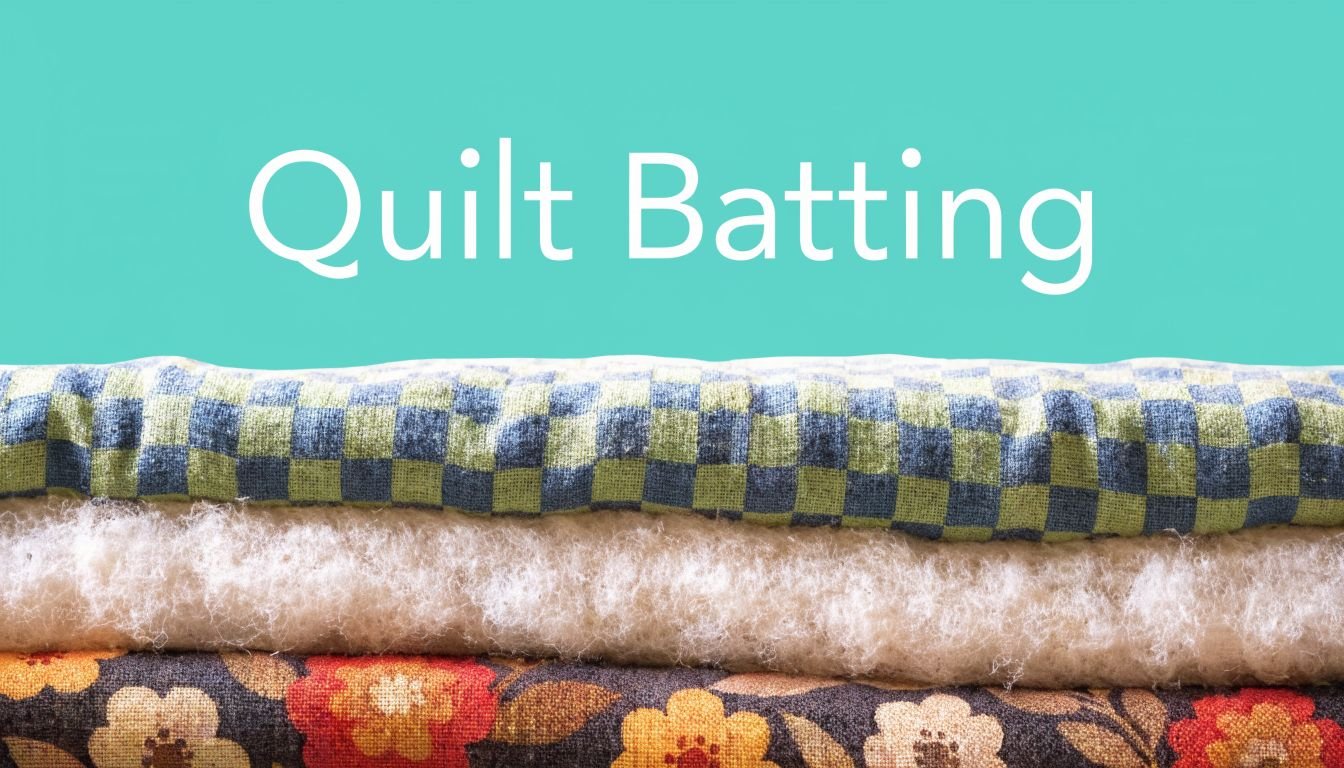
TL;DR: Quilt batting is the middle layer of a quilt that gives it warmth, loft, and structure. The batting market was valued at $2,000 USD Million in 2024 and is projected to reach $3,500 USD Million by 2035 at a 5.4% CAGR, which tells you how central this material is to modern quilting, especially when you're pairing it with premium fabrics like minky.
You can piece a beautiful top and still end up with a disappointing quilt if the batting is wrong. That's the part many quilters learn the hard way.
Batting decides whether a quilt feels flat or plush, whether the stitching sinks in or stands out, and whether the finished piece hangs softly or fights you. If you're working with minky, Cuddle®, or extra-wide quilt backs, batting choice matters even more because the wrong structure can lead to shifting, drag, and a finish that feels heavier than it should.
URL slug: what-is-quilt-batting
Meta description: What is quilt batting? Learn how batting affects warmth, loft, and drape, especially for minky quilts. Get 15% off your first order and free shipping over $70!
Why Is Quilt Batting So Important?
You notice batting the second a quilt starts fighting you. The top is pieced well, the minky backing feels beautiful, then the whole quilt turns heavy, slippery, or oddly flat once it is basted and quilted. That usually traces back to the layer in the middle.
Quilt batting is the insulating layer inside a quilt that provides warmth, dimension, and support for the quilting itself. It sits between the quilt top and backing, and it has a direct effect on how the quilt drapes, wears, and quilts out on the frame.

What does batting actually do?
Batting does three jobs at once:
- Adds warmth: It holds air inside the quilt so the finished piece feels functional, not just decorative.
- Creates loft: Loft is the thickness that gives quilting texture and dimension.
- Supports structure: It gives stitches something to settle into and helps the quilt keep its shape.
Those jobs matter more with specialty fabrics. A cotton top with a standard backing can forgive a mediocre batting choice. A quilt with minky or Cuddle® on the back usually will not. Plush backings add stretch, drag, and bulk, so the batting has to work with that softness instead of amplifying the problems.
Many beginners do not think much about batting until the quilt comes off the machine looking different than they expected.
Why experienced quilters care so much about it
Batting affects the finish from the first pass of quilting to the way the quilt feels after washing. If you want crisp stitch definition, the batting has to support that texture. If you want a soft throw with minky on the back, the batting needs enough body to stabilize the quilt without making it stiff or too warm.
We see this all the time in longarm work. The wrong batting can make an extra-wide backing feel harder to control, add unnecessary weight for shipping, or flatten the plush hand that makes minky quilts appealing in the first place. The right batting helps the quilt stay balanced. It also helps the quilting design show up the way you intended.
What goes wrong when batting is an afterthought?
A few problems show up over and over:
- Too much bulk: The quilt is harder to baste, harder to quilt, and heavier than it needs to be.
- Too little support: Quilting lines can disappear, and the quilt may feel limp.
- Poor fiber match: The quilt may wash, drape, or wear differently than expected.
- Trouble with plush backings: Minky and Cuddle® can shift or feel overly thick if the batting choice is not balanced.
That is why we always match batting to the finished use, not just the quilt top. Bed quilts, baby quilts, modern flat-finish quilts, and minky-backed throws all ask for something different. If you are comparing options, start with a batting collection organized by fiber and loft so you can choose the inside layer based on the result you want outside.
How Do I Choose Between Batting Fiber Types?
Fiber type is where batting choice becomes practical. Most quilters end up comparing 100% cotton, polyester, wool, and 80/20 cotton-poly blends.
Each one solves a different problem. None is "best" for every quilt.

When should I choose cotton batting?
Choose cotton when you want a traditional feel and a breathable quilt. Cotton batting is the heaviest and most breathable option, and it tends to cling to cotton fabric rather than sliding around during machine quilting, as noted in Diary of a Quilter's batting guide.
That stability is why many machine quilters still reach for it. It behaves predictably and gives quilts a classic look.
Cotton works well for:
- Traditional quilts: Especially when you want a flatter profile
- Dense machine quilting: Because it stays put nicely
- Breathable bed quilts: Particularly if you prefer a less puffy finish
Trade-offs:
- Heavier feel: Great for some quilts, not ideal for every project
- Less loft: If you want dramatic texture, cotton won't give you as much puff
- Can contract more than blends: That can matter when paired with low-shrink specialty fabrics
When is polyester batting the better choice?
Polyester is often the answer when you want loft without a lot of weight. It's lightweight, durable, and commonly chosen for quilts that need more puff or for tied quilts where you want the batting to hold shape between more widely spaced anchor points.
For minky-backed quilts, polyester can be a practical pick because it doesn't load the quilt down the way a heavy batt can. It also complements the plush look many quilters want when they use soft fabrics.
Polyester is a good fit for:
- High-loft quilts: When you want quilting to stand out
- Tied quilts: Especially with wider spacing
- Large quilts with plush backing: Where extra weight can become a problem
Watch for:
- Feel differences between brands: Some poly battings are soft, some feel springier
- Potential bearding in lower-quality products: Fiber migration matters more with dark fabrics and plush surfaces
If you want a balanced option that borrows from both camps, an 80/20 cotton polyester batting from Winline Textiles is the kind of batting many quilters choose when they want less shrinkage than cotton and a more versatile finish than full polyester.
Why do some quilters swear by wool?
Wool has a loyal following for a reason. It's warm, light for its warmth, and gives beautiful stitch definition.
According to the earlier cited batting guide, wool provides 8 to 10 times more insulation per unit of weight than cotton, which makes it a strong choice for quilts used in colder conditions. It also has a resilient loft that many quilters love for heirloom-style work.
Wool is usually best for:
- Cold-weather quilts
- Show quilts or heirloom projects
- Quilts where stitch definition matters
Main drawbacks:
- Higher cost
- Not always the first choice for casual utility quilts
- May be more batt than you need for a soft, simple minky throw
Practical rule: Choose wool when warmth and stitch definition matter more than budget.
Why are 80/20 blends so popular?
An 80% cotton and 20% polyester blend sits in the middle. That's why it shows up so often in machine quilting and longarm work.
You get a batting that feels more grounded than polyester but usually shrinks less than all-cotton. It also tends to be forgiving across different project types, which is why many quilters use it as their default unless a project clearly calls for something else.
Blends are especially useful for:
- General-purpose quilts
- Longarm quilting
- Quilts that need balance between drape, stability, and loft
Quilt Batting Fiber Comparison
| Fiber Type | Best For | Pros | Cons |
|---|---|---|---|
| 100% Cotton | Traditional quilts, dense machine quilting | Breathable, stable, classic feel | Heavier, lower loft, can contract more than blends |
| Polyester | Puffy quilts, tied quilts, plush-backed projects | Lightweight, durable, loftier finish, budget-friendly | Feel varies by brand, lower-quality versions may beard |
| Wool | Cold-climate quilts, heirloom projects | Very warm for its weight, resilient loft, strong stitch definition | Pricier, often more than needed for casual quilts |
| 80/20 Cotton-Poly Blend | Everyday quilts, machine quilting, longarm work | Balanced loft and drape, reduced shrinkage versus pure cotton, versatile | Less purely natural in feel than all-cotton |
How should you decide?
Start with the end use, not the label.
Ask yourself:
- Will this be a bed quilt, baby quilt, wall quilt, or throw?
- Do I want flat definition or puffier texture?
- Is the backing cotton, minky, or another plush fabric?
- Will this quilt be heavily used and washed often?
If your answers point in different directions, a blend is often the safest middle ground. If the quilt needs breathability and tradition, cotton wins. If it needs loft with less weight, polyester usually makes more sense. If warmth is the priority, wool earns its place.
What Do Loft and Weight Mean for My Quilt?
Fiber tells you what batting is made of. Loft and weight tell you how it will behave.
Those two terms trip up a lot of quilters because they sound similar, but they affect different parts of the finished quilt.

What is loft in quilt batting?
Loft means thickness or puffiness. High-loft batting sits taller inside the quilt. Low-loft batting stays flatter.
That one choice changes the look of your quilting right away.
- Low loft: Better for a flatter, smoother finish
- Medium loft: Good middle ground for everyday quilts
- High loft: Makes quilting lines stand out more and adds dimension
If you like a clean modern look, low loft usually behaves better. If you want texture pop, trapunto-style emphasis, or a visibly plush quilt, more loft helps.
A thinner batt like Quilter's Dream Cotton Natural Request thin loft batting in throw size is the kind of product quilters reach for when they want the quilt to stay soft and relatively flat instead of rising around every stitched line.
What does batting weight change?
Weight affects how a quilt hangs and feels in the hand. A light batt can make a quilt feel soft and easy to fold. A heavier batt gives more substance, which some people love in a bed quilt and others find tiring in a large throw.
This matters a lot once the quilt gets bigger. A king-size quilt with a heavy batt and plush backing can feel much more substantial than expected.
The bigger the quilt, the more every batting choice gets amplified.
How do loft and weight work together?
They aren't always the same thing. A batt can be lofty without feeling especially heavy, and a batt can be dense without much puff.
That difference matters when you're planning around use:
- Baby quilt: Usually benefits from softness and manageable weight
- Wall hanging: Often works well with a flatter batt
- Couch quilt: Needs drape more than stiffness
- Cold-weather quilt: May justify more loft, more warmth, or both
What usually works best in real projects?
If you're unsure, don't chase the most dramatic option. Start with the finish you want to live with.
A lot of disappointment comes from choosing batting by package description instead of by final effect. "Warm," "soft," and "lofty" all sound good, but they don't always belong together in the same quilt. That's why loft and weight matter as much as fiber type when you're deciding what is quilt batting in practical terms. It isn't just filler. It's a design decision.
Which Batting Works Best for Minky and Cuddle Fabrics?
Minky changes the batting conversation. A batting that works beautifully with quilting cotton can become awkward when paired with a plush, stretchy backing.
For most minky and Cuddle® quilts, a quality polyester batting or an 80/20 cotton-poly blend is usually the most practical choice. Those options tend to preserve softness, keep weight more manageable, and handle the movement of plush fabric better than a dense all-cotton batt in many projects.

Why is minky harder on a quilt sandwich?
Minky and Cuddle fabrics have a different personality from standard quilting cotton. They're soft, slightly stretchy, and often used because people want maximum comfort in the final quilt.
That creates three common batting problems:
- The quilt gets too heavy
- The layers shift more during quilting
- The batting competes with the plush feel instead of supporting it
Generic batting advice often falls short in such situations. Batting for a cotton quilt top with cotton backing is one decision. Batting for a quilt with Luxe Cuddle Hide, Snowy Owl, or Fawn on the back is another.
If you're newer to plush fabrics, this guide on what Cuddle minky fabric is and how it behaves helps explain why batting selection changes once you move into that category.
What solves bearding and shifting?
For minky quilts, construction matters as much as fiber. Needle-punched batting with scrim is often the safest path when you want stability.
According to Seasoned Homemaker's explanation of quilt batting structure, needle-punched batting with a scrim stabilizer allows quilting spacing up to 8 to 12 inches and increases tensile strength by 30 to 40%. That structure helps prevent fiber migration, or bearding, and helps the quilt hold up through 50+ washes with minimal loft loss.
That matters with minky because plush fabric tends to show batting mistakes quickly. If fibers migrate, you can see them. If the batting shifts under tension, the quilt can lose the clean finish that makes plush-backed quilts feel polished.
A soft backing doesn't hide batting problems. It often makes them easier to notice.
Which batting usually works best in practice?
Here is the short version:
- Choose polyester when you want loft, softness, and less overall weight
- Choose an 80/20 blend when you want a stable, versatile batt with a balanced finish
- Use caution with heavy cotton if the quilt is large or the backing is extra plush
- Reserve wool for projects where warmth is the main goal and the budget supports it
This video gives a helpful visual look at batting behavior in real quilts.
What works with extra-wide plush backings?
Extra-wide minky backs are popular because they eliminate seams on larger quilts. That's a big advantage, but it also means the batting has to cooperate with a larger, softer expanse of fabric.
For those quilts:
- A stable batt matters more
- Low-beard products are worth paying attention to
- Medium loft often gives the best balance of softness and control
When quilters want the plush texture itself to remain the star, the batting should support that goal, not overwhelm it. The best batting for minky usually disappears into the experience of the quilt. You notice the softness, drape, and comfort. You don't notice drag, stiffness, or escaped fibers.
How Do I Size Batting for Longarm Quilting Services?
Batting size is one of the easiest places to make a preventable mistake. If the batting is too small, the longarm machine can't grip and quilt the project correctly from edge to edge.
The rule is simple. Batting and backing need a minimum of 4 inches on all sides of the quilt top.
What is the minimum batting overage?
For longarm quilting, you add 8 inches to the width and 8 inches to the length of your quilt top. That's the minimum buffer needed to attach the layers securely and avoid puckering or incomplete coverage, based on Linda's batting size guide for longarm quilting.
A quilt top measuring 60" x 75" needs batting measuring 68" x 83" under that rule.
How do I calculate batting size correctly?
Use this method:
- Measure the quilt top width Measure in more than one place if needed and use the average if the quilt isn't perfectly square.
- Measure the quilt top length Again, check more than one spot if the top has some movement or minor distortion.
- Add 8 inches to each dimension That's your minimum batting size for longarm quilting.
- Check your backing too The same overage rule applies to backing, not just batting.
Prep check: If your batting or backing barely matches the top, it's too small for longarm service.
Why does that extra batting matter so much?
Longarm machines don't quilt the same way a domestic machine does. The layers are mounted and tensioned on rollers. Without enough excess around the quilt top, the machine can't hold the sandwich properly.
That can lead to:
- Puckering near the edges
- Distortion while quilting
- Incomplete quilting area
- Avoidable delays if the quilt has to be re-prepped
This is especially important with minky backings. Plush fabric already has more movement than quilting cotton, so short batting leaves even less margin for a clean setup.
What if I don't want to guess?
If you're sending a quilt out, clear prep instructions save time and stress. A practical place to start is this post on longarm quilting quilt prep tips, which walks through the common issues that cause delays before quilting even begins.
For quilters who'd rather simplify the whole process, batting-inclusive service can remove one variable entirely. That matters most on big quilts, extra-wide backings, and mail-in projects where fixing a sizing mistake after shipping is frustrating.
Good longarm prep starts before the box is taped shut. Accurate batting size is part of that, not an optional detail.
New customer perk: Many quilt shops offer a 15% first-order coupon and free U.S. shipping on orders over $70, which can make it easier to bundle batting, backing, or prep supplies before sending out a quilt.
What Are Some Pro Tips for Batting Success?
Good batting habits save more quilts than dramatic rescue techniques. Most batting problems start before quilting begins.
How do I handle batting straight from the package?
Packaged batting often has fold lines. Those lines don't always disappear the moment you lay it on a table.
A few practical habits help:
- Let it rest: Give it time to relax after opening
- Smooth it by hand: Don't tug aggressively at the edges
- Avoid forcing flatness: Stretching batting can distort it before it ever goes into the quilt
If the batt still looks stubborn, use gentle handling and patience. Rushing this step often creates more trouble than the wrinkles themselves.
What should I check before basting or loading?
Before quilting, check the batting against the project goal rather than just the label.
Use a short checklist:
- Feel the drape: Fold the quilt sandwich in your hands if you can
- Check for bulk: Especially at the edges and corners
- Look for fiber stability: If the batt sheds easily, that's a warning sign for bearding
- Match the batt to the quilting plan: Wide spacing and dense quilting do not suit every batt equally well
Is fusible batting a good idea?
Fusible batting can be useful for smaller projects. It can simplify layering when you're making something compact and controlled.
For larger bed quilts, many quilters prefer traditional batting because large-scale pressing can become awkward, especially if the quilt includes plush fabrics. Fusible options are usually better treated as a specialty tool than an everyday default.
What storage habits help?
Batting stores best when it isn't crushed unnecessarily.
Keep it:
- Clean: Dust and pet hair show up fast in light batting
- Dry: Moisture can affect texture and freshness
- Loosely stored when possible: Tight compression isn't ideal for long periods
Keep the batting as close as possible to the condition you want inside the quilt. Clean, relaxed, and undistorted.
What mistake shows up most often?
Using whatever batting is on hand instead of what the project needs. That sounds harmless until a soft throw turns stiff, or a plush-backed quilt feels overloaded.
The batting doesn't need to be fancy. It does need to fit the job.
How Should I Care for My Finished Quilt?
A quilt gets used, washed, dragged to the couch, packed for trips, and loved hard. Good care keeps the batting doing its job, especially in quilts with minky or Cuddle backings where texture and drape matter just as much as warmth.
How should I wash a quilt with batting?
Start gently. That is the safest choice for most quilts, and it matters even more when the backing is plush or the batting has more loft.
A solid routine looks like this:
- Wash in cold water
- Use the gentle cycle
- Choose a mild detergent
- Skip fabric softener on minky-backed quilts, because it can leave residue on the pile and flatten that soft finish
If you are gifting the quilt, send care instructions with it. We recommend this for baby quilts in particular, since they usually get washed often.
What about drying?
Drying is where many nice quilts get roughed up.
Use low heat first. High heat can tighten fibers, stress the batting, and make plush backings feel less silky over time. For minky and Cuddle quilts, that trade-off is rarely worth it.
Good options include:
- Tumble dry on low
- Air dry when you have the space and time
- Take the quilt out promptly so creases do not set in
If the quilt is large and heavily quilted, expect it to take longer to dry than a flat cotton quilt. That is normal.
How do I keep the quilt feeling good over time?
Wash it when it needs washing, not on a fixed schedule. Too much cleaning wears any quilt faster, and plush-backed quilts show that wear in the hand feel before they show it visually.
Storage matters too:
- Store the quilt fully dry
- Avoid tight bins for long periods
- Refold it now and then if it stays stored for a season
- Keep it away from damp spaces
We see the difference with longarmed quilts all the time. A good batting choice helps from day one, but good care is what keeps that softness, shape, and drape working after real-life use.
If you are pairing batting with plush backing, choosing extra-wide minky for fewer seams, or sending a top through a mail-in longarm service, care should be part of the plan from the start. The best finished quilts are the ones that still feel right after washing, drying, and everyday use.
If you are ready to match batting, backing, and quilting plan more carefully, On Pins & Needles Quilting Co. can help. Explore Luxe Cuddle fabrics, shop extra-wide minky backing options, or review Mail-in Longarm quilting service information.