
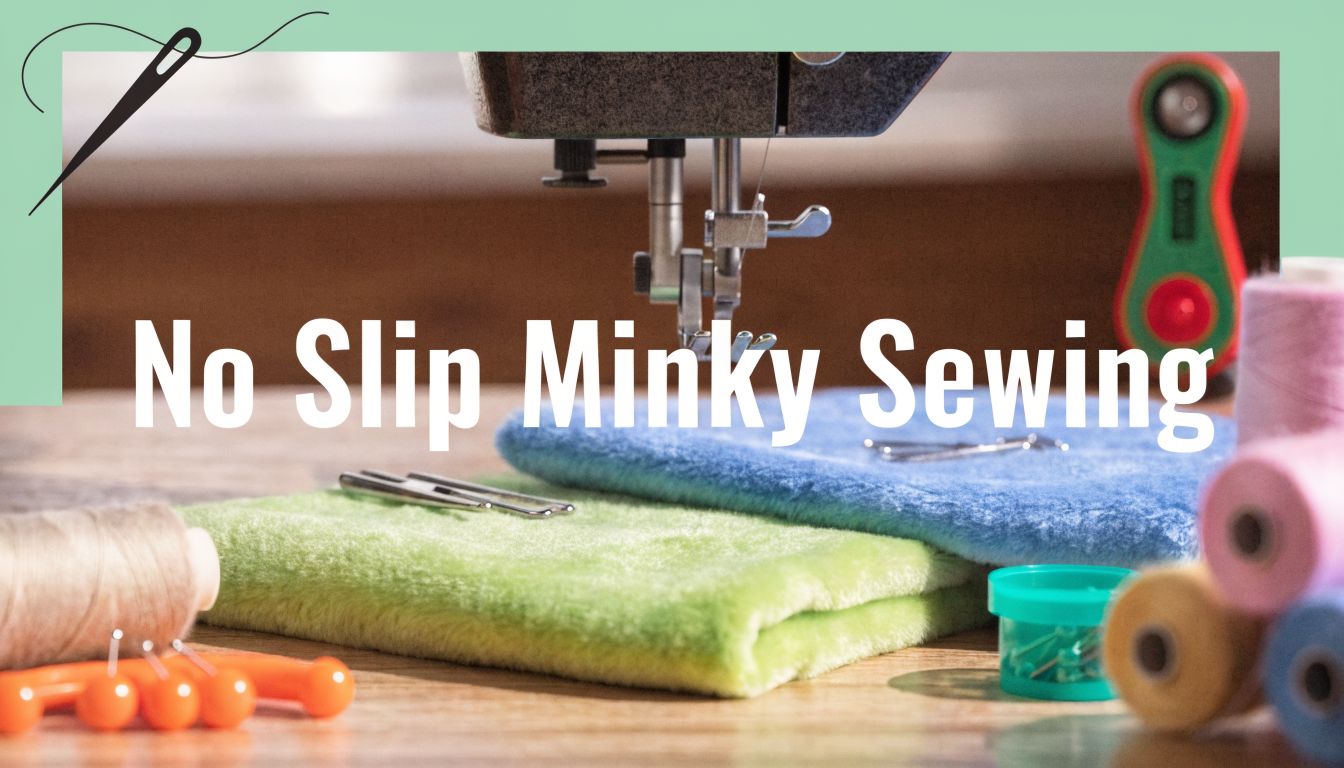
The key to how to sew with minky fabric without it sliding is simple. Use a walking foot, cut with a rotary cutter, secure the layers densely with pins or clips, and sew with a longer stitch length so the fabric feeds without dragging or shifting.
If you're staring at two beautiful pieces of minky that refuse to stay lined up, you're not doing anything wrong. Minky behaves differently from quilting cotton, and the fix starts before the needle ever drops.
Why Does Minky Fabric Slip and Stretch?
Minky doesn't slide because it's “bad fabric.” It slides because of how it's built.
A key reason is its construction. Minky is typically a 2-way stretch knit polyester with a short nap of about 1–3 mm, which makes it soft but also more mobile under the presser foot, as noted in this BeeZeeArt guide on minky construction and feeding. That same guide also points out why a walking foot or dual-feed foot helps keep layers moving evenly.

What does the nap do
That soft surface matters more than many beginners realize. The nap creates a plush face that wants to shift against other fabrics, especially when paired with another minky, fleece, or even a smooth quilting cotton.
One layer starts feeding. The other hesitates. Then your edges are off by the time you reach the end of the seam.
If you've ever wondered why your pieces were perfectly aligned at the start and uneven at the finish, that's usually the combination of stretch plus nap, not carelessness.
Practical rule: Treat minky like a specialty knit, not like a stable woven. If you sew it the same way you'd sew plain cotton, it will usually fight back.
Why standard feeding isn't enough
Regular feed dogs only move the bottom layer. With minky, that often isn't enough control.
The bottom layer moves forward while the top layer lags, creeps, or stretches. That's why experienced sewists reach for a walking foot or dual-feed system early, not as a last resort after a bad seam.
We see the same pattern over and over with plush quilt backs and Luxe Cuddle textures. The prettier and softer the fabric feels in your hands, the more deliberate you need to be in controlling it.
For a broader primer on the fabric itself, OPN has a useful overview of what cuddle minky fabric is.
Which projects exaggerate the slipping
Some projects are forgiving. Others magnify every little shift.
The most common trouble spots are:
- Large blanket fronts and backs because long seams give the layers more time to drift.
- Minky paired with quilting cotton because the cotton stays stable while the minky keeps moving.
- Curves and rounded corners because the fabric wants to stretch as you turn.
- Extra-soft luxe textures like Hide, Snowy Owl, and Fawn because surface plush can increase movement while you're handling the layers.
Once you understand that the slipping is structural, the rest of the process makes more sense. You don't need stronger hands. You need better control.
How Should You Prepare Minky Fabric Before Sewing?
The cleanest minky seams are usually decided on the cutting table.
Preparation does more than make sewing easier. It removes the little problems that turn into major shifting once the fabric is under the presser foot.

How should you handle the nap before cutting
Before you cut anything, smooth the pile and decide the nap direction. If you skip that step, pieces that looked identical on the table can look mismatched once sewn together.
That matters a lot on blankets, quilt backs, and any project using premium textures. On a luxe fabric, a nap mismatch doesn't just feel different. It catches the light differently too.
A practical prep routine looks like this:
- Lay the fabric flat without stretching it. Let it rest on the table so you aren't cutting while it's distorted.
- Brush your hand across the pile. Notice which direction feels smoother and keep that direction consistent from piece to piece.
- Mark the wrong side if needed. A small removable note can save you from turning one panel the wrong way.
- Cut only after the nap is decided. Don't “fix it later.” Later is usually after the mistake is sewn in.
A reliable anti-sliding workflow starts by managing the pile before cutting, then using a rotary cutter for cleaner edges, placing the minky side toward the feed dogs, and securing the seam with very dense pinning at about every 1 inch, according to Shannon Fabrics' minky sewing tips.
Why is a rotary cutter better than scissors
Scissors lift and shift plush fabric as you cut. A rotary cutter lets you cut while the fabric stays flat on the mat.
That one difference matters. Flat cutting reduces distortion at the edge, and cleaner edges are easier to align accurately.
If your first seam keeps ending uneven, check your cut edges before you blame your machine. Minky often starts drifting long before it reaches the needle.
Use a large mat, a long ruler, and make one confident pass where possible. Sawing back and forth with a dull blade can drag the knit and leave a fuzzy, inaccurate edge.
If you're making a simple gift project, this step becomes even more important. A straightforward tutorial like OPN's how to make a minky baby blanket is a good reminder that clean cutting makes the whole project calmer.
How much pinning is enough
More than you think.
With cotton, you can get away with casual pinning. With minky, sparse pinning is an invitation to creep. Dense pinning supports the fabric before the machine has a chance to distort it.
Use this approach:
- Straight seams. Pin close together, about every inch.
- Curves. Pin closer than that so the layers can't pull apart between anchor points.
- Long seams. Work from the center outward to distribute any small differences instead of pushing them all to one end.
Later in the process, a second row of stabilization can help even more, especially on throws and strip-style layouts where sliding becomes obvious over distance.
Here's a visual walkthrough that pairs well with the prep steps above:
Which Stabilizer Works Best for Minky Fabric?
You can square your cuts, match the edges, and still watch the top layer crawl out of place on the walk to the machine. That is why stabilizing minky starts before the first stitch. The best method depends on what you are sewing, how bulky the layers are, and whether you need exact seam control or broad hold across a big piece.
A small baby blanket and an extra-wide quilt back do not ask for the same kind of control. On a small project, I want the seam line locked down with precision. On a wide backing, I care just as much about stopping the layers from shifting while I lift, turn, and position the fabric. Many guides skip that distinction. The practical comparison in this Quilting Board discussion of slippery minky methods points to the same issue.
When should you use pins
Pins give the most accurate control right on the seam line. If I am sewing minky to quilting cotton, matching a corner, or easing a curve, pins still do the best job.
Use pins for:
- Minky to quilting cotton
- Curves, corners, and shaped seams
- Small to medium projects
- Projects that need frequent adjustment before sewing
The trade-off is time. Dense pinning is slower, and plush pile can hide the edge if you rush. Still, for projects where accuracy matters more than setup speed, pins are hard to beat.
A second row of pins can help on long seams. One row holds alignment at the seam. The second row keeps the layers from shifting while you remove the first few pins at the machine.
When are clips the better choice
Clips solve a different problem. They are excellent for holding bulky layers together at the edge without distorting them, and they are faster to place on large pieces.
Clips work best for:
- Bulky seam allowances
- Minky paired with batting or thick backing layers
- Long straight edges
- Projects where hand fatigue matters
They are less exact than pins. A clip grabs the edge well, but it does not anchor the seam line itself with the same precision. On a plush throw or a simple straight blanket, that may be enough. On a curved edge or a seam that has to land exactly, clips alone often leave too much room for drift.
My usual approach is mixed. Clips hold the stack while I spread and align it. Pins go in where the stitching will happen.
What about temporary adhesives and paper methods
Temporary adhesives help before the machine ever gets involved. That is their real value.
If you are sewing a large quilt back, an extra-wide minky piece, or a slippery plush surface that shifts just from being moved, wash-away tape or a light temporary adhesive can calm the fabric down early. These methods reduce the little slides that happen on the table, in your lap, and on the trip to the presser foot.
They are most useful when:
- The project is wide and awkward to carry
- Pinning the whole piece would take forever
- The layers shift during setup, not just during stitching
- You need help at the start of the seam where drag is strongest
There are trade-offs. Too much adhesive can gum up the process and flatten the plush. Tape can struggle on very textured minky. Paper under the seam helps at the beginning and supports feeding, but it adds cleanup later. I use paper for short problem areas or seam starts, not as a full-project solution.
If your project includes batting, loft changes how the layers behave under your hands and under the presser foot. This guide to what quilt batting is and how it affects quilt layers is useful background before you choose your stabilizing method.
Choosing Your Minky Stabilizer
| Method | Best For | Pros | Cons |
|---|---|---|---|
| Pins | Curves, corners, minky to cotton, precise seam matching | Strong seam-line control, easy to fine-tune placement | Slower setup, more handling on large projects |
| Clips | Bulky edges, thick layer stacks, straight seams | Fast to place, easy on hands, good edge control | Less control at the actual seam line |
| Wash-away tape or temporary adhesive | Wide backings, large pieces that shift during setup | Helps hold layers still before sewing, reduces handling drift | Needs testing, can feel messy if overused |
| Paper stabilization | Seam starts, very slippery sections, machine-bed drag | Supports feeding and reduces early shifting | Extra cleanup, not practical for every seam |
My project-based rule of thumb
For a baby blanket, choose pins or a pin-and-clip combination. That setup stays clean, predictable, and easy to adjust.
For a large quilt back, especially in plush extra-wide minky, add temporary stabilization if the fabric shifts while you are positioning it. That extra prep often matters more than any machine setting you choose later.
For high-pile luxe textures such as Hide, Snowy Owl, or Fawn, test all three methods on scraps first. Some piles grip well with clips. Others need pins at close intervals because the seam line disappears into the nap and accuracy gets harder.
A Special Offer from OPN Quilting: As you gather your tools, remember that all first-time customers get 15% off their entire order. Plus, enjoy free shipping on all U.S. orders over $70.
If you need fabric for a large project, extra-wide minky and cuddle options are one route to consider alongside your usual sources, especially if you want to avoid piecing a backing.
What Are the Right Machine Settings for Minky?
Once the layers are stable, machine setup becomes the difference between a calm seam and a wrestling match.
The single most important choice is the walking foot. Earlier guidance on minky construction explains why even feeding matters. At the machine, that principle turns into clean results.
Which settings matter most
A few settings usually make the biggest difference:
- Walking foot or dual-feed system. This is the first thing to change if minky keeps creeping.
- Longer stitch length. A longer stitch helps reduce drag and distortion on plush knit fabric.
- Reduced presser foot pressure. Less pressure can keep the machine from stretching or pushing the fabric too aggressively.
- Slow, steady speed. Minky rewards control more than speed.

Don't yank from the back or pull from the front. Let the machine feed the layers while you guide them lightly.
What should you test before sewing the project
Always test on scraps layered in the same order as the actual project. If you're sewing minky to cotton, test that combination. If you're sewing minky to minky, test that exact stack.
Watch for these signs:
- Wavy seam means the fabric is stretching during feeding.
- Puckering usually points to drag, pressure, or a stitch that is too short.
- Uneven layer lengths suggest the layers still aren't feeding evenly.
- Bunching at the start often means the seam wasn't stabilized enough before the needle began.
A short test seam can save a lot of seam ripping.
A good minky seam should feel boring to sew. If the fabric is fighting you from the first inch, stop and adjust before you commit to the whole project.
What about thread and finishing support
Thread choice matters, especially when you're pairing plush fabrics with pieced tops or planning to quilt the finished sandwich. If you want a refresher on matching thread weights to the job, OPN has a helpful thread weight chart for quilting and sewing.
If you're using Shannon Cuddle, Luxe Cuddle Hide, or Luxe Cuddle Snowy Owl, resist the urge to overtighten everything just because the fabric feels thick. Heavy-handed settings usually create more distortion, not less.
The goal isn't to clamp the fabric into submission. The goal is to feed it evenly.
How Can You Achieve a Professional Finish?
A seam can be straight and still look homemade. The polished look comes from what you do after the layers finally stay together.
The biggest jump in quality usually comes from reducing bulk and respecting the difference between minky and cotton. Those two fabrics don't behave the same way, so they shouldn't be finished the same way.
How do you sew minky to cotton cleanly
When minky is paired with quilting cotton, the cotton often looks puckered first even though the minky caused the problem. The fix is restraint.
Support the seam well, let the machine feed the layers, and don't stretch the cotton to “match” the minky. If one fabric needs coaxing, it should be the plush side, not the woven one.
Pressing also needs care. Use a gentle approach and avoid flattening the pile with direct heat.
How do you reduce bulk in corners and edges
Bulk builds quickly with plush fabric. If corners feel thick and clumsy, trim and grade the seam allowances before turning.
A clean finishing routine often includes:
- Grading seam allowances so both layers don't end at the same thickness.
- Clipping corners carefully to reduce lumpiness without cutting too close to the seam.
- Topstitching with intention only after the project has settled flat.
- Checking the edge by touch as well as by sight, because bulky minky can hide an uneven turn.
If you're holding thick layers while binding or topstitching, tools like quilting clips can make the process calmer. OPN has a related post on using quilting binding clips.
Why does backing quality matter for longarm quilting
A square, smooth minky backing matters even more when the quilt is headed to a longarm. Ripples, skewed cuts, and bulky seams don't magically disappear once the quilt is loaded.
We handle minky-backed quilts regularly, and the projects that quilt most cleanly are the ones that were stabilized and finished carefully from the start. That's especially true when the backing is plush and the top includes piecing that needs to stay straight.
If you're planning to send a quilt out, a flat backing gives the machine a much better chance at producing an even, attractive result. That's one reason mail-in longarm service is easier when the prep is disciplined before the quilt ever leaves your sewing room.
How Do You Fix Common Minky Sewing Problems?
Most minky problems come back to the same few causes. Either the layers weren't stabilized enough, the machine wasn't set to feed them evenly, or the fabric got stretched during handling.
Here are the fast fixes I reach for first.
Why are my layers different lengths at the end
One layer fed faster than the other.
Go back and check whether the seam was pinned densely enough and whether the walking foot was in place. On the next seam, align from the center outward and support the weight of the fabric so it isn't dragging off the table.
Why does the fabric bunch at the start of the seam
The opening inches need extra control. Start with firmer stabilization near the edge and make sure the layers are lying flat before you begin.
If the machine still wants to chew the start, add a temporary support method for that seam opening rather than forcing it through.
Why are the cut edges curling
That's usually the knit structure showing itself during handling. Re-smooth the fabric on the table, recut if needed with a rotary cutter, and avoid lifting the fabric more than necessary before it reaches the machine.
Why does my seam look wavy
The fabric stretched while sewing.
Reduce presser foot pressure if your machine allows it, use the walking foot, and sew with a longer stitch length. Also check your hands. Guiding is good. Pulling isn't.
Why won't clips alone keep the fabric aligned
Because clips hold the edge better than they control the seam line itself. If the seam still creeps, combine clips with dense pinning in the area that will pass under the needle.
Our hundreds of verified reviews reflect something we see every day. Once sewists stop treating minky like cotton and start stabilizing it before sewing, the fabric gets much easier to manage.
If you're ready to stop fighting your seams and start enjoying the fabric, take a look at On Pins & Needles Quilting Co. for Shannon Cuddle yardage, extra-wide minky backing options, luxe textures like Hide, Snowy Owl, and Fawn, plus practical help for finishing projects with mail-in longarm quilting. Get 15% Off Your First Order.