
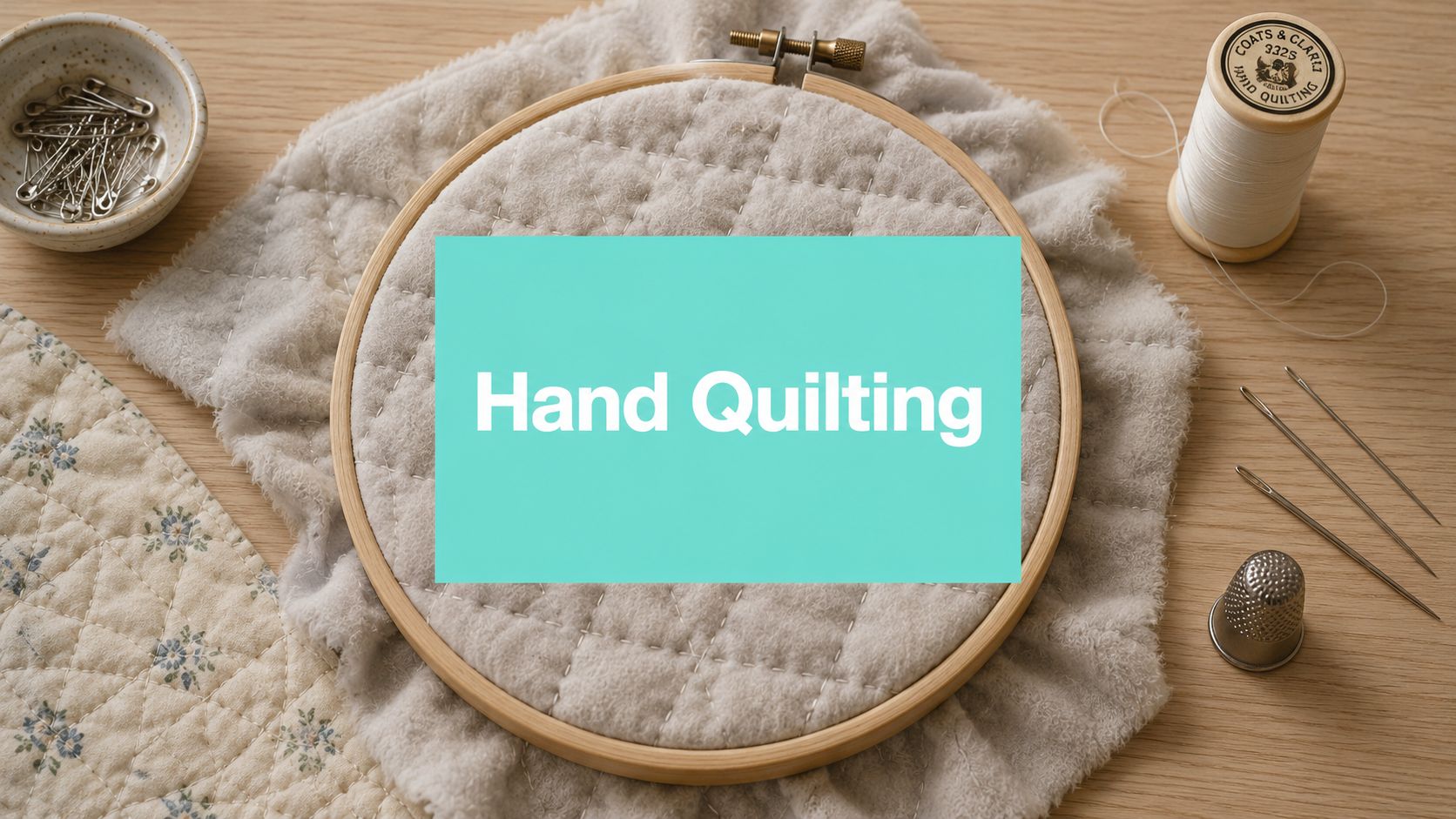
Hand quilting for beginners works best when you aim for stitches spaced between 1/8 inch and 1/4 inch, with 12 stitches per inch as the classic quality benchmark, and use a rocking motion to load 3 to 6 stitches at a time. It is a rewarding craft that uses a needle, thread, and thimble to join fabric layers with a simple running stitch, so you can make something personal without needing a machine.
If you're standing in your sewing space with a bundle of fabric, a fresh needle, and no idea where to begin, start smaller than you think. The most satisfying first hand-quilted projects aren't the biggest or the most intricate. They're the ones that let you learn rhythm, tension, and consistency without fighting the materials at every step.
A lot of beginner advice assumes you should practice on whatever cheap cotton is lying around. I don't agree. If you already love the plush feel of Shannon Cuddle® or Luxe Cuddle®, it makes sense to learn on fabric you want in your home. The trick is choosing a small project and setting it up correctly so the softness feels inviting instead of slippery.
What Supplies Do I Really Need to Start Hand Quilting?
You don't need a studio full of tools for quilting for beginners by hand. You need a short list of dependable basics that feel good in your hands and let you focus on the stitch.

Which tools matter most?
Start with these:
- Needles that glide cleanly: A hand quilting needle should pass through all layers without dragging. If the needle feels like it's fighting the fabric, stitching becomes tiring fast.
- Strong quilting thread: Weak or fuzzy thread turns practice into frustration. Smooth thread helps your stitches settle neatly.
- A thimble that fits your middle finger: A thimble isn't optional for most beginners. It gives you control and protects your finger when you push through layered fabric.
- A marking tool: Marked lines give your hands something to follow. That matters more than most beginners realize.
- A small hoop, if you like structure: Some quilters prefer hand quilting without one, but a hoop can help you keep even tension while you learn.
- Sharp scissors: Clean thread cuts reduce tangles at the start of each pass.
Practical rule: Buy fewer tools, but make each one pleasant to use. Cheap notions often create “skill problems” that are really tool problems.
Should beginners start with cotton or minky?
That depends on your goal.
If you want the easiest possible path for stitch visibility, basic quilting cotton is straightforward. If you want a finished project that feels luxurious and useful right away, Shannon Cuddle® minky is a wonderful choice, especially on a small item where the fabric never becomes unwieldy.
Here's the trade-off:
| Fabric Feature | Basic Quilting Cotton | Shannon Cuddle® Minky |
|---|---|---|
| Surface feel | Crisp and stable | Plush and soft |
| Stitch visibility | Easy to see | Slightly harder to track on textured surfaces |
| Movement during handling | More predictable | More likely to shift if not basted well |
| Finished feel | Traditional | Cozy and tactile |
| Beginner enjoyment | Good for technique drills | Excellent for giftable projects |
Batting matters too. If you're not sure what goes in the middle of a quilt sandwich, this guide on what quilt batting is and how it behaves gives helpful context before you choose supplies.
What doesn't help beginners?
A few things usually slow people down:
- Oversized first projects: Too much fabric weight changes how your stitches feel.
- Very long thread: It knots, abrades, and twists.
- Textured fabric with no plan: Plush fabric is lovely, but it needs careful marking and basting.
- Skipping the thimble: Hand fatigue arrives quickly when you push a bare finger through layers.
If you're drawn to minky from the start, keep the project compact. A pillow front or another small decorative piece lets you enjoy the softness without managing a large quilt all at once.
How Do I Prepare My Fabric and Basting?
Basting is where neat hand quilting begins. If the layers shift before you stitch, the finished surface puckers, and no amount of careful sewing fixes that cleanly afterward.
Think of the quilt sandwich as exactly that: a top layer, a middle layer, and a backing that all need to stay in place while your stitches travel through them.

How should I build a smooth quilt sandwich?
Use a table if you can. It's easier to control the layers on a raised surface than on the floor.
- Cut and square your layers: Make sure the top, batting, and backing sit flat before you stack them.
- Lay the backing first: Smooth it with your hands so there are no ripples.
- Add the batting: Let it rest naturally rather than stretching it into place.
- Position the quilt top last: Smooth from the center outward.
- Baste thoroughly: Use pins or another secure method so the layers don't drift while you quilt.
Minky deserves extra patience here. Its plush surface can shift more than cotton, so smooth each layer carefully and check that the backing stays flat as you pin.
Secure basting is less glamorous than stitching, but it's the part that lets the pretty stitching stay pretty.
What's the best workflow once the sandwich is ready?
A practical beginner sequence is to mark the quilt lines first, thread a needle with no more than an arm's length of thread, start from the quilt's center or a middle edge depending on the motif, and use a rocking motion to take 3 to 6 stitches per pass. Guidance for the same workflow also recommends a thimble on the middle finger and a supporting hand underneath the quilt to help bring the needle back through the layers in this hand quilting tutorial.
That sequence works because it reduces two common problems. Shorter thread behaves better, and starting near the center helps you control fullness instead of pushing excess fabric outward.
What if I want to scale up later?
If your first hand-quilted project goes well and you want to prep a larger quilt for professional finishing, keep a detailed checklist nearby. These quilt prep instructions are useful for understanding how careful layering and preparation affect the final result on bigger pieces too.
What Are the Essential Hand Quilting Stitches?
The first time a beginner hand quilts minky, the surprise is usually the feel. The surface is softer, loftier, and a little more alive under the needle than plain quilting cotton. That is exactly why I keep the stitch menu short for a first project. You do not need a long list of decorative stitches. You need one dependable stitch, one clean way to start, and a rhythm you can repeat without fighting the fabric.

For modern beginners using Shannon Fabrics minky, that simplicity matters even more. Minky gives a beautiful, plush finish right away, but it also asks for steadier hand control. That is one reason OPN kits work so well for a first project. The fabric choices, scale, and pairings are already thought through, so you can focus on learning the stitch instead of second-guessing every material decision.
What stitch should I learn first?
Start with the running stitch.
It is the stitch that carries almost every beginner hand-quilting project worth finishing. Straight lines, gentle curves, grids, echo quilting. The running stitch handles all of them well enough that a new quilter can build confidence before trying anything more decorative.
The goal is not tiny show-quilt stitches. The goal is an even line that holds the layers together, feels good in the hand, and looks intentional. On minky, slightly larger and more consistent stitches usually look better than overly small stitches that distort the pile or tire your hands.
How do I start and hide the knot?
A buried knot gives the cleanest start. Tie a small knot, bring the needle into the quilt about 1/2 inch away from where the stitching line begins, travel between the layers, and come up at the starting point. Pull gently until the knot slips inside the quilt sandwich.
Beginners usually rush this part.
If the knot catches on top, do not keep tugging harder. Reinsert the needle, adjust the path between the layers, and try again. On minky, patience pays off because the plush surface can hide minor handling marks, but a bulky knot still creates a lump you will feel later.
What does the rocking motion feel like?
It feels awkward until your hands start working together.
Your top hand places and pushes the needle with the thimble. Your lower hand catches the point and sends it back up. Instead of making one full stitch at a time, you load a few small stitches onto the needle and pull the thread through in one smooth motion. That is the hand-quilting rhythm most beginners are trying to build.
On minky, I recommend keeping that motion modest. Do not try to stack too many stitches on the needle at first. The loft can make the layers feel thicker, and forcing a big pass often leads to uneven stitches or sore fingers. Three to five stitches per pass is a comfortable place to start for many beginners.
For visual learners, this kind of movement is much easier to understand when you watch hands in action:
What stitch length should I aim for?
Aim for stitches that are even enough to look calm across the surface. Consistency matters more than making them tiny.
A practical beginner range is about 1/8 inch to 1/4 inch, especially on a first minky project where control matters more than speed. If one stitch is slightly longer than the next, that is fine. What you want to avoid is a line that swings wildly from very short to very long, because that draws the eye and can weaken the overall look.
If you want a clearer visual reference before you begin, OPN's guide on stitch length for quilting helps beginners judge spacing in a way that is easy to apply on real projects.
A good beginner stitch line should feel steady, useful, and pleasant to sew. That is enough. Once that feels natural, everything else in hand quilting gets easier.
What Is a Good First Hand Quilting Project?
The best first project is small enough that you can finish it before your enthusiasm cools. That usually means a project with simple lines, limited bulk, and a result you'll use.

A pillow front is one of my favorite starting points because it teaches all the right lessons. You mark lines, baste layers, practice steady running stitches, and end with something soft and visible in your home. That's much more encouraging than a pile of practice scraps in a drawer.
Why is a small project smarter than a throw quilt?
A compact project removes friction:
- Less fabric to control: Your hands learn faster when they aren't wrestling weight.
- Shorter time to finish: Completion builds confidence.
- Mistakes stay manageable: Uneven spacing on a pillow is a lesson. On a bed quilt, it can feel overwhelming.
- Better focus on technique: You can pay attention to the stitch itself.
Pre-cut kits earn their reputation. When the cutting and matching decisions are already handled, beginners can spend their energy on the actual hand quilting.
A good first project should teach one new skill at a time, not ten.
What design should I quilt on a first project?
Keep it plain and intentional.
Good beginner choices include:
- Straight grid lines: Easy to mark and easy to follow.
- Gentle echo lines: Good when you want a softer look.
- Outline quilting around bold shapes: Helpful if the print or piecing already gives you a path.
If you want more project inspiration before choosing your layout, these easy quilt blocks and patterns can spark ideas without pushing you into anything too advanced.
What tends to work poorly for a first attempt?
Avoid dense fills, tight curves, and oversized motifs spread across a large area. Plush fabrics already ask you to pay close attention. Adding a complex quilting map on top of that usually makes beginners feel clumsy when the problem is really just project selection.
Choose a design that leaves room for the fabric to stay soft. That suits minky beautifully. A lightly quilted pillow or small accent piece still feels plush, and the hand stitching adds visible character without flattening everything.
How Do I Troubleshoot Common Hand Quilting Problems?
A beginner hand-quilted minky project usually goes wrong in small, fixable ways. The fabric is plush, the layers have more loft than flat cotton, and your hands are still learning how much pressure to use. That is exactly why I like recommending OPN's beginner-friendly kits. They remove a lot of the guesswork so you can solve one problem at a time instead of fighting your fabric, tools, and pattern all at once.
Why is my fabric puckering?
Puckering usually points to one of two causes. The thread is being pulled too snug, or the quilt sandwich was not basted firmly enough to keep minky from shifting.
Start by easing up on your pull. Hand quilting thread should settle into the fabric, not draw it inward. Then check your basting. On plush fabrics, I prefer more basting than a beginner expects because the loft can hide movement until the stitches are already in place.
If the puckering is minor, stop, smooth the area with your hand, and take the next few stitches with less tension. If it keeps happening in the same spot, remove those stitches and rebaste before continuing. That takes less time than trying to press out a problem later.
Why are my stitches all different sizes?
Uneven stitches are common at the beginning, especially on minky, where the pile can make your spacing look less uniform than it really is.
Consistency matters more than tiny stitches. Pick a comfortable stitch length, mark a clear line, and keep your pace steady. I would rather see a new quilter make even, slightly larger stitches than strain for a fine stitch they cannot repeat.
A simple rhythm helps. Load the needle the same way each time, glance ahead at the line, and stop every few inches to check the look from the front. OPN kits are especially helpful here because the scale of the projects stays manageable. You get enough repetition to build muscle memory without the fatigue that causes sloppy stitching.
Why does my thread keep tangling?
Thread tangles usually come from using lengths that are too long, letting the thread twist up on itself, or sewing with thread that is already getting fuzzy.
A shorter length behaves better. So does pausing now and then to let the needle and thread hang freely so the twist can release. If the thread starts to look worn, cut it off and start fresh. Beginners often push thread too far because they do not want to waste it, but damaged thread costs more time than it saves.
If you are stitching through a bound edge or finishing seam and the area feels bulky, slow down and take smaller passes. Clean edge finishing helps reduce those trouble spots, and this beginner guide on how to bind a quilt neatly by hand is useful if you want to practice that skill next.
First-Timer's Treat! Don't forget to use your 15% off coupon on your first order. Plus, all U.S. orders over $70 ship for free!
How Do I Finish and Care for My Hand-Quilted Item?
The final stitches deserve a clean finish. For a first pillow project, an envelope-style back is one of the easiest ways to get there.
What's the simplest way to finish a beginner pillow?
An envelope back works well because it doesn't require closures. Two overlapping back panels create an opening where the pillow form slips inside, and the outside still looks polished.
That approach keeps your focus on the hand quilting rather than adding zipper installation or buttonholes to a beginner project. If you want to build sewing skills further, this guide on how to bind a quilt for beginners is a good next step for projects that do need a more traditional edge finish.
How should I care for a hand-quilted minky item?
Gentle care preserves both the stitching and the plush texture.
A few habits make a difference:
- Use mild washing methods: Harsh treatment can rough up the pile and stress the stitched areas.
- Avoid high heat: Plush fabrics stay nicer when they aren't overcooked in the dryer.
- Store it uncrushed: Let the texture breathe rather than compressing it under heavy items.
Hand quilting adds meaning to a project, and minky adds comfort. That combination is worth caring for properly so the piece still feels inviting long after the last stitch is in place.
If you're ready to turn quilting for beginners by hand into a finished project you'll love using, browse On Pins & Needles Quilting Co. for premium Shannon Cuddle® and Luxe Cuddle® fabrics, curated kits, and trusted quilting supplies. When you want plush texture from the start instead of settling for practice fabric you don't even like, it's a smart place to begin.