

You're standing at the cutting table with a finished quilt top, a gift blanket idea, and several fabrics that all feel wonderfully soft. Soft blanket fabric is a family of plush textiles, usually polyester-based, including minky or Cuddle, fleece, faux fur, and plush. The right choice depends on the job: a quilt back needs width, a gift blanket needs comfort and drape, and a scarf needs softness without unnecessary bulk.
What Soft Blanket Fabric Really Means for Quilters and Makers
A fabric can feel soft because of its fiber, its surface, or the way those two elements work together. Brushing raises fibers above the ground fabric, while pile construction creates a cushion that your hand reads as plush. That's why two polyester fabrics can feel completely different, even when their labels sound similar.
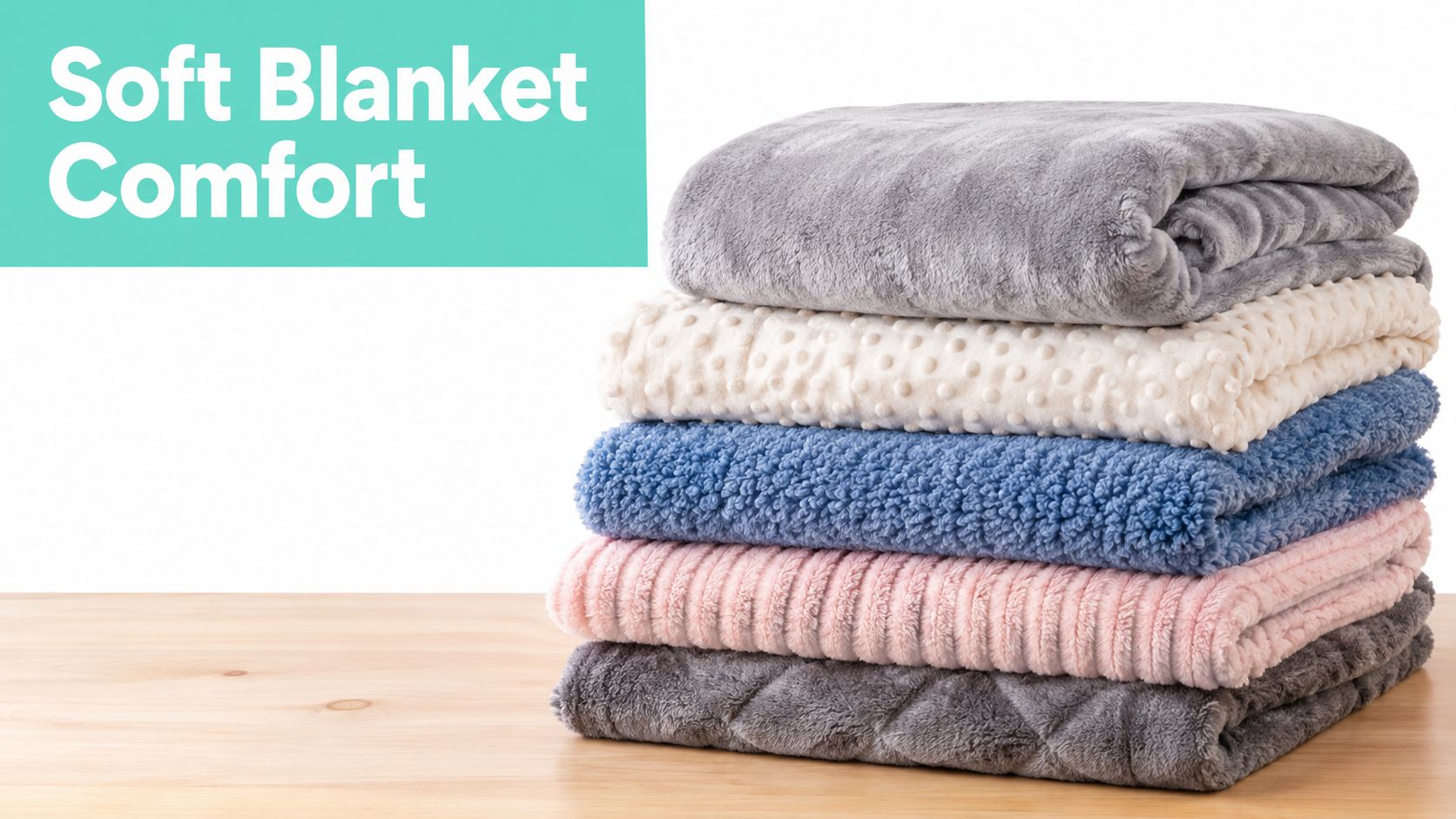
Think of the surface like a tiny field of fibers. A short, even surface feels smooth and cozy, while a taller or more varied pile creates a deeper, more cushioned hand. The backing, stretch, weight, and density also affect how the fabric behaves under a presser foot or on a longarm frame.
Why does softness vary so much?
Minky and Shannon Cuddle fabrics are popular because they combine a soft hand with useful blanket weight and a broad range of textures. Luxe Cuddle Hide, Snowy Owl, and Fawn each create a different tactile experience because their pile patterns and heights vary.
Fleece usually has a brushed surface with a more uniform appearance. Faux fur and plush tend to make a stronger visual statement, but a dramatic pile can be harder to cut, sew, press, or quilt cleanly. That doesn't make them poor choices. It means the fabric should match your project's construction and care requirements.
Our cutting-table advice is simple. Decide whether your priority is smooth coverage, maximum cuddle, easy handling, light drape, or long-term wear before you fall in love with a color. If you're still sorting out the terminology, our guide to the difference between minky and Cuddle fabric is a useful starting point.
For a first project, choose a texture you can handle confidently. A curated Shannon Cuddle fabric cut gives you a practical way to test the hand, sew a small project, or build a quilt back without committing to an unfamiliar pile.
How Do Minky Fleece Faux Fur and Plush Compare
The softest fabric isn't automatically the right fabric. Minky may be ideal for a quilt back, fleece may be easier for a quick blanket, faux fur may create a luxurious gift, and plush may give you the deepest tactile effect.
| Fabric Type | Feel and Pile | Warmth and Weight | Best Use |
|---|---|---|---|
| Minky or Shannon Cuddle | Smooth, dotted, raised, or textured pile with a distinctly plush hand | Cozy warmth with flexible drape; weight varies by construction | Quilt backs, baby blankets, throws, pillow projects, and tactile gifts |
| Fleece | Brushed, soft, and generally more uniform than textured minky | Warm and easy to handle, often with a relaxed drape | Simple blankets, linings, scarves, and beginner projects |
| Faux fur | Longer, more visible pile with a fur-like appearance | Can feel substantial and very warm, depending on the pile | Luxury throws, accent panels, costume work, and statement gifts |
| Plush | Dense, cushioned surface with a soft, rounded hand | Comfortable warmth with a fuller tactile presence | Cuddle blankets, pillows, toys, and decorative layers |
Which fabric works best as a quilt back?
For a quilt back, the construction problem comes first. A fabric can feel magnificent in the shop and still create frustration if it requires a bulky center seam or shifts while you're quilting.
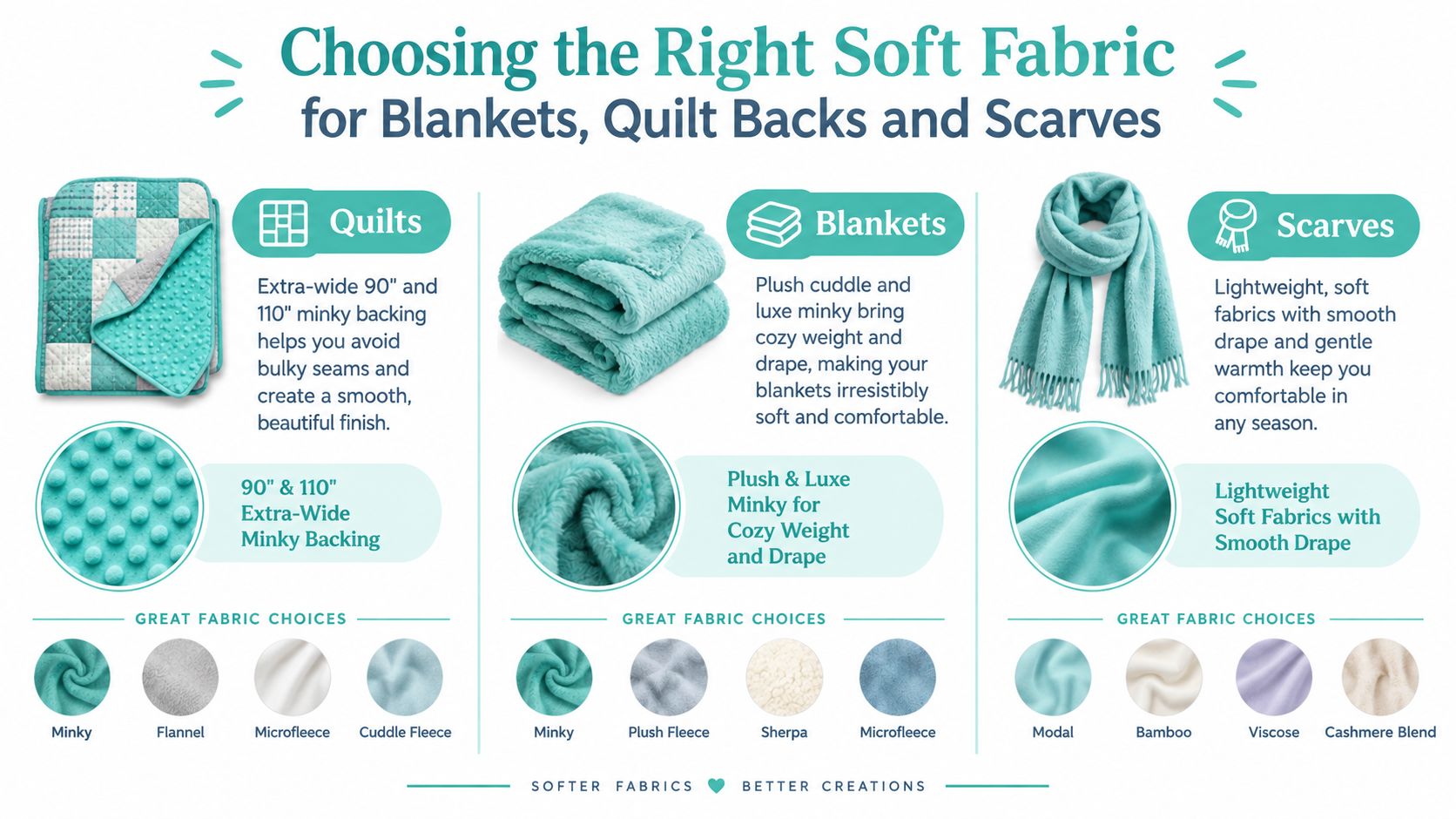
Minky and Cuddle are especially useful when you want a soft reverse side, particularly in an extra-wide format. Smooth Quilting Cuddle is often easier to manage than a very tall texture, while a Luxe Cuddle surface adds more drama and cushion. For a fabric that needs to coordinate across a whole project, browse OPN's Luxe Cuddle textures, including Hide, Snowy Owl, and Fawn.
What about blankets and scarves?
A finished throw can tolerate more visual texture than a quilt back because you're not necessarily aligning it with batting and a pieced top. Faux fur and plush can make a memorable gift, but they're less forgiving when you need crisp seams or precise rotary-cut edges.
Scarves call for a different balance. A fabric with a smooth drape and moderate warmth will usually wrap more comfortably than a tall, heavy pile. Minky can work beautifully for an infinity scarf, especially when the project uses a curated kit rather than a complicated pattern.
Our detailed explanation of what Cuddle minky fabric is can help if product names are making the choice feel harder than it should. Start with the finished object, then select the texture that supports it.
Why Some Soft Fabrics Feel Warmer and Stay Softer Longer
Softness begins at the surface. Cut-pile and raised structures are consistently judged softer because the fibers bend under your hand instead of presenting a flat, rigid face. Increasing pile height can deepen that sensation, while dense three-dimensional pile can feel cushioned and responsive.
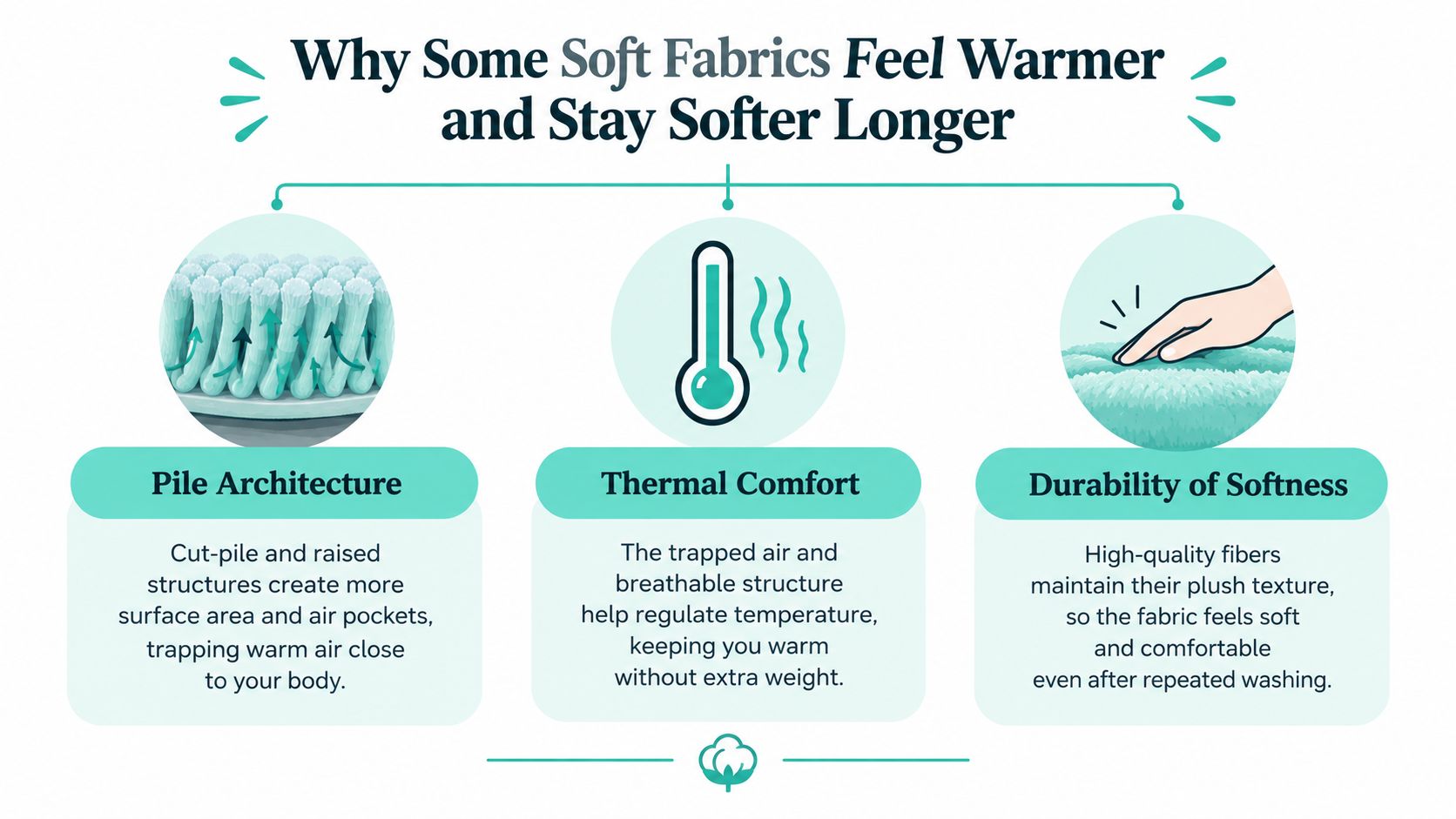
The same architecture affects warmth. Fine microfiber polyester can reduce heat conductance and increase the still-air layer inside the structure, which helps explain why microfiber fabrics often feel warm without becoming excessively heavy. Research cited in the textile literature also reports that fleece and raised structures reduced thermal conductivity by 13% and improved thermal comfort, as summarized by Emerald Insight.
Practical rule: A taller pile may feel softer at first, but the best everyday blanket balances pile, density, backing, weight, and abrasion resistance.
What keeps softness from disappearing?
Washing and rubbing place stress on raised fibers. Anti-pill treatments and low-shed finishes can help a fabric retain a smoother, more attractive surface, but construction still matters. A fabric that's repeatedly dragged across rough furniture or washed with abrasive items may lose its original hand sooner.
Abrasion deserves particular attention in synthetic fleece. One study measured 4,900 to 640,000 fibers released per gram of textile, with abrasion producing 2 to 540 times more fibers than washing in the tested materials. Those findings, reported in this textile research document, support a practical conclusion for makers: choose durable surfaces and treat them gently.
Safety and sustainability also belong in the buying conversation. Buyers increasingly look for certifications such as OEKO-TEX Standard 100 and GOTS, along with organic cotton, bamboo blends, recycled polyester, and responsibly sourced wool. A blanket carbon-footprint estimate of 64.64 kg CO2e shows that material selection involves a measurable environmental tradeoff, not only a marketing phrase, as discussed by The Decor Advisor.
Choosing the Right Soft Fabric for Blankets Quilt Backs and Scarves
A quilt back, a couch throw, and a scarf ask different things from fabric. Treating them as the same project is how makers end up with a beautiful textile that's awkward to sew, too bulky to wear, or difficult to care for.
Which fabric should you choose for a quilt back?
Choose width before texture. OPN stocks 90-inch and 110-inch minky options, which can prevent the bulky horizontal seam that often appears when a standard-width fabric can't cover a large quilt in one piece.
Wide-back quilting fabric is commonly woven at 108 inches wide, approximately 2.5 times the width of standard 42 to 44-inch quilting fabric, according to Quilt Keeper Studio's backing calculator. That format exists to reduce or eliminate seams in large quilt backs.
For mail-in longarm quilting, prepare the backing and batting with at least 4 inches of extra fabric on every side of the quilt top, as outlined in OPN's quilt preparation guide. Another longarm checklist describes 8 inches wider and 8 inches longer overall, with some services requesting 8 to 12 inches total overage or more for custom quilting, so follow the requirements of the service you choose. OPN's Mail-in Longarm service is a natural fit when you want professional edge-to-edge finishing without owning a longarm machine.
What makes a good gift blanket?
For a gift blanket, lead with the recipient's habits. A smooth Cuddle surface is easy to live with, while a deeper Luxe Cuddle texture creates a more dramatic unwrapping moment and a richer hand.
Ready-to-sew cuts make the project less intimidating. OPN offers curated 2, 2.5, and 3-yard cuts, along with pillow kits that include forms, infinity scarf kits, and ready-made minky blankets and scarves. You can explore more project ideas in OPN's soft quilt backing guide.
Which soft fabric works for a scarf?
A scarf needs movement. Pick a soft fabric with a smooth drape and gentle warmth rather than the tallest, densest pile available. An infinity scarf kit can be a practical choice because the fabric amount and project concept are already paired.
How Do You Wash and Care for Soft Blanket Fabrics
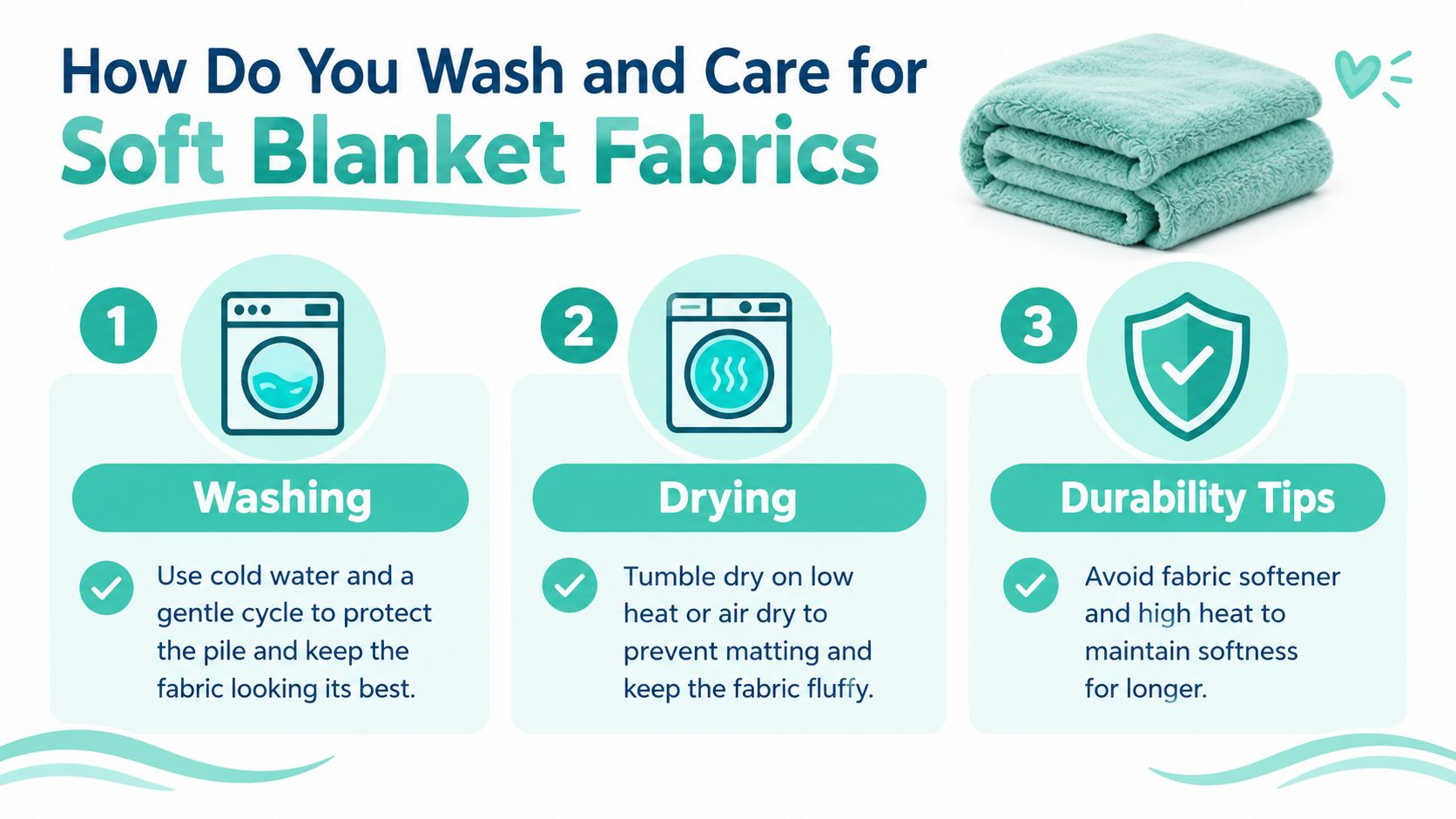
Care determines whether a soft blanket fabric remains inviting after repeated use. Polyester minky needs protection from excessive heat, harsh chemicals, and products that leave a coating on the pile.
What washing routine protects the pile?
- Wash gently: Use a cold, gentle cycle and wash the blanket with similarly soft items when possible.
- Control heat: Tumble dry on low or air dry. Hot washing and ironing can damage polyester minky pile and reduce softness, according to Minkylicious care guidance.
- Skip softener: Fabric softeners can coat the fibers, which may change the hand and interfere with the pile's natural feel.
- Avoid bleach: Bleach can weaken or damage fibers, so use a care method suited to the fabric's label.
- Reduce abrasion: Turn textured blankets inside out when practical and keep them away from rough fasteners, abrasive towels, and overloaded wash loads.
This guide to washing mink blankets offers a helpful reference for everyday care. The goal isn't complicated. Keep the cycle gentle, keep heat low, and avoid anything that mats or coats the surface.
Here's a visual walkthrough for makers who prefer to see the process:
For longer-lasting softness: Test a scrap or follow the manufacturer's care label before washing a finished project, especially when two fabrics with different pile heights are joined together.
Microfiber shedding is part of the wider synthetic-textile issue. A 2024 systematic review recorded microfiber losses from 9.6 mg to 1,240 mg per kilogram of textile per wash, with estimated releases from 8,809 to more than 6,877,000 microfibers, depending on fabric and construction. The review also found mechanically treated polyester samples, including fleeces and jerseys, released about six times more microfiber mass than nylon woven samples, as detailed in this Ocean Conservancy factsheet.
Save the softest hand by choosing durable construction, washing less aggressively, and replacing a worn blanket thoughtfully rather than trying to force a damaged pile back to its original state.
Shop note: New customers can use the 15% first-order coupon, and orders over $70 qualify for free U.S. shipping. Browse the Minky Blankets collection when you want the softness without starting at the cutting table.
Smart Buying Tips for Widths Yardage Kits and Deals
Buying by feel alone can leave you short on fabric or stuck with an unwanted seam. Start with the finished dimensions, then compare the fabric width, direction of the pile, and the amount of handling your project will require.
Which width solves the problem?
Standard 58 to 60-inch fabric can suit smaller throws, pillows, scarves, and some blanket projects. OPN also carries 80-inch Mirage and extra-wide 90-inch and 110-inch options for larger applications, especially quilt backs.
For a large quilt, extra-wide fabric may remove the need to piece the backing. That saves a seam, reduces bulk, and gives your longarm quilter a cleaner backing to load. Before cutting, square the backing and check the service's overage requirements. OPN's extra-wide backing article provides project-focused guidance.
Should you buy yardage or a kit?
Choose a curated cut when you already know your pattern and measurements. Pick a kit when the project is a gift, a first attempt, or something you want to finish without calculating every component.
- For a quick blanket: Consider a 2, 2.5, or 3-yard cut, depending on your intended finished size and construction.
- For a small accent: A pillow kit with a form removes the need to source compatible inserts.
- For wearable gifting: An infinity scarf kit keeps the project focused and approachable.
- For non-sewers: A ready-made minky blanket or scarf provides the finished texture immediately.
OPN provides fast, accurate cutting and secure checkout, with hundreds of verified reviews that shoppers can consult before ordering. You can also browse the broader Cuddle and minky fabric category and compare textures before settling on a width.
The practical buying sequence is straightforward. Measure the project, account for pile direction, select the widest sensible cut, and then check whether a kit saves time. Apply the first-order 15% discount when eligible, and group supplies when useful so your order can qualify for free U.S. shipping over $70.
Find Your Perfect Soft Blanket Fabric and Start Creating
The right soft blanket fabric makes sense when you match it to the job. Choose extra-wide minky or Cuddle for a quilt back where seam reduction matters, a richer Luxe Cuddle texture for a high-touch gift, and a lighter, smoother surface for a scarf that needs comfortable drape.
Care should influence the purchase too. If the blanket will be washed often, look for a durable pile, follow the care label, and avoid high heat, bleach, and fabric softener. If sustainability or material testing matters to your household, look for specific certifications and fiber disclosures instead of relying on a general “eco-friendly” claim.
Beginners can start with a curated cut or kit. Experienced quilters can pair extra-wide backing with OPN Mail-in Longarm finishing, batting, thread, free return shipping, and a pattern chosen from the longarm quilting pattern gallery. Support is available by phone and email when a width, texture, or preparation detail needs a second set of eyes.
Choose your project first, feel your options second, and buy the width that prevents avoidable construction problems. Then select the texture that will make the finished piece enjoyable to use, not merely impressive on the day it's sewn.
On Pins & Needles Quilting Co. offers Shannon Cuddle and Luxe Cuddle fabrics, extra-wide quilt backing, kits, ready-made gifts, and Mail-in Longarm services for soft projects. Visit On Pins & Needles Quilting Co. to shop the Luxe Cuddle Collection or book your longarm service today.