

You're probably here because you want the back of your quilt to feel soft and inviting, but you don't want a bulky seam, shifting fabric, or a longarm headache. Soft quilt backing fabric usually means a plush backing option such as minky, Shannon Cuddle, Luxe Cuddle, fleece, or flannel used as the bottom layer of the quilt, and the right choice depends on balancing maximum coziness with manageable width, stretch, and finish quality.
We handle plush-backed quilts every day, and the same question comes up again and again. Should you choose the softest fabric possible, or should you choose the widest fabric possible so the back stays smooth and seam-free?
That trade-off matters more than expected. A silky back can make a baby quilt feel special, but a large bed quilt often benefits just as much from fewer seams, cleaner loading, and less distortion on the frame.
If you're still narrowing down your backing, our guide on how to choose quilt backing is a helpful companion read before you buy.
What Soft Quilt Backing Fabric Really Means for Your Quilt
You finish piecing the top, run your hand across it, and then hit the choice. Do you want the back to feel buttery and plush the moment someone grabs the quilt, or do you want a wider, steadier fabric that keeps the quilt square and easier to load on the frame?
That is what “soft quilt backing fabric” really means in practice. It is not just a question of comfort. It is a trade-off between maximum coziness and cleaner quilt geometry.
We see this every week at OPN Quilting with minky-backed quilts. A plush backing can make a baby quilt feel irresistible and turn a throw into the quilt everyone reaches for on the couch. The same plush surface can also stretch, creep, or show a little more personality during quilting than a stable woven cotton back.
The backing works like the foundation layer of the whole quilt sandwich. If that layer stays square, the quilt usually behaves better. If that layer has pile, stretch, or nap, we need to handle it with more care from cutting to longarm loading.
Why the backing changes the finished quilt
Soft backing affects four things right away:
- Hand-feel: how cuddly, silky, or fuzzy the quilt feels against skin
- Warmth: plush fabrics often feel warmer and cozier than standard quilting cotton
- Drape: some soft backs make a quilt fall in looser, heavier folds
- Handling: stretch and pile can make basting, trimming, and quilting less predictable
Many quilters get stuck. “Soft” sounds like one simple feature, but it usually brings a package of other traits with it.
For example, minky gives you that lush, velvety finish many families love. Flannel feels soft too, but in a flatter, more familiar way because it is woven and generally easier to keep aligned. Those are two very different kinds of soft.
What quilters usually mean by soft backing
In quilting, soft quilt backing fabric usually points to one of these categories:
- Minky or Shannon Cuddle: plush fabrics with nap and noticeable stretch
- Luxe Cuddle textures: extra-textured plush options with a richer surface feel
- Fleece-type backings: cozy synthetic options in the same comfort family
- Flannel: brushed softness without the deep pile of plush fabrics
Each one answers a slightly different question. Do you want the softest possible cuddle factor? Do you want easier handling on a larger quilt? Do you want enough width to avoid piecing the back down the middle?
That last question matters more than people expect, especially on bed quilts. Sometimes the coziest fabric is not the one that gives the easiest finish. Sometimes a wider backing with less stretch is the better call because it loads straighter and behaves more calmly under the needle. If you are comparing those trade-offs, our guide to choosing quilt backing for size, feel, and handling can help.
The short version is simple. Soft backing is not one fabric choice. It is a decision about texture, width, stretch, warmth, and how much extra prep your quilt can tolerate.
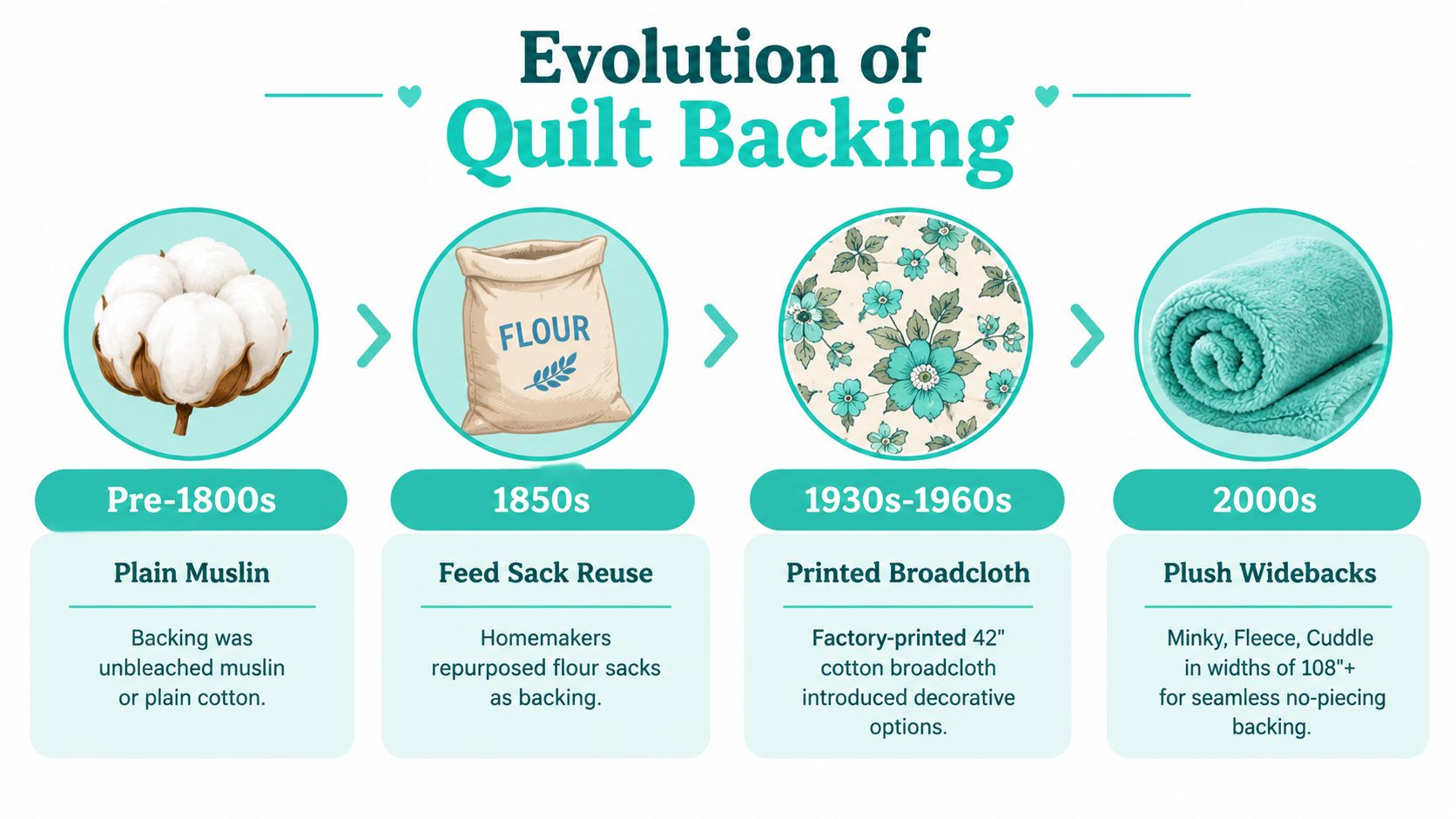
How Quilt Backing Evolved From Plain Cotton to Plush Comfort
A hundred years ago, the backing on many quilts was chosen the way we choose lining for a coat. It needed to do its job, wear well, and stay put. Plain cottons and muslins fit that role because they were stable, familiar, and easy to quilt through.
As quiltmaking shifted from strict necessity to everyday comfort and gifting, backing choices widened too. Printed cottons became more common. Then softer options entered the picture, not because the structure of a quilt changed, but because our expectations of comfort changed. We still build the same three-layer quilt sandwich. We just ask more from the bottom layer now.
Why old construction still matters today
That history matters because a plush backing is not a softer cotton. It behaves like a different material category.
On a longarm, we feel that difference right away. Woven cotton tends to load square and stay where we put it. Plush knit backings, especially minky and cuddle, have more give and a raised surface. They can shift, stretch, and absorb stitch definition in ways cotton does not. The quilt top may be crisp and geometric, while the backing wants to relax and move. That is the trade-off.
Softness brings real benefits. So does stability.
When we help customers at OPN Quilting choose between plush and wider woven backing, the decision often comes down to what they want the finished quilt to prioritize. Maximum coziness points one way. Cleaner geometry, easier alignment, and fewer handling variables often point the other way, especially on larger quilts where width matters as much as touch.
A good backing choice affects more than feel:
- Shape and alignment: stable fabrics help the quilt stay straighter from loading through finishing
- Warmth: plush backings usually feel cozier and fuller against the skin
- Stitch visibility: deep pile can soften or hide quilting detail
- Piecing decisions: narrower plush widths may require joins, while wider backings can reduce them
Why plush backing feels modern
Plush backs like minky and cuddle became popular because they answer a very current question. How can a quilt feel as comforting as a favorite blanket?
That comfort-first shift is why quilters sometimes get mixed advice. Traditional quilting habits were built around woven cotton. Plush backing asks us to handle nap, stretch, bulk, and width limits inside that same quilt structure. The rules of the sandwich stayed the same. The personality of the backing changed.
A simple comparison helps here. Cotton backing behaves more like graph paper. It likes straight lines and predictable edges. Plush backing behaves more like a soft sweater. It offers warmth and drape, but it asks for more care if you want the quilt to finish square and smooth.
That is why plush backing feels wonderful on the couch and can still require more prep at the frame. The question is not whether soft backing is better. The better question is what you want this quilt to do, cuddle harder or hold its geometry with fewer compromises.
Which Soft Backing Is Right for You
A fabric can feel wonderful in your hands and still be the wrong backing for your quilt size, climate, or quilting plan.
The biggest dividing line is knit versus woven. Plush options like minky-style backings are typically knit fabrics, not woven ones, and that knit construction gives them mechanical stretch, especially across the width. Quilting guidance on minky backing also notes common widths around 58 to 60 inches, with some extra-wide options reaching roughly 88 to 90 inches, which can reduce or eliminate seams on larger quilts, as explained in this beginner guide to minky quilt backing.
How the main soft backings compare
If you want a fuller primer on plush fabric behavior, this article on what Cuddle minky fabric is is worth reading alongside your backing decision.
| Soft Quilt Backing Fabric Compared | |||
|---|---|---|---|
| Fabric Type | Feel and Pile | Warmth and Care | Best Use Case |
| Shannon Cuddle / minky | Short plush pile, smooth and cuddly | Warm, easy-care synthetic feel, may show less stitch detail | Baby quilts, lap quilts, gift quilts where touch matters most |
| Luxe Cuddle Hide | Rich textured plush with more visual depth | Cozy and heavier-feeling, more texture to manage while quilting | Throws and statement backs |
| Luxe Cuddle Snowy Owl | Deep, lofty texture with a faux-fur effect | Best when you want softness to be the star, can obscure quilting lines | Couch throws, comfort-focused gifts |
| Luxe Cuddle Fawn | Plush with a softly patterned texture | Cozy finish with strong tactile appeal | Nursery quilts, decorative cuddle quilts |
| Fleece | Soft, low-pile comfort | Warm and practical, sits in a larger fleece market category | Utility throws, simple cozy projects |
| Flannel | Brushed softness rather than plush pile | Softer and more breathable-feeling than plush knit options | Year-round quilts for quilters who want softness with easier handling |
When plush is worth the extra handling
For a small quilt, plush usually makes more sense. A baby quilt or lap quilt doesn't ask as much from width and seam planning, so you can prioritize touch.
For a queen or king quilt, the decision gets more technical. You may still want minky or Shannon Cuddle, but now width and seam placement become part of the buying decision, not an afterthought.
Choose plush first when these matter most:
- Gift value: the back should feel luxurious right away
- Snuggle use: couch quilts, nursery quilts, comfort throws
- Lower stitch emphasis: you care more about softness than crisp quilting definition
Choose a softer woven like flannel, or a wider stable option, when these matter more:
- Cleaner geometry: less distortion during handling
- More visible quilting: stitch detail stays easier to see
- Simpler prep: fewer stretch-related surprises
What about warmth and breathability
This is another common point of confusion. Minky and cuddle are ultra-soft, but they're also polyester-knit based and can be harder to quilt cleanly than cotton-based backing options. Quilting trend coverage also notes growing interest in softness paired with performance, and one cited textile index reported that 71% of premium quilting fabrics include at least one functional treatment such as softness or wrinkle-resistance, as discussed in this overview of backing fabrics.
That doesn't mean plush is too hot for every quilt. It means you should match the backing to the use. Baby cuddles, winter throws, and gift quilts often benefit from that coziness. Year-round bed quilts may do better with a less lofty option if you want lighter drape and easier quilting.
How Wide Should Your Soft Backing Be for a One-Piece Finish
You finish a quilt top, fall in love with a buttery minky backing, and then hit the question. Will that soft backing cover the quilt in one piece, or are you adding seams and extra handling to get the coziness you want?
Width is the trade-off point. Plush backing gives you that sink-in softness people notice right away, but wide stable coverage often makes the quilt easier to prep, load, and keep square. We see that choice all the time at OPN Quilting, especially on bed quilts where a beautiful soft back can also introduce a center seam if the width comes up short.
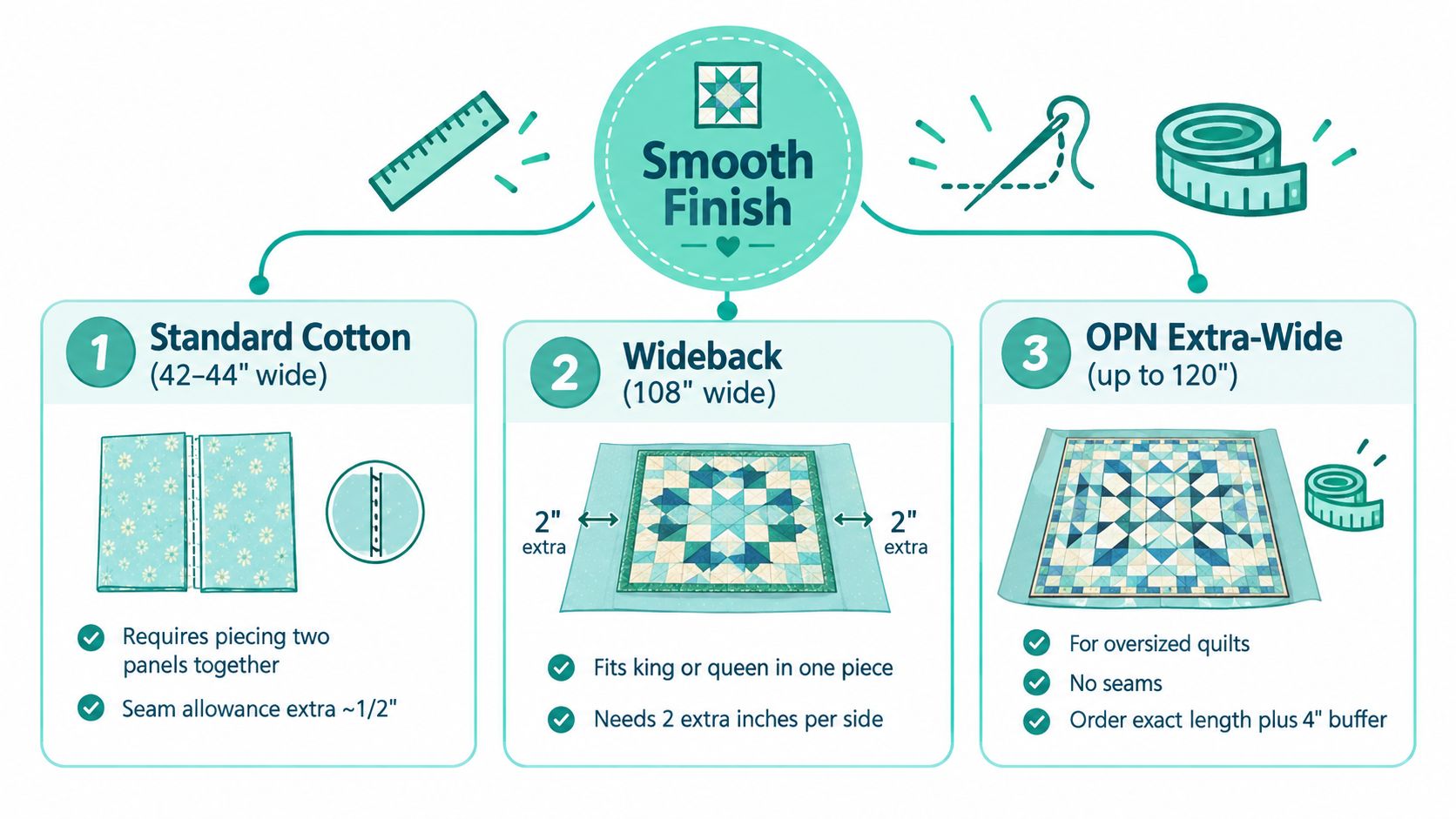
Standard quilting cotton backing is typically 42 to 44 inches wide, while wide-back fabric is commonly 108 inches wide, and that extra width is used specifically to reduce or eliminate piecing on larger quilts, as shown by this quilt backing calculator reference.
What sizing formula should you use
Start with the quilt top, not the package label. Measure the finished top after borders are attached, then add the extra fabric your longarm setup needs on every side.
The basic rule is simple. Backing width = quilt width + twice the overhang, and backing height = quilt height + twice the overhang. A backing calculator notes that 4 inches per side is a common request, while many professional longarm services ask for 6 to 8 inches per side, as explained in this backing calculator guide.
For longarm quilting specifically, one guide says the backing should extend at least 6 to 8 inches beyond the quilt top on all sides, and another practical rule is to cut backing at least 10 inches larger in both width and height for loading and quilting, as outlined in the Fat Quarter Shop backing guide.
If you are used to pieced cotton backs, this can feel like overkill. On a longarm frame, that extra perimeter works like grip allowance. It gives us room to load the quilt cleanly without stealing from your finished size.
How width choices affect real quilts
Smaller throws give you more freedom. Bed quilts are where width decisions become much more practical.
A narrow plush backing may still be the right call if maximum cuddle is the goal and you do not mind piecing the back. If you care more about keeping the back flatter, reducing bulk, and simplifying prep, a wider backing often wins. That is the geometry side of the decision.
A straightforward way to choose:
- Measure the finished quilt top. Use the size, not the pattern estimate.
- Add your longarm margin. At OPN, we want enough extra backing for secure loading and quilting.
- Compare that total with the actual fabric width. This shows whether one piece will work.
- Decide which matters more for this quilt. Maximum plush feel, or wider coverage with less piecing.
That last step is the one quilters often skip. Softness and width are not always bundled together. A plush backing may feel perfect in your hands and still require more planning than a wide woven back.
When extra-wide plush is the better answer
Extra-wide minky helps when you want both coziness and cleaner coverage across a larger quilt. For many bed-size projects, that added width removes the center seam that can create extra bulk and a visible ridge on the back.
If that is the direction you are considering, our guide to extra-wide minky fabric in 110-inch width walks through how wider plush changes the math for larger quilts.
A one-piece back is not only about appearance. It also removes one more ridge, one more point of stretch imbalance, and one more place where bulk can show through the quilt top.
That is why we usually frame width as a use-case decision, not just a fabric preference. Choose plush minky when the touch and warmth are the priority. Choose the widest practical option when you want easier prep, smoother loading, and less interruption across the back.
How Do You Handle Pile Nap and Stretch Without Puckering
Plush backing behaves well when you respect what it is. It's a knit with pile, not a flat woven cotton.
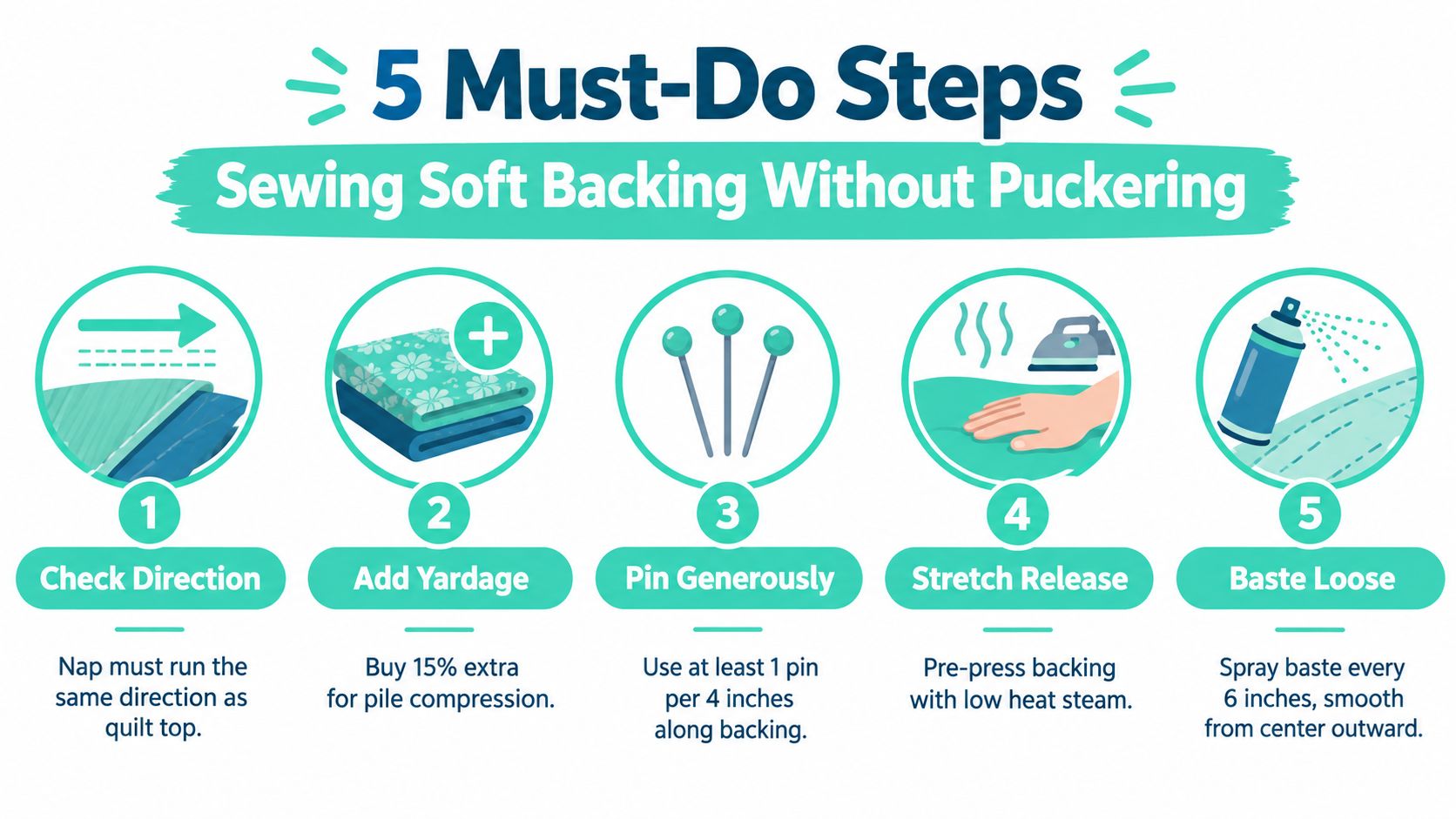
That means two things matter right away. First, the nap needs to run consistently in one direction. Second, the fabric can distort more during cutting, layering, and quilting, so many quilters compensate by adding a bit of extra yardage, clipping or pinning more generously, and stitching more slowly, as noted in guidance on longarm quilting for minky-backed quilts.
What should you do before quilting
A lot of puckering starts before the quilt ever reaches the frame.
Use this quick checklist:
- Check the nap direction: Run your hand across the plush surface and keep every backing piece oriented the same way.
- Cut with space to spare: Plush backings can shift more than cotton during handling, so a little extra breathing room helps.
- Secure layers well: Clips or extra pinning help keep the knit base from creeping.
- Sew at a calmer pace: Slower stitching gives the backing less chance to stretch under pressure.
How should you seam soft backing fabric
If you must piece plush backing, seam construction matters. Quilting references recommend a 1/2-inch seam allowance, pressing the seam open, and avoiding selvage in the seam to reduce bulk and improve stability. Those same references also note that extra-wide backing can remove the need for a center seam altogether, which is a major advantage for larger quilts, as explained in this guide on piecing quilt backs.
That wider seam allowance helps for a reason. A thick plush seam can form a ridge if the allowance is too narrow or crowded.
Keep seam bulk spread out, not stacked up. An open seam usually behaves better under quilting than a pressed-to-one-side plush seam.
Here's a useful loading mindset:
- Stable seam placement matters: avoid putting a bulky seam where it will dominate the center of the quilt
- Less selvage in joins helps: the body and selvage don't always stretch the same way
- Smoother prep gives smoother stitching: a backing that lies flat at the start is easier to quilt cleanly
This visual walkthrough helps if you like seeing the process in motion.
What causes ridges to show through the top
Usually it's a combination of seam bulk, uneven nap direction, and backing tension. Plush can compress under quilting, so any lump underneath has a better chance of telegraphing through than people expect.
That's why wide one-piece backing often quilts more cleanly than a pieced plush back, especially for large projects.
Where to Find Soft Backing and Longarm Finishing at OPN Quilting
You finish a quilt top, drape a plush backing option across the table, and a decision shows up fast. Do you want the coziest possible finish, or do you want the cleanest quilt geometry with fewer handling variables? With soft backings, those two goals often overlap, but they are not always the same.
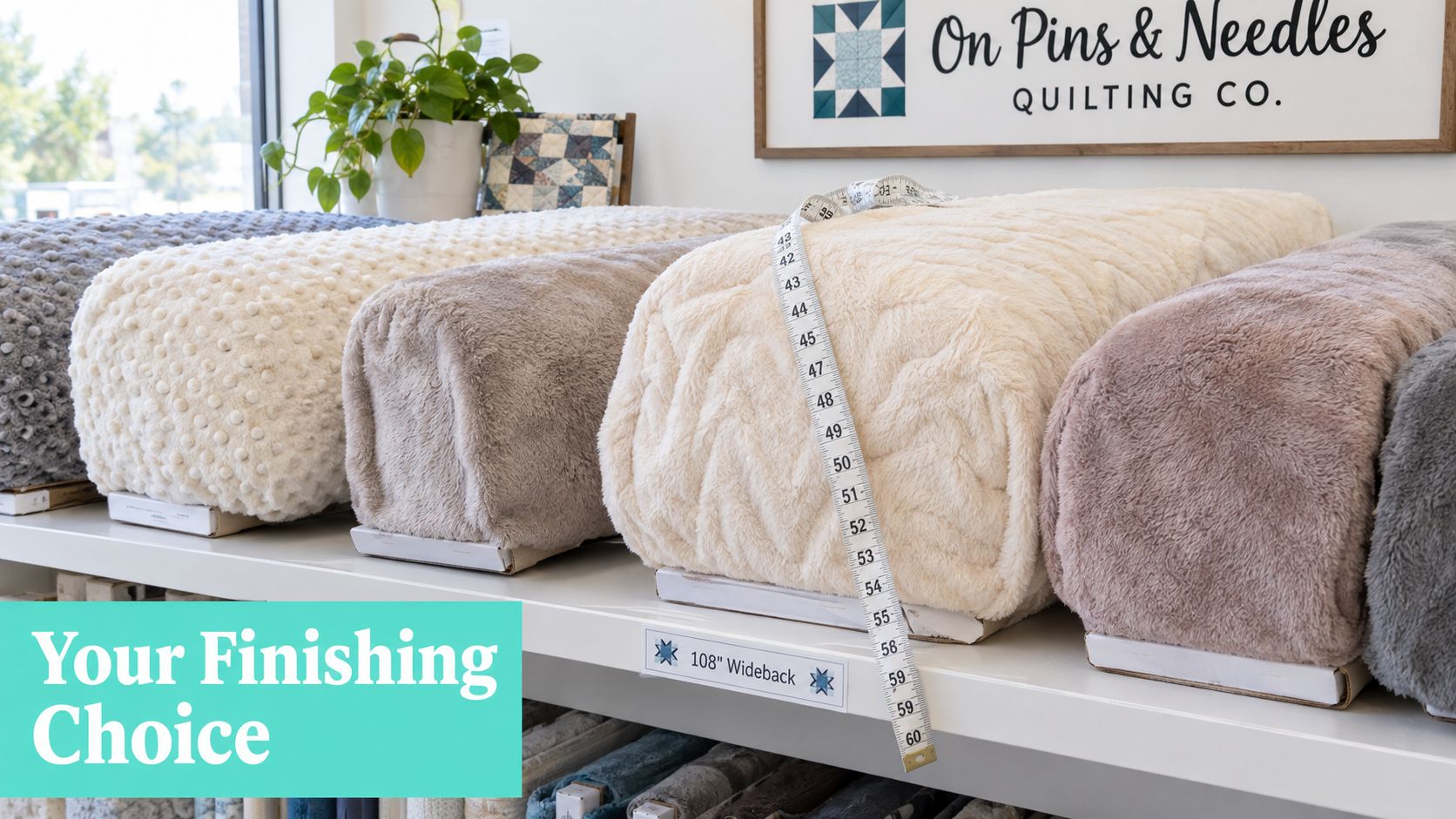
At OPN Quilting, we help quilters sort that trade-off by project, not by hype. A baby quilt may do beautifully with a smaller plush cut where softness is the whole point. A larger bed quilt often benefits from more width first, because one broad piece usually behaves better on the frame than a pieced plush back.
What backing options make sense for different projects
We stock soft backing in several widths and textures, including 44 to 45 inch Quilting Cuddle, 80 inch Mirage, and extra-wide 90 inch and 110 inch plush backing options. We also carry textures such as Hide, Snowy Owl, and Fawn. That mix gives us room to match the backing to the quilt's size, use, and quilting plan.
A practical way to choose is to start with the quilt's job:
- Baby quilts: smaller cuts and simpler plush options are often enough, especially when softness matters more than wide coverage
- Throws: textured plush can add a rich, cozy feel without requiring the widest format
- Bed quilts: wider backing usually makes layout and quilting cleaner because there are fewer joins to manage
- Gift projects: ready-made blankets, scarf kits, or smaller minky projects can give you the soft feel without building a full quilt sandwich
If your quilt top is ready and you want help with the finishing stage, our guide to mail-in longarm quilting services with free shipping walks through how we receive, prep, and quilt customer tops.
Helpful at checkout: first orders can use a 15% coupon, and U.S. orders over $70 ship free.
What to click if you already know your direction
Some quilters already know their priority. They want maximum plush. Others want enough width to keep the back flatter and easier to load.
Use these paths:
- Standard-width plush for smaller quilts: Quilting Cuddle collection
- Professional quilting for a finished top: Mail-in Longarm service
- Smaller soft projects or curated cuts: minky kits and curated cuts
That shopping split matters because soft backing is not just a color choice. It is a build choice. The loft, stretch, and width of the backing affect how the quilt loads, how square it stays, and how much seam bulk we need to account for during longarm quilting.
Why finishing support matters with plush backs
Plush backing has its own personality. Cotton tends to lie still. Minky and cuddle fabrics can shift, stretch, and show directional texture changes if they are not prepped carefully.
That is why we pay attention to the full setup, not only the fabric itself. We look at backing allowance, grain behavior, pile direction, and whether the width you chose supports the shape of the quilt without adding avoidable bulk. After handling hundreds of minky-backed quilts, we have seen the same pattern again and again. The softest option is not always the easiest one to quilt cleanly, and the widest option is not always the cuddliest. Picking well means deciding which benefit matters more for this specific quilt.
Ready to Choose Your Soft Quilt Backing Fabric With Confidence
You finish a quilt top, drape a few backing options across the edge of the table, and the choice gets very real. One fabric invites you to sink your hand into it. Another gives you the width you need to keep the back flatter and the lines of the quilt more orderly. That is the trade-off.
Soft quilt backing works a lot like choosing between a fluffy blanket and a crisp fitted sheet. Plush minky gives you maximum coziness, richer texture, and that cuddle-first feel many families want on the couch, in a nursery, or on a gift quilt. Wider, flatter backing can make more sense when the quilt is large, the piecing is geometric, or you want the back to load with less fuss on the longarm.
A practical way to decide is to match the backing to the quilt's job.
- Pick plush first for cuddle quilts, throw quilts, baby quilts, and gifts where touch matters most.
- Pick width first for larger quilts where fewer joins help the back stay smoother and easier to manage.
- Pick moderate stretch and lower pile when you want softness but also want a little less movement during quilting.
We see this every week at OPN Quilting. Some quilts are meant to feel almost marshmallow-soft, and plush backing is the clear winner. Others have strong straight-line piecing or need broad coverage across the back, so width matters more than the softest possible surface.
Care matters too. Plush backings stay nicest when they are washed and handled gently, especially if you want the nap to keep its full, velvety feel.
If you are still weighing the options, return to the feel-versus-geometry question. Choose plush when coziness is the goal. Choose wider coverage when clean loading, flatter backing, and a smoother finish matter more. If you want help matching the backing to the quilt top, On Pins & Needles Quilting Co. offers soft backing fabrics and mail-in longarm quilting, so we can help you plan both the texture and the finishing path together.
Meta description: Soft quilt backing fabric explained. Compare plush options, width choices, and longarm prep. Get 15% off your first order and free shipping over $70!
URL slug: opnquilting.com/blog/soft-quilt-backing-fabric