

Extra wide backing fabric matters because it gives you a backing that's wide enough to fit larger quilts with fewer or no seams, and that makes both quilt prep and longarm loading easier. If you're staring at a finished top and realizing your usual yardage will force a seam right through the center, this is the fix that changes the whole job.
URL Slug: opnquilting.com/blog/extra-wide-backing-fabric
Meta Description: Extra wide backing fabric helps you avoid bulky seams and prep quilts correctly for longarm quilting. Get 15% off and free shipping on $70+.
When a quilt top is finally done, backing decisions get real fast. A throw can be forgiving, but once you move into queen and king territory, the wrong backing choice can mean extra seams, extra bulk, and avoidable trouble at the frame.
At our shop, we see this all the time with quilters sending tops for Mail-in Longarm service. They've done the careful piecing on the front, then get hung up on the back. That's where extra wide backing fabric earns its keep.
The Seam in the Middle of Your Quilt Back
You finish a queen top, press the last border, and lay it out on the table. Then the backing comes out of the cupboard, and the problem shows up right away. The cut looked generous when you bought it, but once you account for longarm overhang, a center seam is the only way across.
A middle seam is not a mistake. I piece backs all the time when the design calls for it, or when a quilt needs extra width and the right wide back is not available. The trouble starts when the seam is there by default, not by choice, because that changes both the look of the back and the way the quilt loads on the frame.
On a longarm, that seam adds more than one layer of concern. A bulky join can print through a lighter backing. A seam that was not pressed flat can make loading less even from side to side. If the two panels were joined a little off grain, the backing may skew before quilting even begins.
That is why backing width is never only a fabric question. It is also a finishing question.
Most longarm quilters ask for extra backing on all sides so the quilt can be clamped, pinned, and advanced cleanly through the frame. If the backing only barely covers the top, it may fit on paper and still fight you in real use. For a closer look at what that means on a common bed size, this guide on queen size quilt backing lays out the sizing in practical terms.
Why the center seam causes extra work
A center seam can be perfectly serviceable, but it asks more of the quiltmaker before the quilt ever reaches the machine.
- More prep: Two widths have to be cut, joined, pressed, and squared.
- More chances for distortion: One panel can stretch while the other stays stable, especially with loosely woven cottons.
- More bulk under the needle: The longarm can handle it, but thick seam allowances are still one more spot to manage.
- More visual weight: On open prints or solids, the seam line often reads stronger than quilters expect.
I see the biggest headaches on larger throws, queens, and kings, where the backing was planned to the quilt-top measurement but not to the loading measurement. A backing can cover the quilt and still be awkward on the frame.
Extra wide backing earns its keep here because it often removes that forced seam altogether, or at least moves piecing to a less conspicuous place. That gives you a flatter back, simpler prep, and fewer surprises once the quilt is loaded.
What Extra Wide Backing Fabric Actually Is
Extra wide backing fabric is quilt backing woven and sold on a much wider bolt than standard quilting cotton. The point is simple. It gives you enough width to back many larger quilts in one piece, or with less piecing than you would need from regular quilt-shop yardage.
Standard quilting cotton usually comes in 42 to 44 inches wide. Wide backings are commonly sold at 90, 106, 108, 110, and 118 inches, and 108 inches is the width many quilters know best for bed quilts (wide backing overview).
Width is measured selvage to selvage. That number tells you how much fabric you have across the quilt. The cut length is a separate choice, and on a longarm it still needs to account for the extra fabric required for loading, clamping, and advancing.
That second part matters more than many quilters expect.
A 108-inch backing may cover one queen quilt comfortably if you load it with the width across the frame, but feel tight on another queen if borders, shrinkage, or directional print choices push the usable width down. I see this often with quilts that were measured only to the top size and not to the finishing setup. The bolt width answers one question. The longarm loading plan answers the other.
Extra wide backing also comes in more than one base cloth, and the fabric type changes how it behaves on the table and on the machine.
- Cotton wide backs: Stable, familiar, easy to press, and a strong default for pieced tops.
- Flannel wide backs: Warmer and slightly bulkier, with more drag and loft.
- Minky and Shannon Cuddle: Plush options that need different handling because stretch, nap, and weight affect both cutting and quilting.
- Specialty wide backs: Some lines have a heavier hand, a smoother finish, or decorative texture that changes the final drape.
For plush projects, extra-wide minky fabric in 110-inch widths is worth a look because minky solves the width problem differently than woven cotton. It gives a soft, generous back, but it also asks for more control during loading.
Wide Backing Widths and the Quilts They Cover
| Backing Width | Typical Quilt Size | Notes |
|---|---|---|
| 90 inches | Smaller large quilts, some queens | Works when quilt dimensions and loading direction leave enough extra on the sides |
| 106 inches | Large quilts | Useful middle ground when 90 is tight and 108 is more than you need |
| 108 inches | Queen and many king quilts | Common choice for larger bed quilts |
| 110 inches | Queen and many king quilts | Similar working range to 108, with a little more room depending on the fabric line |
| 118 inches | Oversized quilts | Helpful when extra borders, loft, or frame allowance make narrower widths risky |
Shop note: The widest bolt is not automatically the best buy. The right width is the one that fits the quilt size, the backing orientation, and the way the quilt will be loaded on the frame.
Why Quilters Love a One-Piece Backing
You feel the difference at the frame. A quilt with a single-panel back usually loads flatter, advances more predictably, and leaves you with fewer spots that need fussing once the quilting starts.
For many projects, that matters more than the back itself. The question is not just whether a wide cut saves piecing time. It is whether that width gives you enough usable fabric for clamps, selvage trimming, and straight loading on the longarm.
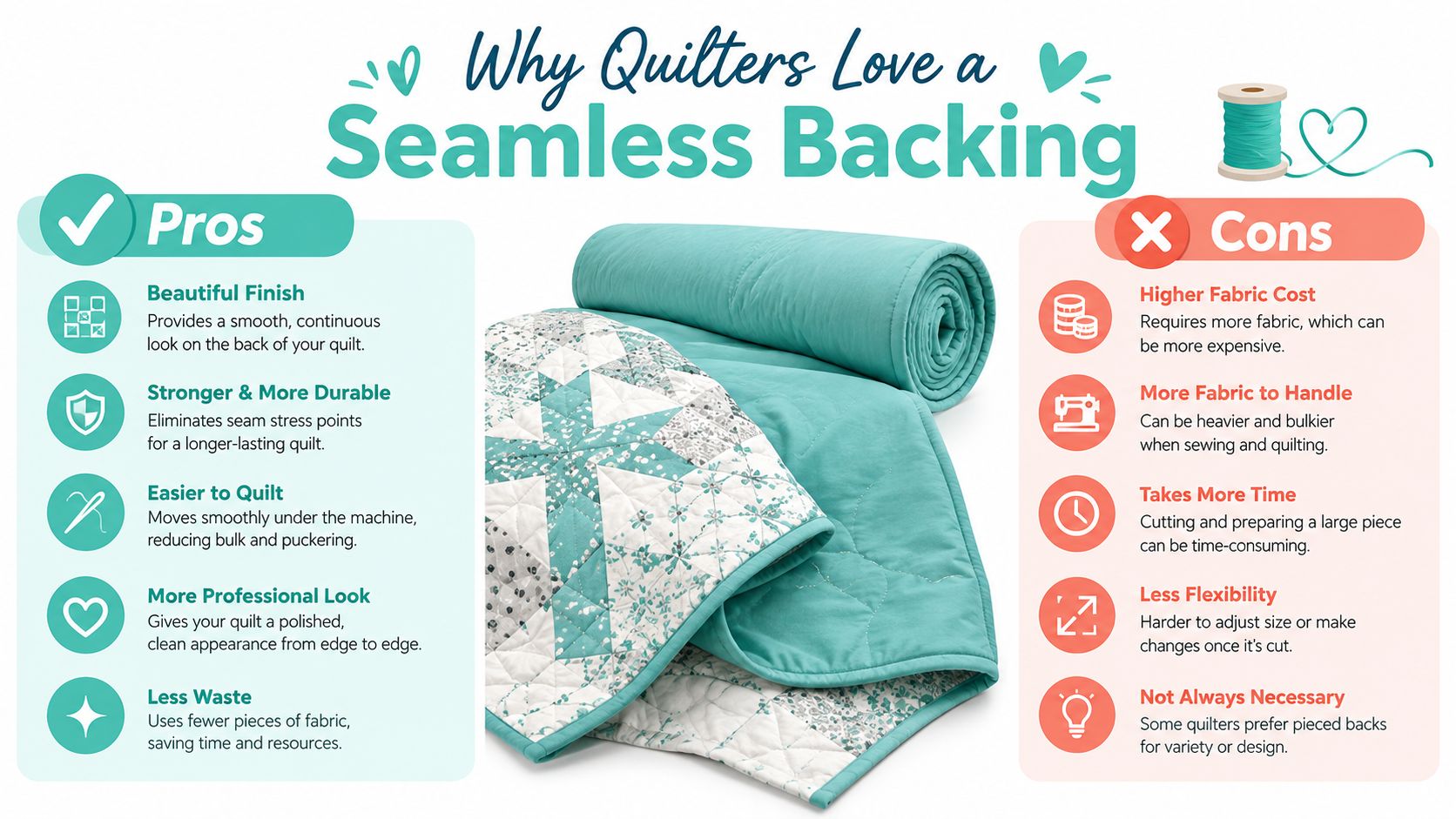
What improves when the back is one piece
A one-piece back removes the center join that often causes the most trouble. There is no seam allowance ridge to press flat, no joined panels pulling against each other, and no stitched line sitting under dense quilting where it can stay slightly firmer after washing.
On the frame, that translates into cleaner loading. I see it most on queen quilts where the backing width is right on the edge. A 108 inch or 110 inch back that fits the quilt top and still leaves proper loading allowance behaves much better than two 44 inch panels with a center seam that was pressed beautifully but still adds bulk.
The finished quilt usually hangs better too. Without that built-in join across the back, the drape is more even from side to side.
Some wide backs also feel smoother and softer than standard quilting cotton because the base cloth is made differently. Moda notes that certain extra-wide backings are produced with a finer, higher-count construction for better hand and drape in larger quilts (Moda backing notes).
Why one-piece backs matter even more on longarms
A one-piece back is not automatically the right answer. If the quilt is oversized, directional, or intentionally pieced, a seam may still be the better choice. But if the goal is efficient prep and fewer loading variables, one wide panel gives you less to fight.
That is especially true with plush backs. Minky and Shannon Cuddle do not forgive extra bulk the way a woven cotton sometimes does. A join interrupts the nap, creates a thicker line under the quilting, and can show as a slightly different texture when the quilt is spread out. For quilters planning a plush back, longarm quilting for minky-backed quilts is worth reading before you cut.
A one-piece backing often gives you:
- A cleaner back: No seam shadow under light fabrics or open quilting.
- Less bulk under the needle: Helpful for dense quilting and plush textures.
- Faster prep: Square it, cut it, and get it ready to load.
- More consistent drape: No firmer line running across the middle.
- Better nap continuity: Especially useful on Hide, Snowy Owl, Fawn, and other textured Cuddle styles.
One-piece backings save sewing time, but the bigger advantage is consistency. The back loads more evenly, quilts more evenly, and usually finishes with a softer hang.
Decorative backs also benefit from being left whole. A large print, subtle texture, or plush surface reads better as one uninterrupted panel than as two widths joined down the center.
Seamed Versus Seamless at a Glance
A queen top comes in for longarm quilting, and the backing choice is where the job either stays straightforward or starts adding little problems. A center join in two widths of 44 inch cotton can quilt perfectly well, but it adds one more line to square, one more area to check for fullness, and one more place where texture changes on the finished back.
Pieced backs still make good sense for many quilts. Reversible quilts, oversized tops, directional prints, and backs built as part of the design all earn their seams. The question is simpler than that. If you are choosing between joining standard widths and loading one wide panel, which option gives you fewer variables at the cutting table and on the frame?
Where the work shows up
With a pieced back, the labor comes early. Panels have to be cut straight, joined accurately, pressed flat, and checked again after handling because a long seam can pull slightly off grain.
With a one-piece wide back, the labor shifts from sewing to selection. You need the right width for the quilt and enough extra for your longarm's side clamps and leader loading, but once the cut is right, prep is usually quicker.
Seamed vs One-Piece Wide Backing
| Criterion | Seamed 44 in Cotton | One-Piece Wide Back (80/90/110 in) |
|---|---|---|
| Prep time | More cutting, joining, pressing | Faster to cut, square, and load |
| Visual look | Join line may read on the back | Continuous surface across the quilt |
| Bulk under quilting | Seam allowance adds thickness | More even thickness across the field |
| Drape after washing | Joined area can hang a bit firmer | Softer, more consistent drape |
| Plush fabrics | Nap gets interrupted at the join | Better texture continuity |
| Longarm loading | More chances for fullness at the join | Fewer variables across the backing |
| Width planning | Useful when one bolt is not wide enough | Useful when the bolt width matches the project |
Cost deserves a straight look. Standard-width yardage can look cheaper on the shelf, but piecing often means buying extra length, trimming away waste, and spending more prep time. Wide back can cost more per yard and still be the better value if it saves a join, loads cleaner, and leaves enough side allowance for the frame.
I usually tell quilters to compare the whole backing plan, not just the price tag. Quilt width, required overhang, print direction, shrinkage, and the fabric hand all matter. An 80 inch wide bolt may be plenty for one throw and completely wrong for a queen once longarm allowance is added.
For longarm work, that last point matters more than many quilters expect. The widest bolt in the shop is not automatically the right pick. The right pick is the width that covers the quilt, leaves the loading margin your quilter asks for, and gives you the finish you want on the back.
How to Measure and Pick the Right Width
A backing can look generous on the cutting table and still come up short once it hits the longarm frame. I see this most often with quilts that were measured by top size alone, then packed with no extra room for clamps, squaring, or a slightly wavy edge.
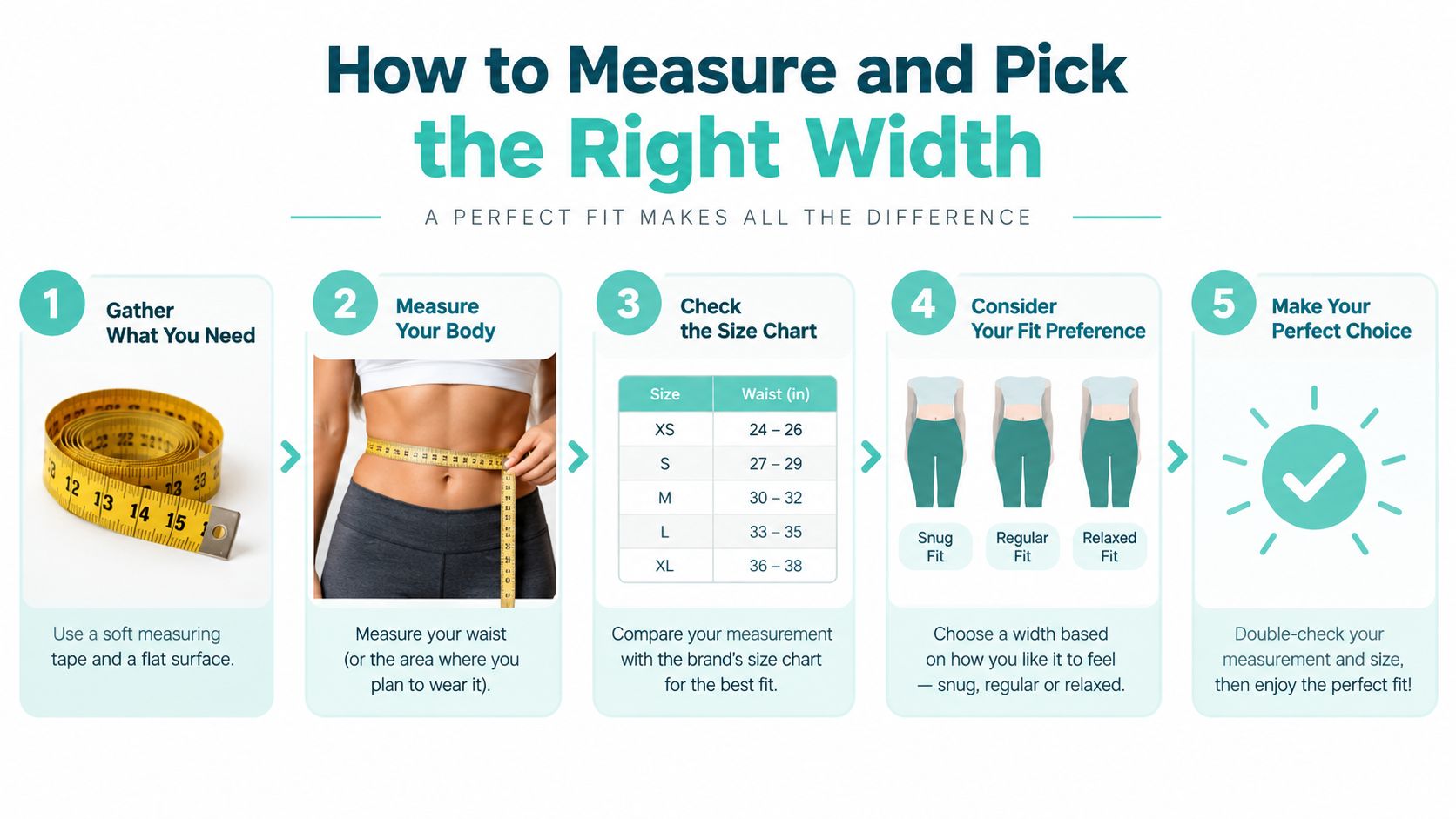
Measure the actual quilt top after it is squared. Pattern math is only a starting point.
The sizing rule that prevents most backing mistakes
For many quilts, adding about 4 inches on each side gives enough extra backing to load and trim cleanly. Some longarm setups need more, especially on larger quilts, heavier backings, or anything with a bit of stretch. The safe question is not "Will this cover the top?" The safe question is "Will this still load well after I add the margin my longarmer asks for?"
Independent longarm guidance often calls for several extra inches on every side because the backing has to attach to leaders, stay square under tension, and leave room for side clamps and final trimming (longarm backing allowance FAQ).
Use this measuring sequence
- Measure the quilt top width after squaring. Use the edge-to-edge number, not the pattern size.
- Measure the quilt top length. Check the longest point if the borders are not perfectly even yet.
- Add the loading allowance your longarmer requires. If you do your own quilting, use the margin your frame setup needs.
- Check fabric orientation. Directional prints, border-style motifs, and nap can change which way the backing should run.
- Choose a width with breathing room. A little excess trims off easily. A backing that is short by even an inch can stop the job.
For yardage math, this guide on calculating yardage for quilts lays out the cut-length side clearly.
Matching width to the job
Wide back does not mean one standard width. In the shop, the widths I reach for most are 90 inch, 106 inch, 108 inch, and 118 inch. Each one solves a different problem.
A throw quilt may fit nicely on a 90 inch back if the top is modest and the quilting setup does not need much extra. A queen usually pushes quilters into 108 inch or wider once loading allowance is added. Plush backings need even more care because stretch and nap can eat up your margin faster than woven cotton.
This quick video is helpful if you want a visual on handling backing preparation:
A few practical checks save trouble:
- Directional print: Turning the fabric for width may put the design sideways on the finished back.
- Plush fabrics: Cuddle and minky behave differently from quilting cotton. They shift more, stretch more, and need more respect on the frame.
- Shrinkage and squaring: If the cut edge is off or the fabric draws up in prewash, your margin disappears quickly.
- Extra width: Buying a little more width is usually cheaper than repacking a quilt that cannot be loaded.
If you are sending a quilt to a longarmer, choose backing width for loading first, then trim the excess after quilting.
From Bolt to Finished Quilt with OPN
A queen top comes in at 88 by 96 inches. The first question is not which backing is prettiest. The first question is whether that backing will load cleanly on the frame and still give the finished quilt the hand you want.
That is usually where backing width and finishing meet.
For Helen's quilt, the goal was a bed quilt with a soft drape and no center join across the back. A pieced cotton back would have worked structurally, but it would have changed the feel of the quilt. She chose a plush extra-wide backing instead, because a seam through minky or cuddle can leave a noticeable ridge and can interrupt the nap once the quilt is washed and used.
Texture matters here as much as width. Shannon Fabrics bases such as Hide, Snowy Owl, and Fawn do not quilt the same way. Some read flatter and quieter. Some catch light across the pile and show more movement. I always tell quilters to judge those options by the finished use of the quilt, not just the bolt sample.
At OPN, this is the point where the fabric choice and the longarm plan usually come together. If the quilt is headed straight to quilting, many quilters pair the backing with Mail-in Longarm service so the width, texture, and prep all match the frame setup from the start. Plush backs in particular benefit from that kind of planning, because they behave differently under clamps and rollers than standard quilting cotton.
The backing options quilters usually compare for this step are:
- Shannon Cuddle fabrics
- Luxe Cuddle textures
- extra-wide Cuddle backing options
One practical advantage of ordering this way is fewer mismatches at the finish line. Backing, batting, thread, and quilting can be chosen as one setup instead of four separate guesses. Before shipping a quilt, quilters can also check how to prep a quilt for mail-in longarm services so the backing arrives squared, labeled, and ready to load.
Helen filled out the rest of her cart the same way many quilters do. She added thread and batting, used the first-order 15% coupon, and passed the free shipping on $70+ mark without adding odds and ends she did not need.
If you are comparing width and finish together, these are the product pages that tend to answer the questions fastest:
- Extra-Wide Cuddle 3 110-inch backing
- 90-inch extra-wide minky cuts
- Quilting Cuddle in 44-45 inch widths
- Longarm quilting pattern gallery
Your Quick Reference Checklist and Next Step
The last mistake usually happens at the cutting table. The quilt top is finished, the backing looks wide enough on the bolt, and then the longarm setup gets forgotten until loading day.
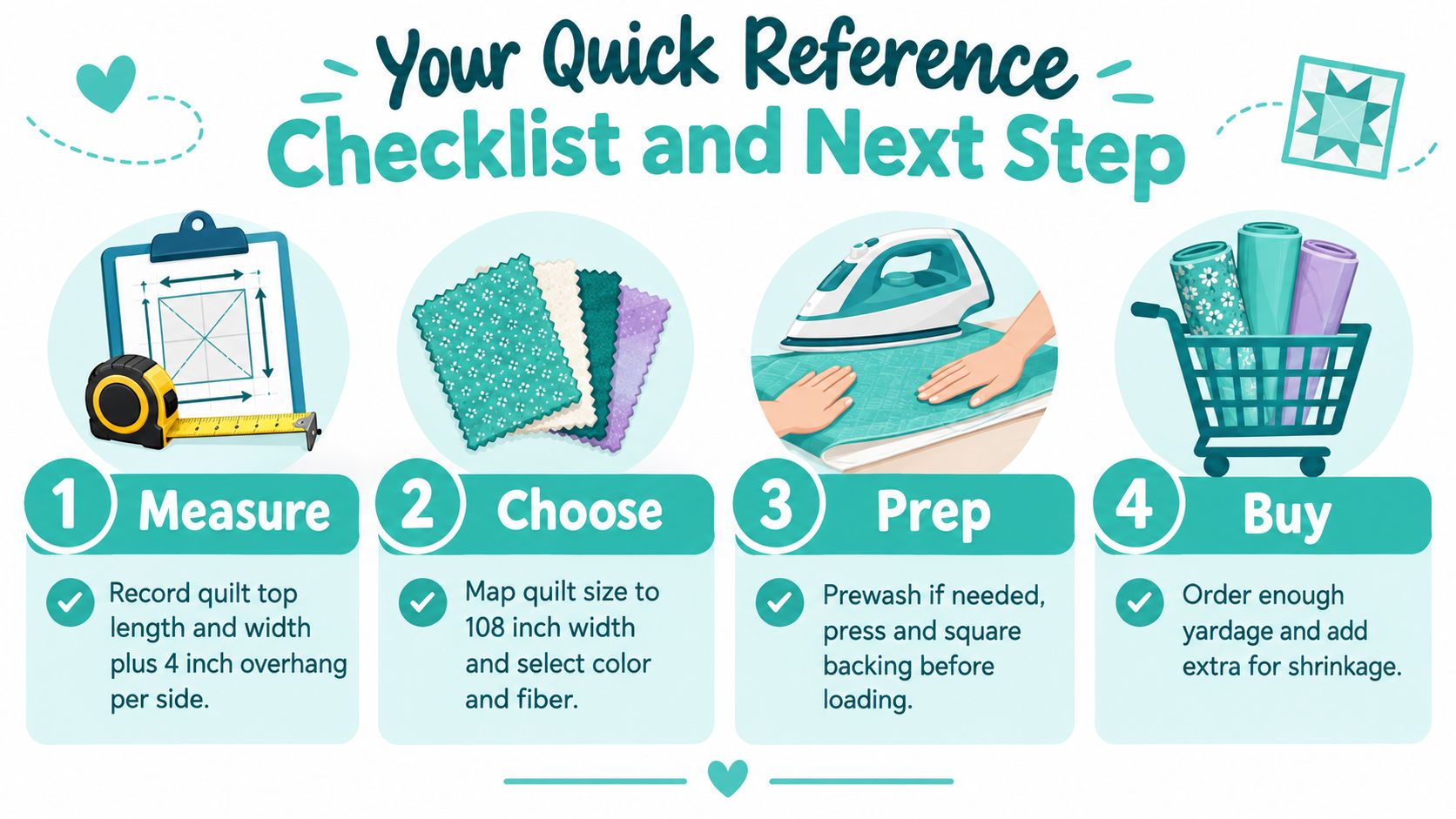
Use this as a final check before you order or ship.
Measure
- Measure after squaring the quilt top: Write down the true width and length, not the pattern size.
- Confirm your longarm allowance: Use the margin your quilter asks for, not the smallest amount you think you can get by with.
- Check the direction of the backing: Width on the bolt and length off the bolt affect how the piece will load.
Choose
- Match the backing to the quilt and the frame setup: The right width is the one that covers the quilt cleanly and still gives enough room to load without a fight.
- Account for texture: Cuddle, minky, and other plush backings handle differently than flat quilting cotton and may influence how much extra fabric you want on hand.
- Buy wider only when it solves a real problem: Extra width helps, but too much excess can be bulky to handle and more expensive than the quilt needs.
Prep
- Square the backing fabric: A backing that starts crooked rarely loads straight.
- Remove issues before shipping: Trim damaged edges, check for stretch, and make sure the backing is pressed or laid flat enough to inspect.
- Mark the top edge if the fabric has direction: That saves guesswork at the frame.
Buy
- Choose backing, batting, thread, and quilting plan together: One decision affects the next, especially with plush or specialty backings.
- Use the first-order 15% coupon if it applies to your order.
- Check the free U.S. shipping threshold at $70+ if you are combining supplies.
If you want backing and finishing handled in one order, On Pins & Needles Quilting Co. offers extra-wide Cuddle and minky options along with mail-in longarm quilting. Order the backing that fits the quilt you already made, then book quilting while your measurements are still in front of you.