

Scrappy quilt patterns turn leftover fabric into purposeful designs. This roundup gives you eight practical patterns that transform assorted scraps into attractive quilts, with guidance for cutting, layout, backing, and professional finishing.
You will find options ranging from charm pack squares and log cabins to improv piecing and modern granny squares. Our OPN Quilting expertise also helps you choose soft Shannon Cuddle backing, including Luxe Cuddle Fawn, Hide, and Snowy Owl.
The best scrap quilt is not the one with the most fabrics. It is the one with enough contrast for the design to read clearly.
Each pattern includes a practical starting plan, fabric suggestions, and ideas for finding a pattern page, kit, or finishing service. Whether you need a quick gift or a queen-size project, these scrappy quilt patterns make your stash work harder.
1. Charm Pack Scrappy Squares
Charm Pack Scrappy Squares is one of the most approachable scrappy quilt patterns for beginners. It uses precut 5-inch fabric squares arranged in a straightforward grid or mixed randomly, so there are no triangles, curves, or complex seams to master. The format also showcases many prints while keeping fabric waste low.
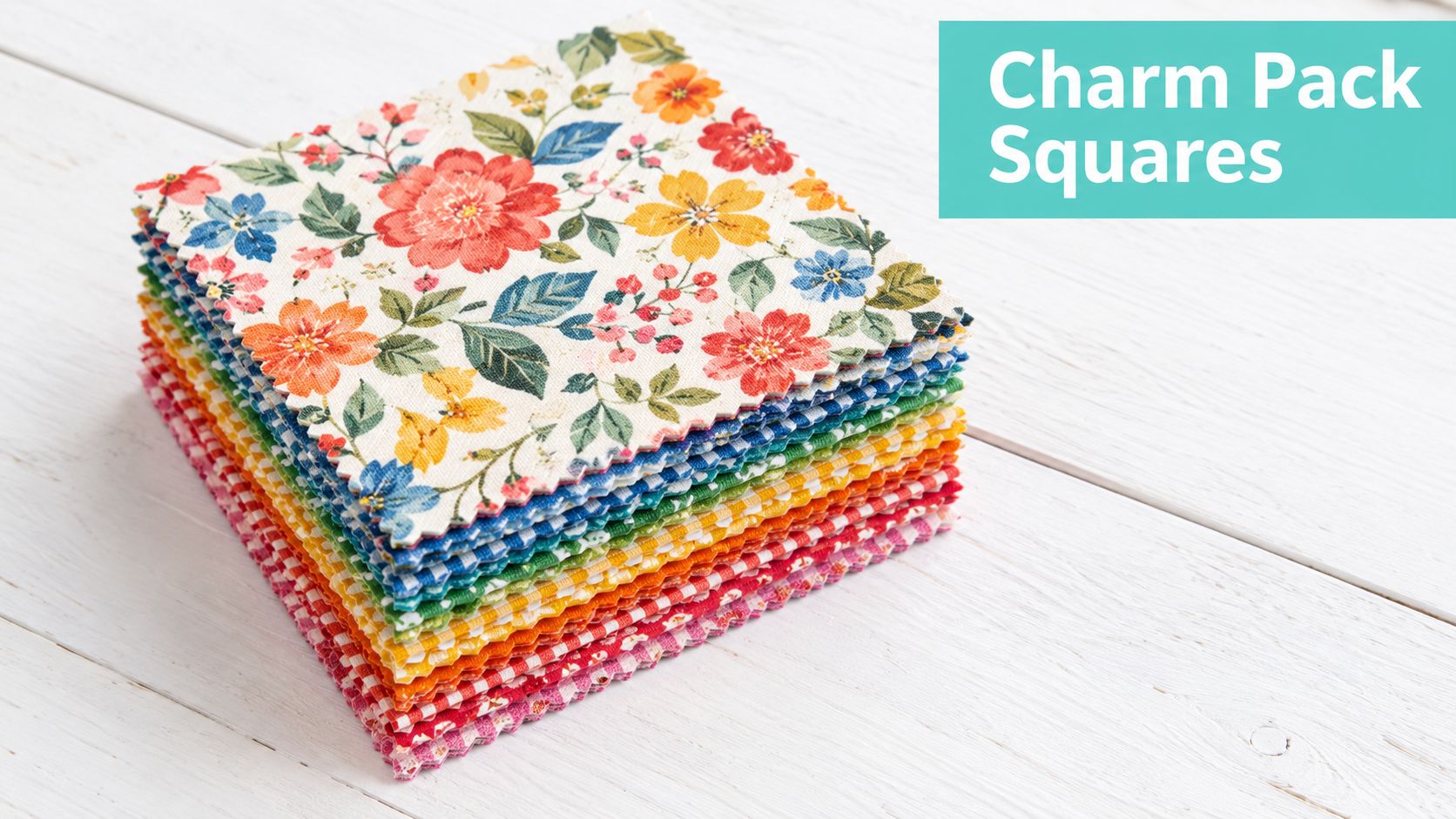
For a baby quilt, plan on roughly 5 to 6 charm packs, depending on the finished size and border. Quilting cotton is easiest to sew, while a minky or Shannon Cuddle backing, such as Hide or Fawn, adds softness without changing the piecing process. Use a walking foot when quilting the finished layers, and choose an extra-wide backing when available to avoid a center seam.
How should you arrange the squares?
- Pre-sort squares by color family to create a gentle visual flow.
- Keep high-contrast prints spaced across the quilt.
- Sew with a consistent 1/4-inch seam allowance.
- Chain-piece each row before cutting threads to save time.
This pattern is ideal for first quilts, quick gifts, and using coordinated leftovers.
Learn more about choosing charm packs for quilts. For a polished finish, consider OPN Quilting’s Mail-in Longarm service.
2. Strip Piecing Scrappy Log Cabin
Strip Piecing Scrappy Log Cabin turns a traditional block into one of the most flexible scrappy quilt patterns. Variable-width strips in mixed colors and prints wrap around a central square, creating lively blocks while making good use of leftover fabric.
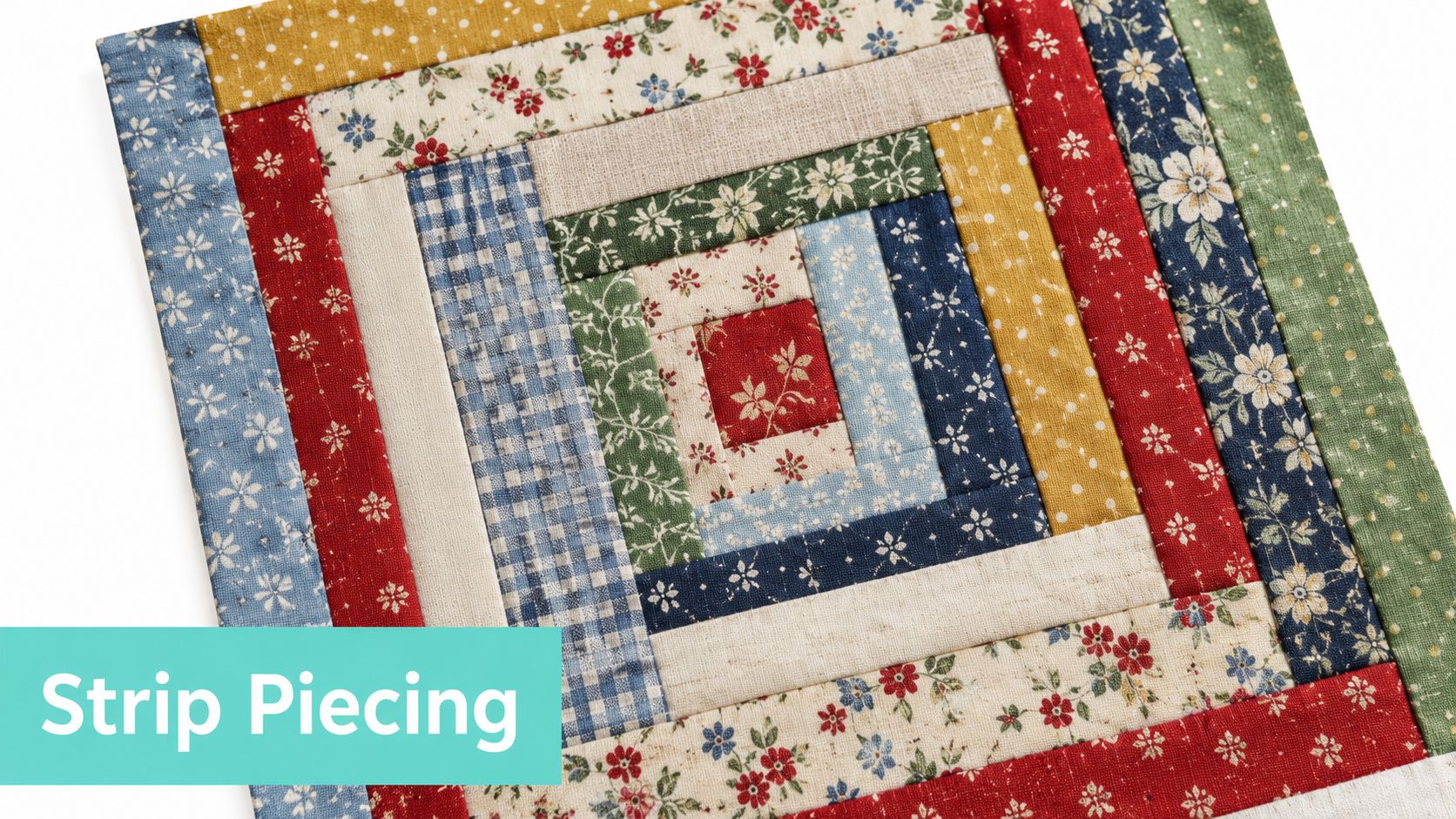
Prepare strips in assorted widths and organize them into bundles before sewing. Quilting cotton is easiest for precise piecing, while Shannon Cuddle or Luxe Cuddle works well as a soft, extra-wide backing after the top is complete. For a large quilt, OPN Quilting’s Mail-in Longarm service can handle dense texture without requiring a home quilting machine.
How can you keep the blocks accurate?
- Sort strips by width, then mix colors and prints within each bundle.
- Press every strip before adding the next round.
- Rotate blocks 90 degrees between rows to form secondary patterns.
- Cut strips slightly longer than the block edge and trim after sewing.
Uneven strip widths are part of the design, but consistent pressing keeps the finished quilt flat.
For jelly-roll strip ideas, learn more about what a jelly roll of fabric is. This method suits memory quilts, colorful throws, and large projects where a seamless minky backing keeps the reverse soft.
3. Disappearing Nine Patch Scrappy Variation
Disappearing Nine Patch is one of the most rewarding scrappy quilt patterns for makers who want complex-looking blocks without difficult piecing. Sew nine assorted squares into a basic Nine Patch, cut the completed block along marked lines, then rearrange the sections to create pinwheels, stars, or hourglass effects.
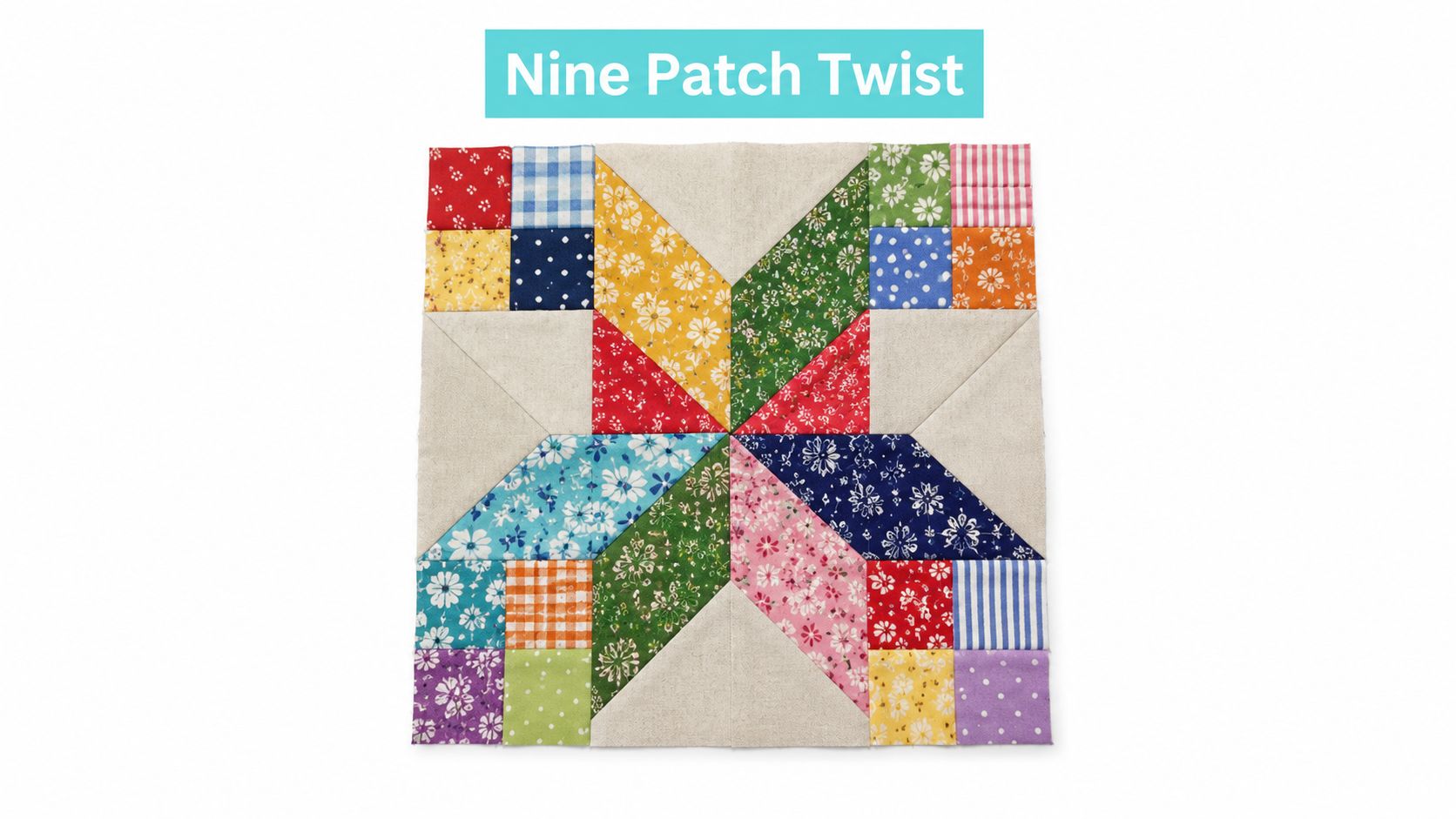
For a throw quilt, start with approximately 2.5 to 3 yards of assorted quilting cotton, plus 3 to 4 yards of backing. Minky and Shannon Cuddle fabrics, including Hide, Fawn, or Snowy Owl, work especially well as soft backings, though the quilt top should remain cotton for accurate cutting. A fresh rotary blade and fabric pen help keep every cut precise.
How do you cut and rearrange the blocks?
- Mark cutting lines before slicing the Nine Patch.
- Press seams open to reduce bulk at intersections.
- Photograph one finished block before repeating the layout.
- Mix bright and low-volume scraps for clearer geometric movement.
This method is ideal when you want maximum visual impact from simple squares.
Learn more about precision ruler techniques. For a soft final layer, consider OPN Quilting’s Mail-in Longarm service.
4. Improvisational Scrappy Piecing (Improv Quilt)
Improvisational scrappy piecing is one of the most flexible scrappy quilt patterns because it replaces fixed blocks with intuitive cuts and organic composition. Cut irregular strips, wedges, or rectangles from your scraps, then join them without deciding on a final design first. The result may resemble a modern landscape, abstract collage, or bold color study.
Start by choosing the finished outer dimensions as your goalpost. For example, a 40-by-50-inch baby quilt gives each pieced section a clear destination while leaving room for creative decisions. Quilting cotton works well for the top, while Shannon Cuddle or Luxe Cuddle Fawn, Hide, or Snowy Owl can provide a soft backing. For larger quilts, extra-wide minky helps avoid a bulky center seam.
How can you keep improv piecing under control?
- Use a design wall to audition color and scale before sewing.
- Accept the first seam, then build outward from it.
- Trim occasionally so the growing panel stays within your target shape.
- Keep contrasting scraps nearby to create visual punctuation.
Improv piecing is ideal for meaningful leftovers, expressive modern quilts, and makers who prefer process over precision.
Learn more about modern quilting designs. For a professional finish, consider OPN Quilting’s Mail-in Longarm service.
5. String Piecing Scrappy Design
String piecing is one of the most flexible scrappy quilt patterns for turning narrow fabric leftovers into orderly quilt blocks. You sew strips onto a paper or muslin foundation, either in straight rows or radiating angles, then trim each completed unit to a uniform size.
This method works especially well with fat-quarter remnants and mixed quilting cottons. For a lap quilt, gather approximately 4 to 6 yards of combined strips, depending on block size, sashing, and borders. A Shannon Cuddle or Luxe Cuddle backing, such as Hide, Fawn, or Snowy Owl, adds a soft finish once the top is assembled. For larger projects, extra-wide minky backing can prevent a bulky center seam.
How can you keep string-pieced blocks consistent?
- Bundle strips by width and color family before sewing.
- Chain-piece blocks on paper foundations to reduce thread changes.
- Press every strip away from the previous seam.
- Trim blocks to the finished size after removing the foundation.
- Alternate light and dark strips to define the pattern.
String piecing is a practical choice for scrap control, especially when you want lively color without random-looking construction.
Learn more about projects for fat quarters and finish your quilt with OPN Quilting’s Mail-in Longarm service.
6. Scrap-Friendly Friendship Bread Quilt (HST Variation)
Scrap-Friendly Friendship Bread Quilt is one of the more dynamic scrappy quilt patterns, combining half-square triangles (HSTs) into four-piece blocks. Each HST can use a different light-and-dark fabric pairing, creating a kaleidoscopic effect from ordinary leftovers.
Plan on approximately 5 to 6 yards of quilting cotton for a throw-size quilt, depending on block dimensions, borders, and how much scrap fabric you already have. Strip sets make HST production faster, while a soft Shannon Cuddle backing in Hide, Marble, or Fawn works well for a cozy finish. An extra-wide backing can eliminate a bulky center seam.
How do you keep the HSTs accurate?
- Pre-sort fabrics by light and dark value before sewing.
- Pair prints with clear contrast so the block pattern remains visible.
- Use strip sets to create multiple HSTs efficiently.
- Press seams open after sewing to reduce bulk.
- Trim every HST to the same unfinished measurement.
This pattern is a strong choice for quilters who want dramatic movement without repeating identical fabric pairs.
For a softer quilt back, browse OPN Quilting’s Shannon Cuddle fabric collection. Finished tops can be sent to OPN Quilting’s Mail-in Longarm service for professional quilting.
7. Crazy Patchwork Scrappy Quilt
Crazy Patchwork Scrappy Quilt is one of the most expressive scrappy quilt patterns, built from irregular fabric pieces sewn onto a sturdy foundation in no fixed order. Instead of matching blocks or repeating measurements, you let each scrap guide the next placement, creating an intentionally chaotic design full of contrast and texture.
For a throw quilt, plan on roughly 5 to 7 yards of assorted scraps plus foundation fabric, depending on the finished size. Quilting cotton works well for the top, while Shannon Cuddle in Hide, Fawn, or Snowy Owl makes a soft backing. OPN Quilting’s wide minky backing options can help avoid bulky seams on larger projects.
How should you build the foundation?
- Cut foundation panels from muslin or lightweight cotton.
- Add pieces one at a time, sewing and pressing after every seam.
- Mix florals, geometrics, solids, chenille, and varied print scales.
- Trim completed panels into matching rectangles before joining them.
Crazy patchwork is best for makers who enjoy improvisation, visible seams, and a quilt with no repeated section.
For a professional finish, send the completed top to OPN Quilting’s Mail-in Longarm service. Their thread and batting options can complete the project without flattening its bold, layered character.
8. Scrappy Granny Square Revisited (Modern Quilt Version)
Scrappy Granny Square Revisited updates the familiar crocheted motif as one of the most graphic scrappy quilt patterns. Small fabric squares form concentric blocks, while bold contrast and strategic rotation create secondary geometric designs across the finished quilt.
For a throw quilt, prepare approximately 4 to 5 yards of quilting cotton, divided into assorted prints, background fabric, and binding. A Shannon Cuddle or Luxe Cuddle backing in Fawn, Hide, or Snowy Owl adds softness, and extra-wide backing helps avoid a center seam. Sew each block carefully with a consistent 1/4-inch seam allowance before joining the rows.
How do you keep the granny square motif visible?
- Pre-sort scraps into color families before cutting.
- Pair dark and light fabrics within every block.
- Use a design wall to test rotations and neighboring blocks.
- Photograph the layout before moving pieces to the sewing machine.
- Press seams consistently so intersections stay flat.
This pattern suits confident beginners who want a modern, high-contrast quilt with plenty of personality.
For professional finishing, send the completed top to OPN Quilting’s Mail-in Longarm service. You can also browse Shannon Cuddle options in the minky fabric collection. With hundreds of verified reviews, OPN helps make the final stage easier.
Shop OPN Quilting’s backing fabrics and finish your granny square quilt with confidence.
How Do These 8 Scrappy Quilt Patterns Compare?
| Quilt Method | Implementation Complexity 🔄 | Resource Requirements | Expected Outcomes 📊 | Ideal Use Cases 💡 | Key Advantages ⭐⚡ |
|---|---|---|---|---|---|
| Charm Pack Scrappy Squares | Low; straight seams and minimal planning | Precut 5-inch squares, basic sewing machine, minimal cutting tools | Fast, scalable quilts with low waste; approximately 6–8 hours for a throw | Beginners, quick gifts, showcasing varied fabrics | Fastest construction, minimal math, beginner-friendly, efficient use of precut fabric |
| Strip Piecing Scrappy Log Cabin | Moderate; requires strip cutting, value planning, and pressing accuracy | 1.5–3-inch fabric strips, rotary cutter, central squares, organized fabric bundles | Dynamic blocks with strong movement and secondary patterns | Scrap utilization, visually complex quilts, intermediate projects | Excellent scrap efficiency, forgiving seams, highly varied visual results |
| Disappearing Nine Patch Scrappy Variation | Moderate to high; precise cutting, rotation, and layout are essential | Nine-patch squares, rotary cutter, fresh blade, marking tool, varied fabrics | High-impact geometric patterns such as pinwheels, diamonds, or hourglasses | Teaching secondary patterns, dramatic quilts from simple blocks | Strong visual transformation, efficient scrap use, impressive results with moderate effort |
| Improvisational Scrappy Piecing | High; freeform decisions require confidence and aesthetic judgment | Irregular scraps, design wall, sewing machine, optional cutting tools | Organic, one-of-a-kind art quilts with unpredictable dimensions | Artistic expression, experienced quilters, zero-waste projects | Maximum creative freedom, no precision pressure, uses scraps of nearly any size |
| String Piecing Scrappy Design | Moderate; foundation piecing provides structure but adds finishing work | ¾–1.5-inch strips, paper or fabric foundations, rotary cutter, trimming tools | Consistent, vibrant blocks with organized linear or radiating designs | Small-strip scrap busting, structured scrappy quilts, batch production | High precision, minimal waste, efficient chain piecing, adaptable layouts |
| Scrap-Friendly Friendship Bread Quilt (HST Variation) | Moderate to high; requires accurate HST construction and multi-piece assembly | Fabric pairs, HST strip sets, rotary cutter, pressing tools, varied scraps | Kaleidoscopic blocks with strong movement and secondary star patterns | Stash busting, fabric exchanges, intermediate quilting projects | Efficient HST production, bold visual impact, excellent fabric variety |
| Crazy Patchwork Scrappy Quilt | High; irregular foundation piecing and optional embellishment require skill | Irregular scraps, sturdy foundation, sewing machine, optional embroidery and embellishments | Completely unique, eclectic quilts with unpredictable layouts | Artistic quilts, maximalist designs, using scraps of all sizes | Ultimate scrap utilization, unlimited creativity, celebrates imperfection |
| Scrappy Granny Square Revisited | Moderate; block construction is straightforward, but color planning matters | Four-patch or nine-patch pieces, coordinated scraps, design wall, rotary cutter | Modern geometric quilts with nostalgic motifs and secondary patterns | Contemporary traditional quilts, scalable throws, coordinated scrappy projects | Combines nostalgia with modern contrast, scalable design, forgiving color variation |
How Can You Finish Your Scrappy Quilt Project?
The eight scrappy quilt patterns in this roundup show how much personality can come from a varied fabric stash. Charm squares and strip-pieced log cabins offer controlled color placement, while improv, string, and crazy patchwork designs make room for unusual shapes, small leftovers, and personal storytelling.
Before cutting, sort scraps by usable size, fiber content, and color value. Keep a separate stack for minky or Shannon Cuddle, since its stretch and pile require different handling from quilting cotton. A 2.5-inch strip may suit a log cabin block, but a larger, stabilized piece is usually easier to manage when adding soft fabric to a quilt back or accent section.
Practical takeaway: Let the pattern determine the scrap size, then let the backing determine the finish. A busy quilt top often looks best with a calm texture such as Shannon Luxe Cuddle Fawn, Hide, or Snowy Owl.
For large quilts, extra-wide backing can prevent a center seam and reduce bulk. Check OPN Quilting’s Minky Fabric Collection for available colors and textures, and compare the cut required for your finished dimensions before ordering. If your quilt top is complete but quilting it at home is impractical, OPN Mail-in Longarm Quilting can handle the finishing work, with batting and thread options available.
What should you do next?
- Choose one pattern based on your scraps and available sewing time.
- Make one test block before cutting the full project.
- Photograph your layout so rows can be reconstructed accurately.
- Press seams consistently, especially with half-square triangles and small pieced units.
- Reserve enough backing and binding before assembling the top.
- Review OPN’s quilt backing options if you want a soft, ready-to-finish surface.
A reliable sewing machine also makes small scrap units easier to piece accurately. For additional guidance on machine selection and precision work, Elna Online in Dutch offers a helpful resource for quilters working through detailed scrap projects.
New customers can look for a 15% first-order discount, and orders of $70 or more may qualify for free shipping. Confirm current terms before checkout.
Once the top is finished, professional quilting can turn uneven scrap colors into a unified design without hiding the maker’s choices. Our team has helped many quilters through mail-in finishing, supported by hundreds of verified reviews and practical experience with soft backings.
Meta description: Discover scrappy quilt patterns for every skill level, plus Shannon Cuddle backing tips, OPN finishing support, 15% off, and free shipping over $70.
Ready to turn your favorite scrap blocks into a finished quilt? On Pins & Needles Quilting Co. supplies Shannon Luxe Cuddle backing, kits, and finishing support for projects made with scrappy quilt patterns. Shop the Luxe Cuddle Collection or Book Your Longarm Service Today.