
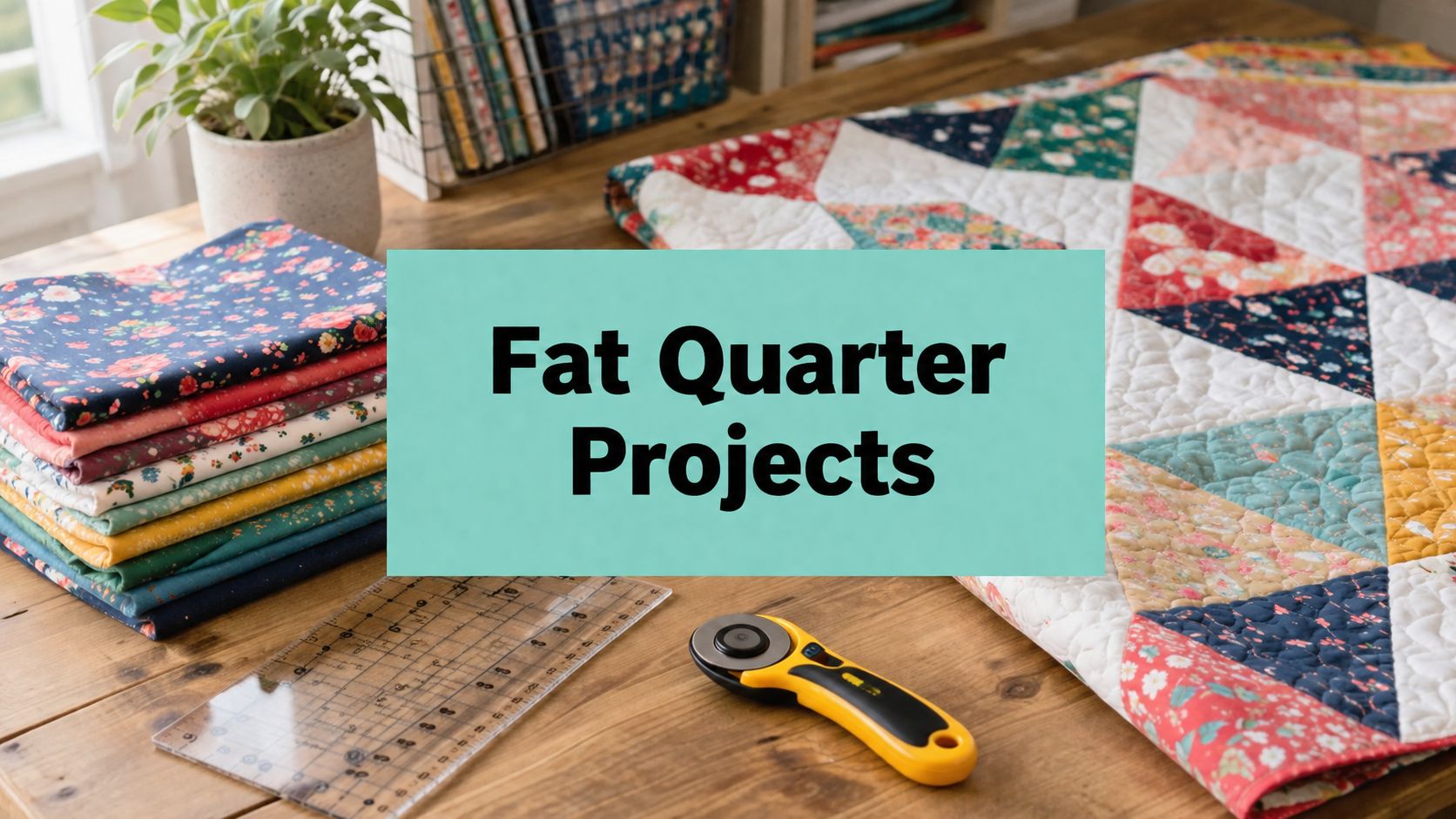
A fat quarter is a quarter-yard cut of fabric, typically measuring 18 x 22 inches, which gives you a practical, stash-friendly piece for small sewing and quilting projects without buying more yardage than you need. That shape is exactly why fat quarters work so well for gifts, decor, pouches, baby sewing, and even quilt blocks that would be awkward to cut from a narrow strip.
Projects for Fat Quarters That Actually Get Used
Fat quarters are one of the most useful cuts in sewing because the standard 18 x 22 inch size gives you enough fabric for gifts, accessories, small home projects, and quilt blocks without a lot of waste. If you've got a stack sitting on your shelf and no clear plan, the following will guide them into finished pieces instead of pretty fabric you keep saving.
A lot of quilters know the feeling. You buy a bundle because the prints are perfect, fold them neatly, and then hesitate because you don't want to waste a good cut on the wrong project.
That's where practical planning matters. Some fabrics are best for crisp piecing. Some are better for softness and gifting. Some fat quarters are ideal for no-sew decorating, which is still badly undercovered compared with standard quilting tutorials.
Your Guide to Amazing Projects for Fat Quarters
Fat quarters earn their keep because they sit in the sweet spot between scraps and yardage. They're large enough to make something satisfying, but small enough that you can test a new idea without committing to a big cut.
The standard size is well established in quilting, and that consistency is what makes patterns and stash planning possible. If you like seasonal making, gift sewing, or quick finishes, fat quarters are one of the easiest ways to keep momentum in your sewing room.
We've helped plenty of customers sort through that exact question of “What can I make with this stack?” and the answer is usually broader than people expect. With hundreds of verified reviews behind our shop experience, we've seen the same thing again and again. The right project depends less on trend and more on choosing the right fabric and scale.
If you're also gathering ideas for holiday gifting beyond sewing, this roundup of easy Christmas crafts for home is a useful companion for mixing sewn and non-sewn handmade projects.
Some fat quarters are too pretty to leave folded. The best project is usually the one simple enough to start today.
What Is a Fat Quarter and How Big Is It
A fat quarter is not just any quarter yard. It's a specific cut from a standard fabric bolt that gives you a squarer piece to work with, which is why it's so much more flexible than a long narrow strip.
A standard fat quarter measures 18″ × 22″ and represents exactly one-quarter of a yard from a 45″-wide fabric bolt, giving you 198 square inches of fabric, as outlined in this overview of fat quarter dimensions and uses. That consistency is what lets pattern designers write reliable cutting instructions.

Why is a fat quarter easier to use than a regular quarter yard
A regular quarter yard is usually cut straight from the bolt. That leaves you with a long, narrow piece that works fine for strips, but not always for patch shapes, pouch panels, or wider pattern pieces.
A fat quarter gives you more width and more layout options. That matters when you want to cut:
- Bag pieces for small zip pouches
- Pillow fronts without piecing
- Appliqué shapes that need room to rotate
- Quilt blocks that use larger motifs
- Napkins and small accessories with cleaner cutting options
For a more detailed breakdown, this guide on what size is a fat quarter of fabric is worth bookmarking.
Fabric cut comparison
| Cut Name | Typical Dimensions | Total Square Inches |
|---|---|---|
| Fat Quarter | 18" x 22" | 198 |
| Quarter Yard | 9" x 44" | 396 qualitatively varies by width |
| Half Yard | Varies by bolt width | Qualitatively larger than a fat quarter |
| Full Yard | Varies by bolt width | Qualitatively larger than a half yard |
That table points to an important real-world trade-off. Yardage math and cut shape are not the same thing. Two cuts can represent similar yardage on paper and still behave very differently at the cutting table.
Practical rule: If the project needs width more than length, start with fat quarters, not skinny cuts.
Another useful detail is how standardized the cut has become. Many project tutorials assume that exact benchmark, and some even tell you to square the piece slightly before cutting for better trimming accuracy. That's part of why fat quarters are so friendly to both beginners and experienced quilters. The format is predictable.
What Tools and Supplies Do You Need for Success
A fat quarter project usually goes off track at the cutting table, not at the sewing machine. One corner is slightly off, the ruler slips, or the fabric stretches more than expected. On small projects, those little misses show up fast.

I keep a simple project kit ready in the shop because it saves time and prevents waste, especially when I am cutting into a favorite print or a soft Cuddle piece that cannot be recut once it shifts. For newer sewists, this quilting for beginners guide is a good refresher before you start.
My go-to supplies are:
- Rotary cutter with a fresh blade for clean, accurate cuts on small pieces
- Self-healing mat so measurements stay consistent
- Acrylic ruler for squaring and sub-cutting
- Fabric shears for curves, trimming, and detail work
- Pins or clips based on fabric thickness and pile
- Reliable thread that suits the fabric, not just the color
- A fresh machine needle because skipped stitches show up quickly on small makes
If you sew mostly with quilting cotton, that basic setup handles almost everything. If you work with minky or Shannon Cuddle, a few tool choices matter more. Plush fabric has more movement, more drag under the presser foot, and more bulk at the seam. I strongly prefer clips over fine pins for thicker Cuddle, a walking foot for layered pieces, and polyester thread for smoother stitching and better durability on soft gifts like baby blankets, loveys, and pillows.
A sharp needle matters too. For cotton, a standard quilting or universal needle is usually fine. For minky, switch to a new needle before you start. That one small step fixes a lot of frustration.
If you want to branch out beyond sewing, keep a no-sew kit on hand as well. Fabric-safe adhesive, a good ruler, sharp scissors, and Wonder Tape or fusible options can handle simple fat quarter projects for DIY gifts and decor. No-sew works especially well with Cuddle when the goal is softness and texture, not pieced precision.
A few habits make a bigger difference than buying more tools:
- Square the fat quarter first if the edges are off
- Test stitch on scraps before sewing the full project
- Match your thread to the fabric type so the seam behaves properly
- Use clips, a walking foot, and slower stitching on plush fabrics
- Brush or shake off minky lint as you go to keep your workspace clean
Small projects reward careful prep. The right tools help, but the better result usually comes from choosing the right setup for the fabric in front of you. Cotton likes precision. Cuddle likes control. If you set up for that difference from the start, your fat quarters go a lot further.
How Do You Choose the Right Fabric for Your Project
You can save yourself a lot of frustration by matching the fabric to the job before you cut the first piece. A zip pouch, a burp cloth, a cuddle pillow, and a no-sew gift all ask different things from a fat quarter. Cotton handles precision well. Cuddle handles softness well.

When should you use cotton and when should you use minky
Quilting cotton still earns its place. It presses flat, holds a crease, and gives you clean points and straighter piecing. I reach for it first on patchwork-heavy projects, structured accessories, placemats, and anything that depends on sharp edges.
Minky, especially Shannon Cuddle, is my better choice for projects people will hold, hug, or use every day. Loveys, baby blankets, pillows, scarf-style accessories, and simple comfort items feel better in a plush fabric. You give up some crispness, but you get softness, texture, and a more giftable finish.
That trade-off matters.
If you are planning colors and prints first, start with curated fat quarter bundles for quilting and small projects. Then decide whether the project wants structure, softness, or a mix of both. One of my favorite combinations is cotton on the front and Cuddle on the back. It keeps the project manageable while still giving it that premium hand people notice right away.
A few fabric-to-project matches work especially well:
- Quilting cotton for patchwork blocks, bunting, fabric baskets, and pouches
- Cuddle or Luxe Cuddle for loveys, cuddle pillows, stroller blankets, and scarves
- Cotton plus Cuddle for bibs, baby blankets, reading pillows, and small play mats
- No-sew Cuddle pieces for simple DIY gifts, room accents, and soft sensory projects
Shannon textures also change the look of a simple pattern more than many quilters expect. Hide adds visual depth on pillows and accessories. Snowy Owl has a plush, high-touch surface that works beautifully for baby gifts. Fawn gives you a softer, more natural texture when you want something understated.
What do you need to watch out for with minky
Minky has a nap, some stretch, and more movement than cotton, so fabric choice affects cutting as much as sewing. Grain direction matters. Nap direction matters too. If you ignore either one, a project can look uneven even when the stitching is fine.
The practical rules are simple:
- Cut all pieces with the nap running the same direction
- Use simpler shapes if you want an easier first project
- Pair minky with cotton when you want easier handling
- Test your seam and stitch length on scraps before sewing the full piece
For beginners, I usually suggest starting with Cuddle as a backing, accent panel, or whole-cloth project instead of intricate piecing. You waste less fabric and get a cleaner result faster. That is one reason baby gifts are such a good fit. If you want a few handmade ideas beyond sewing, top DIY children's gifts 2026 is a useful companion list.
If texture is the whole point of the project, choose the fabric for touch first and pattern second. That sounds backwards to traditional quilters, but it is often the right call for gifts. A simple item made in the right Cuddle texture usually feels more special than a more complicated pattern made in the wrong fabric.
What Are Some Easy Projects for Babies and Kids
Baby and kid sewing is one of the best uses for fat quarters because the scale is right, the pieces are manageable, and the finished items usually get immediate use.

Which small projects are worth making first
-
Burp cloths
These are practical, fast, and easy to personalize with a favorite print on one side and a soft backing on the other. -
Baby bibs
A fat quarter gives enough room for several bib fronts, especially if you're mixing prints. -
Tag blankets or loveys
Minky particularly shines here. Texture matters for little hands. -
Soft fabric blocks
Great for mixing prints and sensory-friendly textures. -
Small stuffed animals
Best for makers who want a more playful gift without tackling a full quilt.
For anyone building out a handmade gift set, this article on top DIY children's gifts 2026 offers some nice companion ideas beyond fabric sewing.
What works especially well in minky
A lovey, stroller blanket, or cuddle pillow feels more special when the texture does part of the work. If you want help with assembly and fabric pairing, this tutorial on how to make a minky baby blanket is a strong place to start.
A few ready-to-browse options that fit this category naturally:
New to OPN Quilting? Enjoy 15% off your first order, plus get Free Shipping on all U.S. orders over $70.
If you want to see a soft project in action before cutting, this video helps:
Which projects tend to disappoint
Not every baby project is worth sewing from a single fat quarter. Fitted items that need precision shaping can eat time fast, and stiff fabrics can make a comfort item feel less inviting.
The projects that usually land best are the ones that combine usefulness with touch. That's why burp cloths, bibs, loveys, and mini quilts stay at the top of the list.
What Can You Make for Home Decor and Accessories
Fat quarters are excellent for projects you can finish in a weekend. They're small enough to cut quickly and large enough to make something that doesn't feel trivial.
Which home projects are the best fit
Some of the most reliable choices are:
- Zipper pouches for notions, makeup, or cords
- Fabric baskets with interfacing for structure
- Coasters and mug rugs for quick gifts
- Placemats or napkins when you want a coordinated set
- Bookmarks that use even small leftovers
- Pillow covers for seasonal decor
- Infinity scarves when you want softness and drape
For textured accessories, curated plush cuts and scarf kits save guesswork. Good starting points include:
Try these no-sew ideas
One of the biggest gaps in fat quarter content is that most ideas stay locked into sewing. A review of the topic found that 90% of existing content focuses on sewing, while no-sew uses like rag wreaths and decoupage are underserved, as discussed in this video on no-sew fat quarter ideas.
That matters because some of the smartest uses for fat quarters don't need a machine at all.
Try these:
- Rag wreath ties for seasonal decorating
- Gift wrap accents for boxes, jars, or baskets
- Decoupage panels for trays, drawers, or small furniture
- Fabric gift bags made with folding and ribbon instead of stitching
- Covered journals or memory boxes for handmade presents
If a print is too good to cut into tiny patchwork, use it where the motif can stay whole.
What makes a no-sew project look intentional
Keep the scale of the print in mind. Large motifs look better on wreath strips, box wraps, and decoupage panels than on tiny folded details.
Texture matters too. Cotton usually behaves best for no-sew crafting because it folds cleanly and glues predictably. Plush fabrics are better reserved for touch-based accessories unless the project is specifically built around softness.
Can You Make a Full Quilt from Fat Quarters
Yes, absolutely. In fact, fat quarters were practically made for quilt planning because the cut gives you flexible block options without forcing you into long strip-heavy layouts.
The main thing to understand is that the number you need depends on the quilt design, the block size, and how much background fabric the pattern uses. Fat quarter quilts are rarely just a matter of stacking identical cuts and sewing until the top is big enough.
How many fat quarters do you usually need
Use this as a planning guide, not a strict formula:
| Quilt Size | Approx. Dimensions | Fat Quarters Needed |
|---|---|---|
| Crib | Small baby quilt size | Varies by pattern |
| Lap | Throw-size quilt | Varies by pattern |
| Twin | Bed-size quilt | Varies by pattern |
| Queen | Larger bed quilt | Varies by pattern |
The cut size helps because each piece starts with a predictable shape, and many quilt patterns are written around that standard. If you want layout ideas, block approaches, and pattern-friendly options, this collection of fat quarter quilt patterns is a solid next step.
What about backing and finishing
Once the top is done, backing is where many quilters lose momentum. If you want an especially soft finish, wider minky can simplify the job. A 90-inch wide minky fabric can back quilt tops up to 64" x 82" as a single piece, while standard 58 to 60 inch minky backs only accommodate tops up to 50" x 64" with the same cut size, according to this guide on 90-inch wide minky for quilt backs.
That's a real upgrade for bigger projects because it helps avoid a center seam.
If you're also comparing feel and function for pillows, quilted decor, or backing-related fabric choices, this article on explore pillow material options gives useful context on how different fabrics behave in home projects.
For larger plush projects and backing options, these are worth exploring:
A quilt top made from fat quarters is often the fun part. Finishing it well is what turns it into something that lasts.
Fat quarter quilts are a great use of beautiful prints because they let the fabric stay visible. You're not just chopping everything into tiny scraps. You get enough surface area to show off color, texture, and motif, especially when you pair pieced cotton tops with soft backing.
If you're ready to turn your stack into real projects for fat quarters, On Pins & Needles Quilting Co. is the practical next stop for plush Shannon textures, wide minky backing, curated kits, and mail-in finishing support. Browse the soft textures you'll want to sew with, use the 15% first-order discount, and take advantage of free U.S. shipping on orders over $70. Book Your Longarm Service Today