
A useful zipper picture shows the tape, teeth or coil, and slider together, so you can judge fit and function before sewing. That matters when you're choosing between a pillow closure and a blanket opening for Shannon Cuddle or Luxe Cuddle. The annotated examples below focus on how each zipper behaves in real minky projects, not just how it looks in a gallery.
A pillow needs a closure that can survive handling and washing. A reversible blanket needs hardware that lets the project open completely. A soft infinity scarf may need a flexible coil, while a decorative pillow might benefit from a visible metallic pull. These differences become much easier to spot when the zipper is photographed from the front, side, and bottom.
For makers creating visual references, consistent image structure matters too. Bulk patterns for branding can help build repeatable background elements, but the zipper itself still needs a clear, accurately labeled photograph.
1. What makes metal zippers useful for minky pillows?
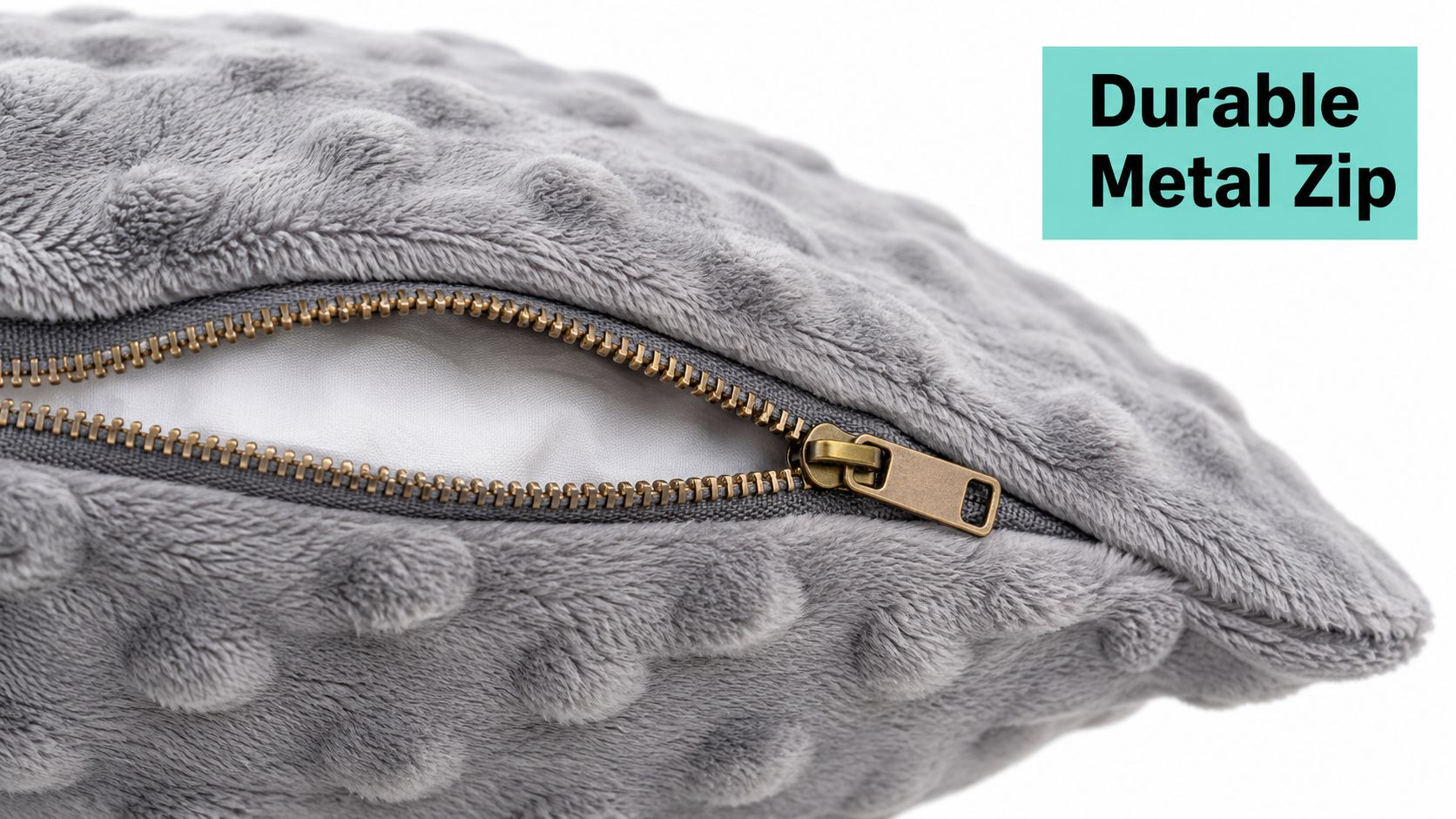
Metal zippers are a strong choice for minky pillow covers, cushion covers, and other projects that will be opened often. Their brass or aluminum teeth give the closure a firm, polished feel that suits the plush surface of Shannon Cuddle and Luxe Cuddle.
A useful picture should show the teeth in profile, the tape sewn into the fabric, and the slider sitting squarely on the track. A front-facing product photo alone won't tell you whether the zipper is bulky enough to distort a pillow edge or whether the pull will catch in a deep minky nap.
Metal hardware works especially well on the back or underside of a pillow. It keeps the visible face soft and uninterrupted while giving the cover a dependable closure for washing, form replacement, or seasonal storage. That makes it practical for pillow kits with forms, ready-made accent pillows, and longarm-quilted pillow covers.
Practical rule: Match the zipper finish to the fabric instead of treating the hardware as an afterthought. Silver can sit quietly with a cool gray, while antique hardware can complement a warmer Hide texture.
Before sewing, compare the zipper length with the opening and keep the tape flat. Minky can shift under the presser foot, so clips are often easier to manage than excessive pinning. A slightly darker polyester thread can help the stitching recede into the pile.
For a project that combines a plush cover with a ready-to-use form, the guidance in OPN's minky pillow forms and luxury pillow kits is a useful companion. Browse OPN's pillow kits when you want the fabric, form, and project direction to work together rather than sourcing every component separately.
2. Why are coil zippers a good match for soft minky accessories?
Coil zippers use a continuous nylon or polyester spiral rather than separate metal teeth. That construction makes them flexible and comfortable against the body, which is why they suit infinity scarves, wraps, soft baby items, and lightweight minky accessories.
In pictures of zippers, the coil can be easy to miss. Photograph it close enough to show the recessed spiral, then include a wider view that demonstrates how the tape bends around a scarf or curved opening. A useful caption should identify the coil, tape, slider, and stitching line.
Coil zippers are forgiving when the fabric has a little movement. That helps beginners working with a two-yard minky cut or a simple scarf kit, although the zipper still needs support at the seam so the plush fabric doesn't stretch away from the tape.
- Choose a quiet color: White, black, and gray usually blend into the surrounding minky instead of competing with the texture.
- Protect the hand-feel: Avoid heavy topstitching when the zipper will sit against the neck or wrist.
- Control the nap: A ballpoint or stretch needle can help reduce skipped stitches on fluffy fabric.
- Test the glide: Run the slider over the full length before closing the seam permanently.
For a beginner-friendly project, the minky infinity scarf pattern shows the kind of construction where a flexible zipper makes sense. You can also compare OPN's infinity scarf kits when you want a coordinated soft fabric cut and a lower-friction starting point.
A coil zipper won't provide the same visual weight as metal. That's a benefit for a scarf, but it may look underpowered on a structured cushion or a hard-used outdoor panel.
Softness matters at the opening. A zipper that feels comfortable in the hand can still fail if its tape isn't stabilized, so judge both touch and construction.
3. How do invisible zippers create a clean minky finish?
An invisible zipper is designed to disappear into the seam allowance. When it is installed correctly, the outside of a minky pillow shows a clean seam rather than exposed teeth, making the closure especially suitable for luxury pillows, gift blankets, and boutique-style home décor.
A good annotated image should show the zipper before installation and then the finished seam from the plush side. The important detail isn't only the hidden teeth. It is the way the seam lines meet without a ridge, gap, or exposed tape.
This style rewards preparation. Practice on cotton first, especially before cutting into a specialty texture such as Shannon Fabrics Hide, Snowy Owl, or Fawn. Minky's pile can hide the seam while you sew, so hand-basting or careful clipping helps keep both sides aligned.
What should you check before sewing an invisible zipper?
- Use the correct foot: An invisible zipper foot keeps the coil open as you stitch close to it.
- Match the color: The zipper should blend with the dominant minky color, even though the teeth disappear.
- Support the seam: Stabilize the seam allowance so the plush fabric doesn't buckle.
- Leave room for the slider: Stop stitching before the hardware becomes trapped under the foot.
- Test the cover: Turn the pillow right side out before trimming excess fabric.
The trade-off is time. Invisible zippers produce a refined result, but they offer less visual feedback during installation than a standard zipper. If the seam is off by even a small amount, the closure may ripple or become difficult to operate.
For a quilted pillow top, OPN's Mail-in Longarm service can handle the quilting before you install the final closure at home. That order keeps the zipper out of the quilting process and reduces the risk of catching hardware under the longarm.
4. When should you use separating zippers on minky blankets?
A separating zipper lets two finished sides detach completely. Its bottom construction is the clearest visual clue: one side has an insertion pin and the other has a retainer box, rather than a permanent bottom stop holding both tapes together.
That distinction matters for reversible minky blankets and modular quilts. You can join two finished panels, use the blanket as one piece, and then separate the layers for washing, storage, or alternate combinations.
For example, a Shannon Cuddle Hide side and a Fawn side can become a reversible project when the joining edges are accurately aligned. The zipper should be photographed from the bottom so viewers can identify the pin, box, slider, and tape instead of confusing it with a standard closed-end zipper.
What makes a separating zipper work on bulky minky?
The seam needs enough room for the plush pile and the zipper tape. A narrow allowance can pull the fabric toward the teeth, while an oversized allowance may leave a loose edge that catches during separation.
Plan the zipper line before cutting the fabric. This is particularly important for large projects using extra-wide minky, where a misaligned joining edge can become difficult to correct after quilting.
A separating zipper is functional hardware, not just a decorative line. Test the insertion pin several times before the final edge is sealed.
The minky fabric panel guidance from OPN is relevant when you're planning joined sections rather than a single uninterrupted piece. For large backing projects, explore OPN's extra-wide minky collection and confirm the finished layout before ordering.
A separating zipper offers flexibility, but it also creates more alignment points. It isn't the best choice for a small cushion that only needs a simple removable cover.
5. How do two-way zippers help convertible minky projects?
A two-way zipper has sliders at both ends of the track. You can open the project from either direction, which creates useful ventilation, foot access, or fit adjustment in loungewear, wraps, sleeping bags, and convertible blankets.
Pictures of zippers for this style should show both sliders in different positions. A single closed view hides the feature that makes the zipper valuable. Include one image with the sliders meeting and another with the lower opening partially released.
A two-way coil zipper suits soft accessories because it bends easily and doesn't add much visual weight. A metal version makes more sense for a robe, travel blanket, or other item that will see firm pulling and repeated handling.
The practical benefit is control. A person can open the lower section of a blanket without exposing the entire top, or adjust a wrap without removing it. That function is useful, but only if the sliders are easy to distinguish and the finished item includes clear care and operating directions.
- Set the sliders before sewing: Confirm which direction opens each end.
- Keep the ends aligned: Uneven top edges can make one slider feel harder to move.
- Reinforce the ends: The slider can place stress on the final stitches.
- Test the opening: Operate both sliders before hemming or sealing the project.
- Explain the feature: A gift recipient may not recognize why two pulls are present.
When stretch or movement is part of the project, OPN's guide to sewing with stretch fabric offers useful construction context. A two-way zipper won't correct an unstable seam, so the fabric support still comes first.
6. What do waterproof zippers add to minky outdoor and baby items?
Waterproof zippers use a sealed or coated track to limit water entering through the closure. They can be useful on wet bags, changing pad covers, travel organizers, outdoor throws, and pet bedding, but they don't make the surrounding minky waterproof.
That limitation should appear in the image caption. Show the coated track and identify the fabric around it as a separate material. A photograph with water droplets can communicate the intended application, but it shouldn't imply that the entire project has the same water resistance as the zipper.
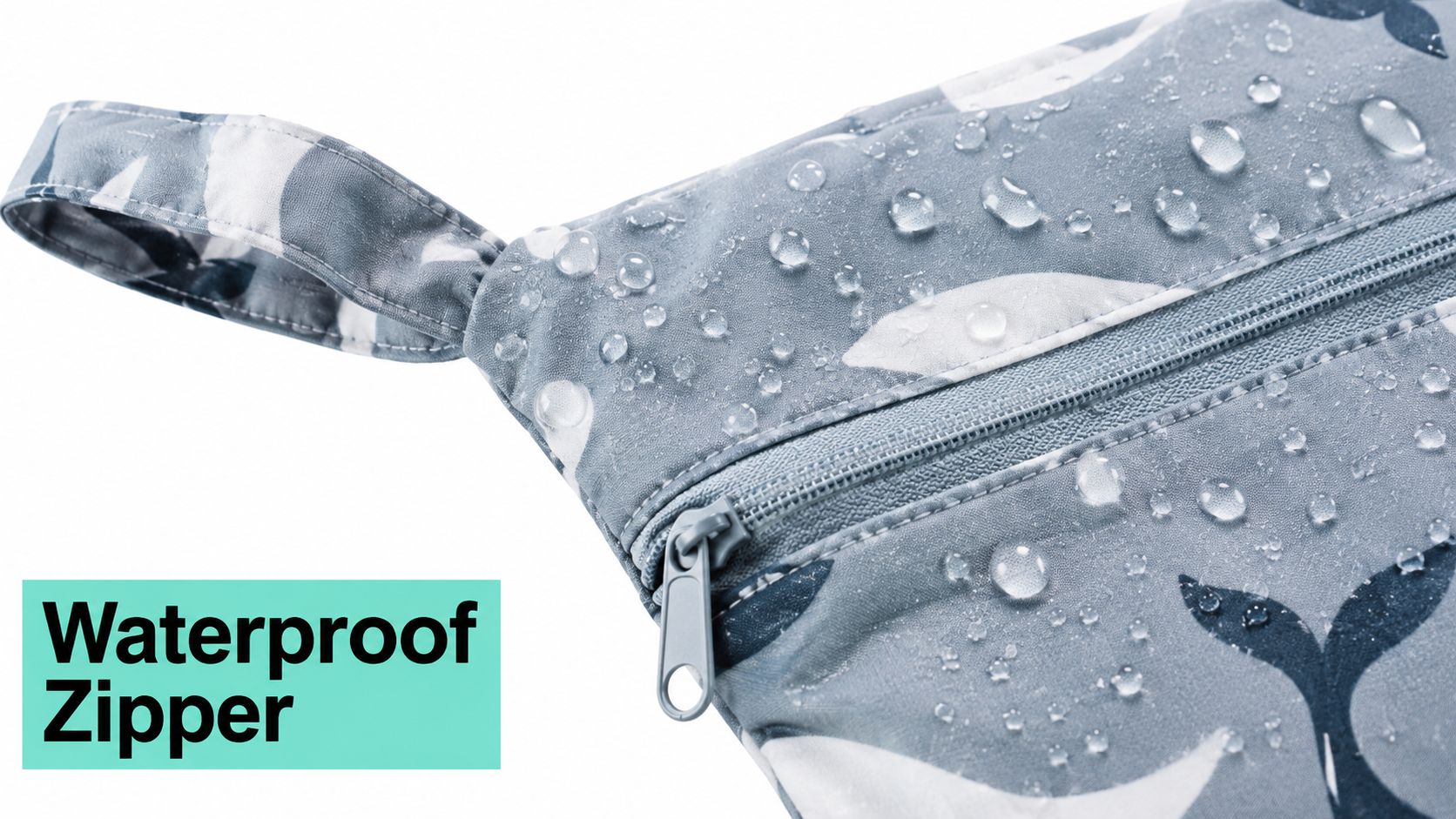
Waterproof zipper tape often needs a different sewing approach from ordinary tape. Extra stitching can create more holes through the coated area, and aggressive pressing may affect the seal. Test the zipper on a scrap of the exact minky before committing to the full accessory.
For baby and nursery projects, soft texture and easy cleaning need to coexist. OPN's juvenile and nursery minky collections can help you choose a suitable surface before you pair it with performance hardware.
Do not promise more protection than the construction provides. A waterproof zipper can limit water entry at the track, but seams, fabric, and needle holes still need attention.
A waterproof zipper is often unnecessary for an indoor pillow. It adds cost and can feel stiffer than a coil zipper, so use it where moisture exposure is part of the actual problem.
7. How can decorative zippers elevate minky fashion and décor?
Decorative zippers make the hardware part of the design. A visible pull, contrasting teeth, or a finish such as rose gold, gunmetal, or antique brass can turn a simple minky pillow or wrap into a deliberate statement piece.
The picture should prioritize the detail. Use a close crop of the pull and teeth, then a wider photograph showing how the hardware relates to the plush surface. This gives shoppers enough information to judge both finish and scale.
Texture pairing changes the mood. Rose gold can warm up Fawn, antique brass can sit naturally with Hide, and silver can keep Snowy Owl looking cool and clean. These are design choices, not mechanical rules, so the best match depends on the room, garment, or gift collection.
Decorative zippers work particularly well for small handmade businesses because a repeatable hardware choice can become part of the maker's visual identity. A branded leather pull, coordinated hardware across a pillow and throw, or a seasonal zipper detail can distinguish a handmade item from a plain mass-market closure.
- Photograph the hardware clearly: Don't bury the pull in the nap or use a distant lifestyle image as the only view.
- Protect the plush: Keep the decorative edge away from areas that rub against skin.
- Repeat the finish: Matching hardware across a collection creates a more intentional presentation.
- Check the pull: A beautiful slider still needs to move smoothly through the full opening.
- Choose the base fabric carefully: OPN's Luxe Cuddle collection gives decorative hardware a rich surface to work against.
A decorative zipper isn't automatically stronger than a concealed one. Choose it for visibility and style, then match the zipper construction to the project's actual use.
7 Zipper Types for Minky: Quick Comparison
A good zipper photo should answer one practical question fast. Will this closure behave well in thick, plush minky, or will it fight the nap, feel bulky, or show more than you want? This comparison works best as an annotated reference, not a gallery. Match each zipper type to the project, then show the teeth, tape, slider, and finished edge so the trade-offs are obvious.
| Type | Implementation Complexity 🔄 | Resource & Cost ⚡ | Expected Outcome ⭐ / Impact 📊 | Ideal Use Cases | Key Advantages 💡 |
|---|---|---|---|---|---|
| Metal Zippers for Durable Minky Pillow & Cushion Projects | Medium to High 🔄🔄, requires firm needle control | Higher cost, heavier, strong needle/thread, may increase shipping ⚡ | Strong durability ⭐⭐⭐⭐⭐, polished long-lasting finish 📊 | High-traffic pillows, premium cushion kits, retail pillows | Durable, polished look, long lifespan, wholesale quality 💡 |
| Coil Zippers for Soft, Snag-Free Minky Infinity Scarves & Wraps | Low 🔄, forgiving to install | Low cost, lightweight and flexible, standard needles ⚡ | Soft hand-feel ⭐⭐⭐⭐, snag-resistant for high-pile minky 📊 | Infinity scarves, wraps, beginner projects, baby items | Soft, affordable, smooth glide, beginner-friendly 💡 |
| Invisible Zippers for Hidden Luxury Minky Pillow & Blanket Closures | High 🔄🔄🔄, requires invisible-zipper foot and precision | Higher cost, special foot and technique, limited colors ⚡ | Hidden, retail-quality finish ⭐⭐⭐⭐⭐, raises perceived value 📊 | Luxury pillows, heirloom blankets, boutique gift items | Hidden closure, improves the finished look for retail presentation 💡 |
| Separating Zippers for Reversible Minky Blankets & Modular Quilts | High 🔄🔄🔄, complex placement and two sliders | Expensive, heavier, may need heavy-duty versions ⚡ | Enables full separation and convertibility ⭐⭐⭐⭐, design versatility 📊 | Reversible blankets, modular quilts, large throws | Allows reversible and convertible assemblies, professional finish 💡 |
| Two-Way Zippers for Convertible Minky Blankets & Functional Loungewear | Medium 🔄🔄, dual sliders but non-separating | Moderate cost, dual sliders, less bulky than separating ⚡ | Versatile openings, partial ventilation ⭐⭐⭐⭐, novelty appeal 📊 | Convertible blankets, loungewear, climate-adaptive wraps | Multiple functional openings, practical temperature control 💡 |
| Waterproof Zippers for Minky Outdoor Gear & Baby Product Applications | Medium to High 🔄🔄🔄, careful handling to avoid seal damage | Very high cost, stiffer, limited colors, special care ⚡ | Water resistance for interior protection ⭐⭐⭐⭐, functional premium 📊 | Wet bags, diaper covers, outdoor blankets, travel gear | Protects contents from moisture, practical premium feature 💡 |
| Decorative Zippers for Statement-Making Minky Fashion & Home Décor Projects | Low to Medium 🔄🔄, standard install plus attention to placement | Variable to high cost, custom lead times, special pulls ⚡ | Strong visual impact, increases perceived luxury ⭐⭐⭐⭐ | Statement pillows, branded scarves, limited-edition gifts | Distinctive branding and detail, improves visual appeal and pricing 💡 |
Use the table as a first pass, then confirm with pictures that show failure points as well as finished results. On minky, that usually means slider clearance through the pile, whether the tape sinks into the nap, and how visible the closure stays once the seam is brushed out.
If I were choosing by project alone, I would reach for coil on soft accessories, invisible on gift-grade pillows where the closure should stay out of sight, and separating or two-way only when the opening changes how the item functions. Decorative and waterproof options solve narrower problems, but the right photo makes those limits clear without overselling them.
Pick your zipper and start your next minky project
A good zipper photo saves time at the cutting table. On minky, the right choice is rarely about looks alone. It comes down to how the closure moves through a thick nap, how much structure the project needs, and whether the zipper should show, hide, or separate completely once the seam is brushed out.
Match the zipper to the job first. A metal zipper suits a pillow or cushion that benefits from a firm, durable closure. A coil zipper keeps an infinity scarf or soft wrap flexible instead of adding stiffness. An invisible zipper works on gift-grade finishes where the closure should stay quiet, while a separating zipper earns its keep on reversible blankets and modular quilted pieces that need to come apart cleanly.
Some options solve narrower problems, but they still matter. Two-way zippers help when opening from both ends changes comfort or access. Waterproof zippers add protection at the track for wet bags, nursery accessories, and outdoor items. Decorative zippers belong on projects where the pull, finish, and exposed teeth are part of the design, not hardware to hide.
Your pictures should show those trade-offs, not just the prettiest angle. Get close enough to see the slider, tape, teeth or coil, and bottom construction. Show where a slider can catch in the pile, where zipper tape disappears into the nap, and how visible the closure stays after the seam is brushed out. That is the difference between a visual reference and a generic gallery.
Alt text needs the same level of specificity. Name the zipper type and the project, not just the color or fabric. A reader using a screen reader, or anyone viewing with images off, should still understand whether the zipper separates, opens from both ends, or nearly vanishes into the seam.
For installation and repair photos, show the zipper before sewing and after the seam is finished. Include seam line, fabric bulk, alignment, and any spot where the nap crowds the slider path. A clean close-up can look polished and still miss the one detail that decides whether the zipper works on a pillow, blanket, scarf, or quilted panel.
OPN Quilting carries Shannon Fabrics Cuddle and Luxe Cuddle in curated cuts, pillow kits, infinity scarf kits, prints, panels, and extra-wide backing for larger projects. The shop also offers Mail-in Longarm quilting with batting, thread, and free return shipping, which is useful when the quilt top needs to be finished before the zipper goes in.
If you are comparing Hide, Snowy Owl, Fawn, or another soft texture, start with a swatch or small cut before committing to a full project. OPN also offers hundreds of verified reviews, responsive support, free U.S. shipping on orders over $70, and a 15% first-order coupon. Choose the zipper after you decide how the minky piece needs to open, close, wash, and wear.