
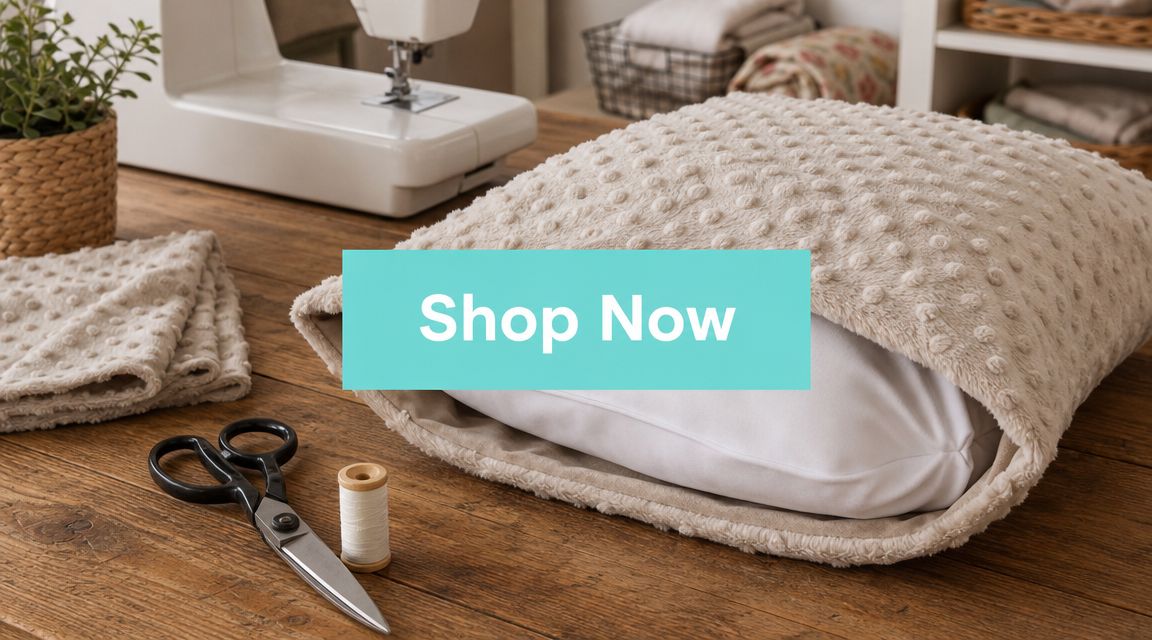
Your pillow form should be 2 inches larger than your finished pillow cover, and its loft should match the minky texture. A low-pile cover usually wants more loft to avoid a flat look, while high-pile Luxe Cuddle already adds visual bulk and usually looks better with a standard, snug insert.
You're probably here because you've seen those perfectly plump minky pillows that hold their shape, fill the corners, and look expensive the second they hit the sofa. Then you make one of your own and it turns into either a pancake or a sausage.
We've learned this the hard way in quilting rooms and sewing spaces. The cover fabric matters, but the form choice is what makes or breaks the finish.
What Is the Secret to a Plump, Professional Minky Pillow?
The biggest secret isn't fancy trimming or a tricky closure. It's getting the relationship right between the cover, the insert, and the pile height of the minky.
A decorative pillow has a very long history. Sources place early pillow use in ancient Mesopotamia around 7,000 BC, and the luxury version we love today is really the newest chapter in a very old tradition of comfort, status, and beautiful materials, as noted in this history of decorative pillows.
That's why cheap-looking results usually come from technical mismatches, not bad taste. If the form is too small, the corners slump. If the form is too lofty for a thick, plush cover, the pillow can look swollen and stiff instead of soft and well-formed.
What actually changes the finished look
- Insert size: A properly oversized insert fills the corners.
- Pile height: Thick textures create visual volume on their own.
- Seam accuracy: Even a slightly uneven cover can make one corner look collapsed.
- Closure style: A loose envelope back can rob the pillow of structure.
Practical rule: If your pillow looks limp, check the insert before blaming the fabric.
For minky, handling matters too. If you need a refresher on taming stretch and creep before you sew a cover, this guide on how to sew with minky fabric without it sliding is worth keeping open beside your machine.
How Do I Choose the Right Minky Pillow Form?
Most pillow problems start with the wrong insert, not the wrong cover. Quilters often spend time choosing the perfect texture, then grab whatever form is nearby. That's usually where the corners go soft and the whole project loses that polished look.
The professional sizing rule for decorative pillows is to choose an insert that is 2 inches larger in both dimensions than the finished cover. An 18×18 cover typically pairs with a 20×20 insert for a fuller look, as explained in this pillow insert sizing guide.

Pillow cover vs pillow form sizing chart
| Finished Pillow Cover Size | Recommended Pillow Form Size |
|---|---|
| 18 x 18 | 20 x 20 |
That simple rule does two jobs. It pushes fabric into the corners, and it keeps the front face smooth instead of slightly wrinkled.
Why loft matters as much as size
Size gives you fill. Loft gives you character.
A lofty insert under low-pile minky helps the pillow read as plush instead of flat. A standard loft insert under high-pile Luxe Cuddle often looks more refined because the fabric itself already contributes body and softness.
Here's the trade-off we watch for at the cutting table:
- Low-pile minky with too little loft: The pillow reads thin and skimpy.
- High-pile minky with too much loft: Seams strain, edges round off too much, and the pillow loses shape.
- Snug fit with balanced loft: Corners fill nicely and the face stays smooth.
A good pillow should feel full when you pick it up, not hollow in the corners and not hard as a block.
What works better for different pillow goals
If you want a lounge pillow, a softer hand usually matters more than a sharply crisp edge. If you want a display pillow, structure matters more.
A practical option for a firmer, supportive look is a memory foam and gel fiber insert like this Cuddle Dreamz 24x24 memory foam gel fiber pillow form. That kind of insert can suit a pillow meant to hold shape on a bed or sofa, especially when the cover fabric is smooth enough to show the form cleanly.
Signs you picked the wrong form
- You see corner slack: The insert is usually too small or too soft.
- The zipper or seam fights you: The insert may be too dense for that fabric and cover size.
- The pillow looks round instead of square: Loft is overpowering the cover.
- The front face wrinkles after fluffing: The fill isn't supporting the fabric evenly.
If you remember one thing, remember this: minky pillow forms and luxury pillow kits look polished when the insert fills the cover confidently without forcing it.
Which Luxe Cuddle Texture Works Best for Pillows?
Texture changes everything. The same insert can look crisp under one fabric and overstuffed under another.
A common challenge is choosing the right fill density for different minky textures. Tutorial guidance notes that a “nice tight” fit is essential, but the ideal firmness changes with the fabric so you don't end up with either a flat pillow or an overstuffed one, as discussed in this minky pillow sewing tutorial.

High-pile textures
Think of textures like Snowy Owl or other deep Luxe Cuddle finishes. These fabrics already create a fuller visual profile.
That means they usually don't need an aggressively lofty insert to look generous. In fact, if you pair very high pile with too much puff, the pillow can start looking clumsy instead of neat.
Best use:
- Sofa pillows meant to feel indulgent
- Accent pillows where texture is the star
- Rooms that need softness more than crisp edges
Low-pile and smoother textures
Textures like Hide or other sleeker cuddle surfaces show the underlying form more clearly. These are the fabrics that benefit from a little extra internal support.
If the insert is too soft, every weakness shows up. You'll see flatter faces, less corner definition, and a pillow that disappears visually once it's placed among other cushions.
Best use:
- Bed styling where shape matters
- Layering with quilted shams
- Pillows that need a cleaner silhouette
How we pair texture and loft in practice
When we're helping someone choose fabric, we don't just ask what color they want. We ask how they want the pillow to sit and feel.
| Texture Type | Visual Effect | Better Insert Approach | Risk if Mismatched |
|---|---|---|---|
| High-pile Luxe Cuddle | Full, plush surface | Standard snug loft | Overstuffed, bulky shape |
| Low-pile minky | Cleaner outline | Higher loft, still snug | Flat, pancake look |
| Textured pattern pile like Fawn or Seal | Balanced softness and dimension | Medium structure | Either sloppy corners or stiff face |
If you want a broader fabric primer before choosing a pillow cover texture, this article on what cuddle minky fabric is helps clarify how these plush fabrics behave.
When a pillow looks expensive, it usually means the fabric texture and the insert are cooperating instead of competing.
Curated kits help here because they remove the guesswork. Instead of shopping fabric and inserts as unrelated pieces, you're treating the pillow like a system.
What Makes OPN's Luxury Pillow Kits the Easiest Option?
The easiest route is buying the fabric and form as a matched set so you're not solving three problems at once. That matters most with minky, because softness can hide mistakes until the final stuffing step.
For pillow planning, expert demonstrators commonly recommend about ½ yard of Luxe Cuddle per pillow up to 18 inches square, and they note that one yard can yield about three pillows in that size range in a tutorial on making a throw pillow with Luxe Cuddle. That's useful when you're deciding whether to cut your own from yardage or start with a kit.
Why kits remove the fussy parts
A good kit helps with the parts people usually underestimate:
- Fabric amount: You're not second-guessing whether you cut enough.
- Texture pairing: The project starts with fabric chosen for pillow use.
- Insert fit: You avoid the common mistake of buying a form that's too relaxed.
- Decision fatigue: Fewer variables means cleaner sewing.
One ready-to-make option is the Shannon Fabrics Sweet Dreamz Pillow Kit Luxe Cuddle Baby Calf Graphite, which combines the tactile appeal of Luxe Cuddle with the convenience of a coordinated project.
Worth using if you're ordering for the first time: OPN lists a 15% first-order coupon and free U.S. shipping on orders over $70, which can make it easier to add the pillow project materials in one cart.
The assembly habits that save a kit project
The best results still come from handling the insert correctly once the cover is sewn.
- Fold the insert gently: A taco fold helps you feed it through the opening without stressing seams.
- Seat one corner at a time: Don't shove the whole form in and hope it settles.
- Massage the edges outward: This is how you erase that empty-corner look.
- Check the back closure before final shaping: A loose envelope back can undo a good insert fit.
A matched kit won't sew the seams for you, but it does remove a lot of the trial and error that makes handmade pillows frustrating.
How Do I Assemble My Minky Pillow for a Flawless Finish?
You sew the cover, slip in the form, and suddenly the pillow tells on every shortcut. Corners collapse, the front bows, or the whole thing looks stuffed hard in the middle and empty at the edges. Minky does that. The fabric is soft and forgiving in your hands, but it shows shape problems fast.
The fix starts before the form goes in. Match your machine setup to the fabric so the cover keeps its shape instead of stretching out while you sew. A 90/14 stretch needle is a solid choice for many minky pillow projects. Polyester thread holds up well for a pillow that gets squeezed and tossed around, and a walking foot helps if the layers want to crawl out of alignment. If you are sewing close to a zipper, switch to a zipper foot and keep the stitching line straight.
Start with the visual overview if you want the process at a glance.

Sew the cover so it can support the form
Accurate cutting matters more with minky than many quilters expect. If one panel is even a little off, the nap and stretch can exaggerate it once the pillow is filled.
Keep seam allowances consistent and avoid pulling the fabric through the machine. Let the feed dogs do the work. I have seen plenty of pretty covers turn lopsided because the sewer stretched one side without realizing it.
For envelope backs, give yourself enough overlap that the back stays closed after the insert expands. For zipper backs, support the zipper area well so it does not ripple or dip at the seam.
Insert the form with the pile in mind
This is the stage that decides whether the pillow looks plush or awkward.
High-pile minky, like rabbit, calf, or other thicker Luxe Cuddle textures, visually adds bulk even before the form is inserted. That means the cover can look overfilled faster, especially with a lofty insert. Low-pile or smoother textures show the actual shape of the form more clearly, so any underfilling reads flat right away. We handle those two situations differently.
Use a gentle taco fold and place the far corners first. That keeps the pressure off the opening and helps the fill spread into the corners instead of bunching in the center.
A reliable sequence looks like this:
- Check the cover direction: Make sure the nap and opening are oriented the way you want.
- Fold the form gently: Compress it only enough to clear the opening.
- Guide the far corners in first: Set the structure before the middle expands.
- Release the center slowly: Let the form fill the shell instead of forcing it.
- Shape each edge by hand: Push and massage the fill outward until the corners round out.
If you are working with a high-pile fabric and a full insert, stop and assess before closing everything up. The pile itself creates visual fullness. Sometimes the pillow is already “done” before you think it is. Keep stuffing and you get that overstuffed sausage look, with a tight middle and strained seams. On the other hand, a low-pile texture usually benefits from more deliberate shaping because it will not hide a lazy corner.
Choose the closure based on the finish you want
Both options work. They just behave differently once the form is inside.
| Closure Type | What it does well | What to watch for |
|---|---|---|
| Envelope back | Quick to sew, easy to remove for washing or form swaps | Can gap if the overlap is shallow or the insert is very full |
| Zipper closure | Holds a crisp shape and keeps the form contained | Takes more precision, especially with thick minky |
For a pillow that gets opened often, envelope backs are practical. For a cleaner outline on a dressier pillow, a zipper usually gives better control.
Here's a video reference for the sewing side before you stuff the form:
Finish the shape by hand
Do not stop once the insert is inside.
Set the pillow upright, pat the center lightly, then work both hands from the middle toward the corners. This distributes the fill and lets you judge the loft against the texture. A dense, velvety minky often needs less aggressive fluffing because the surface already reads rich and full. A flatter or slicker texture usually needs more corner shaping to look custom.
Check these details before you call it finished:
- Corners are evenly filled
- Side seams run straight
- Front face looks balanced, not stretched
- Back closure lies flat
- The insert is centered and not twisting inside the cover
That last minute of shaping is where a handmade minky pillow starts looking polished instead of homemade.
How Should I Care For and Style My Finished Minky Pillow?
You finish a minky pillow, set it on the sofa, and within a week it has already been hugged, napped on, and claimed by somebody in the house. That is normal. Good care keeps that first-day plush look from turning limp or scruffy.
The big rule is simple. Treat minky like a soft garment, not like a towel. Wash the cover in cold water on a gentle cycle, skip fabric softener, and use low heat or air dry if you can. Heat and residue are what flatten the pile fastest, especially on the plusher Luxe Cuddle textures.
If the pillow has a removable cover, take the insert out before washing. That gives you a cleaner result and helps the form keep its loft longer. After drying, run your hand over the surface in the direction of the nap and fluff the pillow back into shape before it goes back in the room.
Styling matters just as much as washing because minky reads differently depending on the texture and the fill behind it. A high-pile fabric already looks full, so it usually works best where you want one soft focal point instead of a whole row of bulky pillows. A lower-pile or smoother minky can handle a slightly fuller arrangement because the surface does not add as much visual volume.
A few combinations consistently look polished:
- One high-pile pillow with two quieter textures: This keeps the plush pillow from looking oversized or heavy.
- Smooth minky mixed with a ribbed, embossed, or dotted texture: You get contrast without visual clutter.
- A firmer-looking pillow paired with a drapey throw: The room feels layered, and the pillow shape stands out instead of disappearing into more fluff.
I also like to match the pillow's role to its texture. Super plush, sink-in textures are great on a chair corner or bed where you want softness first. Smoother or denser textures tend to hold a neater outline on a sofa, which helps the whole space look more intentional.
If you want to refresh a pillow that has gone flat, start by checking the insert, not just the cover. Sometimes the fabric is fine and the form has lost bounce. Our pillow forms and luxury pillow kits collection makes it easier to swap in the right loft or start a coordinated set that still feels good after real everyday use.
The best compliment a minky pillow gets is this one. People keep reaching for it.
Start Your Luxury Pillow Project Today
A polished minky pillow doesn't come from luck. It comes from pairing the right insert with the right texture, sewing the cover accurately, and shaping the finished pillow with intention.
If you're shopping minky pillow forms and luxury pillow kits, keep the tactile goal in mind. Low-pile fabrics usually need more internal lift, high-pile Luxe Cuddle usually needs a snug but not overblown insert, and the final look depends on that balance.
For a single place to compare forms, kits, and pillow project options, browse the pillows, kits, and pillow forms collection.
Ready to make a pillow that looks full on day one and still feels inviting in real life? Browse the curated minky supplies at On Pins & Needles Quilting Co. and Shop the Luxe Cuddle Collection.