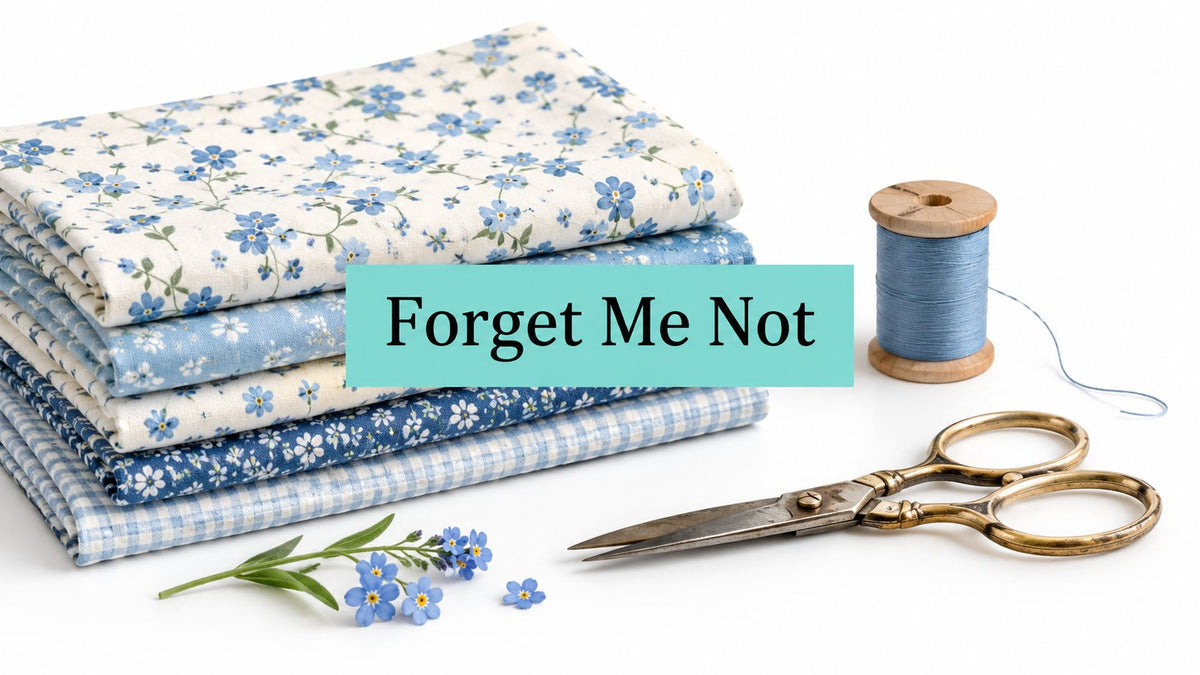
Forget me not fabric is a floral textile featuring small, five-petaled blue blossoms, and its most important meaning is remembrance and fidelity. It can be printed on traditional quilting cotton or made as ultra-soft minky, which makes it suitable for memorial quilts, baby blankets, and heartfelt gifts.
I first noticed how much emotion a tiny blue flower can carry when a quilter chose it for a keepsake blanket made from family clothing. The pattern looked delicate, but the finished piece felt intentional, almost like a quiet way of saying, “You're remembered.”
What Exactly Is Forget Me Not Fabric
Forget me not fabric is fabric decorated with the recognizable forget-me-not flower, usually shown as compact blue blossoms with green foliage. The pattern is more than a generic floral because the flower has long been associated with remembrance, loyalty, fidelity, and enduring affection.
The plant most often connected with the motif is Myosotis scorpioides, although other cultivated Myosotis species are also sold under the same common name. That means the phrase identifies a design theme, not one standardized textile composition. A forget-me-not print might appear on quilting cotton, woven home décor fabric, embroidered material, or soft minky.
For quilters, the first practical step is to separate the print from the fabric base:
- Identify the fiber. Check whether the fabric is cotton, polyester, a blend, or another construction.
- Check the intended use. A crisp woven cotton behaves differently from a plush pile fabric.
- Read the care information. Washing, drying, shrinkage, and color stability depend on the actual textile.
- Match the texture to the recipient. A structured cotton suits piecing, while minky brings warmth and softness to blankets and gifts.
If you're new to plush fabric, this guide to what Cuddle minky fabric is helps explain why a familiar floral design can feel completely different on a soft pile surface.
The name also shouldn't be treated as a performance guarantee. A blue colorway called “Forget-Me-Not” might be a durable upholstery textile, a delicate cotton print, or a luxurious polyester minky. Always choose by fiber, width, weight, finish, and care requirements, not by the color name alone.
Why Is This Flower So Significant in Fabric Design
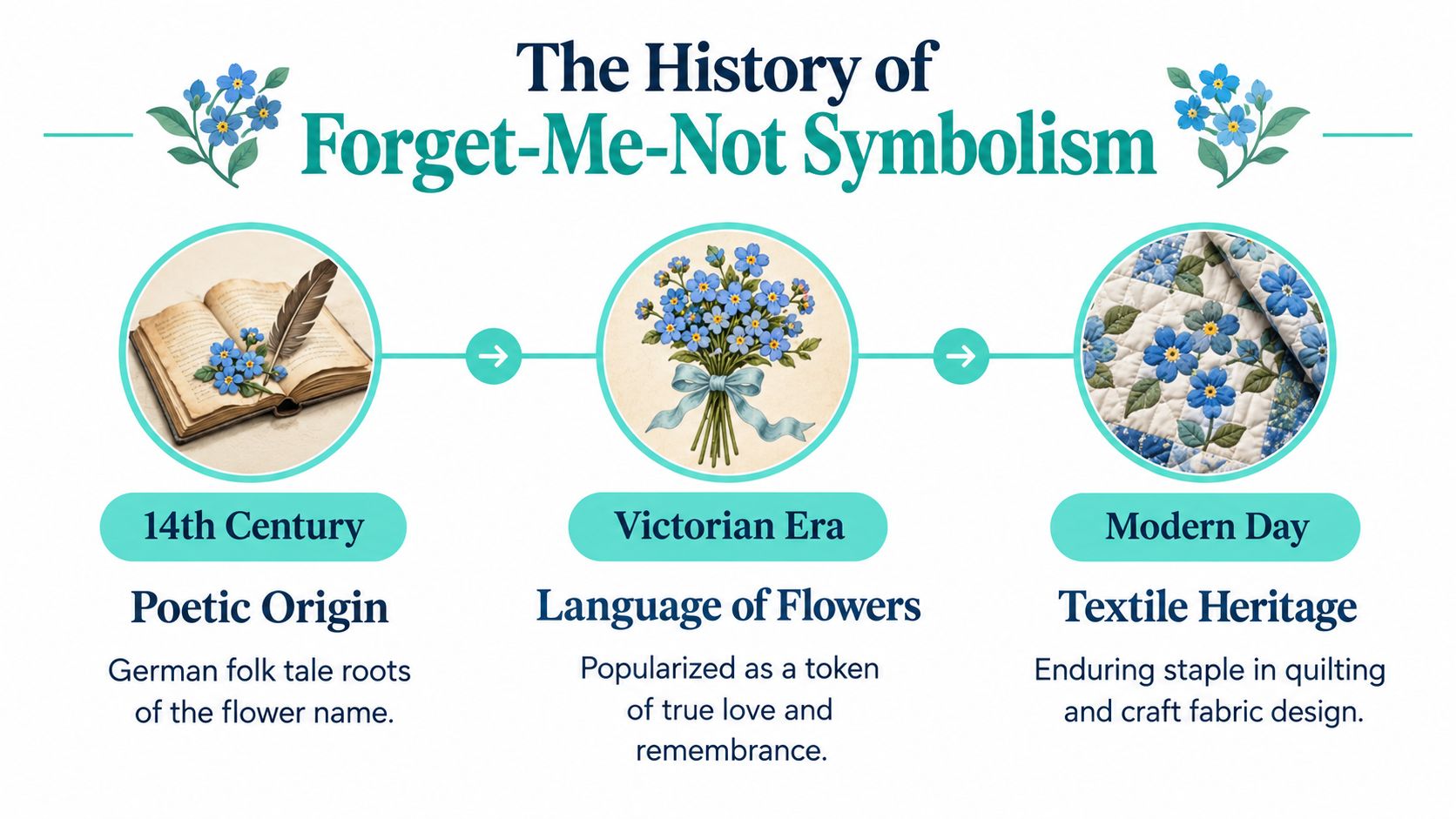
The forget-me-not's meaning developed long before modern quilting fabrics. The Metropolitan Museum of Art records older names for the flower, including the Old French ne m'oubliez mye and Middle High German vergiz min niht. These names show that associations with remembrance existed before the modern English name became widespread. The museum's history of the forget-me-not also describes the familiar story of a knight swept away while gathering flowers as a legend, rather than verified history.
The stronger historical evidence comes from the flower's use as a token of steadfastness by fifteenth-century German love poets. The museum also connects the flower's meaning with the medieval association between blue and fidelity. That combination helps explain why the blue blossom still feels especially appropriate for promises, keepsakes, and personal gifts.
How did the Victorian period shape the motif
By the Victorian period, forget-me-nots appeared on valentines. Their small blue blossoms communicated faithful memory and romantic constancy, giving the flower a place in the era's language of sentiment.
That history still influences how makers use the print today. The design can express:
- Remembrance: A memorial quilt or comfort blanket can use the flowers as a gentle visual tribute.
- Fidelity: The motif suits wedding gifts, anniversary pieces, and projects celebrating a lasting relationship.
- Family connection: A quilt made from clothing scraps gains another layer of meaning when paired with a flower associated with memory.
- Affection: The pattern works beautifully for baby gifts, pillows, scarves, and handmade items for a friend.
The flower also has a documented twentieth-century memorial dimension. A gardening publication records that European Freemasons selected the forget-me-not as a symbol of their work during World War II, adding a modern remembrance layer to its medieval and Victorian history. This historical overview of forget-me-nots connects those layers with the flower's familiar five-petaled blue form.
Design insight: A forget-me-not print gives a sentimental project a visual story without requiring a large motif or a literal message.
That makes the pattern remarkably adaptable. It can feel traditional in a heritage quilt, gentle in a nursery blanket, or elegantly understated in a home accessory. The emotional meaning remains present, but the maker can decide how openly to express it.
What Kinds of Forget Me Not Fabric Can You Buy
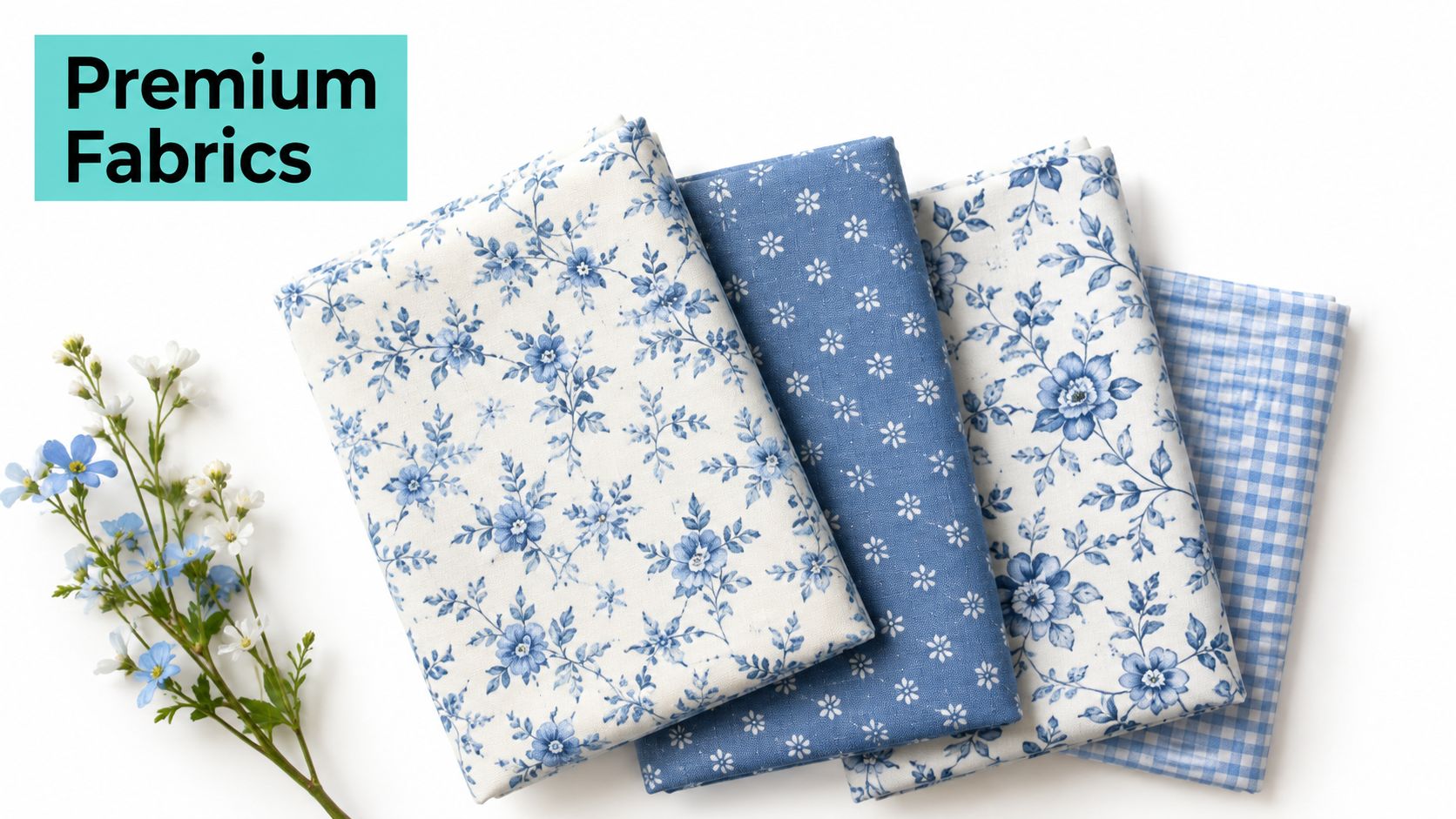
The best choice depends on the problem you're trying to solve. Quilting cotton gives you a stable surface for cutting and piecing, while Shannon Cuddle® minky adds a plush hand and comforting warmth that suits blankets, quilt backs, and gifts.
A documented premium quilting cotton example is 100% cotton, approximately 145 gsm, with estimated shrinkage of 3 to 5%. The product guidance recommends prewashing at 30°C or below, especially before cutting patchwork pieces. See the documented cotton forget-me-not fabric specifications.
Minky requires a different decision. Its polyester construction and plush surface make it attractive for cozy projects, but you need to check the specific pile, width, and care information. If your priority is a soft quilt back or a tactile baby blanket, browse the Shannon Cuddle digital prints and minky fabric collection.
How do cotton and minky compare
| Feature | Quilting Cotton | Shannon Cuddle® Minky |
|---|---|---|
| Surface | Smooth, woven, and structured | Plush, soft, and tactile |
| Best fit | Piecing, appliqué, blocks, and structured accessories | Blankets, quilt backs, pillows, and comfort gifts |
| Shrinkage concern | A documented cotton example estimates 3 to 5% shrinkage | Follow the specific product's care guidance |
| Sewing feel | Stable and easy to mark | May shift or shed lint while cutting |
| Emotional effect | Crisp, traditional, and heirloom-like | Warm, cozy, and immediately comforting |
| Main buying check | Fiber content and prewash advice | Pile, width, composition, and care instructions |
Cotton is often the straightforward choice for a pieced top, especially when accurate seams matter. Minky becomes the stronger option when the finished piece needs softness against the skin or when the texture itself is part of the gift.
If you want a custom repeat, colorway, or artwork rather than a stocked print, you can also explore this resource for designing your own fabric. Whatever route you choose, order or cut from the project's purpose first, then confirm the fabric's technical details.
A practical buying rule: Never assume that “forget-me-not” tells you how the fabric will wash, stretch, shrink, or wear. The composition and construction decide that.
How Can You Use Forget Me Not Prints in Projects
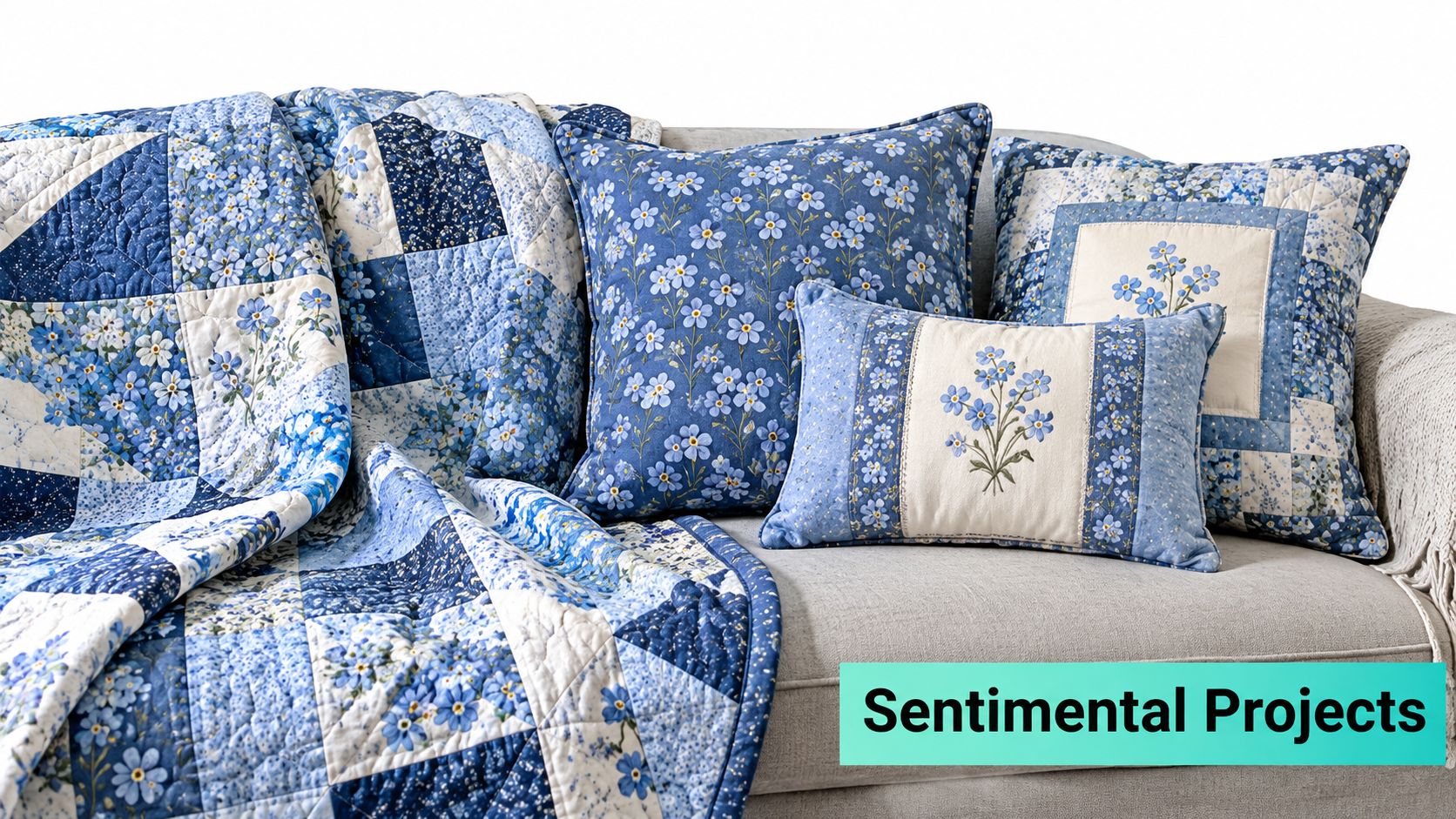
Forget-me-not prints work best when the project already has a personal purpose. The compact flower repeats easily across blocks, borders, accessories, and all-over layouts, so you can use it as a quiet background or make it the visual focus.
Which projects suit the symbolism
Memory quilts are an especially natural fit. Combine clothing pieces, familiar colors, or meaningful scraps with a forget-me-not minky backing. The flower reinforces the purpose of the quilt without overpowering the original fabrics.
Baby blankets benefit from the pattern's gentle scale. Blue blossoms can support a traditional nursery palette, but they don't limit the blanket to one gender or one decorating style. A plush backing can also make a simple quilt feel more inviting during everyday use.
Friendship gifts can use the motif in a pillow, lap quilt, scarf, or small accessory. The flower's long association with faithful remembrance gives a handmade gift a clear emotional reason, even if the finished item remains understated.
Heritage quilting lets the historical layers become part of the design. Pair the floral print with reproduction-inspired solids, calm neutrals, or fabrics inherited from a relative, then let the blue blossoms connect the old and new elements.
How can you make the project easier
Start with the finished object, not the fabric yardage. A pillow needs a different amount and construction from a throw, while a quilt back needs enough width and length for loading, trimming, and quilting.
- Choose a coordinated cut: Curated three-yard minky cuts can simplify planning for a throw-sized project.
- Build a comfort gift: A minky pillow kit gives you a focused project with a soft, useful result.
- Use a panel thoughtfully: If the design has a central image, combine it with forget-me-not yardage for borders or a coordinating back. These fabric panel project ideas can help you think beyond an all-over repeat.
- Test the contrast: Blue and white can create strong visual contrast, so place a small swatch beside the backing and batting before committing to the full layout.
For a plush quilt, sew with the pile direction in mind and keep the design simple enough that the tactile surface remains visible. The flower's compact shape is also useful for accessories because it won't disappear as easily as a large, widely spaced botanical.
A short visual demonstration can help when you're deciding how to approach a new minky project.
Whether you make a memorial quilt or a small gift, the design works because it carries meaning without demanding attention. That balance is what keeps forget-me-not fabric useful across generations of projects.
What Is the Best Way to Care for Minky Fabric Prints
Minky care is simpler than many first-time makers expect. The central goal is to protect the plush pile from excess heat, friction, harsh products, and unnecessary agitation.
A care guide recommends washing minky at 40°C with mild detergent, skipping fabric softener because it can coat the fibers and leave a sticky feel, and tumble-drying on low heat. These minky care recommendations are useful for blankets, quilt backs, and other projects where softness matters.
What should you do before the first wash
If the fabric is uncut, test a small swatch first. This lets you check for pile changes, lint, color transfer, and the way the print looks after washing before those variables affect a full project.
For a finished blanket, turn it according to the care label and avoid adding unnecessary abrasion. A short, gentle cycle and low-temperature drying are sensible starting points, but the manufacturer's instructions should take priority when they differ.
- Use mild detergent: Strong formulas can be harder on color and surface texture.
- Skip softener: The coating may change the hand of the plush pile.
- Choose low heat: High heat can affect softness and surface appearance.
- Air-dry when practical: This reduces heat exposure when you have enough space.
- Inspect after washing: Look for matting, loose lint, or color movement before repeating the same routine.
How can you reduce loose fibers
Fabric structure, thickness, density, fiber type, finishing, and treatment all influence microfiber shedding. A 2025 review found that double-sided fleece released more fibers than several other polyester structures, so you shouldn't assume every synthetic fabric behaves identically. The review of microfiber release from textiles also reports that some cotton and wool samples produced comparable microfiber quantities, which means cotton isn't automatically a lower-shedding alternative.
A separate 2025 household study measured an average of 5,849,943 microfibers per liter across wash trials and reported that optimizing temperature and cycle time reduced shedding, although some overall laundering conditions showed no significant difference. Read the household laundering study.
For broader fabric organization, this resource on storage and maintenance advice offers useful ideas that can complement the specific care label. For detailed blanket guidance, keep the Luxe Cuddle washing guide nearby.
Best practice: Test the exact fabric and the exact care routine before washing a sentimental finished gift.
Where Can You Find Premium Forget Me Not Fabric
A meaningful print deserves a fabric choice that matches its intended use. For a pieced top, look for stable quilting cotton with clear shrinkage information. For a soft blanket, baby gift, or quilt back, compare the pile and care requirements of Shannon Cuddle® and Luxe Cuddle® options rather than choosing only by the blue colorway.
If you're preparing a quilt for professional finishing, plan the backing before you order. For a mail-in longarm service, the backing should extend at least 4 inches on all four sides of the quilt top, providing material for frame attachment and final trimming. This quilt backing calculator gives the practical measurement method, but the written requirements of your chosen service should always take priority.
That extra margin is especially important when you're pairing a sentimental top with plush minky. Avoid a last-minute seam if an extra-wide backing can give the quilt a cleaner finish. You can also review this guide on where to buy material for quilts before deciding between yardage, curated cuts, and extra-wide options.
For shoppers who want a specialist rather than a general fabric catalog, On Pins & Needles Quilting Co. focuses on premium minky, including Shannon Fabrics Cuddle® and Luxe Cuddle® textures such as Hide, Snowy Owl, and Fawn. The shop also offers curated cuts, kits, extra-wide options, and Mail-in Longarm services, backed by hundreds of verified reviews.
New customers can use the 15% first-order coupon, and orders of $70 or more qualify for free U.S. shipping. Those offers can make it easier to gather the backing, coordinating fabric, or kit you need for a complete project.
On Pins & Needles Quilting Co. offers premium forget me not fabric options, soft Shannon Cuddle® textures, curated project cuts, and convenient Mail-in Longarm finishing. Visit On Pins & Needles Quilting Co. to choose the right minky for your meaningful quilt or gift, then use the 15% first-order offer and free shipping on orders of $70 or more when eligible.