
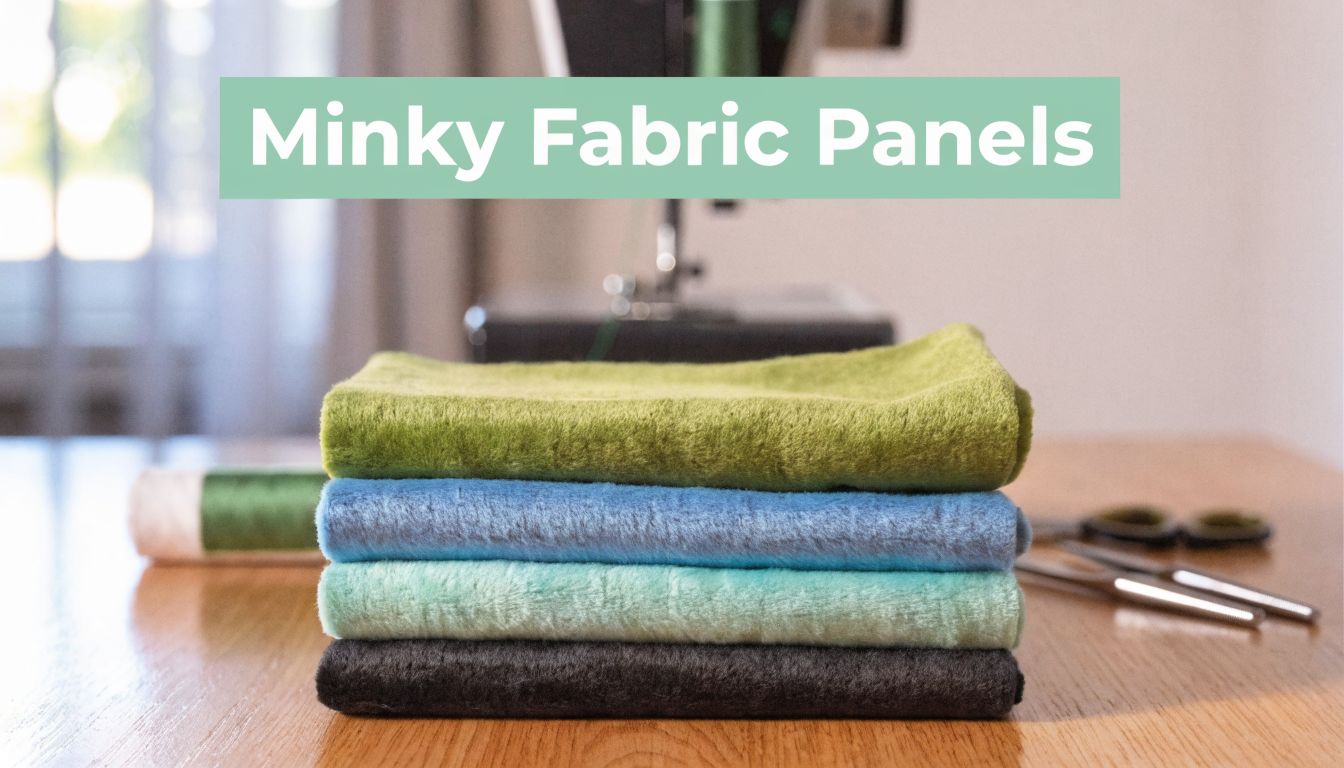
Minky fabric panels for quilting are pre-printed, single pieces of plush polyester fabric designed to be used as a quilt's focal point, a complete baby blanket top, or an ultra-soft quilt back. They save piecing time, but they still need smart handling because minky is a knit with nap and stretch, not a stable woven quilting cotton.
You bought a gorgeous panel because the design was done, the softness sold you, and the project looked simple. Then questions started. Should the nap run up or down? Will it stretch out of shape? Is a panel better as the quilt front, the back, or both?
Minky fabric panels for quilting work beautifully when you treat them like plush knit fabric first and printed fabric second. That’s the difference between a smooth, gift-worthy finish and a project that fights you all the way to the binding.
What Exactly Are Minky Fabric Panels
A minky panel is one cohesive printed piece rather than fabric you cut repeatedly from yardage. In quilting, that usually means one of three things: a ready-made focal image for the quilt top, a wholecloth-style baby blanket front, or a large plush piece used as the quilt back.
That’s what makes panels different from standard cut yardage. With yardage, you create the visual structure by piecing. With a panel, the design is already doing most of the visual work.

What makes minky different from cotton panels
Minky is manufactured as 100% polyester knit material and comes in varying weights and pile heights, with most minky made as a one-sided fabric to balance texture and production efficiency, as noted in this explanation of what minky fabric is and how it's used. That knit construction is why minky feels soft and plush right away, and it also helps with color retention.
A cotton panel behaves like quilting cotton. A minky panel doesn’t.
It has more give, more surface texture, and a directional pile. If you cut, pin, or sew it the way you’d handle a cotton panel, the fabric usually lets you know fast.
A panel simplifies the design side of the project. It does not remove the need for careful prep.
When a panel is the smarter choice
Panels make the most sense when the goal is speed, softness, or visual impact.
They’re especially useful for:
- Fast baby gifts: One printed panel, backing, and binding can become a complete project quickly.
- Focal quilts: A single central image saves you from piecing a complicated center block arrangement.
- Soft-backed quilts: A plush panel on the back changes how the finished quilt feels in everyday use.
- Beginner-friendly layouts: You can spend less time designing and more time learning how minky behaves.
If you’re still sorting out the difference between cuddle, minky, and quilting applications, OPN’s guide on what is cuddle minky fabric is a useful starting point.
How Do I Choose the Right Minky Panel Texture
You see it most often at the cutting table. The print is perfect, but the wrong texture turns a simple panel project into extra work. Detail gets lost in heavy pile, seams show more than expected, or the backing fights the top instead of supporting it.
Texture decides more than softness. It affects how clearly the artwork reads, how much nap you see under light, how obvious seams look, and how easy the project is to finish cleanly.
The first question is simple. Is the panel supposed to be looked at, cuddled hard, or asked to do both?
Start with the job the panel has to do
If the printed image is the main feature, choose a quieter surface. Smooth cuddle keeps edges, faces, lettering, and small printed details easier to see. That matters on nursery panels, character panels, and scenic prints where the design does the visual work.
If the project is more about feel, a textured luxe finish earns its place. Higher pile gives the quilt a richer hand and can soften the look of joins, especially on backs that need piecing.
That trade-off is real. More texture gives you more forgiveness at the seam line, but it can mute fine printed detail.
What pile and nap change in practice
Directional nap matters most once the quilt is under real light or spread across a bed. A panel can look lighter from one direction and darker from the other. On a single panel project, that usually is not a problem. On a pieced backing or a quilt with borders, mismatched nap direction is one of the first things experienced quilters notice.
Pile height matters for a different reason. Taller, denser textures tend to blur seam lines. Smoother surfaces show them more clearly. If I know a backing will be pieced, or I want a more forgiving finish for an everyday-use quilt, I usually steer quilters toward a luxe texture rather than the flattest option.
Shannon Cuddle vs. Luxe Cuddle at a glance
| Feature | Shannon Cuddle® | Shannon Luxe Cuddle® |
|---|---|---|
| Surface feel | Soft, plush, often simpler surface | Plush with more texture variation and depth |
| Common texture profile | Smooth or simpler cuddle styles | More pronounced textures |
| Best use | Baby blankets, simple tops, straightforward backing | Premium backs, pieced backs, projects where seam visibility matters |
| Nap visibility | Visible, but usually less dramatic | More noticeable directional surface |
| Seam concealment | Moderate, depends on print and color | Better in higher-pile textures |
| Project vibe | Clean and simple | Richer, more dimensional finish |
A practical way to choose
Use these guidelines at the fabric table:
- Choose smooth cuddle for detailed artwork, printed names, or panels you want to read clearly from across the room.
- Choose luxe texture for throws, nursery quilts, and gift quilts where touch is part of the appeal.
- Choose higher pile if the backing may need a seam and you do not want that seam to stand out.
- Choose a simpler texture for your first minky panel project, because it gives you fewer variables to manage while cutting and quilting.
Shop rule: Quiet surface for visual detail. Deeper texture for comfort, seam disguise, and a more plush finish.
This is also where curated kits save people trouble. A good panel choice is only half the decision. The backing texture has to cooperate with the front, the project size, and the amount of quilting you want to do. OPN helps quilters avoid the usual mismatch by pairing panels with compatible backings and project paths, including options that work well for a simple minky baby blanket project.
If you are comparing finishes for the back or border fabric, browsing Luxe Cuddle collection and Shannon Cuddle minky fabric side by side makes the trade-offs easier to judge before you cut.
What Are the Best Projects for Minky Panels
Some fabrics ask for a complicated pattern. Minky panels usually don’t. Their strength is that they arrive with enough visual interest to anchor a project without a lot of extra engineering.
Three projects that make sense
-
A focal-point quilt top
Use the panel as the center and frame it with cotton or minky borders. This works well when you want a fast quilt top that still looks planned. The panel carries the theme, and the borders set the scale. -
A wholecloth baby or toddler blanket
This is one of the most practical uses. Pair the panel with backing, keep the quilting simple, and finish with binding. If you need a starting point, this tutorial on how to make a minky baby blanket is the kind of project path that keeps beginners out of trouble. -
A plush quilt back
Some panels don’t belong on the front at all. They work better as a dramatic back that turns a pieced quilt top into something much softer and more giftable.
Which quilter each project suits
A new quilter often does best with the wholecloth approach because there are fewer seams to manage. A more experienced piecer may prefer using the panel as a center medallion, especially when they want to combine print, border work, and custom quilting.
Gift makers usually love the back-panel approach. The cotton top gives structure and visual detail, while the minky side becomes the side everyone wants to touch.
If you want a project that finishes faster and still feels special, start with the panel and simplify the rest of the layout.
Offer note: If you’re stocking up for a panel project, OPN offers 15% off a first order and free U.S. shipping on orders over $70. That’s useful when you’re buying the panel, backing, binding, and a few notions in one pass.
A good place to browse if you want a ready-made visual centerpiece is a digital cuddle panel. If your project is more gift-focused, pairing a panel with a preplanned backing from the minky fabric by the yard collection usually keeps the build simple.
Why Do Quilters Prefer Extra-Wide Minky Panels
For larger quilts, standard-width minky is where many projects turn from fun to annoying. The issue isn’t just extra sewing. It’s controlling stretch across seams while keeping the backing flat enough to quilt cleanly.
Minky shows significant perpendicular stretch to the selvage edge, and that gets more noticeable on large backings. Using extra-wide, continuous panels reduces the need to manage that stretch across multiple seams, which helps lower the risk of puckering and distortion during quilting, especially on long-arm systems, according to this guide on minky quilt backing.
What extra-wide solves
When the back is one large piece instead of several joined widths, you remove a few common failure points:
- Fewer seams to align
- Less bulk in the backing
- Less chance for directional nap mismatches
- Simpler loading on a longarm
- Cleaner finish on large quilts

When piecing still makes sense
Piecing isn’t wrong. It’s just a trade-off.
If you already have the exact color or print you need in a narrower width, piecing can be worth it. It also makes sense when the backing seam can be hidden under a higher-pile luxe texture. But for queen and king projects, many quilters prefer to eliminate the seam problem instead of managing it.
That’s where extra-wide options earn their keep. They reduce setup time, reduce frustration, and make the quilting stage less risky.
For a deeper look at sizing logic and use cases, this article on extra-wide minky fabric in 110 inch widths is worth reading before you cut anything. If you’re shopping by width first, 90 inch and 110 inch cuddle minky backing is the most direct route.
How Do I Cut and Sew Minky Without Stretching or Shedding
A lot of minky trouble starts on the cutting table, not at the machine. The panel looks stable, so quilters square it up, tug it into place, and treat it like quilting cotton. That is usually the moment the problems begin.
Minky is a knit with pile and directional nap. It shifts more, stretches more, and leaves fuzz at the cut edge. Once you account for those traits, it becomes much easier to handle.

Start with nap before you cut
Run your hand across the surface first.
One direction feels smooth. The other direction lifts the pile. Choose that direction before you make a single cut, then keep every related piece consistent. If the nap changes from one section to another, the color can look mismatched even when the fabric is identical.
A few habits prevent most cutting problems:
- Keep the panel fully supported: A small mat or table edge invites stretching.
- Let the fabric relax naturally: Do not pull it square.
- Cut with nap in mind: Saving fabric is not worth reversing the pile on part of the project.
- Expect loose fibers at the edge: Clean cuts still shed.
Cutting minky right side down usually helps contain some of the fuzz. It also gives better visibility on many printed panels, especially when you are trimming around a design layout. If you are using a preprinted layout, this guide to cut and sew fabric panels is a useful reference before you trim anything.
Control matters more than speed
Minky behaves best when it is handled gently and supported well. Fast cutting, rushed pinning, and pulling from the needle side create the distortion people blame on the fabric.
At the machine, use more control points than you would with cotton. Clips or pins placed close together help keep the layers from creeping apart. Smooth the layers together on the table first, then sew. Do not stretch either side to make the edges match. Ease them into alignment and let the feed system move the fabric.
I also recommend a test seam on scraps whenever the panel and backing have different pile heights. That small step can save a lot of unpicking.
Basting decides how the quilt will behave later
This is the stage where many minky quilts go right, or go sideways.
The goal is a flat, supported quilt sandwich. Minky should be held taut enough to remove slack, but not stretched. If it is basted loosely, it can pucker during quilting. If it is basted under tension, it can rebound and distort the finished quilt.
Pins often give better control than spray alone on plush backings, especially for quilters working on a domestic machine. The extra handling time is worth it. Good basting reduces surprises later.
What I tell quilters to avoid
These mistakes show up over and over:
- Do not tug while sewing: Tugging creates ripples and stretched edges.
- Do not force the panel into cotton habits: Minky needs more support and more restraint.
- Do not rely on heat to flatten problems: High pile can crush or shift.
- Do not skimp on cleanup and prep: A few extra minutes before sewing usually save a lot of frustration later.
For many quilters, the easiest path is to skip avoidable problems at the start. A well-matched panel kit, a compatible backing, and enough width to avoid piecing remove several common failure points before the first seam is sewn. That is one reason OPN curates minky kits and extra-wide backing options together. The fabric choices are already set up to work as a quilt, not just look good on a shelf.
A short demo can help if you’re more visual than verbal:
What If I Dont Want to Quilt the Minky Myself
That’s a reasonable decision. Piecing a quilt top and quilting a minky-backed quilt are not the same task.
A domestic machine can handle some minky projects, especially smaller ones. But once the quilt gets larger, the bulk, drag, and shifting become the part many quilters stop enjoying. The top may be finished beautifully and still stall out at the quilting stage.
When outsourcing makes sense
Longarm quilting is often the cleaner option when:
- The backing is extra wide and heavy
- The quilt sandwich feels bulky on your home machine
- You want edge-to-edge quilting without fighting drag
- You’d rather not risk puckers on a gift quilt
Some quilters enjoy every part of the process. Others enjoy piecing and binding, but not wrestling plush backing through a domestic throat space. Both approaches are valid.
What a mail-in option changes
A mail-in service removes the hardest mechanical part of the project. You prep the top and backing correctly, ship it, and let a longarm handle the stitching path and the fabric control.
OPN Quilting’s Mail-in Longarm Quilting Service is one example of that kind of workflow. The service includes batting, thread, and free return shipping, and the company notes that it has hundreds of verified reviews. For quilters working with plush backings, the main value is straightforward: you avoid forcing a minky quilt through equipment that isn’t enjoyable for the job.
If the top is done and the quilting step is what’s stopping you, outsourcing is often the difference between a finished quilt and a folded project stack.
If you want to compare designs before sending anything out, the edge-to-edge quilting pattern gallery helps narrow the look you want.
Where Can I Buy Curated Minky Panel Kits
Buying a panel is easy. Buying the right companion pieces is where beginners often lose momentum.
They pick a panel, then hesitate over backing, trim, notions, or project size. That’s where a curated kit helps. Instead of assembling every part from scratch, you start with a bundle planned for a specific result.
Why kits work for beginners and busy makers
Kits remove several common problems at once:
- They reduce decision fatigue: You’re not matching every component from a blank slate.
- They cut down waste: Preplanned quantities are easier to manage than overbuying yardage.
- They make gifting simpler: The project path is clearer from the start.
- They help repeat sellers: Consistency matters if you make multiples for craft shows or online shops.
For panel shoppers, the most useful kit-adjacent category is often Studio Hoffmann Digital Cuddle Panels, because the design direction is already established and easier to build around.
What to look for in a curated option
A solid kit or curated project should answer these questions before you checkout:
-
What is the finished project?
Pillow, scarf, baby blanket, quilt back, or panel top all require different planning. -
Are the pieces sized for that use?
Good curation saves you from awkward leftovers or missing material. -
Does it simplify a known minky pain point?
The best kits don’t just bundle fabric. They remove guesswork.
For shoppers who want lower-friction minky projects, minky fabric kits are the obvious category to browse. If your preference leans toward finished accessories rather than quilting from scratch, minky pillow kits with forms and infinity scarf kits are practical options because the end use is already defined.
Your Minky Panel Questions Answered
How do I wash a finished minky quilt and keep it soft
Wash it in cold water on a gentle cycle and tumble dry on a low or no-heat setting. Skip fabric softeners, because they can coat the fibers and reduce the plush feel over time, as noted in this discussion of minky care and softness retention.
That’s the care routine I recommend most often because it supports the texture people bought minky for in the first place.
Can I iron minky fabric panels
Use real caution here. Minky is polyester, and heat can damage pile.
If you need to flatten a seam allowance or tame an edge, use very low heat and a pressing cloth only when necessary. For plush or textured surfaces, many quilters get better results by finger-pressing, clipping, and letting quilting do the final flattening work.
Is minky safe for baby quilts
Yes, minky is commonly chosen for baby quilts. Its 100% polyester construction is associated with hypo-allergenic properties in the material description cited earlier, and the soft surface is one reason it shows up so often in nursery sewing.
The practical part matters too. A baby quilt gets handled, washed, dragged, folded, and loved hard. Softness is nice. Easy care matters just as much.
Should I use a panel on the front or the back
Use it on the front if the printed artwork is the point of the quilt. Use it on the back if the quilt top is already doing the visual work and you want the comfort upgrade.
If you’re choosing between the two, let the panel answer one question: is this piece meant to be looked at first, or touched first?
If you’re ready to start a project with Minky fabric panels for quilting, browse On Pins & Needles Quilting Co. for panels, extra-wide backing, kits, and finishing options. For a fast next step, Get 15% Off Your First Order.