
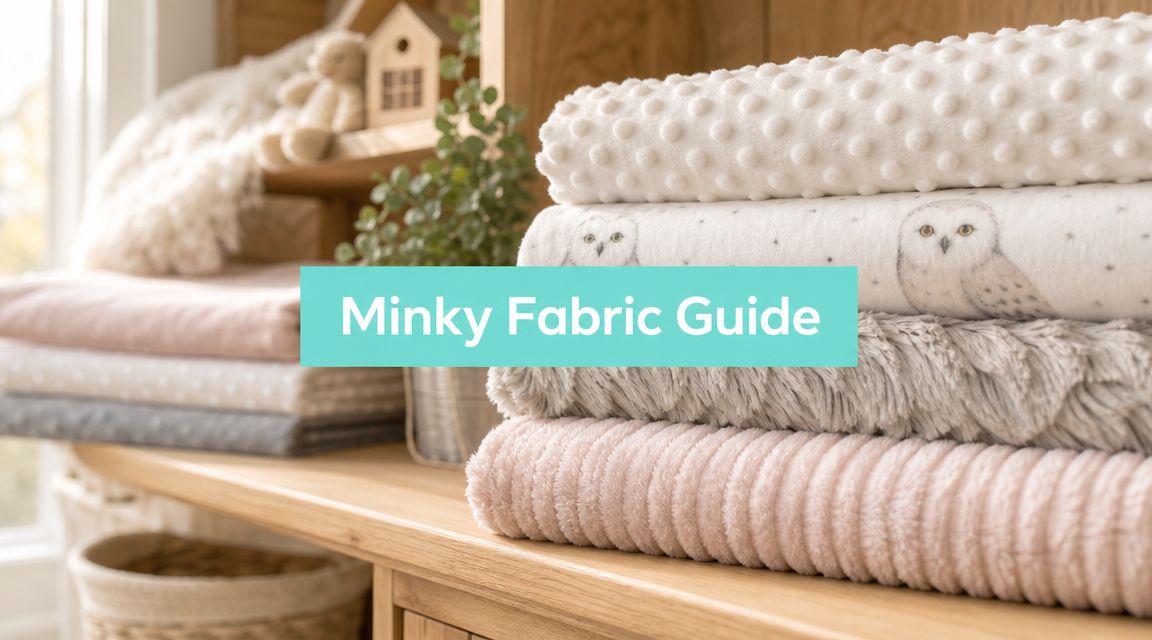
Juvenile and nursery minky fabric collections are curated assortments of 100% polyester plush fabric chosen for baby and child projects because they combine softness, durability, hypoallergenic qualities, and easy care. For most makers, the right choice isn't just the cutest print. It's the texture, width, and finish that fit how the item will be used.
If you're standing in front of a stack of buttery-soft minky and wondering what belongs in a nursery, you're asking the right question. A blanket for tummy time needs something different from a stroller throw, and a decorative nursery quilt doesn't behave the same way as a daily-use cuddle blanket.
At our cutting table, we see the same hesitation again and again. People know minky feels wonderful, but they're not always sure which version will sew well, wash well, and still look good after real family use. That's where juvenile and nursery minky fabric collections make sense. They narrow the field to fabrics that work for baby blankets, quilts, plush toys, and soft nursery accents.
The answer is simple: nursery minky works best when you choose by use case, not by softness alone.
What Are Juvenile and Nursery Minky Fabric Collections
Juvenile and nursery minky fabric collections are assortments of plush polyester fabrics selected specifically for baby and child projects. In practical terms, “juvenile” usually points to child-friendly prints, softer color stories, panel designs, and tactile textures that fit blankets, burp cloths, swaddling wraps, quilts, stuffed toys, and nursery comfort pieces.
The reason these collections exist is straightforward. Minky has become a nursery staple because the fabric is commonly described as 100% polyester, and it's valued for being hypoallergenic, durable, and easy to care for. That combination matters when a project will be handled constantly, washed often, and expected to stay soft instead of turning rough or tired after a few rounds in the laundry. A helpful plain-language background read is this guide on what Cuddle minky fabric is.
Why minky became a nursery favorite
The fabric's signature feel comes from its raised fibers, or pile. Many trade explanations of minky describe it as a more luxurious alternative to traditional fleece, which explains why it moved from a niche plush textile into a mainstream nursery material for comfort products rather than structured garments or custom-fit decor pieces.
That distinction matters when you're planning a project. Nursery minky shines when you want drape, touchability, warmth retention, and washability. It's not the fabric we reach for when we want crisp corners, sharp pleats, or a formal silhouette.
Practical rule: If the item needs to invite touch, tolerate repeated washing, and stay comforting against sensitive skin, minky is usually a strong fit. If it needs rigid structure, look elsewhere.
What belongs in a nursery collection
A good nursery assortment usually includes a mix of texture levels and project-friendly formats:
- Smooth basics: Useful for quilt backs, binding accents, simple baby blankets, and projects where you want less visual bulk.
- Textured surfaces: Dimple, embossed, or patterned piles bring tactile interest to sensory blankets and gift projects.
- Panels and themed prints: Helpful when you want a fast project with a polished front and a plush back.
- Wider cuts: Better for backings and larger nursery pieces where visible seams would distract from the finish.
One of the biggest mistakes beginners make is thinking all baby minky does the same job. It doesn't. A nursery throw that mostly lives over a rocker can handle a more dramatic texture than a play mat that gets dragged, folded, and washed repeatedly.
What these collections solve for real makers
Parents and gift-makers usually aren't shopping for fabric in the abstract. They're solving a problem. They want something soft enough to feel special, practical enough to survive daily life, and forgiving enough that the finished piece doesn't become “too nice to use.”
That's why juvenile and nursery minky fabric collections work so well. They remove a lot of guesswork and put the focus where it belongs: safety-minded softness, sensible construction, and easy-use comfort.
Which Minky Texture Is Right for Your Project
A nursery blanket can feel wonderful in the bolt, then turn into a frustrating project once you start sewing. The usual problem is texture choice. Pile height changes how the fabric feeds, how bulky the edges get, and how the finished piece holds up after regular use.
For baby projects, texture should match the job. A blanket for daily naps, stroller rides, and frequent washing needs different handling than a gift throw that mostly stays draped over a nursery chair.

If you want more project examples, our guide to textured minky fabric for baby blankets helps compare touch, appearance, and day-to-day practicality.
Minky Texture Comparison for Nursery Projects
| Texture Name | Feel & Pile Height | Best For | OPN Collection Link |
|---|---|---|---|
| Luxe Cuddle® | Higher pile, plush, fuller surface | Decorative nursery throws, cuddle blankets, statement gifts | Shop Luxe Cuddle textures |
| Cuddle® 3 | Medium pile, soft, versatile | Baby blankets, quilt backing, all-purpose nursery sewing | Browse Cuddle fabric |
| Silky Cuddle® | Dense, smooth, lower-profile feel | Cleaner-looking blankets, modern nursery styles, sleek bindings | See silky minky options |
| Dimple-style minky | Tactile surface with raised dots | Sensory baby blankets, simple gifts, playful nursery projects | Explore dimple minky fabrics |
| Specialty textures like Hide, Snowy Owl, and Fawn | More visual depth, often fuller texture | Luxe gifts, nursery accents, richer cuddle projects | Specialty Shannon textures are best chosen by feel and project needs rather than by a catch-all collection page |
What works best for everyday nursery use
For blankets that will live with a child, get dragged to the couch, folded into a diaper bag, and washed often, medium-pile minky is usually the safest pick. Cuddle® 3 sits in that middle range nicely. It feels plush without creating as much bulk at corners and binding edges.
We recommend this texture often at OPN Quilting Co. because it gives beginners and experienced quilters a little more control. It is easier to cut accurately, easier to baste to a cotton top, and less likely to fight you at the presser foot.
That matters more than shelf appeal.
When a luxe texture is worth it
Luxe Cuddle has a place in nursery sewing. It gives the finished piece more loft, stronger texture, and a rich hand that stands out in a gift box. For a keepsake blanket, nursery accent, or baby gift meant to feel extra special, that added pile can be the right trade.
There is still a cost. Higher-pile textures shed more during cutting, build more thickness in the seam allowance, and can make turning and topstitching less tidy. They also show pressure points differently, so an edge that looks crisp in a smoother minky may look puffier in a luxe one.
A chair throw and a play blanket do not ask the same thing from fabric.
Where silky and lower-profile textures do their best work
Silky and other lower-profile minkies are a smart choice when the front of the project already has enough going on. If you are pairing minky with appliqué, embroidery, piecing, or a printed nursery panel, a smoother backing keeps the whole project from feeling visually overloaded.
These textures also help with finish quality. Seams tend to settle flatter, bindings look cleaner, and the blanket drapes in a more controlled way. For modern nursery palettes or simpler gift sewing, that cleaner line often looks more polished than a heavily textured plush.
How we match texture to project type
Use the project first, then choose the fabric:
- Daily-use blanket: Choose smooth or medium-pile minky for easier sewing and easier care.
- Keepsake or gift blanket: Choose luxe textures if you want more loft and visual impact.
- Sensory blanket: Choose dimple or lightly embossed minky for tactile interest without extreme bulk.
- Panel quilt or detailed quilt top: Choose silky or lower-profile minky so the front design stays in focus.
- Simple two-layer baby blanket: Choose the texture that gives the feeling you want, but remember that fuller pile means thicker edges and more shifting during sewing.
The best texture is the one that supports the project from cutting through finishing. Softness gets attention first. Manageability, durability, and a clean finish are what make a nursery piece worth using every day.
How Do You Choose the Right Minky Fabric Width
Fabric width is one of those decisions that looks minor until it creates a seam right where you didn't want one. For nursery quilts and juvenile projects, width isn't just a math problem. It changes drape, nap consistency, and how polished the finished piece feels.
If you've ever fought a bulky center seam on the back of an otherwise sweet baby quilt, you already know why this matters.

Why extra width solves real problems
Shannon Fabrics explicitly notes that 90-inch-wide Cuddle is suitable for baby quilts, throws, and twin-size quilts in its guidance on minky plush fabric problems. That matters because wider minky can eliminate seams, reduce construction risk, and keep the nap running in one direction.
For nursery projects, that's not just a convenience issue. Seam placement is more noticeable on plush backings, especially in soft solid colors or simple room designs where every shadow line shows.
Standard width versus extra-wide
Here's the practical distinction most quilters need:
- Standard 44 to 45 inch minky: Works well for smaller blankets, nursery accessories, and pieced projects where seams are expected anyway.
- Wider minky options: Better for larger backings, throws, and toddler-size projects where a smooth uninterrupted back makes the whole quilt look more professional.
If you want a deeper look at backing strategy, this article on extra-wide minky fabric in 110 inch widths is worth keeping open while you plan.
When narrow width still makes sense
Not every project needs extra-wide minky. A lovey, burp cloth set, or compact stroller blanket may be easier and more economical with standard-width cuts. Smaller projects often let you place texture and print more deliberately, and they're easier to control at the cutting table.
But once a project crosses into quilt-back territory, piecing minky starts costing you more than fabric math suggests. You're managing nap direction, matching texture, controlling stretch, and trying to keep seam buildup from telegraphing through the quilt.
If the backing seam is the first thing you notice when you unfold the quilt, the width decision was wrong.
A width-first decision checklist
Use this before you buy:
- Choose standard width when the project is small, intentionally pieced, or meant to be quick.
- Choose extra-wide when you want a continuous nursery quilt back.
- Choose wider cuts when nap direction must stay visually consistent across the whole piece.
- Avoid piecing plush backings unless you have a design reason to do it.
- Plan for drape early because the wider, uninterrupted backing usually hangs better and feels more finished.
A lot of nursery sewing frustration disappears when you stop treating width like a background detail. For minky, width is part of the finish.
What Are the Easiest Minky Projects for Beginners
Most beginners don't struggle because minky is impossible. They struggle because they start with the wrong project. A full quilt back, slippery binding, and a high-pile texture is a rough way to learn.
The easiest wins come from projects that let you enjoy the fabric without forcing you to manage too many variables at once.

Start with projects that forgive small mistakes
A simple baby blanket is still the best beginner minky project because it teaches the important parts without overloading you. You learn how the nap behaves, how the fabric shifts, and how plush edges turn without asking your machine to handle a complex construction sequence.
Pre-cut options help here. Curated 2, 2.5, and 3 yard cuts remove a lot of measuring and layout stress, especially for gift-makers who want to get moving instead of debating yardage.
Good beginner projects that actually get finished
These are the projects we recommend most often:
- Turn-and-topstitch baby blanket: Fast, useful, and forgiving.
- Simple panel blanket: Lets the front design do the work while the minky adds softness on the back.
- Minky pillow kit: Small enough to finish in a sitting or two, and you don't need to invent the project from scratch.
- Infinity scarf kit: A nice choice if you want to practice handling plush fabric on a smaller scale before sewing for a nursery.
One practical route is to use minky pillow kits with forms when you want a contained first project. For baby gifting, many makers also start with pre-cut minky yardage because it reduces cutting-table mistakes.
Worth doing: Pick a project with straight seams, broad margins, and a finish that still looks good even if your topstitching isn't perfect.
A beginner-friendly workflow
This is the sequence that usually works:
- Choose a manageable texture, not the loftiest one on the shelf.
- Use clips instead of relying only on pins.
- Cut with the nap in mind before you stitch anything.
- Sew a simple form first. Blanket, pillow, or scarf.
- Wash the finished item once before gifting if you want to see how the texture settles.
If you want to watch the process before cutting into your fabric, this walkthrough is helpful:
A practical step-by-step companion is this guide on how to make a minky baby blanket.
First-order note: Many shoppers use the first-order discount to test a beginner project without overcommitting. There's also free U.S. shipping on orders over $70, which can make it easier to bundle a cut, a kit, and a coordinating backing.
Beginners do better when the project feels achievable on day one. That confidence matters more than squeezing every possible feature into a first attempt.
How Should You Wash and Care for Minky Items
Good minky care is simple, but it does need consistency. The goal is to preserve the pile, avoid residue on the fibers, and keep the fabric feeling soft instead of coated or heat-stressed.
This is one reason minky works so well in nurseries. Juvenile and nursery minky collections are built on a 100% polyester plush textile valued for being hypoallergenic and durable, and its nursery success is tied to combining comfort with the practical need for frequent washing, as described in this overview of minky fabric types, uses, and products.
The care routine that works
For finished baby blankets, quilt backs, toys, and soft nursery items, stick with a gentle routine:
- Wash in cool water: Lower temperatures are easier on plush polyester fibers.
- Choose a gentle cycle: Less agitation helps the pile stay tidy.
- Use mild detergent: Heavy products can leave residue that changes the hand.
- Skip fabric softener: It can coat the fibers instead of improving them.
- Dry on low heat or air dry: Heat is where people get into trouble with plush fabrics.
- Wash separately when possible: Towels, denim, and rough items can create unnecessary friction.
What usually causes problems
Most “my minky doesn't feel the same” complaints trace back to one of three things: residue, rough wash companions, or too much heat. The fabric isn't fragile, but plush polyester responds better to a low-stress routine than to a hot mixed load.
If you want a detailed care walkthrough, this guide on how to wash mink blankets gives a clear process in plain terms.
Care advice for gift-makers
If you're giving a baby blanket or quilt, include washing instructions with the gift. That small step protects your work and helps the recipient enjoy the fabric the way it's meant to feel.
A simple note is enough. Cool wash, mild detergent, no fabric softener, low heat. That's usually all they need.
Why Choose Professional Longarm Quilting for Minky
Quilting a minky-backed project on a domestic machine can be done. It can also be the point where a lovely nursery quilt turns into a wrestling match.
The problem isn't just thickness. It's the combination of bulk, drag, stretch, and the way plush backings behave when rolled, shifted, and stitched through a smaller throat space.

Where domestic machines hit their limit
Small nursery quilts are often where people think, “This should be easy.” But minky adds resistance under the quilt sandwich, and that resistance shows up as uneven feeding, shifting layers, and fatigue.
If your quilt top is crisp and your backing is plush, the challenge gets more obvious. You're trying to preserve a polished front while controlling a soft, movable back that doesn't always want to glide evenly.
What professional longarming changes
A longarm setup handles the quilt sandwich in a way a domestic machine doesn't. The project is loaded for support, the stitch path stays more consistent, and the bulk doesn't collect in your lap while you try to force it under a small opening.
That matters for nursery quilts because the finish is part of the gift. Smooth quilting lines, balanced tension, and an evenly managed backing all help the quilt look intentional instead of merely completed.
One option some quilters use is Mail-in Longarm quilting service, which includes batting, thread, and free return shipping. For pattern planning, the longarm pattern gallery helps match a juvenile quilt to motifs that suit the theme without overcomplicating the surface.
A baby quilt doesn't need fussy quilting to feel special. It needs even stitching, a calm backing, and a finish that lets the materials speak.
When longarming makes the most sense
Professional quilting is especially useful when:
- The backing is plush: Minky changes how the sandwich moves.
- The quilt is gift-bound: You want a clean finish without home-machine compromises.
- The top has piecing you care about: Distortion is harder to fix after the fact.
- You're short on time: Wrestling a backing for hours isn't always the best use of your sewing energy.
- The project should become an heirloom: Finishing quality matters more on keepsake nursery quilts.
The practical standard we use
If the quilt top is done and the only thing standing between you and a finished project is the quilting stage, be honest about whether your machine setup matches the job. Plenty of quilters are excellent piecers and still choose longarm finishing because it protects the work they've already put in.
That's not outsourcing the meaningful part. It's choosing the finishing method that suits the materials.
What Should You Look for When Buying Minky Online
You can fall in love with a nursery print on screen and still be disappointed when the package shows up. That usually happens because the listing sold the color story, not the fabric itself. With minky, the details that matter most are the ones that tell you how it will feel, sew, and hold up after washing.
A good online listing gives enough information to match the fabric to the project. That matters even more with juvenile and nursery minky, where the wrong choice can leave you with a backing that is too heavy for a baby quilt, too slick for the binding you planned, or too narrow for the cut you need.
Start with construction quality
Good minky is more than a soft surface. It comes down to pile consistency, base stability, finish, weight, and whether the color stays true after laundering. Shannon Fabrics explains those quality markers well in its guide on things to look for when purchasing minky plush fabric.
For practical buying, the question is simple. Does the shop tell you what you are purchasing, or does it rely on words like “luxury” and “super soft” to do all the work?
Signs the listing is useful, not just attractive
The strongest minky listings answer the questions a sewist asks at the cutting table, not just the questions a shopper asks while browsing.
Look for these details:
- Texture category: Smooth, dimple, embossed, luxe, or faux fur style textures behave differently under a presser foot and in finished nursery projects.
- Intended use: A listing should tell you whether the fabric suits backings, simple blankets, stuffed items, apparel accents, or decor.
- Clear width: This affects yardage, seam placement, and whether the fabric can back a quilt without piecing.
- Brand or texture family: Named collections usually give you a better sense of consistency from one order to the next.
- Close-up photos: You should be able to see pile direction, loft, and surface detail, not just a flat swatch shot.
That kind of clarity helps bridge the gap between admiring minky online and choosing the right one with confidence. It also saves beginners from buying a fabric that looks sweet for a nursery set but fights them through the whole project.
What to avoid
Some listings leave out the exact details that matter in real sewing. That is where mistakes happen.
Be careful with:
- Vague descriptions: If every option is described the same way, you still do not know what you are buying.
- Missing width information: That can turn a simple backing plan into an avoidable piecing job.
- No guidance on pile or texture: High-pile and low-pile minky are not interchangeable.
- Little or no customer feedback: Reviews often reveal whether the color, thickness, and softness matched expectations.
At OPN Quilting Co., we pay attention to how those details affect the whole project, not just the purchase. A nursery quilt backing has different demands than a cuddle blanket or a kit for a newer sewist. For background on the shop itself, about OPN Quilting Co. gives context, and the store is backed by hundreds of verified reviews.
A strong online minky shop gives you enough detail to judge how the fabric will feel and perform before the package arrives.
Frequently Asked Questions About Nursery Minky
Is minky fabric breathable enough for babies
Minky is a plush polyester fabric, so the better question is whether the specific project suits the way it will be used. It's commonly used for baby blankets, swaddling items, quilts, and comfort products, but project choice still matters. A light cuddle blanket and a thick layered nursery throw aren't the same thing.
For responsible use, match the fabric to the purpose. A supervised cuddle blanket is one thing. A heavily layered sleep environment is another.
Can I use minky for baby clothing
Sometimes, but it usually performs best in comfort items rather than structured apparel. The fabric's nursery identity is rooted in blankets, swaddles, quilts, throws, toys, and similarly soft-use items. If you want clean garment structure, minky often isn't the easiest answer.
Small apparel accents, linings, and cozy trims can work better than full structured garments.
What is the difference between Cuddle and Luxe Cuddle
The practical difference is the feel and pile character. Luxe Cuddle tends to have a richer, higher-profile texture with more visual depth. Standard Cuddle options are usually easier all-rounders for blankets, backings, and everyday nursery sewing.
If you're choosing between them, let the use case decide. Decorative throw or keepsake gift, luxe can be a fit. Frequent wash item or hard-use blanket, standard or medium-pile textures often behave better.
Is any soft minky good enough for a baby gift
No. Softness is only one part of the decision. A key consideration for nursery minky is matching texture to use case. As noted in the earlier discussion of project fit, a higher-pile luxe finish may suit a decorative throw better than a frequently washed play mat, where seam stability and durability matter more.
That's the part many gift-makers skip. The baby won't care which texture name sounds fancier. The family will notice what washes well and holds up.
What should I choose for a first nursery project
Start with a simple blanket, a panel-backed project, or a low-complexity item that doesn't ask you to manage too much bulk. Smooth to medium-pile minky is usually easier than the loftiest texture in the room.
If you want to buy for confidence instead of guesswork, start with a manageable cut, a clear texture category, and a project you can finish in a reasonable sitting.
If you're ready to turn all that softness into a finished project, browse On Pins & Needles Quilting Co. for nursery-friendly minky textures, extra-wide backing options, kits, and quilting services. If you're placing a first order, you can also use the first-order discount, and free U.S. shipping applies on orders over $70. Get 15% Off Your First Order