
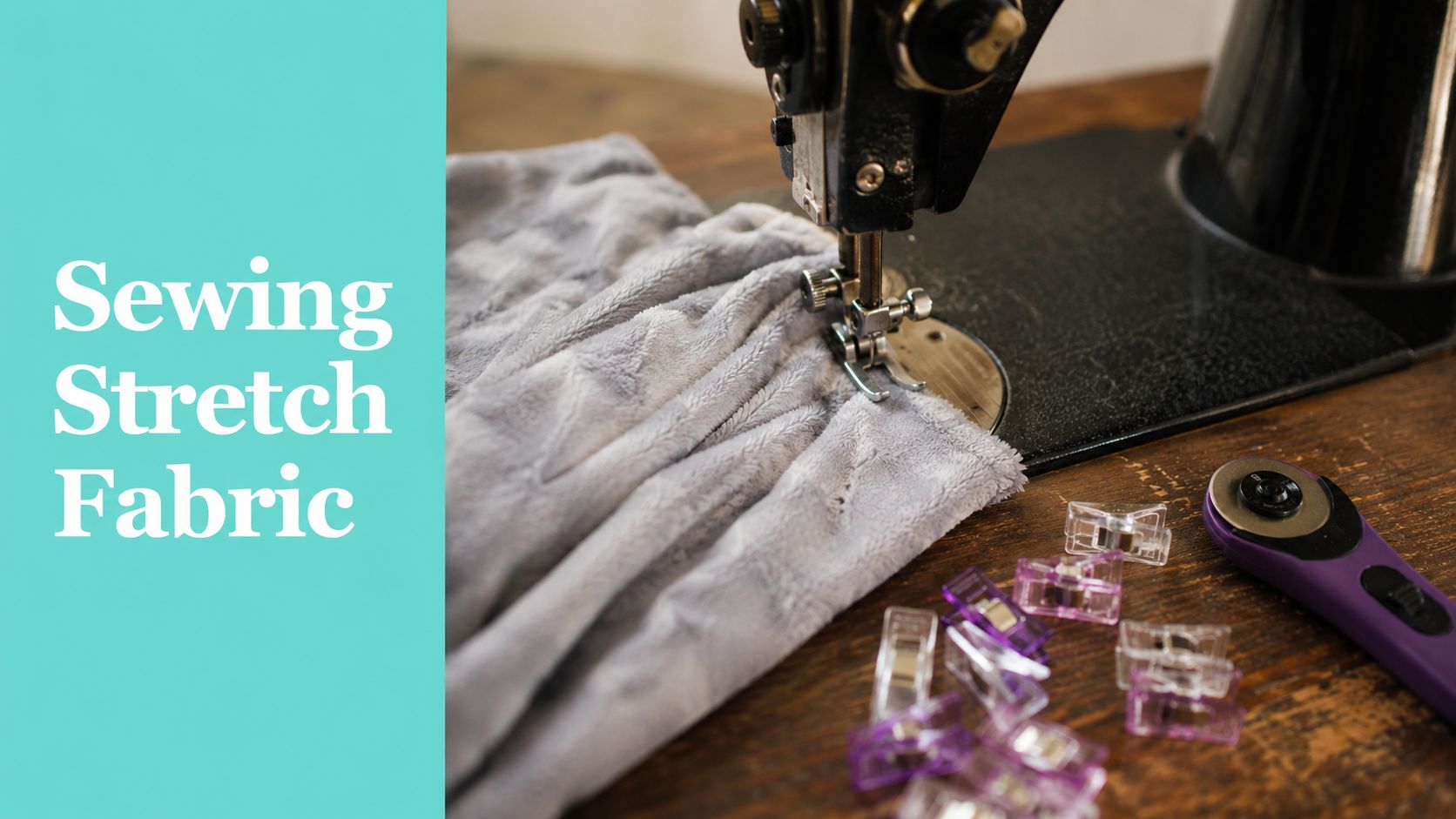
To sew with stretch fabric, use a ballpoint needle and a narrow zigzag stitch, such as 2.0 mm wide by 2.0 mm long, to prevent skipped stitches and let the seam stretch with the fabric. That combination is the difference between a seam that moves cleanly and one that pops, tunnels, or fights you on plush fabrics like minky.
If you're staring at a cut of soft, high-pile fabric and wondering why it suddenly feels harder than regular quilting cotton, you're not imagining it. Plush stretch fabrics shift, curl, and grab in ways that punish rushed prep, but they sew beautifully once you treat them like a different category of material instead of “just another fabric.”
How to sew with stretch fabric gets a lot easier when you stop expecting cotton rules to work on Shannon Cuddle. Around our shop, we've handled enough Hide, Snowy Owl, and Fawn textures to know that most frustration comes from three things: the wrong needle, the wrong stitch, and trying to force the fabric flat instead of supporting it.
Want the short version? Use the right needle, reduce drag, stabilize where needed, and let the machine do the feeding. That's how you get soft seams that look finished instead of stressed.
What Do I Need Before Sewing Stretch Fabric
You spread out a piece of Shannon Cuddle, line up the edges, and within a minute the nap has shifted, the cut edge is fuzzing, and the fabric suddenly feels twice as bulky as it did on the bolt. That is the moment to slow down and set up for plush stretch fabric, not regular quilting cotton.
High-pile minky asks for a different kind of prep because the stretch is only part of the job. The loft creates drag, the nap pushes layers away from each other, and the cut edges shed enough fiber to make a clean workspace matter. If you start with the right setup, the sewing itself gets much easier.
What should be on your table first
Before cutting anything important, gather the tools that solve minky-specific problems:
- A fresh ballpoint or stretch needle: Plush knits are far less forgiving of a dull or incorrect needle.
- Clips: They hold thick layers without distorting the pile the way frequent pinning can.
- A rotary cutter, mat, and ruler: Cutting flat with support helps prevent the fabric from stretching out of shape.
- A lint roller, small vacuum, or waste bin: Shannon Cuddle sheds at the cut edge, and that fluff travels.
- A test scrap from the same fabric: On minky, a quick sample saves more frustration than any guesswork.
Garment knits and plush minky are both stretch fabrics, but they do not punish the same mistakes. Apparel sewing usually revolves around fit, recovery, and body movement. Shannon Cuddle adds bulk control, nap direction, and surface drag to the list. If you also sew apparel, the guide to the best shirt material for POD gives useful context for how fabric choice changes the whole process.
Why prep matters more with plush stretch fabric
With minky, prep is what keeps a soft project from turning sloppy. I check nap direction first, then I test how much the fabric shifts when handled, and only then do I cut. That order matters. A fabric can have manageable stretch and still behave badly because the pile makes the layers crawl against each other.
A small practice piece tells you a lot. Sew a short sample, pull on the seam, and watch whether the stitches recover cleanly or the fabric ripples. This is also the right time to confirm thread choice. If you want a quick reference before you start, keep this thread weight chart for quilting nearby.
Practical rule: if the fabric feels bulky, slippery, or unusually plush in your hands, test it before cutting your full project. That habit saves fabric, time, and a lot of seam ripping.
Which Tools Prevent Stretch Fabric Headaches
A lot of stretch-fabric frustration starts before the first seam. With Shannon Cuddle, the pile grabs, the backing stretches, and a mediocre tool setup shows up fast in skipped stitches, creeping layers, and seams that never quite lie flat.

Which tool matters most
Start with the needle. For plush stretch fabrics, that choice affects stitch quality more than almost anything else.
The ballpoint or stretch needle usually gives the cleanest result because the tip slips between knit fibers instead of forcing its way through them. That matters even more on minky than on a flatter knit. The plush surface can hide problems until you tug on the seam and find skipped stitches all in a row. If you want help choosing a size, this guide to the best needle size for Shannon Cuddle fabric lays it out clearly.
I keep universal needles for wovens. On Cuddle, they cause too many avoidable problems.
Needle guide for stretch fabrics
| Needle Type | Best For | Why It Works |
|---|---|---|
| Ballpoint needle | General knit and plush stretch fabrics | Rounded tip slides between fibers instead of tearing them |
| Stretch needle | High-recovery, slippery stretch fabrics | Helps the machine form stitches more consistently on difficult knits |
| Universal needle | Wovens, not plush stretch sewing | More likely to cause damage or unreliable stitch formation on stretchy materials |
What else earns a permanent spot by the machine
A walking foot is high on my list for minky. On cotton, you can sometimes get away without one. On high-pile Cuddle, the top layer often creeps because the nap creates drag while the knit backing still wants to stretch. A walking foot helps both layers travel together, which means fewer twisted corners and less easing after the fact.
Fabric clips also beat pins for most plush projects. Pins can distort the edge, disappear into the pile, or leave you adjusting the layers every few inches. Clips hold the seam allowance without pushing the fabric out of shape, especially on bindings, pillow edges, and stacked quilt layers.
Keep these nearby:
- Walking foot: Feeds thick, plush layers more evenly.
- Fabric clips: Hold alignment better than pins on bulky, slippery edges.
- Rotary cutter and mat: Give cleaner cuts with less handling.
- Temporary adhesive spray: Helps when quilt sandwiches or appliqué layers drift.
- Quality thread with a bit of flexibility: Lets the seam move instead of feeling stiff.
The trade-off is simple. More control tools can slow the setup, but they save far more time than they cost. I would rather spend an extra minute clipping a Cuddle seam than spend twenty minutes unpicking one that stretched out under the presser foot.
If you want a low-pressure way to practice clipping, edge alignment, and soft-seam construction, minky pillow kits are a friendly place to start.
The best stretch-sewing tools make plush fabric predictable. That is the real win.
How Should I Cut and Prepare Minky Fabric
The first time a new sewist cuts high-pile minky, the usual reaction is the same. Fluff everywhere, edges shifting off the ruler, and two pieces that looked matched on the table suddenly do not match at all. Shannon Cuddle behaves differently from an ordinary stretch knit because the plush pile adds drag on top while the knit backing still has give underneath.

How do I cut plush minky without distorting it
Cutting goes better when the fabric stays flat and supported. I treat minky more like a fabric that needs managing than one that wants to behave on its own.
Use this sequence:
- Check the nap first: Run your hand across the pile and decide which direction it should lay before you cut paired pieces.
- Lay it flat without pulling: Smooth it into place with open hands. Do not stretch the knit backing to force it square.
- Cut from the back when possible: On many Cuddle fabrics, cutting through the backing helps reduce stray fibers and gives you a clearer line.
- Use a sharp rotary cutter for long edges: It keeps the fabric flatter than lifting it with scissors.
- Keep the piece in place as you cut: Weights help more than repeated handling.
- Vacuum or lint-roll as you go: Minky mess spreads fast once cut edges start rubbing together.
If you want a cleaner, step-by-step method for controlling shed and keeping your table manageable, this guide on how to cut minky fabric without the mess is a useful reference.
How should I prep the edges before sewing
Minky usually does not curl like a jersey knit, but the pile can make the edge look thicker and less precise than it really is. The issue is not only stretch. It is bulk, loft, and the way the nap pushes neighboring layers out of alignment.
Finger-press the seam allowance flat before stitching. On extra-plush textures, I also trim away loose fibers right at the raw edge so the seam line is easier to see and the layers seat together more cleanly. If a piece keeps shifting, clips placed closer than you think you need will save the seam.
Texture changes the prep. A deep-pile surface like Luxe Cuddle Hide takes more patience than a flatter dimple or smooth Cuddle because the loft hides the cut edge and adds thickness inside the seam. The trade-off is softness. The plusher the fabric, the more carefully you need to align, clip, and handle it before it ever reaches the machine.
Here's a useful visual if you like to see cutting and handling before trying it yourself.
Should I prewash minky
Usually, no.
Most Shannon Cuddle fabrics sew better straight from the bolt because prewashing can rough up the cut edges, increase lint, and make the pile look tired before the project is even assembled. For quilts, pillows, and most gifts, I skip prewashing and wash the finished piece the way it will be used later.
The exception is a project that will be paired with another fabric you know behaves differently in the wash. In that case, test both fabrics the same way before cutting. Matching real care conditions matters more than following one rule for every project.
What Are the Best Machine Settings and Stitches
You notice machine settings fastest on minky when the seam looks fine under the presser foot, then tunnels, waves, or pops the first time the fabric is handled. High-pile Cuddle is less forgiving than an ordinary knit because the loft adds drag, hides the stitch line, and encourages the layers to shift out of sync.
Start with a narrow zigzag. On most domestic machines, 2.0 mm wide by 2.0 mm long is a strong first test for Shannon Cuddle. If the fabric is especially dense or the seam needs a little more flexibility, widen and lengthen slightly to 2.5 to 3.0 mm. I rarely begin with a straight stitch on plush stretch seams because it has no give, and minky will find that weakness fast.
Which stitch should I start with
Use the stitch that matches the job:
- Narrow zigzag: Best everyday choice for joining minky pieces and for seams that need to flex.
- Slightly wider zigzag: Helpful on thicker, plusher Cuddle where the pile eats some of the seam's movement.
- Stretch stitch: Good if your machine makes a clean one and you do not mind unpicking it more slowly.
- Straight stitch: Reserve it for areas with little stress, or for topstitching after the seam is already secured.
The trade-off is simple. A tighter, smaller stitch looks cleaner. A stitch with more width or length usually survives handling better on plush fabric.
What settings reduce shifting and waviness
Presser foot pressure matters as much as stitch choice. If your machine lets you reduce it, back it off a little and test on scraps from the same fabric stack you plan to sew. Too much pressure can mash the pile and push the lower layer ahead faster than the top. That is one of the main reasons minky seams come out wavy even when the cutting was accurate.
A walking foot helps on long seams, quilt backs, and any pairing where one side is especially slippery or lofty. It does add bulk at the machine head, so I do not reach for it automatically on every small project. For cuddle blankets and plush quilt backs, though, it often earns its spot.
Keep your hands calm. Support the weight of the fabric on the table and guide it straight, but do not tug from the front or back. Minky stretches more easily than it looks, and the pile can disguise that distortion until the seam is finished.
What else helps stitches form cleanly on high-pile Cuddle
Use a fresh stretch or ballpoint needle, and change it sooner than you would on quilting cotton. Plush fibers and knit backing expose a dull needle quickly. If stitches skip, I first try a new needle before touching anything else.
Test tension on scraps. Thick pile changes how the top thread locks with the bobbin thread, especially when you are sewing through two plush layers. A balanced stitch should sink into the seam without pulling the fabric into ridges.
Slow down at bulky crossings. On Shannon Cuddle, that extra loft stacks up fast in hems, corners, and turned edges. Short pauses and hand-wheeling over the thickest spot usually give a cleaner result than trying to power through.
If you want a practical reference for comparing stitch size across different projects, this stitch length for quilting guide is a useful place to start.
One unexpected place to study construction choices is Snugglebug's creation story. Soft projects show clearly how stitch choice, bulk control, and fabric behavior work together once plush fabric leaves the cutting table and becomes something meant to be handled.
How Can I Apply These Skills to a Real Project
You cut a beautiful piece of Cuddle, run it through the machine, and halfway through the first seam the layers start creeping in opposite directions. That is why I like to teach stretch sewing on a project you can finish in one sitting. High-pile minky behaves differently from an ordinary knit, and a small win builds the right habits fast.
For many beginners, the best first project is a baby blanket, infinity scarf, or quilt back. Each one lets you practice with nap direction, bulk, and edge control without adding garment fit to the mix.

What's the easiest real project for beginners
A scarf or simple baby blanket is usually the smartest place to start. You can focus on feeding the fabric evenly and keeping the pile under control, which are the two skills that matter most with Shannon Cuddle.
If you want less cutting guesswork, Infinity Scarf Kits give you a manageable way to practice on a small piece. If you want a project with straight edges and a clear finish, this tutorial on how to make a minky baby blanket walks through the process from cutting to final stitching.
Soft toys and comfort items teach something different. They show you how construction order affects bulk, and they make you pay attention to where the plush texture should sit. For inspiration on how thoughtful plush design comes together, Snugglebug's creation story is a nice behind-the-scenes read.
What project shows off plush texture best
Large surfaces show minky at its best.
A quilt back is one of my favorite uses for Shannon Cuddle because the pile has room to read as texture instead of getting lost in small seams. 110-inch extra-wide minky fabric helps you avoid piecing the backing, which means less shifting, less seam bulk, and fewer places for the nap to fight you. If you want the texture to carry more of the visual interest, Luxe Cuddle Snowy Owl has enough loft to make the surface part of the design.
Fitted projects ask for a different skill set. Stretch percentage matters there, as noted earlier. Blankets and quilt backs are more forgiving, but they still reward careful nap placement and realistic planning around thickness at the edges.
When should I hand off the quilting finish
Hand off the quilting once the top is done and the size or weight starts working against you. Plush backing adds drag, and that drag gets harder to control as the quilt grows.
For bigger finishes, Mail-in Longarm Service is often the cleanest path from pieced top to usable quilt. If your goal is softness without bulky joins, Shannon Fabrics gives you enough texture options to match the project instead of forcing one fabric to do every job.
How Do I Fix Wavy Seams and Skipped Stitches
A wavy seam on Shannon Cuddle usually starts before the needle ever hits the fabric. The plush pile creates drag, the knit base wants to shift, and a machine set up for flat cotton often pulls the layers out of shape. Skipped stitches come from the same kind of mismatch. The machine is not catching the loop cleanly through that soft, bulky surface.
This is also the point where many sewists blame themselves. I don't. If minky is rippling or skipping, I look at setup first.

Why are my seams rippling
With high-pile minky, rippling usually means the fabric is being stretched as it feeds. Sometimes the presser foot is pushing too hard. Sometimes your hands are doing the stretching without you noticing. Sometimes the top layer is creeping because that plush surface does not glide evenly.
Check these trouble spots:
- Presser foot pressure is too high: Reduce it if your machine allows that adjustment. Minky needs room to move.
- The layers are feeding unevenly: A walking foot helps keep the knit base and plush surface traveling together.
- You are pulling from the front or back: Support the weight of the fabric, but do not tug it.
- The stitch is too straight for the fabric: A narrow zigzag often recovers better than a straight stitch on plush stretch fabric.
- The seam is too close to a distorted cut edge: Recut a clean test scrap if the edge has already stretched out.
Why is my machine skipping stitches
Start with the needle. On Shannon Cuddle, I usually change the needle before I change anything else because a slightly dull point can miss stitches fast on a plush knit.
Then work through this short checklist:
- Install a fresh stretch or ballpoint needle
- Rethread the top thread and bobbin completely
- Lower your speed and let the feed dogs do the work
- Test on two layers of the same minky, not on quilting cotton
- Check whether lint has built up around the needle plate or bobbin area
Minky sheds. That lint builds up faster than many beginners expect, and it can affect stitch formation.
A skipped stitch on plush stretch fabric usually points to needle choice, lint buildup, or fabric bulk under the foot.
What if the seam still doesn't look right
Test on scraps cut from the same fabric and sewn in the same direction as the project. With Shannon Cuddle, nap direction and pile height can change the result enough to matter.
Change one thing at a time in this order:
- Replace the needle
- Lower presser foot pressure
- Switch to a walking foot
- Adjust stitch width or length slightly
- Add a strip of tissue or other temporary stabilizer if the seam edge is collapsing into the feed dogs
That order saves time and keeps you from chasing three problems at once. On plush minky, the fix is rarely dramatic. It is usually one small adjustment that lets the fabric feed without being stretched, crushed, or dragged.