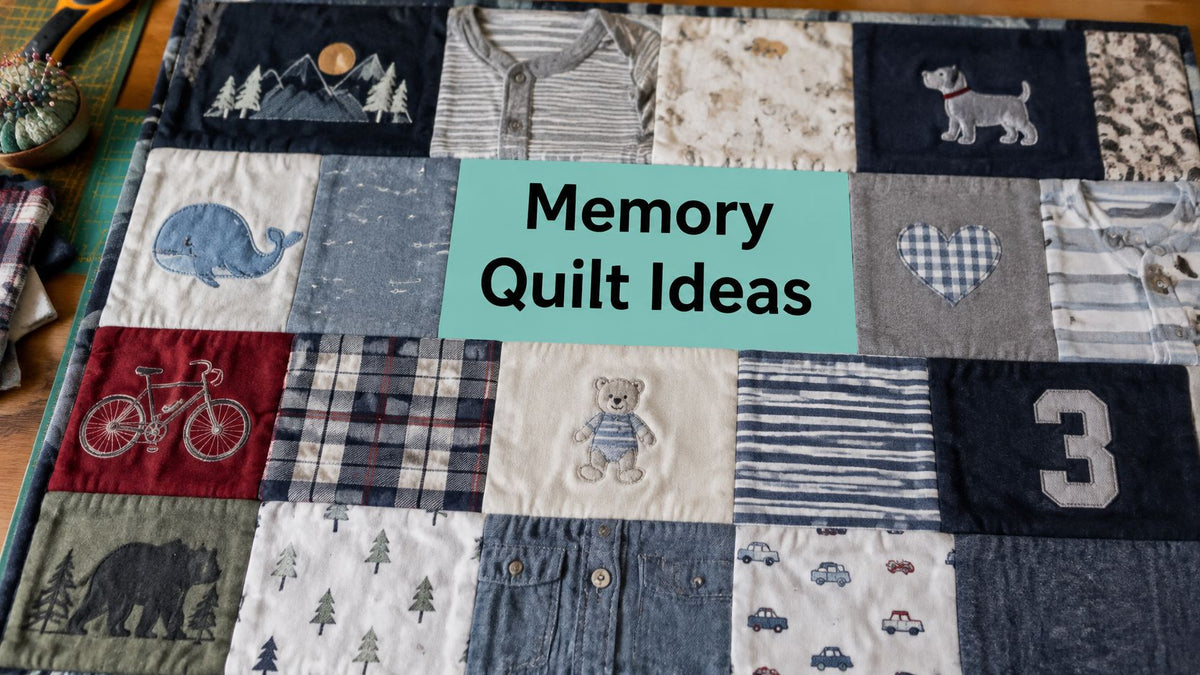
You've got the box open on the bed, shirts folded too neatly to throw away and too worn to wear, and you're stuck on the first cut. The best memory quilts ideas start with one clear job for each garment, stabilized blocks cut to a repeatable size, and a backing matched to how the quilt will be used. That's how a keepsake survives the couch, the wash, and years of being held, instead of stretching out of shape in month one.
You're not alone in that pile. The Craft Industry Alliance quilting trends survey puts the U.S. audience at an estimated 9 to 11 million active quilting consumers, and 18% of respondents were new to quilting in that survey. Memory quilts fit right into that mix because they solve a practical problem and a personal one at the same time.
Below are eight buildable ideas, each paired with the fabric problem it solves and the backing we'd recommend. Pick the one that matches the clothes in front of you, stabilize before you cut, and don't overcomplicate the layout. A simple grid you finish beats a fancy design that stays in the box.
1. Classic T-Shirt Memory Quilt Turn Event Tees Into a Keepsake
Say you've saved years of youth sports tees, race shirts, and college reunion tops. Cut the graphic panels into squares, stabilize every block, and sew them into a clean grid. You get a throw that tells the timeline without asking you to wear a stained shirt again.
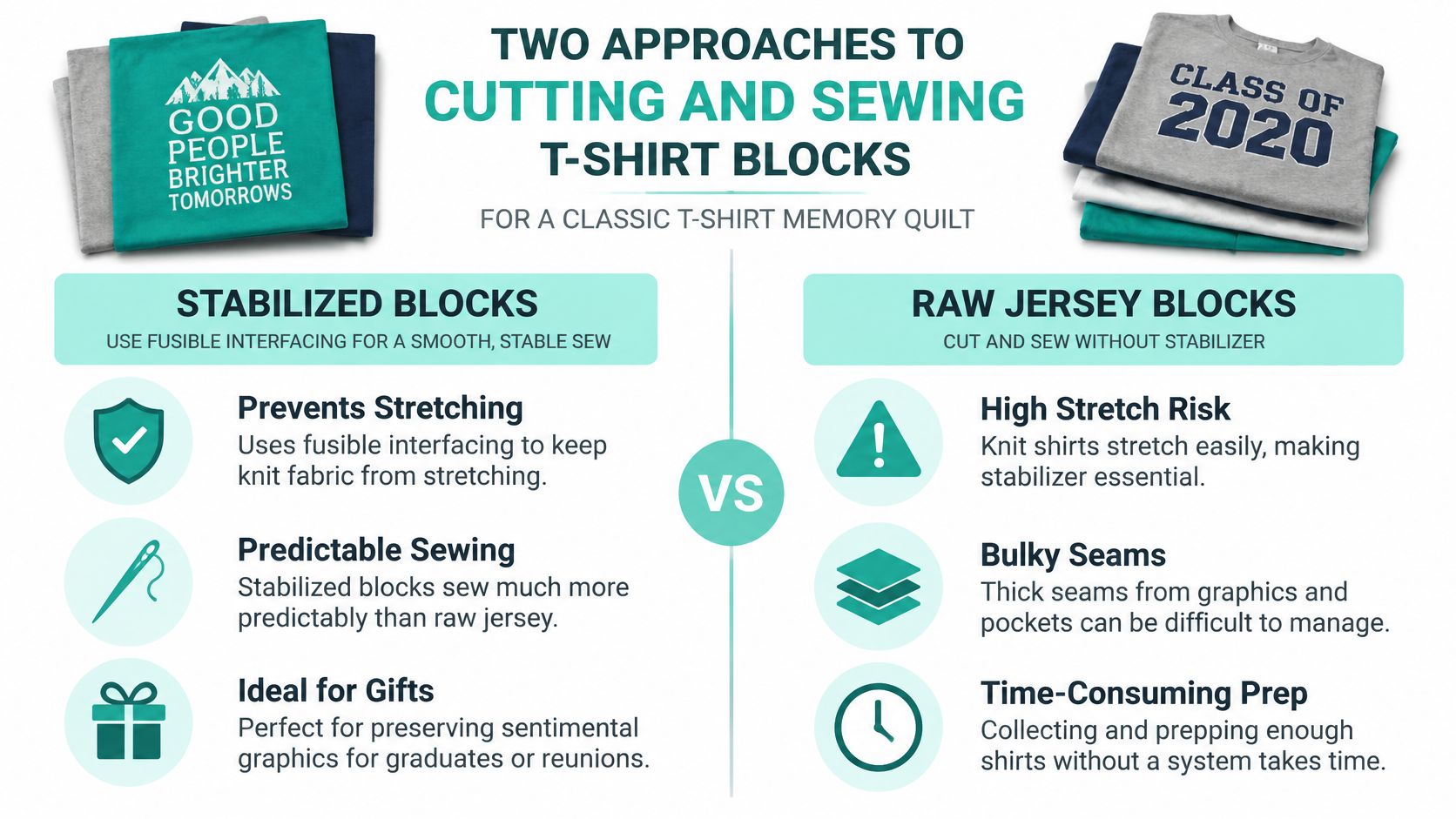
Jersey is the problem here. It curls, stretches under the presser foot, and shrinks differently from block to block. Wash and dry the shirts first, then fuse a lightweight woven stabilizer to the back before you make your final cut.
How do you size T-shirt blocks so they line up
Build around repeatable finished blocks such as 8, 10, or 12 inches, as outlined in the Worcester Polytechnic Institute quilting thesis workflow for standardized garment panels. Trim each stabilized panel to the same unfinished size and keep the seam allowance outside the printed motif. Photograph the shirts, map the layout on paper, and put the strongest graphics in the center before you sew a seam.
Compare a stabilized block with raw jersey before you commit to twenty shirts.
For the back, stop struggling with a bulky center seam on a big throw. Our 110-inch extra-wide minky gives queen and king tops a smooth finish, and you can shop the Luxe Cuddle Collection for a soft contrast to cotton jersey. If you want the full construction sequence first, follow our guide to making T-shirt blankets step by step and work one row at a time.
2. Baby Clothes Memory Quilt Preserve Tiny Outfits Forever
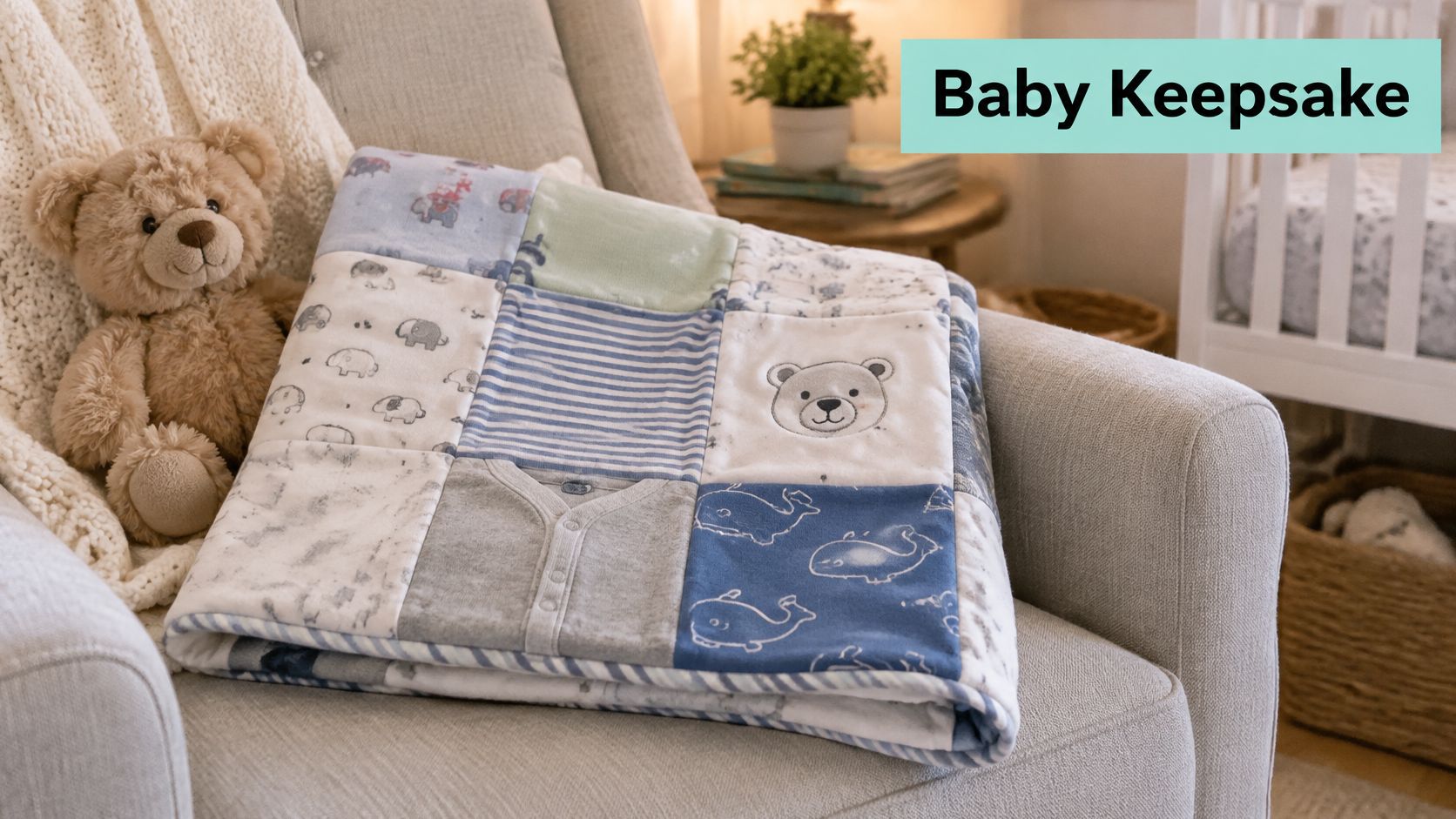
Tiny onesies and sleepers rarely provide enough fabric for large, uniform blocks. Build the layout around the details that make each garment recognizable: a small chest print, a pocket, or a footed toe. Use a calm background fabric to fill the gaps, so the keepsakes remain easy to see.
A crib or stroller quilt around 36 by 44 inches is practical to fold and wash. Choose one backing color, such as Snowy Owl or Fawn Shannon Cuddle, to settle a mix of prints and pastels. The shop's 2- and 2.5-yard curated cuts are a practical option for nursery projects: they provide a set amount of fabric without leaving bolt yardage to store.
If breathability is a concern for a baby gift, read about whether minky fabric is breathable for baby quilts before choosing the backing. For stretchy garments or tiny pieces that are awkward to quilt through, a smooth Cuddle backing can finish the quilt softly while keeping attention on the keepsake panels.
3. Sweatshirt Cuddle Memory Quilt Warmth for Cold Nights
Heavy hoodies make a different kind of quilt. A memorial lap quilt from a late parent's favorite sweatshirts, or a campus quilt from team crewnecks, will be thick, warm, and heavy. Plan for a couch or lap size, not a king bedspread you have to wrestle through a home machine.
Cut panels large and remove the trouble spots first. Zippers, kangaroo pockets, cuffs, and thick hood seams create lumps that throw off quilting stitches. Keep a pocket only if it's the memory itself, then appliqué it flat on top of a finished block.
- Trim hardware early: Remove zippers, drawstrings, and snaps before you rotary cut.
- Use larger pieces: Heavy fleece belongs in big blocks with fewer seam intersections.
- Watch total weight: Add the backing weight before you decide on dense quilting.
That fabric-weight rule matters. The Missouri Star memory quilt guide notes that heavier fabrics work better in larger pieces and that rag construction can avoid forcing bulky fabrics through dense machine quilting. If your top is already thick, a plush but not overly lofty back is smarter than piling on more bulk.
We like Luxe Cuddle Hide here for its rich, suede-like finish against fleece. Our guide to soft blanket fabric choices helps you compare hand feel before you buy. When the top is done, you can book your longarm service today through our mail-in service, which includes batting and thread, and free U.S. shipping applies on orders over $70.
4. Necktie Memory Quilt Honor Professional Style
Neckties look elegant in a drawer and behave badly on a cutting mat. Silk and polyester ties are narrow, bias-cut, and slippery, so they shift if you piece them like quilting cotton. A retirement quilt from a career of work ties, or a father's memorial throw, needs stabilization and a layout that respects the narrow shape.
Open each tie, remove the interfacing if it's bulky, and back the silk with lightweight fusible interfacing before stitching. Log cabin strips, Dresden-style fans, and simple framed blocks all work because they give ties a stable foundation fabric. Don't skip pressing with a cloth, and test your iron on a cut tail first.
This patchwork example shows how varied tie prints can share one calm setting.
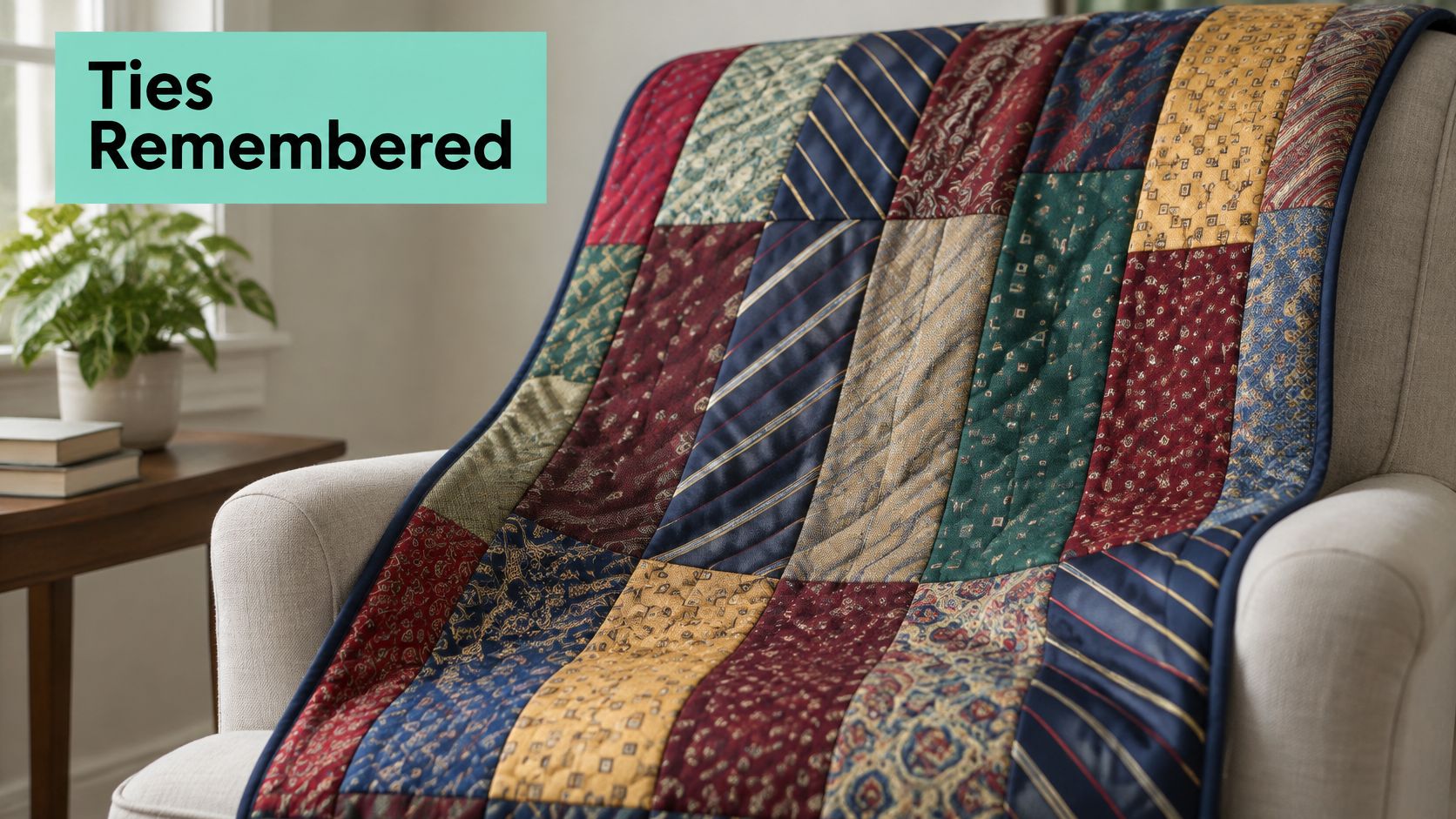
Collective quilts prove how small personal pieces can carry public history. A history of the AIDS Memorial Quilt records that 1,920 panels were displayed in 1987 and later records describe nearly 50,000 panels commemorating roughly 105,000 to 110,000 people. Your tie quilt works on the same principle at family scale, one panel preserving one chapter.
Balance that structured front with Fawn or Snowy Owl plush backing so the throw invites use. Our customers rely on our hundreds of verified reviews when choosing backing, and you can read those reviews and get 15% off your first order before you cut a single tie.
5. Photo Transfer Memory Quilt Put Faces on Fabric
A photo quilt turns an album nobody opens into a throw everybody touches. Print family photos onto printable fabric or inkjet transfer sheets, set each image in its own block, and surround it with garment fabric or quiet cotton. A family reunion quilt with one block per generation, or a 50th anniversary throw mixing wedding and recent portraits, lands hardest when the photos stay large.
Image quality decides whether this works. Blurry phone screenshots and dark indoor shots won't sharpen up on fabric. Pick bright, high-resolution files, crop faces bigger than feels natural, and leave breathing room around heads so seam allowances don't clip anyone.
Print one test block, wash it the way the finished quilt will be washed, and only then print the full set. That single test saves a whole top.
How do you keep photo blocks clear and square
Use a smooth, light-colored fabric for the transfer surface, follow the sheet maker's heat and timing exactly, and stabilize the finished photo block like any other lightweight panel. Alternate photo blocks with plain or garment blocks so the eye can rest. Dense quilting across faces distorts them, so quilt around portraits or choose a loose edge-to-edge pattern.
Watch a transfer method in action before you print your final set.
Finish the back with a soft solid that doesn't compete with the images. You can shop premium minky and Cuddle backings for that quiet reverse side, and free shipping applies on orders over $70, so add backing and batting to the same cart.
6. Handwriting and Signature Memory Quilt Stitch Words That Last
A recipe card, greeting card, or yearbook signature can carry a familiar voice long after the original is too fragile to handle. Copy the writing onto a light fabric block, then embroider over the lines or use a fabric pen and heat-set it according to the pen's directions.
For a grandparent's birthday quilt, invite each grandchild to sign a pre-cut light square. A class reunion quilt can use the same approach for yearbook-style notes. If you're collecting messages at an event, wedding guest book inspiration from EventUploader offers ideas for gathering contributions in an organized way.
- Pre-cut the squares: Mark a border so signatures stay clear of the seam allowance.
- Use fabric pens: Ask contributors to write slowly. Let the ink dry fully, then heat-set it as directed.
- Scan originals first: Photograph recipes and cards before tracing or transferring the handwriting.
Choose plain, light blocks so the writing remains legible after quilting. Busy prints can swallow thin pen lines, while dark fabric hides most standard ink. Garment sashing can join the signature blocks to clothing pieces without crowding the words.
A soft Shannon Cuddle backing makes the quilt comfortable to hold while reading. For light quilt fronts, choose a low-contrast texture from the Luxe Cuddle Collection. Add a label with personalized quilt label ideas, and contact the shop if you need help choosing a backing amount.
7. Memorial Pillow Keepsake Small Memories Easy Sewing
You don't need twenty garments to start. One flannel shirt, a grandmother's apron, or a pet's favorite blanket can become a throw pillow in an afternoon. That's why this is the project we suggest when the loss is recent and a full quilt feels like too much decision-making at once.
Keep the shirt's button placket as the pillow front and you've barely cut anything recognizable away. For flat fabric, center the meaningful motif, stabilize it, and sew a simple envelope back. The memory stays visible instead of being sliced into anonymous squares.
A plaid shirt pillow keeps the garment instantly recognizable on a chair.
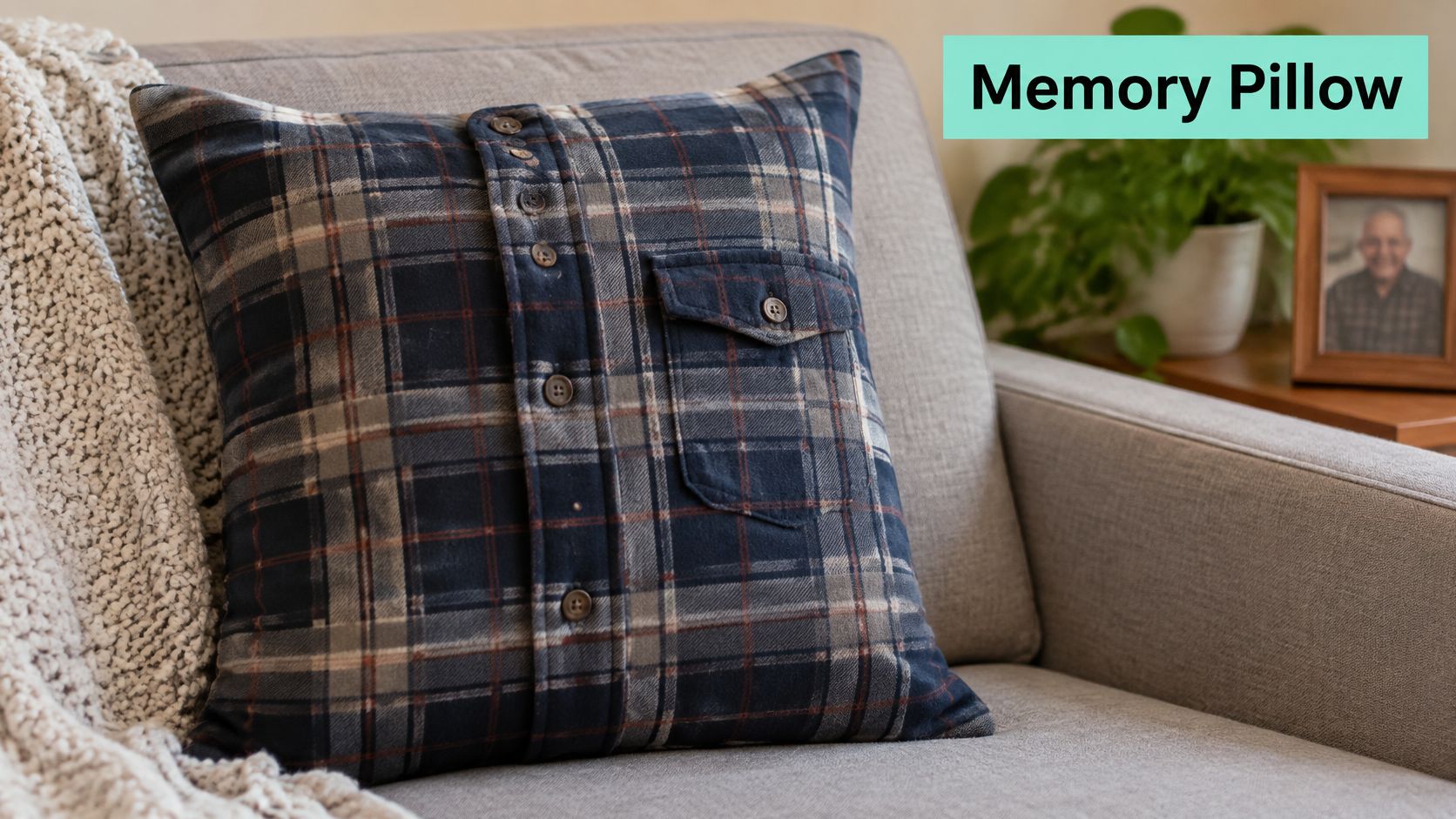
Why does a pillow kit make this easier
A pillow kit with a form removes the two guesses beginners get wrong, finished size and fill firmness. You cut to the form, sew three sides, insert, and close. Choose a Snowy Owl or Hide minky back and the pillow feels plush from behind while the garment front carries the story.
You can browse pillow kits and ready-made options to match the form to your shirt size. Orders over $70 ship free within the U.S., so many of our customers make matching pillows for siblings from the same set of shirts instead of dividing one quilt.
8. Memorial Minky Throw Soft Keepsake for Everyday Comfort
Some keepsakes shouldn't be formal. A memorial minky throw pairs a loved one's flannel or cotton shirts on the front with plush Cuddle on the back, minimal quilting, and a soft drape you can pull over your legs every night. It reads less like a display quilt and more like the blanket that lives on the couch arm.
Say you're using a father's flannel shirts. Cut large, simple squares, keep a chest pocket or two intact, and don't add fussy sashing that fights the plaids. A second option from the same shirts is a memorial infinity scarf, which uses far less fabric and works as a gift when there aren't enough garments for a throw.
Minky handling is the skill to learn here. Mark the grain and nap direction before cutting, cut from the back with a rotary cutter, and shake off the fluff outside. Pins every few inches matter because that soft fabric stretches just enough to creep under the foot.
Sizing rule: Choose your finished throw size first, then buy the backing width that covers it in one piece. Piecing a plush back you didn't need to piece adds a ridge you'll feel forever.
Our 90-inch wide minky backs a generous throw without a seam, and our curated 2, 2.5, and 3 yard cuts make planning simple when you shop backing cuts for your throw. If you're torn between sizes, check our throw blanket size guide before ordering, then get 15% off your first order and start with the shirts you already have.
How the 8 memory quilt ideas compare on material, size, and difficulty
Match the keepsake to the fabric problem: stabilizer helps T-shirt knits hold their shape, while smaller panels make tiny garments easier to use. The backing affects the finished feel, but bulky seams and slippery fabrics need attention during construction.
| Item | Best Source Material | Typical Block or Panel Size | Main Challenge | Suggested Backing Match |
|---|---|---|---|---|
| Classic T-Shirt Memory Quilt | Event, school, or sports T-shirts | 8, 10, or 12-inch finished squares | Stretchy knits and bulky seams | Plush or minky backing |
| Baby Clothes Memory Quilt | Onesies, sleepers, and baby garments | 6–9-inch blocks | Delicate fabrics and limited usable fabric | Soft Shannon Cuddle backing |
| Sweatshirt Cuddle Memory Quilt | Hoodies and crewneck sweatshirts | Front or back panels about 12 × 14 inches | Heavy fabric and bulky seams | Luxe Cuddle Hide |
| Necktie Memory Quilt | Silk or polyester neckties | Strips about 1.5 to 3 inches wide | Slippery fabric and limited material per tie | Plush Fawn or Snowy Owl |
| Photo Transfer Memory Quilt | Printed family photos on fabric | 8 × 10-inch or 10 × 10-inch panels | Image clarity and fading with washing | Soft minky or cuddle backing |
| Handwriting and Signature Memory Quilt | Handwritten notes, recipes, or signatures | Fabric blocks about 8 × 10 inches | Time-consuming embroidery and variable legibility | Shannon Cuddle backing |
| Memorial Pillow Keepsake | Meaningful clothing, scarves, or baby blankets | 16–20-inch square | Limited design space and matching the pillow form | Soft minky backing |
| Memorial Minky Throw | A loved one's clothing or a few fabric panels | Panels about 10 × 10 to 12 × 14 inches | Stretchy minky and less structure than a quilt | Plush minky or cuddle fabric |
Use the finished size as a starting point, not a rigid rule. A pocket, photo, or signature may need a larger panel, while small garments often work better pieced into smaller blocks. For slippery ties and stretchy knits, stabilize the fabric before cutting; otherwise, the pieces can shift and distort as you sew.
Choose Your First Keepsake and Finish It With Confidence
Start with the strongest memory, not the hardest technique. If you've got a stack of tees, make the grid quilt. If you've got one shirt, make the pillow. If the clothes are fragile, stained, or moth-damaged, preserve the recognizable section intact with appliqué or a layered patch instead of cutting more fabric just to fill a pattern.
That use-it-or-display decision should drive your construction. The Johnson Heirloom memorial quilt care guide summarizes survey findings that 46% of surveyed consumers had tried upcycling once or twice and 21% did it regularly. Interest is clearly there, but care knowledge is where keepsakes get ruined, usually by hot washing, sunlight, and sealed plastic storage.
How do I wash Shannon Cuddle fabric on a finished keepsake
Wash in cool water with mild detergent, skip fabric softener, and dry on the lowest heat or air-dry, following Shannon Fabrics Cuddle care guidance. Softener residue builds up and reduces that soft hand over time. Attach those care directions to the quilt label so a gift recipient doesn't default to high heat and bleach.
For storage, fold as few times as possible and refold periodically to move stress off permanent creases. The University of Nebraska-Lincoln quilt storage publication recommends flat storage in darkness at a steady 50 to 60°F and about 50% relative humidity. It also advises taking displayed quilts down at least every six months so fibers can rest.
How do you prepare a top for mail-in longarm quilting
Send the top, backing, and batting as separate pressed pieces, not basted together. The Haines City Public Library longarm checklist specifies backing and batting 12 inches larger than the quilt top, with pins, buttons, and sequins removed before quilting. At OPN our rule is backing at least 4 inches larger on all sides, so a 60 by 80 inch top needs at least a 68 by 88 inch back.
Measure that backing after you piece it, press seams flat, and trim loose threads that could show through light blocks. Our mail-in longarm service includes batting, standard thread, and free return shipping to the lower 48, plus free trimming and squaring. If you can't choose a pattern, pick Quilter's Choice and we'll match a favorite design to your top.
Whichever of these memory quilts ideas you choose, match the backing weight to the top, stabilize anything that stretches, and finish the quilt instead of perfecting the plan. Shop the Luxe Cuddle Collection for a back that feels as meaningful as the front, get 15% off your first order with free U.S. shipping on orders over $70, and book your longarm service today when you're ready for a professional finish.
Your box of shirts deserves better than another year in storage, and we stock the Shannon Cuddle backings, pillow kits, curated cuts, and mail-in longarm finishing to turn it into a quilt you'll use. Browse textures like Hide, Snowy Owl, and Fawn, pick the width that backs your top without a seam, and visit On Pins & Needles Quilting Co. to start your keepsake today.