
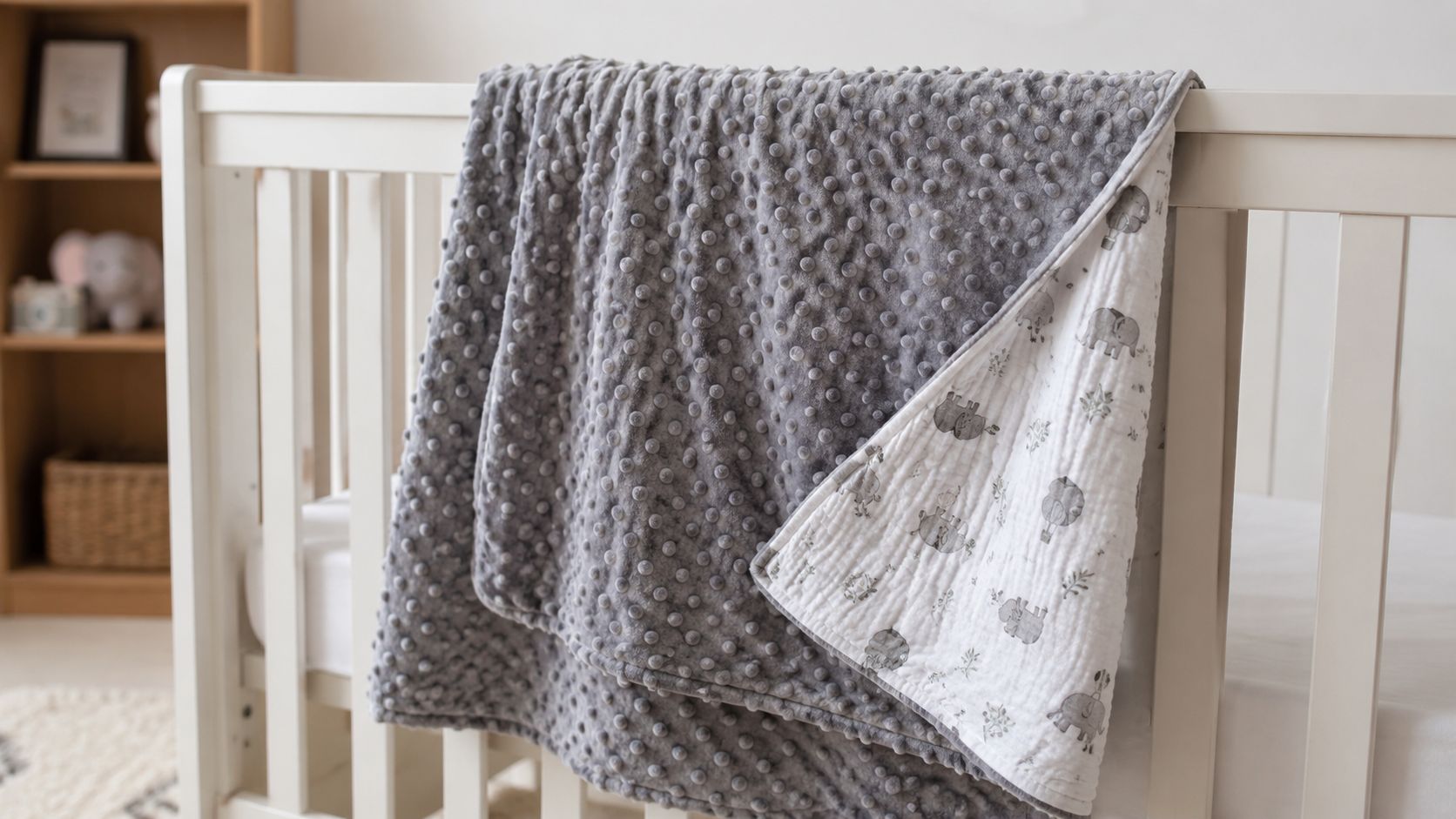
Minky fabric is not considered highly breathable for baby quilts, and its typical weight is about 250 to 380 gsm, which helps explain why it feels warm and cozy instead of airy. It can still work well in a baby quilt if you build the quilt carefully, use it for the right setting, and treat warmth, layering, and sleep safety as key decision points.
A lot of parents and quilters ask the wrong first question. They ask whether minky is breathable, when the better question is whether a specific minky quilt setup will be comfortable and appropriate for a baby in a particular room, season, and use case.
That distinction matters. A stroller quilt for a chilly walk, a tummy-time mat, and an unsupervised infant sleep environment are not the same thing. When quilters understand that, they stop looking for one-word answers and start making better fabric choices.
If you're trying to decide whether Is Minky Fabric Breathable for Baby Quilts should end in yes or no, the practical answer is: usually less breathable than cotton, but often useful when softness and warmth are the goal.
What Does Fabric Breathability Actually Mean
Breathability gets used like a marketing word, but in quilting it has a practical meaning. It usually comes down to how air moves through the fabric and how the fabric handles moisture against the skin.
A simple way to think about it is this. A window screen lets air pass through easily. Plastic wrap does not. Fabric sits somewhere between those two extremes.

Why softness and breathability are not the same thing
Very soft fabric can still trap heat. Quilters run into this all the time because handfeel and airflow are different properties.
A plush fabric may feel wonderful in your hand and still hold more warmth around a baby than a lighter cotton weave would. That doesn't make it bad. It just means softness alone can't answer a safety or comfort question.
Practical rule: If a fabric feels lofty, plush, and warming, assume you need to evaluate the whole quilt build, not just the touch.
The two parts that matter most
When I evaluate baby-quilt fabrics, I separate breathability into two working ideas:
- Air movement: How easily air passes through the fabric and the quilted layers.
- Moisture handling: Whether the material tends to hold onto a damp, warm feeling or buffer perspiration more gently.
Those are related, but they aren't identical. A fabric can allow some airflow and still not handle moisture the way a natural fiber does. It can also feel dry to the touch while still building warmth in use.
Why quilters need to think in layers
A quilt isn't one fabric. It's a system.
The top, batting, backing, pile height, and quilting density all affect the final result. That's why two baby quilts with minky in them can behave very differently.
One might feel balanced and comfortable because it uses a cotton top, lighter batting, and moderate quilting. Another might feel too warm because it stacks plush minky with polyester batting and a dense quilting pattern.
If you're shopping textures and wondering how plush is too plush, our guide to what cuddle minky fabric is helps clarify the different minky categories quilters work with.
How Breathable Is Shannon Cuddle Minky Fabric
Minky is generally not highly breathable when compared with cotton-based quilt fabrics. The core reason is material structure.
Independent fabric guidance describes minky as a 100% polyester microfiber knit with a plush pile that prioritizes warmth and loft over airflow, with typical weights of about 250 to 380 gsm. That same guidance notes that cotton is the more breathable choice for quilting or backing, especially in hotter conditions or where overheating is a concern, as explained in this overview of minky fleece properties and uses.
Why Shannon Cuddle feels warm even when it isn't bulky
Quilters can sometimes be misled. Shannon Cuddle and Luxe Cuddle often feel light in the hand compared with thicker winter fabrics, but they still create a warm sleeping or snuggling surface because the polyester knit and pile are built for loft and softness.
That's why textures such as Luxe Cuddle Hide, Luxe Cuddle Fawn, and Luxe Cuddle Snowy Owl feel so inviting. They aren't trying to behave like open-weave cotton. They're built to feel plush, smooth, insulating, and comforting.
What that means for baby quilts
If your question is strictly, “Is minky fabric breathable for baby quilts,” the direct answer is less breathable than cotton, muslin, or bamboo-based options.
That doesn't mean minky has no place in baby quilting. It means you should use it with intention.
Here's where minky usually works well:
- Cooler rooms
- Cold-weather nursery use
- Stroller or travel quilts
- Backs or accents paired with more breathable layers
Here's where it usually needs more caution:
- Hot climates
- Warm homes
- Heavy multi-layer builds
- Babies who tend to run warm
Minky earns its place through softness and warmth, not through airflow.
That trade-off is also why many experienced quilters pair minky with cotton rather than building an all-plush quilt. If you're choosing between textures before you sew, a product page like Luxe Cuddle Hide is useful for comparing handfeel and loft with real project intent in mind.
What Factors Change a Minky Quilt's Breathability
Can a minky baby quilt breathe well enough to stay comfortable? It can, if the quilt is built with airflow and warmth in balance instead of chasing maximum plushness.
The biggest variable is not the minky alone. It is the full stack of materials, how thick they are, and how firmly they are quilted together. I see this often at OPN Quilting Co. A quilt that uses minky on one side can still feel comfortable in everyday use, while a quilt with the wrong batting and too much loft can turn noticeably warmer than the maker expected.
A practical way to judge breathability is to look at four construction choices at once.
The four construction choices that matter most
- Pile height: Lower-pile minky usually traps less warmth than deep, heavily textured plush.
- Batting fiber: Cotton batting often releases heat better than polyester batting.
- Backing choice: A cotton backing changes the feel of the whole quilt. Full plush on both sides creates a warmer build.
- Quilting density: Very dense quilting compresses the layers and changes how heat and moisture move through the quilt.
If you need a quick foundation on batting before choosing a build, this guide on what quilt batting is explains the differences clearly.
How construction changes the finished quilt
| Component | More Breathable Choice | Warmer Choice |
|---|---|---|
| Minky texture | Lower-pile or lighter-feel minky | Higher-pile plush texture |
| Batting | Cotton or bamboo blend batting | Polyester batting |
| Backing | Cotton or cotton-blend backing | Full plush backing with extra insulating layers |
| Quilt build | Fewer layers | Multiple insulating layers |
| Quilting approach | Moderate quilting that keeps drape balanced | Dense quilting with thick loft |
Those trade-offs matter because baby quilts are small. A small quilt built with dense plush, polyester batting, and extra loft can hold heat more than the maker intended, even if each individual material feels soft and appealing on the cutting table.
Builds that usually work better
These combinations tend to give you the softness people want from minky without making the quilt overly warm:
- Cotton quilt top with a minky back. This is one of the most practical layouts for baby quilts.
- Lighter minky with cotton or bamboo-blend batting. That keeps the hand soft without adding as much insulation.
- Moderate quilting. Enough to stabilize the layers, but not so dense that the quilt gets stiff or heavy.
Builds that usually run too warm
A few combinations deserve extra caution:
- High-loft plush minky with polyester batting
- Minky paired with another heavy insulating back layer
- Multiple warm layers added for appearance rather than comfort
- Any baby quilt intended for a warm room without adjusting the materials
Room temperature still matters. So does how the quilt will be used. A stroller quilt for cool weather can handle a warmer build than a quilt meant for daily indoor snuggling in a heated house.
The practical answer is conditional. Minky can work well in a baby quilt, but breathability depends on the total build, not the label on one fabric.
What Is the Official Safety Guidance for Infant Bedding
Fabric choice matters, but sleep setup matters more. That's the part many quilt tutorials skip.
The most useful question isn't whether minky feels safe. It's whether the finished item and the way it's used fit infant safety guidance.

One industry source addressing baby fabrics notes that minky is appropriate under adult supervision and specifically points to uses such as stroller blankets, tummy-time mats, or nap buddies, rather than unsupervised sleep for infants under 1 year, in this discussion of minky vs cotton vs bamboo for babies.
What that means in real quilting terms
A handmade minky quilt can be a wonderful gift. But the safest role for it often isn't “crib bedding for an infant overnight.”
Better uses include:
- Supervised tummy time
- Stroller outings
- Cuddling with an adult present
- Lap quilt use while awake
- A comfort blanket for an older baby or toddler, depending on family guidance and use
Where people get into trouble
Trouble starts when quilters focus only on softness. Soft doesn't automatically mean suitable for every sleep situation.
Overheating risk, loose bedding concerns, and the broader sleep environment all matter. That's why I tell customers to think of a baby minky quilt as a comfort item with conditions, not a default sleep product for every age and setting.
Here's a visual refresher that pairs well with that decision-making:
A beautiful baby quilt can still be the wrong choice for unsupervised infant sleep. Use determines safety as much as fabric does.
If the quilt is intended for a gift, I recommend including a care and use note with it. That's not overkill. It's responsible quilting.
How Can You Build a Safer and More Comfortable Minky Quilt
Minky became popular in baby quilts for a reason. Fabric guidance notes that it rose strongly in the 2000s and 2010s as a premium blanket and quilt-backing material because it combined softness, durability, and warmth in a low-bulk fabric. That same guidance makes the key point that minky's popularity came from luxurious handfeel and insulation, not from superior breathability, as outlined in this article on what minky fabric is and how it's used.
That history matches what we see at the cutting table. Minky shines when you use it for what it does well.
A practical recipe that usually works
For most baby quilt projects, the most balanced build looks like this:
- Quilt top: Pieced cotton top
- Batting: Breathable cotton or bamboo blend
- Backing: A single layer of minky
- Quilting: Enough stitching to stabilize the layers without overbuilding the quilt
That setup keeps the classic quilt look on the front while giving the baby or toddler the soft minky feel on the back.
Why the back is often the smartest place for minky
Using minky on the back gives you the comfort factor people love without forcing every layer of the quilt to behave like an insulating blanket. It also keeps piecing easier on the front.
Extra-wide backing is important. A single-piece back is flatter, cleaner, and more comfortable than joining several narrower plush panels if you can avoid it.
For example, extra-wide 90-inch and 110-inch minky backing options help eliminate bulky seams on larger quilt backs. That matters even more on baby and cuddle quilts, where the back is often the touch side.
Texture choices I'd make for different goals
Not every Shannon texture behaves the same in a finished project.
- If you want a sleeker back, I'd lean toward a lower, simpler cuddle texture.
- If the goal is a very plush winter handfeel, Snowy Owl or Fawn gives more loft and a richer texture.
- If the quilt is likely to be used in mixed seasons, I'd avoid stacking the plushest possible texture with the warmest batting.
For people sewing their first one, this tutorial on how to make a minky baby blanket is a useful reference before you cut.
My build rules for baby minky quilts
When comfort and caution both matter, I stick to these rules:
- Keep one side breathable. Cotton on the front gives the quilt balance.
- Don't over-insulate. Avoid pairing plush minky with thick polyester batting unless the quilt is clearly for cold conditions.
- Match the quilt to the use. A supervised stroller quilt can be warmer than an indoor all-purpose baby quilt.
- Choose the texture on purpose. Luxe Cuddle Hide, Fawn, and Snowy Owl all feel different in the finished piece.
- Avoid solving every design choice with more softness. Sometimes the better move is lighter batting, fewer layers, or a simpler backing plan.
The safest, most comfortable minky baby quilt usually isn't the plushest one. It's the one with the most balanced construction.
If your goal is a polished finish with fewer seams, extra-wide Cuddle backing is often the cleaner route. If you're choosing yardage for a smaller project, Shannon Cuddle fabric by the yard gives you more flexibility on texture and color.
What Are the Best Breathable Fabric Alternatives
Sometimes the right answer is not minky. If maximum airflow is your top priority, especially for hot climates or a lighter summer baby quilt, another fabric may suit the project better.

Better choices when breathability comes first
A few alternatives consistently make more sense for airy baby projects:
- Cotton muslin: Light, open, and familiar for baby use.
- Cotton quilting fabric: Stable, easy to sew, and more breathable than plush polyester.
- Linen: Often chosen when a cooler hand and stronger moisture movement matter.
- Bamboo blends: Soft and often selected for a smoother, lighter feel.
If batting is part of that decision, Dream Bamboo quilt batting is one option quilters consider when they want a lighter-feeling interior layer.
Quick comparison by project goal
| Project Goal | Better Fabric Direction |
|---|---|
| Cooler stroller or winter cuddle quilt | Minky can make sense |
| Warm-weather baby blanket | Cotton, muslin, or bamboo blend |
| Sensory-soft comfort item | Minky |
| Everyday light nursery layer | Cotton-based quilt build |
| Quilt gift for later toddler use | Cotton plus minky backing can work well |
Where minky still wins
Even when it isn't the most breathable option, minky still has a place. Nothing else quite replicates that plush, silky, cozy handfeel that makes a cuddle quilt feel special.
That's why many quilters don't replace minky. They use it more selectively.
If you're choosing textures for comfort rather than summer airflow, Luxe Cuddle Fawn and other plush textures are worth comparing side by side before you commit to a backing.
Why Choose OPN for Your Next Minky Project
Need minky for a baby quilt, but want to make smart choices about width, texture, and final build? That is where experience matters.
At On Pins & Needles Quilting Co., we work with minky every day, including Shannon Cuddle and Luxe Cuddle textures such as Hide, Snowy Owl, and Fawn. That hands-on familiarity helps when a quilt needs to feel soft without creating avoidable bulk, shifting, or heavy seam buildup.
For baby quilts, fabric width can make a real difference. A wider backing often means fewer seams, less distortion, and an easier finish, especially with plush fabric. If you are comparing backing options, our guide to extra-wide minky fabric in 110-inch widths can help you choose a size that fits your quilt plan.
We also help quilters who want a professionally finished result. Stitch density, backing choice, and overall quilt structure all affect how a minky quilt drapes and how warm it feels in actual use. That does not change infant sleep safety guidance, but it does matter for stroller quilts, tummy-time quilts, and cuddle quilts made for supervised use.
If you are still deciding on fabric, ready-to-sew minky cuts and kits make it easier to compare textures before you commit. The goal is simple. Build a quilt that looks beautiful, feels right in the hand, and matches how the baby will use it.
If you're ready to make a baby quilt that uses minky thoughtfully, shop with On Pins & Needles Quilting Co. and Get 15% Off Your First Order. You can also take advantage of free U.S. shipping on orders over $70 while you choose your backing, batting, and quilting supplies.