
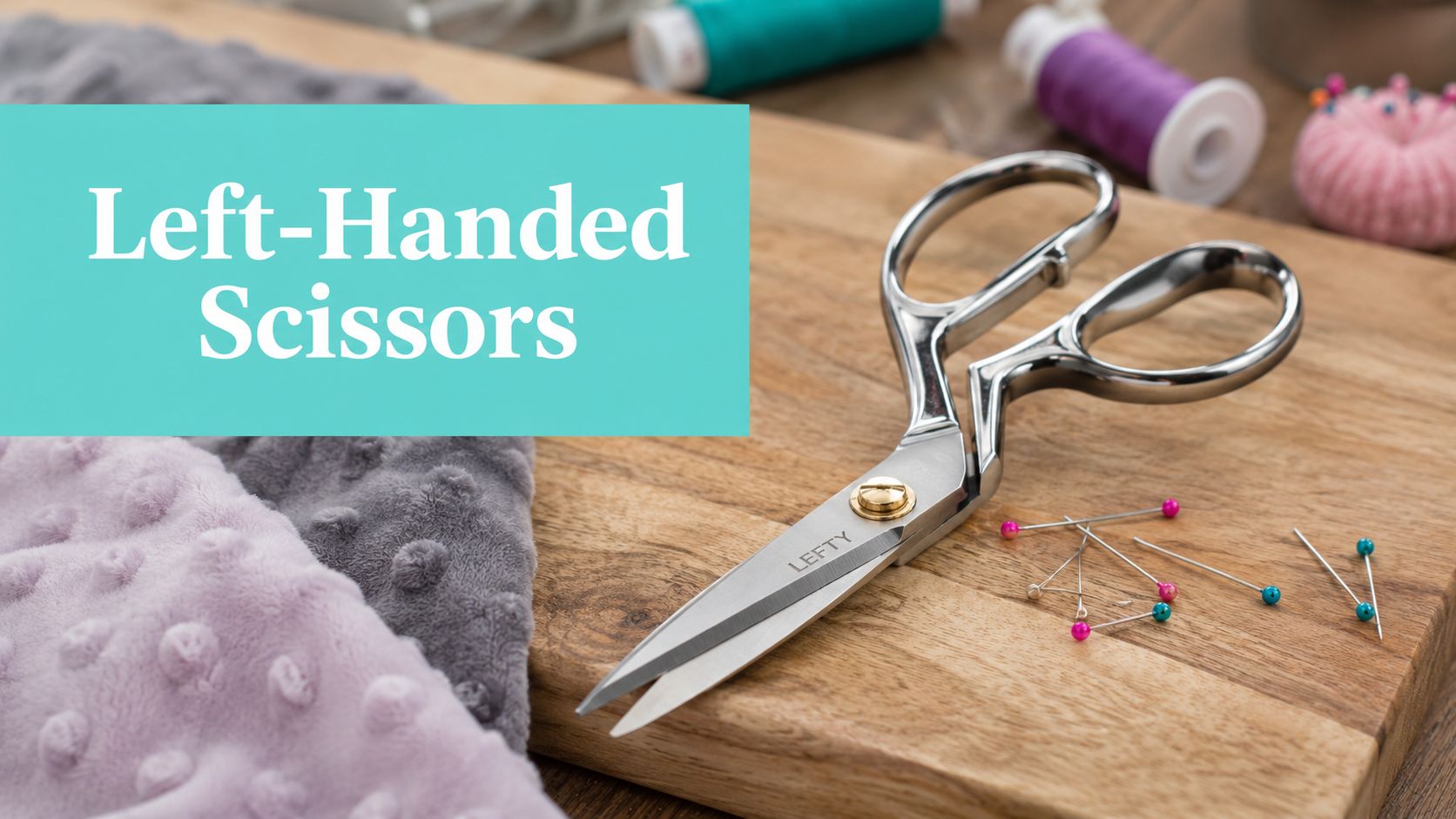
If your left hand fights every fabric cut, true left handed scissors for sewing can fix more than comfort. They improve line-of-sight, reduce awkward wrist angles, and help fabric shear cleanly instead of slipping, which matters fast when you're cutting minky or layered quilt pieces.

What Makes Left Handed Scissors Different
If you've ever tilted your quilt top, fought the blade line, and still ended up with a cut that feels a little off, the problem usually isn't your technique. It's the tool geometry. True left handed scissors for sewing are defined by blade orientation, not handle color, and that detail changes everything when you're cutting fabric.
When the scissors are open, the left blade sits on top, which gives a left-handed sewer a clear view of the cut line. Right-handed scissors reverse that view, so the line disappears under the upper blade and the fabric can feel like it's being pushed apart instead of sheared cleanly. You can verify this in a store in seconds, just open the blades and look from above, if the left blade is the visible upper blade, you're holding a true left-handed pair. That orientation is what lets you cut with confidence instead of compensating with your wrist, especially on slippery plush fabrics like Shannon Cuddle.
For a quilted workflow, that difference shows up most on long, precise cuts. The wrong-hand scissors can make you chase the fabric, while the right-hand geometry lets the blades do the work. If you're also planning your cutting setup, this rotary cutter guide for left-handed sewists is worth keeping handy alongside your scissor choice.
The practical takeaway is simple. If the cut feels awkward, if the line vanishes, or if you have to twist your wrist to force control, the scissors are likely built for the other hand.
Practical rule: if you can't see the cutting line clearly when the blades open, you're probably using the wrong orientation.
Left Handed vs Right Handed vs Ambidextrous Scissors

A lot of confusion comes from the word ambidextrous. In sewing tools, that word often means the handles feel symmetrical, but the blade stack still isn't reversed. That's why many left-handed sewists try an “all-hands” pair and still don't get the sightline or shear they expected.
| Scissor Type | Blade Orientation | Handle Design | Best Use |
|---|---|---|---|
| Left-handed | Left blade on top | Shaped for the left hand | Fabric cutting with clear line-of-sight |
| Right-handed | Right blade on top | Shaped for the right hand | Fabric cutting for right-handed users |
| Ambidextrous | Usually neutral-looking, but not always reversed | Symmetrical or generic | Light utility use, not always sewing-accurate |
The test is still the same. Open the scissors and look at the top blade position. If the left blade isn't on top, the pair may feel “fine” for quick snips, but it won't give the clean visual alignment many sewists need for quilting seams, applique, or minky yardage.
That's why true left-handed sewing scissors are not just mirrored handles, they're reversed shears with a cutting geometry that suits left-hand pressure. Independent sewing guidance notes that this setup restores the view of the cutting line and helps the blades close into the material instead of pushing layers apart, while false ambidextrous designs can still leave the wrist angle wrong and the line-of-sight unclear (AnyThinglefthanded left-handed sewing scissors guide).
If you've only ever used right-handed scissors, the awkwardness can masquerade as normal. It isn't. It's a mismatch between your hand and the tool.
The broadest sewing-store collections often include both styles, but the better choice depends on whether you want a quick utility pair or a true fabric-cutting tool. For a closer look at a mixed tool lineup, the rotary pinking cutter update is a useful comparison point.
Key Features for Cutting Minky and Quilting Fabrics
For quilting, the most useful spec is usually blade length. Long shears in the 8 to 9 inch range are a better fit for yardage and layered cuts, while 6 to 6.5 inch scissors suit detail work like trimming seam allowances. That matters even more with plush fabrics, because shorter blades mean more strokes, and more strokes mean more chances for minky to shift.
What to match to the task
- Long yardage cuts: Use longer shears for stable, fewer-pass cutting on backing and broad pattern pieces.
- Detail trimming: Use smaller scissors when you're clipping threads, trimming corners, or cleaning up a seam.
- Slippery plush fabric: Consider serrated edges if you work a lot with minky, because micro-teeth help grip the surface instead of letting it slide.
- Extended cutting sessions: Prioritize handle shape and balance, since hand fatigue shows up quickly in fabric work.
Published examples show what this looks like in the market. Fiskars offers an 8-inch left-handed all-purpose pair, Kai makes 10-inch left-handed dressmaking shears with a 95 mm blade and 212 g weight, and Paul's left-handed fabric scissors come in at 212 mm overall length (best left-handed scissors examples). Those longer formats make sense for stable fabric stacks, especially when you're working through broad backing pieces.
Left-Handed Scissors by Task
| Scissor Type | Blade Length | Best For | Example Use |
|---|---|---|---|
| Detail scissors | 6 to 6.5 inch | Thread trimming, seam allowances | Snipping corners on applique pieces |
| General fabric shears | 8 inch | Everyday quilting cuts | Cutting medium yardage and block components |
| Dressmaking shears | 8 to 10 inch | Longer fabric runs | Cutting wide minky backing and multi-layer sections |
Sewing and quilting stores often stock a broad spread of left-handed tools, but many don't tell you which ones belong in which task. That gap is exactly why left-handed sewists end up buying the wrong size first, especially if they only read “left-handed” and stop there.
For minky-specific prep and cutting habits, this minky cutting guide pairs well with the scissor basics above.
Your Buying Checklist for Left Handed Sewing Scissors
A good pair pays for itself by cutting accurately and staying comfortable. A cheap pair usually shows its weakness in the same places every time, dull blades, sloppy alignment, or a handle that feels fine for five minutes and irritating after ten.
Use this checklist before you buy
- Verify blade orientation: Open the blades and confirm the left blade sits on top.
- Check handle comfort: The grip should fit your hand without forcing a squeeze or stretch.
- Test balance: The scissors should feel stable in motion, not blade-heavy or awkwardly tip-forward.
- Match blade length to your work: Choose longer shears for yardage, smaller scissors for snips and trimming.
- Look for sewing-specific edges: Serrated blades can help on plush surfaces like minky.
- Confirm blade quality: High-carbon steel or quality stainless tends to hold up better than bargain metal.
- Ask about sharpening: If a pair can't be serviced, you may end up replacing it sooner.
- Read left-handed reviews: Look for feedback from sewists, not just general craft users.
The hidden trap is buying for price instead of use. A pair that dulls quickly or twists your wrist costs more over time than one solid tool you keep in rotation. If you cut fabric often, especially expensive yardage, it's smarter to buy once and maintain it well.
Buying rule: if the scissors only feel comfortable when you hold them “almost right,” they're not the right pair.
For a broader look at cutting setup and workspace flow, this cutting table guide can help you build a cleaner station around the scissors you choose.
Maintenance and Sharpening Tips
Fabric residue builds up faster than most sewists expect, especially on minky and other plush synthetics. Wipe the blades after each session, because tiny fibers can collect near the edge and make clean shearing harder over time.
Keep the pivot and edge working
- Wipe after use: Use a soft cloth to clear lint and fabric dust from the blades.
- Oil the pivot sparingly: A tiny amount helps keep the action smooth.
- Store them closed: Keeping the blades shut protects the edge from knocks and dings.
- Cut fabric only: Paper dulls fabric scissors fast.
- Avoid drops: Even a short fall can throw off alignment.
Sharpening needs more care with true left-handed scissors because the blade geometry isn't the same as a standard pair. If the cut starts snagging or the blades no longer close cleanly, service them rather than forcing more pressure through the handle. A professional sharpener who understands the orientation is the safest route, and if you're maintaining other shop tools too, this sewing machine maintenance note fits nicely into the same care routine.
For some users, a quality electric sharpener can be part of a broader maintenance plan, like this safe electric knife sharpener, though scissors still need the right setup and the right hand-specific attention.
The best scissors last longer when they're treated like precision tools, not general-purpose shears. That's especially true with left-handed models from makers like Kai or Fiskars, where the value comes from keeping the original geometry intact.
Cutting Minky and Quilting Fabrics with Confidence
The hardest cut is usually the first one on a big piece of plush fabric. A 110-inch backing wants to drift, curl, and catch on itself, so the goal is a long, smooth pass that keeps the layers stable while the blades do the work.

On wide Shannon Cuddle backings, true left handed scissors for sewing matter because the sightline stays open and the cut moves in one clean direction. That makes it easier to avoid tiny corrections that can shift plush fabric out of square. For quilters who also like small project work, this kid-friendly sewing projects 2026 link is a useful reminder that even scraps deserve clean, accurate cuts.
What works at the cutting table
Hold the fabric lightly taut, not stretched. Use pattern weights instead of pins on slippery minky when possible, because pins can create bumps and drag the pile. Make longer passes whenever the blade length allows it, since short choppy cuts can leave uneven edges.
For Luxe Cuddle textures like Hide, Snowy Owl, and Fawn, the safest cut is the one that respects the pile. Let the fabric lie flat, keep the nap direction consistent, and avoid sawing motions that rough up the surface. Clean blade engagement matters more than brute force here.
A true left-handed pair also helps on smaller jobs. Trimming seam allowances, cutting applique shapes, and cleaning corners all get easier when you can see exactly where the blade is landing. That is why many experienced sewists keep one longer pair for yardage and one smaller pair for detail work.
Smooth cuts start with visibility. If you can see the line, you can follow the line.
Are Left Handed Scissors Worth the Investment
For occasional sewing, a right-handed pair can feel “good enough.” For regular quilting, especially with expensive minky yardage, that usually stops being true once the cutting gets longer and the fabric gets more unstable. A controlled study of 18 left-handed participants found measurable ergonomic and performance differences when they used scissors made for the correct hand versus the wrong hand, with wrist position shifting to 4.67 ± 14.60° of extension instead of 1.19 ± 12.41° of flexion, and cutting errors averaging 1.39 ± 1.29 versus 0.72 ± 0.67 (PubMed study).
That kind of difference matters most when the material is pricey or the cut can't be redone. A crooked edge on a small scrap is annoying. A crooked edge on wide quilt backing is wasted money and time.
Threads Magazine also notes that true left-handed shears can reduce hand tension and points to research showing more wrist flexion and cutting inaccuracy when left-handed users rely on right-handed scissors (Threads Magazine PDF). If you sew often, the comfort upgrade becomes a practical productivity upgrade.
The market tells the same story. Left-handed scissors are a niche but persistent category, with a global estimate of $285 million in 2024 and a projected rise to $482 million by 2033 at a 6.1% CAGR; North America is estimated at about 38% share, while a Japanese stationery survey found 12.5% of respondents owned left-handed dressmaking scissors and 75.0% owned right-handed dressmaking scissors (market estimate). That mix says the tools exist because sewists keep needing them, even if right-handed versions still dominate the shelf.
If you're ready to stop fighting your cuts, choose a pair that matches your hand, your fabric, and your cutting style. Visit On Pins & Needles Quilting Co. for minky-friendly tools, premium textures, and the kind of quilting support that helps left-handed sewists work with confidence.