
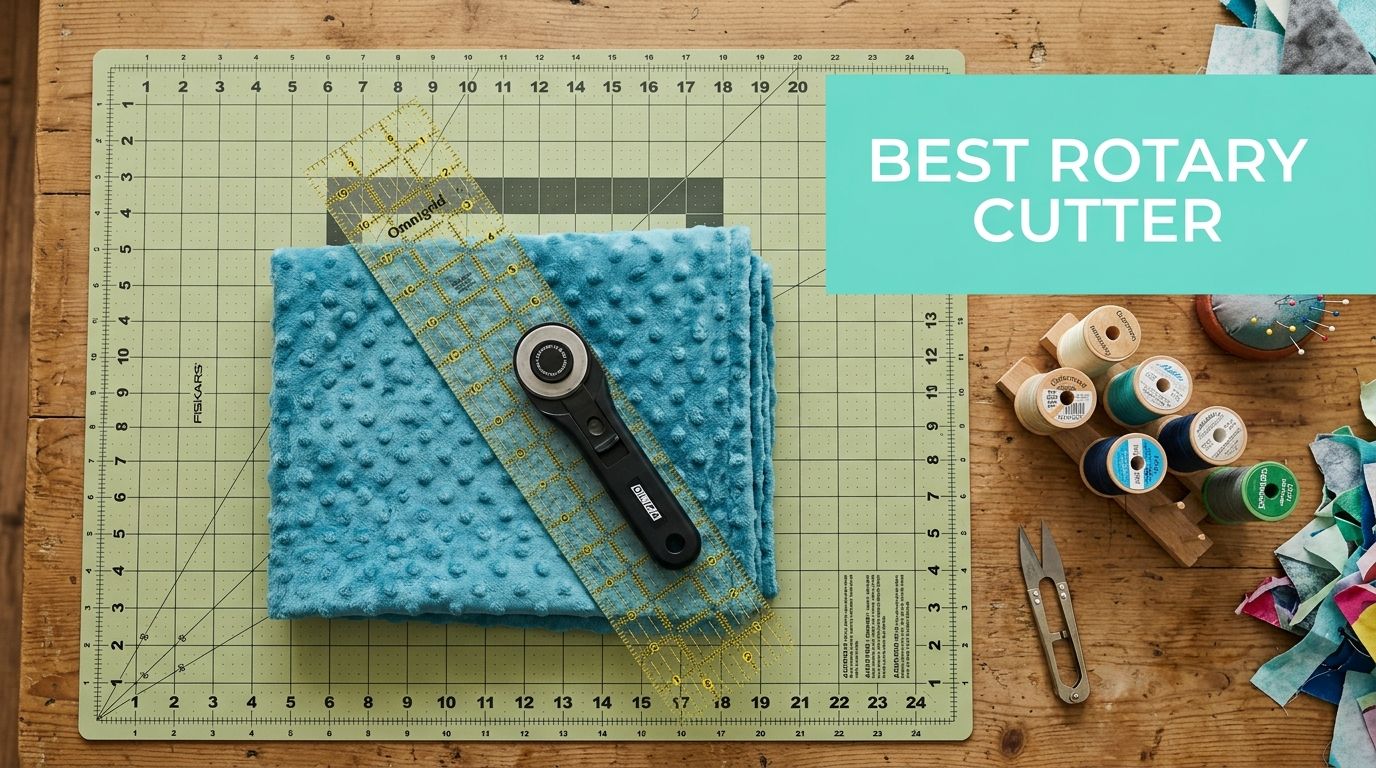
The best rotary cutter is the one that matches your project's fabric and your hand's comfort, with a 45mm ergonomic model being the most versatile choice for the majority of quilters, especially for cotton and standard minky. If you're fighting drag, skipped spots, or chewed-up pile on plush fabric, the issue usually isn't that you need a “top rated” cutter. It's that your blade size, blade geometry, and handle style don't match the job.
You're probably here because your cutter behaves fine on quilting cotton, then turns stubborn the second you switch to Shannon Luxe Cuddle, a deep pile Hide texture, or a wide minky backing that wants to shift under the ruler. That's the point where generic quilting advice stops being useful.
At OPN, we work with plush fabric every day, and that changes how we judge tools. We care less about hype and more about whether a cutter tracks straight on soft fabric, stays comfortable through repeated cuts, and leaves a clean edge on slippery backings. If you're new to this fabric family, start with this guide to what Cuddle minky fabric is so the behavior of these textures makes more sense before you choose your cutter.
Introduction
Most “best rotary cutter” articles are written for cotton piecing. That's helpful up to a point, but it leaves out the exact problems that show up with plush fabrics.
Minky exposes every weakness in your setup. A mediocre blade drags. A clumsy handle makes you press harder. A cutter that feels stable on flat woven fabric can suddenly wander when you're cutting Luxe Cuddle Snowy Owl, Fawn, or Hide.
We take a simple view. The best rotary cutter isn't the biggest, priciest, or most recommended model. It's the one that gives you control on the fabric you sew.
Clean cuts on plush fabric come from matching the cutter to the pile, the backing, and the length of the cut.
For most quilters, that starts with a 45mm ergonomic cutter. It's the all-rounder that handles straight cuts, medium pieces, and routine prep without feeling bulky. It's also the blade size most often treated as standard for general quilting with cotton and standard layers, including beginner-to-pro cutting sets, as noted in this overview of 45mm rotary cutting set basics for quilting.
Why Does Your Rotary Cutter Struggle With Minky Fabric?
A rotary cutter that behaves well on cotton can start skipping, dragging, or drifting the moment it hits minky. We see it all the time with Shannon Luxe Cuddle, especially on long cuts where the pile wants to lift and the knit backing wants to shift.
The problem is rarely just "a dull blade." Plush fabric asks the cutter to do two jobs at once. It has to part the pile cleanly, then stay planted long enough to slice the backing without pushing it out of line.
What makes plush fabric harder to cut
Minky fights clean cuts in a few specific ways:
- High pile: Fibers stand up into the blade path and can deflect the cut before the blade reaches the base fabric.
- Slick or stretchy backing: The backing can move under pressure, especially if your ruler grip is weak or your mat is worn.
- Compression: Plush fabrics flatten when you press down, then rebound as the cutter rolls forward. That can leave a cut edge that looks fine folded, but goes off once the piece relaxes.
Those are different problems than cotton gives you. Cotton stays visible and stable. Minky hides the ruler edge, grabs at the blade, and shifts more easily on wide cuts.
Blade geometry also matters more than many quilting guides admit. In practice, we get cleaner results when the blade size, cutter weight, and handle angle match the pile height and the length of the cut. A sharp blade in the wrong setup can still leave furry edges or force you to press too hard.
Why standard advice falls short
A lot of rotary cutter advice is built around flat woven fabric, short patchwork cuts, and neat stacks that stay put. That works for cotton. It breaks down fast on plush yardage, blanket panels, and extra-wide backings.
For example, a small cutter may feel precise, but it often takes too many passes on minky. More passes means more chances for the backing to creep. A heavy 60mm cutter can help on long straight runs, but it may feel clumsy if you're trimming smaller pieces or learning control. Those trade-offs matter more on minky than they do on basic quilting cotton.
If fabric shift is part of the problem, fix that alongside your cutter choice. Our guide on how to sew with minky fabric without it sliding pairs well with rotary cutting technique because the same slip starts at the cutting table.
| Feature | Best For | Considerations for Minky |
|---|---|---|
| Smaller blade | Curves and detail work | Can feel too slow on long plush cuts |
| 45mm blade | General quilting and most minky prep | Good balance of control and cutting power |
| 60mm blade | Long straight cuts and thicker stacks | Better for wide backing, less ideal for beginners |
| Straight handle | Light occasional cutting | Often encourages wrist strain on plush fabric |
| Ergonomic handle | Repeated cuts and dense soft fabric | Better wrist alignment and steadier pressure |
If your blade is sharp and your cuts still look ragged, check the whole setup. On minky, blade size, handle control, ruler grip, and cutting pressure all affect the result.
What Are The Different Types Of Rotary Cutters?
Rotary cutters split into two decisions. Blade diameter determines how much fabric the cutter can clear in one pass. Handle design determines how steady your hand stays while you do it.
On cotton, quilters can get away with treating those choices as personal preference. On Shannon Luxe Cuddle, thick minky, and extra-wide backing, the wrong cutter shows up fast in skipped spots, drag, and edges that need cleanup.

Which blade size works for which project
Each size has a job.
- 18mm: Best for tight curves, applique trimming, and very small pattern pieces.
- 28mm: Good for small curves and lighter craft work where a larger blade feels bulky.
- 45mm: The standard size for general quilting and the best starting point for most minky cutting.
- 60mm: Best for long straight runs, thicker layers, and wide backing where you want fewer stops.
We keep coming back to the same pattern at OPN. A 45mm handles most day-to-day cutting well, especially for throw-size projects, strips, and standard yardage. A 60mm earns its place when the fabric gets wide, plush, or heavy enough that extra passes start costing accuracy.
The smaller sizes still matter. They are specialty tools, not main cutters.
What handle style actually changes
Handle shape affects control more than many buying guides admit. A straight handle can work for occasional cutting, but it asks more from your wrist and forearm, especially on plush fabric that resists the blade. An ergonomic handle keeps your hand in a better position and helps you hold even pressure from the start of the cut to the end.
That difference is easy to feel on minky.
If you cut often, or you are still building control, ergonomic handles are usually the better choice. Quilters who are just getting comfortable with rulers, mats, and blade safety can keep it simple with a beginner quilting guide and a reliable 45mm ergonomic cutter before adding specialty sizes.
| Feature | Best For | Considerations for Minky |
|---|---|---|
| 18mm blade | Intricate curves and tiny pieces | Precise, but slow for blanket and backing cuts |
| 28mm blade | Small curves and craft projects | Easy to control, limited power on dense plush |
| 45mm blade | Straight cuts and medium pieces | Best all-purpose option for most quilters |
| 60mm blade | Long cuts and multiple layers | Excellent for wide minky and backing prep |
| Straight handle | Short sessions and light use | More wrist strain during plush cutting |
| Ergonomic handle | Frequent cutting and dense textiles | Better comfort and steadier tracking |
For most quilters working with minky, one cutter is enough to start. Make it a 45mm with an ergonomic handle. Add a 60mm once your projects regularly include wide backs, king-size cuts, or long straight trimming.
How Do You Choose A Cutter For Your Project And Skill Level?
Project size matters, but fabric behavior matters just as much. A cutter that feels fine on quilting cotton can start to drag, skate, or tire your hand fast on Shannon Luxe Cuddle, tall pile minky, or extra-wide backing. That is why we choose cutters based on control first, then speed.

For the big-project quilter
Long cuts across wide plush fabric reward a larger blade, especially when you are trimming backing or squaring a blanket after quilting. A 60mm cutter covers more ground in one pass and is less likely to stall in dense pile.
Use this setup:
- Choose a 60mm cutter if you regularly cut extra-wide minky, quilt backs, or long straight blanket edges.
- Use an ergonomic handle to keep pressure steady through the full cut.
- Keep a 45mm nearby for corners, smaller shapes, and cleanup work.
For minky, fewer passes usually means a cleaner edge. Every restart gives the pile another chance to shift.
For the beginner crafter
New quilters and sewists usually need a cutter that feels predictable, not oversized. Bigger blades can be useful, but they ask for more confidence with ruler placement, body position, and stopping distance.
That matches what we see at the cutting table. Beginners often get better results with a 45mm cutter because it balances reach and control well on both cotton and plush fabrics.
- Start with 45mm for the widest range of projects.
- Choose a clear, easy safety lock you can use without fumbling.
- Skip specialty sizes at first if you are still building clean ruler habits.
Practical rule: If your shoulder lifts, your grip tightens, or you feel the need to shove the cutter through the fabric, the setup is wrong for your current project.
Many shops offer a 15% first-order coupon, and free shipping often starts at $70+, which can help if you need to buy a cutter, extra blades, and a ruler at the same time.
For the small-biz seller
Batch cutting changes the decision. If you make baby blankets, loveys, quilt backs, or kits for sale, the best cutter is the one that gives you the same cut on the tenth piece as it did on the first.
We usually recommend a two-cutter setup:
- A dependable 45mm ergonomic cutter for daily cutting and general prep.
- A dedicated 60mm cutter for long runs, wide cuts, and stacked layers.
- Separate fresh blades for plush fabric so paper, stabilizer, and batting do not dull the edge you need for minky.
Consistency pays for itself. Cleaner cuts save rework, and rework is what slows down production.
For the budget-conscious hobbyist
One good cutter beats a drawer full of mediocre ones. If budget matters, spend on the tool you will reach for every week.
Buy in this order:
- First purchase: 45mm ergonomic cutter
- Second purchase: replacement blades
- Third purchase: 60mm cutter if your projects keep growing into wide backing, large throws, or multiple layers
We have seen plenty of quilters buy a specialty cutter first, then still struggle because the underlying problem was a dull blade or an uncomfortable handle. Start with the setup that solves the most common jobs on minky, then add size-specific tools once your projects demand them.
How Can You Get Clean Cuts And Extend Blade Life?
Technique matters as much as the cutter. Even a strong blade will behave badly if the fabric shifts, the ruler lifts, or the mat is too worn.

How do you cut plush fabric without wrestling it
These habits make the biggest difference:
- Cut from the backing side when possible: It gives you a flatter surface and a clearer ruler line.
- Use pattern weights instead of pins: Pins distort plush fabric and create little hills under the ruler.
- Make one continuous pass: Stopping halfway often leaves a fuzzy notch where the blade re-enters the pile.
- Press down on the ruler, not the cutter: Extra force on the cutter usually increases drag.
We also like the no-lift approach for long cuts. Set the ruler, anchor it firmly, and commit to the pass instead of pecking through sections.
If lint and drag are becoming a pattern, this step-by-step guide on how to cut minky fabric without the mess is worth keeping open while you work.
When should you change the blade
Sooner than you think.
Plush fabrics dull a blade faster than many quilters expect because the pile adds friction before the edge even reaches the backing. If your cut line starts needing extra pressure, don't muscle through it. Change the blade.
A fresh blade is cheap insurance for expensive fabric.
Safe disposal matters too. Keep a dedicated sharps tin or blade container near your cutting station. Don't drop old blades loosely into the trash.
For general edge maintenance habits and tool sharpness mindset, a useful outside reference is this guide to selecting the best knife sharpener. It's not about rotary blades directly, but the principles around edge performance and tool care carry over well.
A quick visual helps here:
What else protects blade life
- Use a good self-healing mat: A rough or damaged mat chews through blades.
- Reserve one cutter for fabric only: Paper, stabilizer, and packaging dull blades fast.
- Clean lint often: Plush fibers collect around the blade housing and interfere with smooth rotation.
What Are The Top Rotary Cutters We Trust At OPN Quilting?
At OPN Quilting, we judge rotary cutters by one standard. Do they stay on line and cut plush fabric cleanly without forcing the hand?
That matters more with minky than with quilting cotton. A cutter that feels fine on flat woven fabric can drag, skip, or push the pile sideways on Shannon Cuddle, Luxe Cuddle, and other lofty backings.

The 45mm ergonomic cutter
This is still the cutter we put in most quilters' hands first.
A good 45mm ergonomic cutter gives the best balance of control, visibility, and comfort for everyday cutting. It handles cotton well, but for our work, it also manages standard minky without feeling clumsy. The smaller profile helps on curves, trim work, and shorter straight cuts where accuracy matters more than speed.
Brand matters less than fit. We trust established options from OLFA, Fiskars, and Clover because replacement blades are easy to get and the handles tend to be better built than bargain cutters. For plush fabric, that consistency matters. A cutter with blade wobble or a sloppy safety latch gets frustrating fast.
The 45mm ergonomic cutter for high-pile work
Dense minky exposes weak cutters in a hurry.
For high-pile fabrics, we still prefer a 45mm size, but only if the cutter tracks smoothly and keeps the blade seated firmly. In real cutting sessions, the difference shows up in hand fatigue and edge quality. Some handles let you keep your wrist in a more natural position, which helps on repeated cuts across cuddle fabrics. Some blade housings also glide through loft better than others, even when the blade size is the same.
This is one reason generic "best rotary cutter" lists miss the point. They are usually written around cotton piecing. We are choosing for plush fabrics that fight back.
The heavy-duty 60mm cutter
A 60mm cutter earns its place on the table when the project gets wide.
Use it for:
- Extra-wide backing
- Long straight edges
- Multiple plush layers
- Large blanket panels
We do not recommend it as a primary cutter. It is heavier, less nimble, and easier to overcut at the end of a pass. Still, for broad yardage and long edge cleanup, it saves time and keeps the cut more consistent than a smaller blade making repeated passes. If you are regularly working with wide plush fabric, starting with quality yardage from our Shannon Cuddle 3 minky collection makes cutter choice easier because the fabric behaves more predictably on the mat.
The best rotary cutter for minky is the one that stays smooth through the pile and lets you finish the cut without adding pressure.
Our short version is simple. Start with a well-made 45mm ergonomic cutter. Add a 60mm cutter if your projects often include extra-wide backings, long blanket cuts, or thick plush layers. That setup covers nearly everything we cut in the shop.
Are You Ready To Start Your Next Project?
The best rotary cutter is the one that fits the fabric, the scale of the project, and the way your hand works. Often, that means starting with a 45mm ergonomic cutter, then adding a larger cutter only when long cuts or wider backing justify it.
If you work with soft fabric often, especially Shannon Cuddle and Luxe Cuddle textures like Hide, Snowy Owl, and Fawn, don't let generic cotton-based advice steer the whole decision. Plush fabric asks for more precision in blade choice, handle comfort, and cutting technique.
We've seen the difference the right setup makes. Cleaner edges, less drift, less hand strain, and fewer frustrating recuts. That matters whether you're making a baby blanket, prepping extra-wide backing, or sending a top out for Mail-in Longarm finishing. Hundreds of verified reviews don't come from guesswork. They come from getting the details right.
Ready for softer cuts and better results? Browse premium Shannon Cuddle textures, project-ready plush fabrics, and Mail-in Longarm options at On Pins & Needles Quilting Co., then Get 15% Off Your First Order.