
You're standing at the fabric shelf with a quilt top finished, a blanket pattern open, or a jacket half-planned, and the soft rolls are all starting to look alike. Fleece fabric by the yard is continuous fleece cut from a roll in the length you need, making it practical for quilts, garments, blankets, and other projects without buying an entire bolt.
The right choice depends less on color than on weight, width, pile, and the finished object you want. Buy too light and a quilt back may feel insubstantial. Buy too heavy and a fitted garment can become bulky, difficult to sew, and uncomfortable to wear.
What Fleece Fabric by the Yard Really Means
At a cutting counter, “by the yard” describes how the fabric is sold, not a special type of fleece. A shop cuts a continuous length from a roll, whether you need part of a yard, a full yard, or several yards for a large backing. Retail catalogs commonly list fleece in full-yard pre-cuts and cut-yardage formats, which is why the phrase appears so often in project searches. Hobby Lobby's fleece catalog shows how widely this buying format is used.
Most fleece is a synthetic knit made from polyester, brushed on one or both sides to raise a soft pile. That fuzzy surface traps warm air, while the fiber itself dries quickly and doesn't absorb water readily because polyester fleece is hydrophobic. Frontier Textile's overview of fleece characteristics describes the combination of softness, low weight, warmth, and quick drying that makes fleece useful beyond outdoor clothing.
What continuous yardage gives you
A continuous cut matters when you're backing a quilt or making a blanket. You can plan around the fabric's full length instead of joining small remnants, and you can scale the purchase to the project rather than committing to a whole bolt.
Use yardage for:
- Quilt backs, where a continuous piece reduces unnecessary joins.
- Blankets and throws, including simple no-sew designs.
- Hoodies, robes, and jackets, where the cut needs to follow a paper pattern.
- Pet beds and cushions, where loft and washable softness matter.
- Samples, when you want to test washing, stretch, or color before cutting the main project.
Fleece is often confused with minky because both can feel plush, but they behave differently. The guide to Cuddle and minky fabric is useful when you're deciding whether a smooth fleece, a dimpled Cuddle, or a longer Luxe Cuddle pile better suits the result you have in mind.
Fleece Types Compared by Weight and Feel
Weight is the quickest useful filter when the product description gives it. GSM, or grams per square meter, tells you how much fabric is packed into the textile, but it doesn't tell the entire story. Brushing, heat-setting, fiber quality, stretch, and pile height all affect the hand-feel.
For by-the-yard sourcing, microfleece is commonly engineered around 140 to 180 GSM with a pile height near 0.8 to 1.2 millimeters, while standard apparel fleece often falls around 200 to 280 GSM. A B2B fleece specification guide explains why the difference matters. Lower GSM usually gives you less bulk and easier drape, while higher GSM holds more trapped air and feels warmer.
Independent textile guidance places microfleece at roughly 100 to 180 GSM and polar fleece at roughly 220 to 320 GSM, with heavy winter categories reaching 350 GSM or more. Textile Pulse's fleece comparison provides a useful buyer-oriented view of those ranges.
Fleece weight comparison
| Type | GSM Range | Pile Height | Best For |
|---|---|---|---|
| Microfleece | Roughly 100 to 200 GSM | Thin, close pile | Base layers, lightweight robes, baby garments |
| Midweight polar fleece | Roughly 200 to 300 GSM | Moderate pile | Throws, scarves, blanket accents, pullovers |
| Heavyweight or Berber fleece | Above 300 GSM | Deep, lofty pile | Pet pads, winter throws, lined jackets |
Microfleece works when you want softness without a lot of insulation. It's easier to move in and usually more comfortable for a garment worn indoors, but it won't give a bed blanket the same substantial feel as a denser polar fleece.
Midweight fleece is the practical middle ground. It has enough warmth for a throw or pullover without automatically turning every seam into a ridge. Heavy fleece brings comfort and loft, but it can fight you at the machine. The added thickness may reduce drape and increase needle breakage if the construction and needle choice aren't appropriate, as noted in this fleece buying guide.
Practical rule: Choose the lightest fleece that can deliver the warmth and structure your finished item needs.
Anti-pill finishing can help a garment or gift maintain a cleaner surface, but it isn't a substitute for good finishing or sensible care. Specialty surfaces such as Sherpa imitate shearling, while prints and licensed designs change the appearance without changing the basic weight decision.
How Fleece Became a Mainstream Textile
Modern commercial fleece grew out of work by Malden Mills in Massachusetts during the late 1970s and early 1980s. The mill developed a lightweight polyester pile fabric and partnered with Patagonia to bring it into outdoor apparel. Patagonia traces its first fleece sweaters to that collaboration, while trade coverage identifies Synchilla as the inaugural fleece used in Patagonia's Snap-T pullover in 1985. Patagonia's history of fleece documents the partnership and the material's place in outdoor clothing.
The key commercial decision was that the material wasn't patented. Other manufacturers could adopt the method, so fleece moved beyond one brand and one product line. That choice helped turn a performance textile into a familiar fabric for clothing, blankets, home goods, and craft projects.
Why quality varies so much
An unpatented manufacturing path encouraged broad adoption, but it also means “fleece” doesn't identify one uniform product. Two bolts can differ in:
- GSM and thickness, which change warmth and bulk.
- Pile height, which affects softness and visual loft.
- Brushing quality, which influences shedding and hand-feel.
- Heat-setting, which can affect dimensional stability and pilling.
- Width, which determines how efficiently you can cut a quilt back.
- Colorfastness and shrinkage, both important after washing.
The category's commercial growth reflects that broad usefulness. One industry report estimates the fleece fabrics market at about USD 736 million in 2022 and projects USD 1,046 million by 2031, with an estimated compound annual growth rate of about 5.2% over that forecast period. The fleece fabrics market report connects the category's appeal with apparel, blankets, and home textiles.
That history explains why a maker can find thin performance fleece, thick Berber, printed blanket fleece, and plush alternatives under closely related names. The label is only the starting point. The project outcome still depends on the specifications.
Widths and Yardage That Fit Your Project
Width is where many fleece purchases succeed or fail. Standard apparel fleece is often about 150 to 175 centimeters wide, while retail cuts commonly appear around 58 to 60 inches wide. Extra-wide options can reach 90 or 110 inches, which changes the cutting plan for large quilts. This guide to extra-wide backing fabric explains why width can matter more than the price per yard.
Start with the finished object, then check the fabric width against the largest dimension. A 60 by 80 inch throw backed with standard-width fleece may require a center seam and around 2.5 yards, while ordering 3 yards gives more working room. An extra-wide backing can avoid that center seam when its width covers the quilt.
Fleece yardage by project
| Project | Standard 58 to 60 inch width | Extra-wide 90 to 110 inch | Seam Notes |
|---|---|---|---|
| Throw quilt | Around 2.5 to 3 yards for a 60 by 80 inch example | Often allows one-piece backing | Standard width may need a center seam |
| Pullover or zip-up jacket | Around 2 yards for many sizes | Usually unnecessary | Reserve fabric for motif matching |
| Child's blanket | Around 1.5 yards | More than needed for many layouts | Check finished dimensions first |
| Bed-sized quilt | Measure carefully from the quilt dimensions | Often the more efficient choice | Extra-wide fabric can eliminate a center seam |
These are planning examples, not universal pattern requirements. Sleeve length, hood pieces, directional prints, nap, shrinkage, and pattern size can change the total. Lay out the pattern pieces before ordering whenever the project is close to the edge of the width.
How to protect the cut
Half-yard cuts and fat quarters are useful for testing a texture, checking a color, or making a small accessory. Some stockists also offer pre-cut panel lengths, which can simplify gifts and small projects.
Add an extra half-yard to an estimate when you need room for shrinkage, motif alignment, or an inevitable cutting mistake. For a large or expensive project, a swatch is cheaper than discovering after the first wash that the fabric no longer fits the plan.
Fleece vs Minky Flannel and Cotton
Fleece, minky, flannel, and cotton quilting fabric can all produce a comfortable textile project, but they don't produce the same result. The right choice depends on whether you value insulation, surface plushness, breathability, structure, or easy handling at the machine.
| Fabric | Softness | Warmth | Drape | Sewing Ease | Best Project |
|---|---|---|---|---|---|
| Polar fleece | Soft, brushed surface | High for its weight | Moderate | Generally manageable, but stretchy | Throws, pullovers, washable blankets |
| Minky or Shannon Cuddle | Very plush, often deeper pile | Warm and substantial | Heavier, fluid drape | More demanding, especially across layers | Luxury blankets, quilt backs, baby gifts |
| Flannel | Softens with washing | Moderate | Relaxed, stable | Relatively easy | Pajamas, shirts, lighter quilt backs |
| Cotton quilting fabric | Smooth or crisp, depending on finish | Low insulation by itself | Structured | Easy for piecing and pressing | Quilt tops, patchwork, detailed prints |
Polar fleece has an advantage when a project needs warmth without waterlogged weight. Its moisture resistance and fast-drying behavior make it useful for clothing and practical blankets, although surface pilling can become more noticeable with wear.
Minky and Shannon Cuddle fabrics deliver a more luxurious hand and deeper texture. They usually cost more than utility fleece, and the pile can shift while you sew. A walking foot, careful pinning or clipping, and a controlled feeding rate make a meaningful difference. Textures such as Hide, Snowy Owl, and Fawn are chosen for the surface experience, not only for warmth.
Flannel breathes better and becomes friendlier after washing, but it doesn't create the same lofty insulation. Cotton quilting fabric gives you crisp piecing, reliable print detail, and structure, yet it works best as a quilt top rather than the only warmth layer. For backing decisions, this comparison of quilt backing fabrics helps frame the choice around the finished quilt instead of the bolt alone.
Care and Sewing Tips for Lasting Fleece
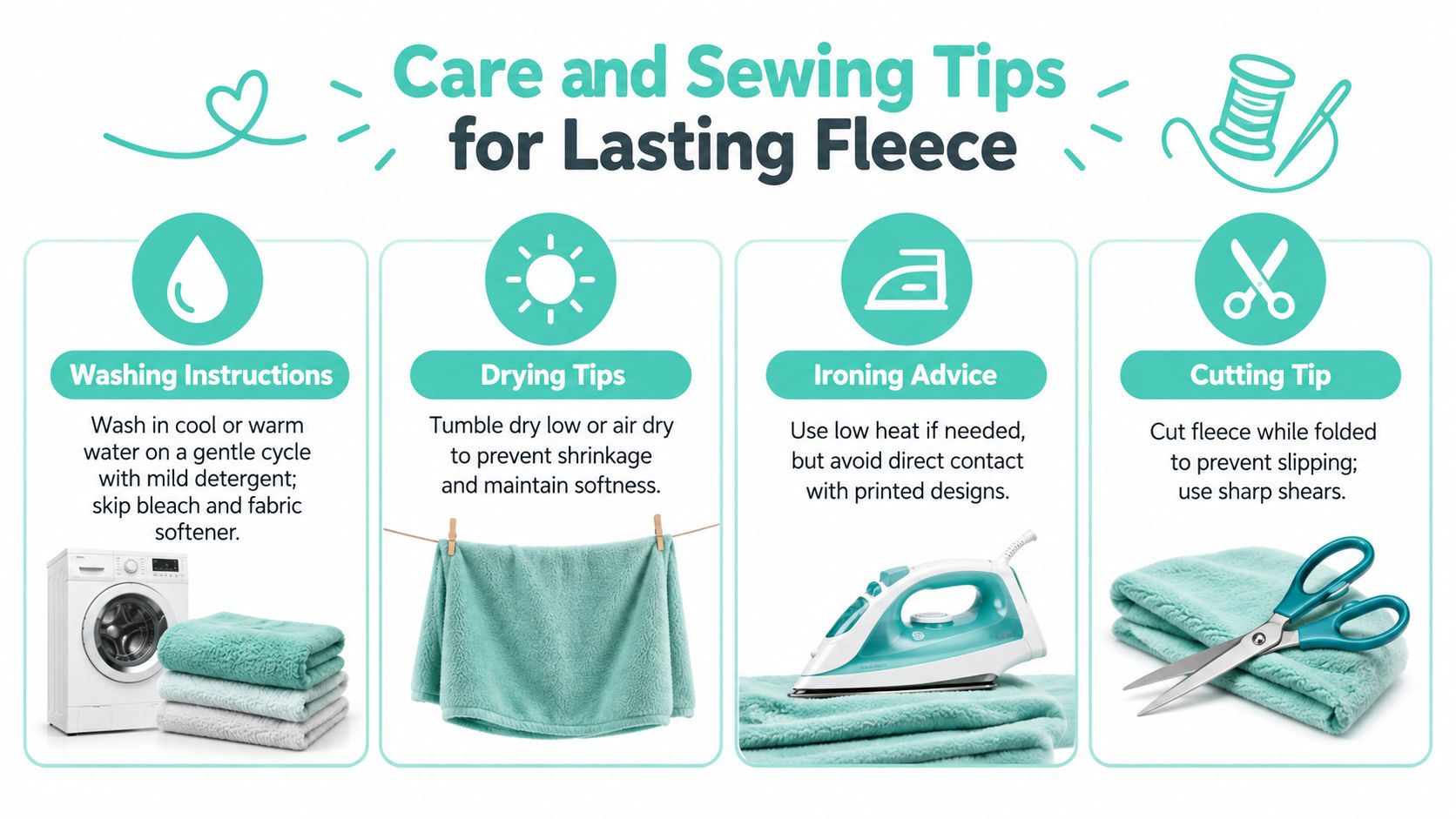
Fleece is forgiving, but high heat and careless feeding can shorten its useful life. Polyester fleece is generally machine washable, fast drying, and wrinkle resistant, yet it can pill, create static, and melt when exposed to high dryer heat or open flame. Dalston Mill Fabrics' fleece care guidance makes the heat warning especially clear.
Washing and drying
- Pre-wash every cut: Even anti-pill fleece should be washed before cutting so you can account for future dimensional change.
- Use a gentle cycle: Cool or warm water and mild detergent are sensible choices. Skip bleach and fabric softener, which can coat fibers and interfere with moisture management.
- Keep heat low: Tumble dry on low or air dry flat. Don't leave fleece near a heater, iron it aggressively, or expose it to fire.
- Remove it promptly: Taking the fabric out of the dryer quickly reduces deep creases and helps limit edge curling.
- Store it folded: Hanging can stretch a knit, especially when the fabric is heavy or plush.
Sewing without stretching the project
Use a ballpoint or stretch needle, then test the machine settings on a scrap. A stitch length around 3 to 3.5 millimeters can help the seam move with the knit instead of creating a tight, tunneling line.
A walking foot is useful when joining fleece to another layer or handling a slippery plush surface. Trim excess seam allowance where bulk will stack, and finish exposed edges with a zigzag or serged stitch when the project calls for it. Cut while the fleece is folded, keep the shears sharp, and use weights or clips to stop the layers from wandering.
The same principles matter even more with minky. This tutorial on sewing minky fabric covers the handling issues that arise when a plush pile shifts under the presser foot.
If you prefer to send a completed quilt to a professional rather than wrestle with multiple thick layers at home, this video offers another practical visual reference:
Choosing a Supplier You Can Trust
A dependable supplier makes fleece yardage feel straightforward. You should know the width, fiber content, cut format, and finishing details before paying, and the fabric should arrive as a clean continuous cut rather than a surprise collection of remnants.
What to check before ordering
- Accurate yard cuts: Confirm that the shop cuts the length you ordered and identifies whether the item is a continuous cut.
- Consistent stock: Look for clear width, GSM, fiber content, and finish information so a reorder has a fair chance of matching.
- Respectful shipping: Fleece is bulky. It should be rolled or folded securely enough to avoid unnecessary creasing and surface damage.
- Transparent pricing: The cost per yard, cut minimums, shipping threshold, and return policy should be visible before checkout.
- Useful project guidance: A knowledgeable shop can tell you whether a fabric is better suited to a garment, throw, backing, or plush gift.
Ask whether the shop distinguishes cut-yard orders from bolt-yard pulls, and whether the stated stock is current. If you're working with a directional print or a deep texture, request photos or read the product description carefully so the pile and layout don't surprise you.
A quilt-focused stockist may also carry both standard utility fleece and wider backing choices. That lets you compare a 60-inch cut with 90-inch or 110-inch yardage before splitting the order between several vendors. This guide to buying quilt materials offers a useful checklist for evaluating fabric sources.
A trustworthy listing answers the questions you'd ask at a local cutting counter. If it doesn't state the width, cut format, or fiber content, pause before ordering.
Look for curated collections and named lines, but don't let a familiar brand replace inspection of the actual specifications. A beautiful texture still needs to fit your pattern, your washing routine, and the way you plan to finish the project.
Bringing It All Together on Your Next Project
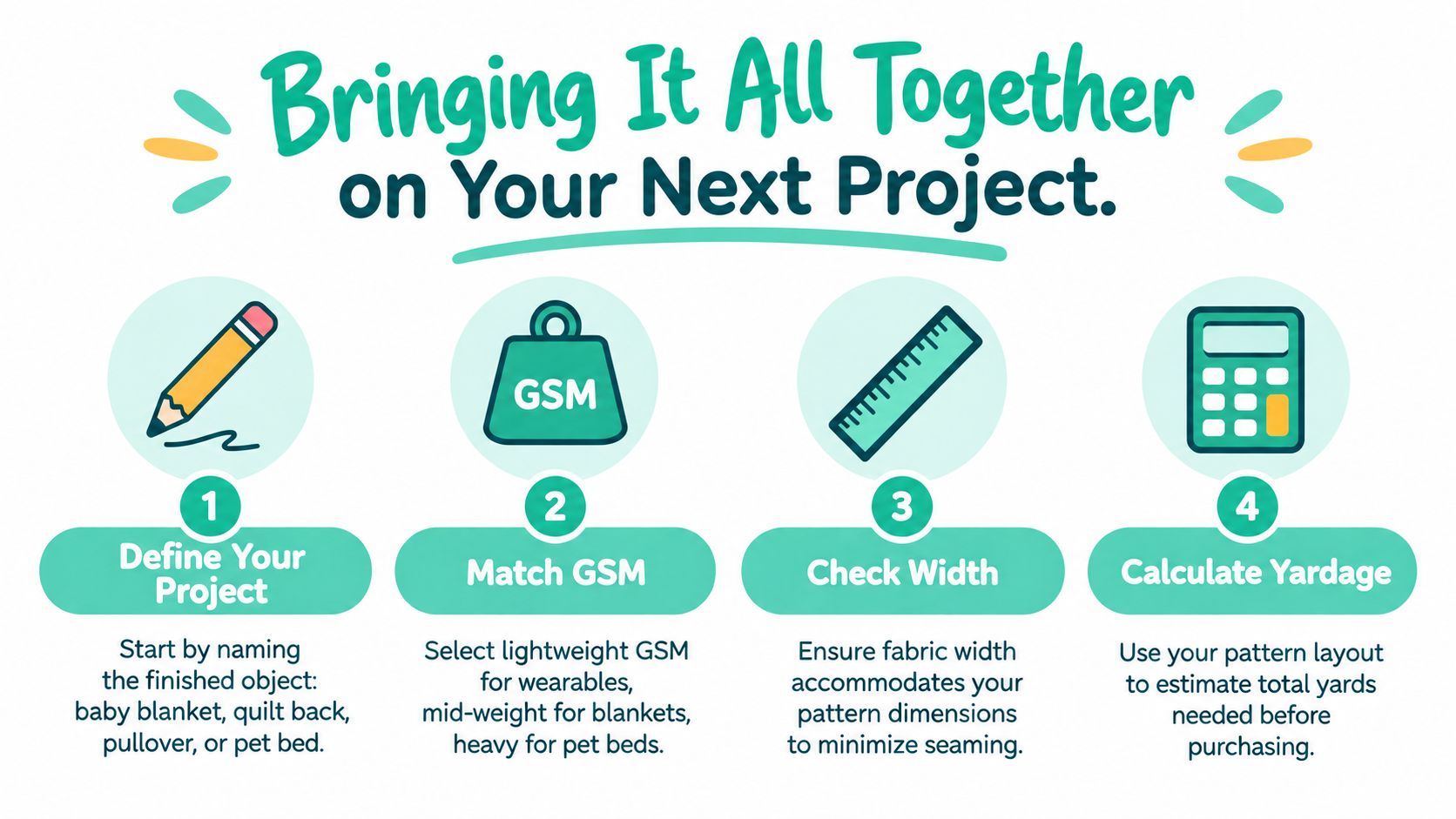
Start with the finished object, not the color wall. A baby blanket, quilt back, pullover, and pet bed each place different demands on fleece, so the useful sequence is simple: define the object, choose the weight, confirm the width, and calculate the continuous yardage.
Microfleece below 200 GSM is a reasonable direction for lighter wearables when breathability and low bulk matter. Midweight fleece around 200 to 300 GSM suits many throws and practical blankets. Heavy fleece is better reserved for projects that can accommodate loft, such as pet beds or substantial winter layers.
A reliable buying sequence
- Name the finished object: Write down whether you're making a quilt back, blanket, garment, or cushion.
- Match the GSM: Choose lightweight fleece for wearables, midweight for general blankets, and heavy fleece where bulk is acceptable.
- Check the width: Compare the fabric width with the largest pattern or quilt dimension before calculating length.
- Allow for reality: Add working room for shrinkage, directional prints, repairs, and cutting errors. Wash a swatch first, then pre-shrink wide backing in the same way you'll launder the finished quilt.
For makers who want coordinated fabric and professional finishing, On Pins & Needles Quilting Co. offers curated minky cuts, including standard and extra-wide options, alongside a mail-in longarm service. The service includes batting, thread, and return shipping, while the shop's collection includes textures such as Hide, Snowy Owl, and Fawn, plus quilt backing and project kits.
Order-planning note: A single stockist can simplify color matching when you're buying backing, coordinating fabric, and finishing at the same time.
The shop lists free U.S. shipping on orders over $70, a first-order 15% coupon, and support from hundreds of verified reviews. Those details matter when you're comparing bulky yardage, especially if you want a cut matched to a quilt rather than a generic remnant.
Choose your project first, then shop On Pins & Needles Quilting Co. for fleece and premium Cuddle yardage that fits the job, with curated cuts, extra-wide backing, and mail-in longarm finishing available. Use the 15% first-order offer, build your order toward free U.S. shipping over $70, and turn your fabric plan into a finished quilt or blanket.