
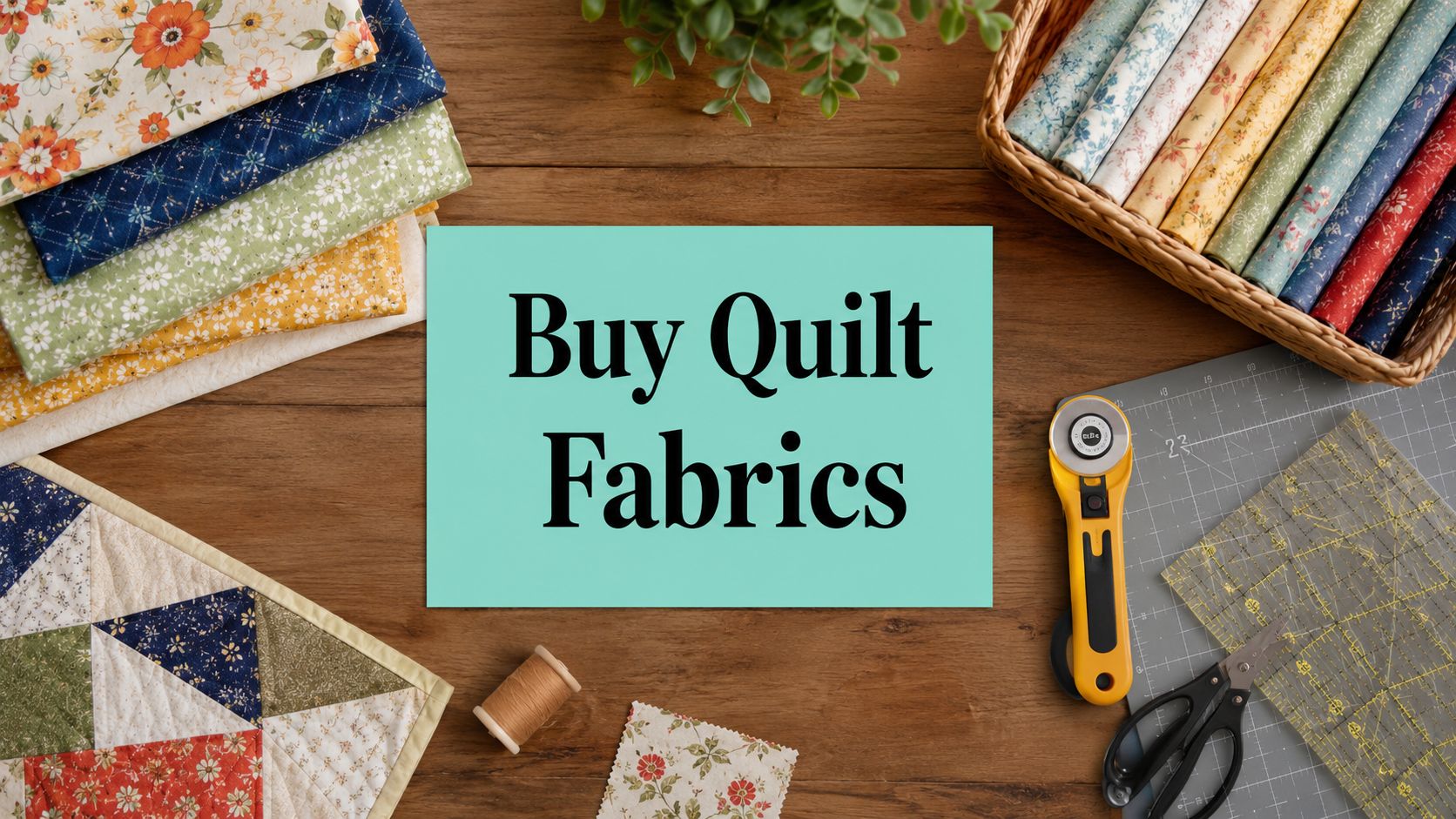
You're staring at a quilt top that's almost done, a baby gift you need to make look polished, or a backing that keeps turning into a piecing problem. Where to buy material for quilts depends on the project, not just the price tag, and the right source changes once you factor in width, texture, cut format, and whether you still need finishing.
Ask the Right Question When Buying Quilt Fabric
The fastest way to clear up a confusing fabric search is to stop looking for one perfect shop. Ask which buying channel solves this quilt's problem.
A queen backing needs a different source than a beginner-friendly baby kit. A plush throw for a nursery calls for a different fabric family than a piecing cotton stash. Generic “best quilt shop” lists feel thin because they flatten very different buying jobs into one basket.
Think in four decisions
The cleaner way to shop is to sort the purchase into four parts, channel, fabric type, format, and finishing. Once those are separated, the choice gets much easier.
- Channel: local shop, mass retailer, online specialty shop, or bulk source.
- Fabric type: quilting cotton, minky, wideback, flannel, or a textured blend.
- Format: yardage, pre-cut bundle, kit, or curated cut.
- Finishing: sew it yourself, or send it out for longarm quilting.
That framework also explains why specialty minky stockists deserve their own lane. Texture and width matter more with plush fabrics than they do with standard piecing cotton, and a specialist source usually bundles those decisions together instead of making you guess.
For a buyer who wants to test a new specialty source without getting stuck, compare how the fabric feels, how it is cut, and whether the shop shows real use cases. A useful outside reference for that kind of shopping mindset is this guide to try before you buy, because the same logic applies to fabric as it does to any tactile purchase.
That is also why a specialist shop like Shannon Cuddle fabric can make more sense than a broad general store when the main need is softness, backing width, and a clean finish. A local option such as fabric stores in St. Paul can help when you need to feel the cloth in person, compare color under store lighting, or leave with yardage the same day. The source should match the outcome you want, not just the yardage you need.
Four Buying Channels and What Each One Is Best At
The market doesn't run on one channel. In Craft Industry Alliance's 2025 Quilting Trends Survey, 64% of quilters said they prefer to buy supplies at their local shop, while only 13% preferred online shopping. For fabric and thread specifically, 51% preferred local shops and 22% preferred online, which tells you the buying decision is still personal and tactile, even as digital shopping keeps growing. The same survey estimated annualized quilting-industry revenue at $4.5 billion in 2025. (Craft Industry Alliance)
At the same time, online stores captured about 38.6% of global quilting-fabric revenue in 2025, and specialty stores held about 31.4%. That's not a contradiction, it's a reminder that channel choice depends on the job. (DataIntelo)
| Channel | Best For | Main Strength | Watch Out For |
|---|---|---|---|
| Independent local quilt shops | Hand-selecting fabric, quick buying, color matching | You can feel the cloth and compare bolts in person | Smaller inventory and fewer unusual widths |
| Mass retailers and big-box craft chains | Basic cotton, simple projects, bargain hunting | Convenience and frequent sales | Limited specialty textures and backing widths |
| Online specialty shops | Luxe textures, wideback, curated cuts, precise matching | Deep inventory and niche formats | You can't touch the fabric before ordering |
| Wholesale or bulk channels | Repeat orders, small-batch makers, consistent replenishment | Better fit for repeat production | Less flexible for one-off, custom projects |
Match the channel to the risk
Local shops still win when the fabric choice is visually sensitive, because you can compare shade, hand, and drape in person. Online specialty wins when the need is specific, like 108-inch backing fabric, curated cuts, or a particular Shannon Fabrics texture that isn't stocked everywhere.
Mass retailers can be smart for routine piecing cotton or a project that doesn't need anything fancy. Wholesale channels make sense when you're replenishing the same material again and again for a small business, but they're less forgiving when you only need one quilt.
Practical rule: the higher the risk of getting the wrong width, texture, or cut, the more you should favor a specialist source.
If you want a real-world example of a local-quilt-shop mindset translated into online shopping, the store note in this Fabric Stores in St. Paul update shows how quilters still think in terms of access, selection, and local trust.
Choosing the Right Fabric Type for Your Project
The fabric family matters as much as the store. A buyer can pick the right shop and still end up with the wrong result if the cloth does not fit the quilt's job.
A bed quilt that needs a smooth back, a baby gift that should feel soft in the hand, and a simple piecing project all ask for different materials. I see the same mistake over and over in the shop, people start with color or price, then discover the fabric is too thin, too bulky, too narrow, or too plush for the way the quilt will be used.
Cotton, minky, wideback, flannel, and blends serve different jobs
Quilting cotton is the workhorse. It is what most piecing depends on, and the quilting fabric market still centers on it because it fits so many everyday projects, with cotton, polyester, linen, and silk each serving very different price and performance ranges. Those ranges help set expectations before you fall in love with a bolt that does not fit the budget or the use case. (DataIntelo)
Minky and Shannon Cuddle answer a different need. They are about softness, comfort, and a smooth finish, which is why What Is Cuddle Minky Fabric is such a useful primer before buying. For a rugged baby blanket, Hide gives you a textured look that helps hide everyday wear. For a statement throw, Snowy Owl gives the quilt a distinct personality. For animal-themed gifts, Fawn lands in a sweet spot that reads playful without feeling childish.
Wideback and texture choices solve finishing problems
Wideback fabrics solve the back of the quilt, not the front. Standard quilting cotton is usually 44/45 inches wide, while wideback options are made to reduce or eliminate piecing on larger quilts. If the quilt is going to be handled a lot or used on a bed, that choice changes how clean the finish looks.
| Fabric Type | Best Use | Why Buyers Choose It |
|---|---|---|
| Quilting cotton | Piecing tops, blocks, borders | Easy to cut, press, and sew |
| Minky or Shannon Cuddle | Backing, baby quilts, plush gifts | Soft hand and cozy finish |
| Wideback fabric | Queen and king backings | Fewer seams, less bulk |
| Flannel | Warm quilts, casual layers | Soft, warm, familiar feel |
| Linen or cotton blend | Texture-forward projects | Drape and visual interest |
Start with the project, not the bolt. If the quilt's job is warmth, comfort, or a smooth back, let that decide the fabric family first.
That is why the Luxe Cuddle collection gets treated differently from standard quilting cotton. A plush backing can make the quilt better, but only if the texture matches the purpose. For a closer look at that fabric family, the Luxe Cuddle collection shows how much the hand and pile can change the final result.
Sizing Up Widths and Yardage the Smart Way
Width is the variable many quilters underestimate. They shop length first, then discover the back won't cover the quilt without a seam, or it won't load squarely on the longarm.
Start with the quilt top, then add space
For a backing to work well, it has to be larger than the quilt top on all sides. A common longarm prep standard is 4 inches of overhang on every side, which gives room for loading, slight shift, and quilting take-up. That's why backing calculations should always start with the finished top size, not just the fabric you want to buy. (Calculating Yardage for Quilts)
The practical lesson is simple. 44/45-inch fabric works fine for many baby and lap projects, but it often forces piecing on larger quilts. 90-inch and 110-inch widebacks exist because queen and king quilts need a cleaner solution.
Use width and length together
- Throw quilts: standard-width fabric can work, but measure carefully and add enough for overhang.
- Queen quilts: wideback is often the safer choice if you want to avoid a center seam.
- King quilts: extra-wide backing usually saves time, bulk, and alignment trouble.

If you need a source that stocks specialty widths, wideback minky and backing options are worth checking before you commit to piecing a large back. A shop that carries 80-inch Mirage, 90-inch, and 110-inch options changes the math completely.
Buying the right width up front is cheaper than buying extra yardage and time later.
Why Kits and Curated Cuts Save Time and Reduce Waste
Kits and curated cuts aren't just beginner-friendly. They're mistake-reducers, and that matters when the buyer wants a finished object instead of a pile of beautiful leftovers.
Curated formats shrink decision fatigue
A 2-yard, 2.5-yard, or 3-yard cut tells you exactly what you're working with. Strip bundles and kit formats do the same thing by narrowing the usable range and making it easier to estimate whether the project will finish cleanly. That predictability is especially useful online, where you can't hand-pick every bolt.
Fenwick Fabrics' product structure reflects that logic. Pre-cut formats keep dye-lot and texture matching more predictable, which helps when you're buying from a screen instead of a cutting table. (Fenwick Fabrics)
Pick the format that matches the outcome
- Pillow kits with forms: good for apartment gifts and fast wins.
- Infinity scarf kits: useful for craft-fair inventory or easy seasonal presents.
- 2.5-yard cuts: a practical choice for baby blankets and smaller backings.
- Strip bundles: efficient for strip quilts and repeatable tops.
The buyer who values predictability over creative freedom should default to curated cuts the way a contractor defaults to pre-cut lumber. That doesn't limit creativity, it prevents waste.
If you want a shop built around that kind of buying, curated cuts and quilt kits are the category to browse first. The other advantage is simple, the yardage is right-sized to the project, so you're less likely to overbuy.

Finishing the Quilt Without Owning a Longarm
A quilt top isn't finished when the piecing is done. It still needs batting, thread, and quilting, and that's where a lot of home sewers get stuck.
Mail-in longarm closes the gap
Mail-in edge-to-edge longarm service solves the last mile. A strong all-in service usually includes the quilting itself, batting, thread, and return shipping, which keeps the process simpler than sourcing each piece separately. That's especially useful for buyers who already spent time choosing the top fabric and backing and don't want another round of decision-making.
The prep matters. Backing should be cut at least 4 inches wider and longer than the top, batting should extend a bit beyond the top as well, and seams need to be pressed with loose threads clipped. Don't pre-baste or pin the layers, because the longarm machine loads them independently.
Pattern choice matters more than people think
A good pattern gallery gives the buyer control over the final look. Modern, floral, juvenile, holiday, and nature motifs all lead to very different finished quilts. If you're mailing out a baby gift, that variety matters more than a default meander.
One specialist source can simplify the whole purchase. Mail-in longarm quilting services keep backing questions, batting choices, and pattern selection in one place, which saves time and reduces the chance of buying the wrong supplies twice.

Mail-in longarm isn't only for huge bed quilts. Baby quilts and wall hangings fit the same workflow when you want a polished finish without buying a machine.
Pricing, Shipping, and Coupon Strategies That Work
A smart order usually comes down to three things, per-yard price, shipping, and whether the cart reaches the free-ship threshold. Ignore one of them, and the bargain can disappear fast once postage gets added.
Use the price range to set expectations
Fabric prices make more sense when you compare them by type instead of by the sale tag alone. Cotton quilting fabric usually sits in one band, polyester in another, linen higher still, and silk at the premium end, so the key question is what the cloth does for the quilt and how it behaves under a needle. As noted earlier, the broader quilting market includes a wide spread of fabric grades, and that spread shows up in the checkout screen as much as on the bolt.
Sales and clearance sections matter here too. Hancock's of Paducah organizes discounted fabric by the yard and by quilting formats like fat quarters, jelly rolls, honey buns, and charm packs, which is a good reminder that quilting buyers shop by project shape, not just by brand name. When I am helping someone choose material for a specific top, I care less about the headline discount and more about whether the cut size fits the quilt without leaving scraps that will never get used. (Hancock's of Paducah sales)
Run the cart through a simple checklist
- Compare the yard price: check the fabric type, not just the sale tag.
- Check shipping: the cheapest bolt can become the most expensive order after postage.
- Hit the free-ship threshold: at OPN, orders over $70 qualify for free U.S. shipping.
- Use the first-order coupon: the store offers 15% off your first order, which is an easy way to test a new specialist.
- Confirm the cut size: make sure you're ordering the width and yardage the quilt needs.

For a quick way to lower the first purchase, the fabric coupon codes update is the kind of page I would check before I checked out. If you are trying a new shop, a coupon plus free shipping can make the first project feel much safer.
Your Quick Decision Map and Next Step
If you need a fast answer for where to buy material for quilts, use this map. Choose a specialist when the fabric is textured, extra-wide, or project-sensitive. Choose a local shop when you need to touch and match by hand. Choose a mass retailer when the quilt is simple and the material is routine.
Then match the fabric to the job. Cotton pieces well. Minky and Shannon Cuddle bring softness. Wideback skips seams on large quilts. If you don't want to finish it yourself, mail it in for longarm quilting.
The cleanest workflow is often one source for the material and one place for the finishing. On Pins & Needles Quilting Co. carries minky, Luxe Cuddle, curated cuts, wideback options, and mail-in longarm finishing, and the shop backs that up with hundreds of verified reviews. When the buyer wants fewer handoffs and fewer sizing mistakes, that combination keeps the project moving.
For a focused next step, start with the Luxe Cuddle Collection if you want softness, or the Mail-in Longarm Services page if your top is already done and needs a professional finish.
If you want the easiest path from fabric choice to finished quilt, On Pins & Needles Quilting Co. has the material, the curated cuts, and the longarm finishing in one place. Browse the shop, pick the width and texture that fit your project, and place one confident order instead of piecing together five different sources.