
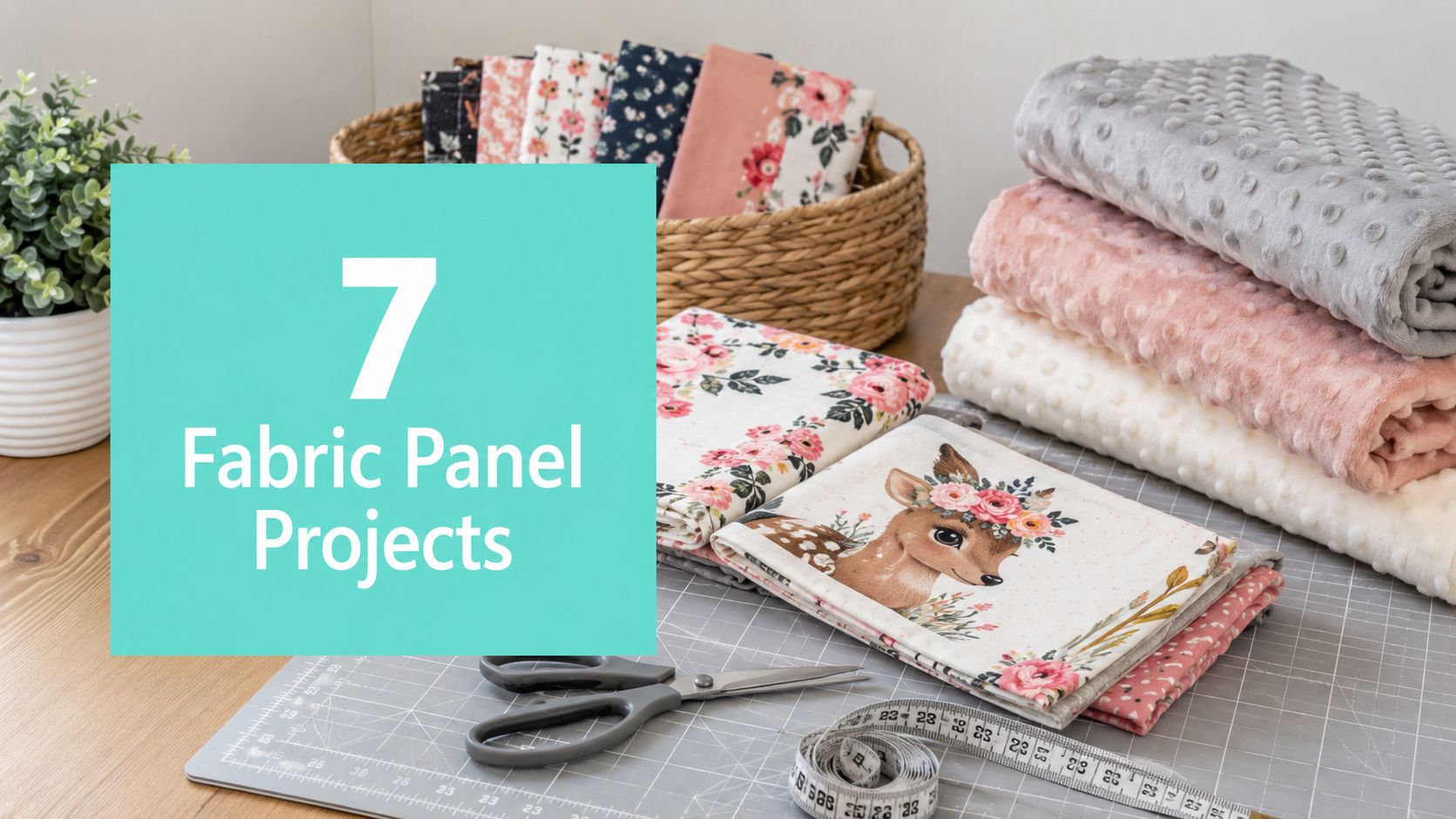
Transform panels into heirloom quilts and gifts without fighting bulky seams or guessing at the finish. Fabric panel projects work best when you pair the right panel with the right minky texture, measure the printed image before you cut, and choose a finishing method that protects the design. That approach saves time, keeps the panel square, and gives you a cleaner result whether you're making a baby quilt, a throw, or a wall hanging. For broader textile context, Lewis and Sheron Textiles explains batting basics in a useful primer on quilt layers, and that foundation matters before you start finishing.
1. Pre-Printed Panel Baby Quilts with Minky Backing
A baby quilt is often the simplest place to start because the panel does most of the visual work. A pre-printed design already gives you the focal image, and a soft backing like Shannon Cuddle Hide or Luxe Cuddle Snowy Owl turns it into a gift that feels finished, not rushed. That pairing works especially well for licensed character panels, alphabet prints, and animal motifs that need a smooth, cozy back. For more ideas for truly useful baby gifts, a panel quilt gives you a practical starting point without making the project harder than it needs to be.

What works in a nursery quilt
Neutral minky colors like Hide, Fawn, and Snowy Owl are the safest picks when the panel has a lot of color. They keep the front in focus and make the quilt easier to match with nursery décor. If you want a fast finish, keep the panel as the center, add a modest minky border, then send the sandwich to OPN's Mail-in Longarm service so the quilting stays even and the layers do not shift.
The printed front and the backing should work together, not compete. A simple panel usually benefits from a little more texture in the back, while a busy panel needs a calmer surface so the image still reads clearly. If you want a practical overview of backing options, OPN's guide to minky fabric panels is a useful reference before you cut.
A few habits make baby quilts look more polished:
- Press first. Missouri Star recommends pressing and squaring the panel before you cut, because the printed image often does not match the nominal fabric size exactly. Their panel guide is a good reminder to measure what is on the cloth.
- Pre-wash separately. Wash minky backing on its own if you want to reduce color transfer risk.
- Leave room for binding. The plan should include extra fabric for the finish, not just the visible quilt top.
- Choose edge-to-edge quilting. That style keeps a baby quilt soft and sturdy without competing with the panel artwork.
For quick baby-gift makes, the right support matters too. OPN's cut-and-sew fabric panels can shorten the path from idea to finished present, and soft minky throw blankets offer another useful benchmark if you are comparing hand feel and drape before you commit to a backing choice.
Practical rule: If the panel already has a busy image, use a calm minky back. If the front is simple, the backing can carry a little more texture.
2. Pre-Printed Panel Throw Blankets and Lap Quilts
A throw blanket or lap quilt gives a panel more room to breathe. The front can stay fully visible, while the backing and quilting do the quiet work of making the piece feel finished and comfortable in use. For larger projects, OPN's 110-inch extra-wide minky helps avoid a center seam, which keeps the back cleaner and reduces one more place where the fabric can shift.

Why the backing choice changes the whole look
On a throw, the back is part of the presentation. A smooth, continuous backing reads cleaner, especially when the panel already carries a strong scenic, floral, or novelty print. For makers weighing softness against structure, OPN's minky fabric panels guide is a useful reference before you cut.
Texture should follow the mood of the print. Hide works well with geometric or modern panels because the surface stays more restrained. Luxe Cuddle suits florals and scenic panels when you want a richer, plusher feel that still supports the artwork. If you are sending the quilt out for finishing, check the quilting motif first in OPN's pattern gallery, then choose a pattern that supports the front instead of competing with it.
The trade-offs are straightforward.
- No-seam backing uses more fabric up front, but it saves setup time and removes a visible interruption.
- Soft minky adds comfort and drape, but it will show distortion if the panel was not squared before assembly.
- Edge-to-edge and simpler fill designs usually suit a detailed image better than dense custom quilting.
- A care label helps the buyer, because it gives clear washing instructions and keeps the gift from feeling unfinished.
Before you settle on a backing, look at hand feel as well as appearance. OPN's soft minky throw blankets offer a useful comparison point if you want to judge drape and surface texture against your panel choice. For small sellers, this format also pairs well with Mail-in Longarm finishing, since buyers notice the drape and the finished edge right away.
3. Pre-Printed Panel Pillows with Minky Backing and Insert
Pillows are the quickest way to test fabric panel projects without committing to a full quilt. A single panel can become a polished accent pillow in a short session, especially when you use one of OPN's pillow kits instead of cutting every piece yourself. That makes them a smart gateway project for beginners and a useful upsell for small makers.

Why pillows sell so well
A pillow is easy to gift, easy to ship, and easy to display. When the front panel is balanced with a textured minky back, the pillow looks like a curated home-decor piece instead of a simple craft. That's especially true when you use colors already present in the print, then finish the edge with matching minky binding.
For practical construction, an envelope-back closure is worth considering because it makes insert removal easier for washing. If the panel is delicate or the print feels slightly short after pressing, measure before you cut and don't trust the package size alone. That's a small habit, but it prevents a lot of frustration.
For shoppers who want a faster start, OPN's minky pillow forms and luxury pillow kits are a strong fit. The bundled approach cuts down setup time and keeps the project from turning into a pile of stray pieces.
A good pillow project should look deliberate from both sides. If the back feels like an afterthought, the whole piece reads cheaper than it should.
Seasonal panels work especially well here. Halloween, Christmas, and spring florals all make sense as pillows because the format is small, visible, and easy to swap out with the seasons.
4. Pre-Printed Panel Infinity Scarves and Wearables
Infinity scarves are one of the most flexible fabric panel projects because they let the print become part of the outfit. A narrow panel strip paired with minky gives you a wearable piece that feels soft against the skin and looks finished with very little fuss. For sizing help, OPN's DIY minky infinity scarf kit removes a lot of guesswork before you ever cut.
The texture choice changes the mood
Use Luxe Cuddle when the print leans dressy or polished. Use Cuddle when you want a softer, more casual feel. That distinction matters because the scarf sits near the face, so texture is part of the design, not just a comfort detail.
A scarf also benefits from disciplined prep. Press the panel and the minky before cutting so the width is accurate. Then use a contrast binding if you want the print framed clearly, or a matching binding if you want the fabric to feel integrated and plush.
These are good projects for gifting because they're small enough to finish quickly but substantial enough to feel thoughtful. Matching sets for mothers and daughters, or siblings, tend to look especially coordinated when the panels share a theme. For small sellers, that makes scarves an efficient add-on item next to quilts and pillow kits.
If you want a pattern that doesn't fight the fabric, keep the design simple. A scarf with a very busy panel and a very busy texture can feel cluttered fast. A cleaner print usually wins.
5. Pre-Printed Panel Quilted Wall Hangings and Art Pieces
Wall hangings let you treat a fabric panel like artwork instead of bedding. That shift changes everything, because now the goal is visual balance, not warmth. A panel backed with minky and finished through OPN's hanging sleeve wall-hanging guide can read like a framed textile piece when it's planned carefully.
Finishing matters more here than anywhere else
The quilting should support the image, not overpower it. That's why stipple, edge-to-edge, and feature-following designs tend to work better than dense decorative fills when the panel already contains a strong scene. The same is true for borders. A narrow frame of minky can make the piece feel gallery-ready without turning it into a heavy construction project.
If you're building for sale, the back should be all one piece whenever possible. Large pieces photograph better and hang cleaner when there isn't a visible center seam pulling the eye away from the artwork. OPN's 110-inch backing options are useful here for the same reason they help with big quilts.
A few practical choices separate a nice wall hanging from a forgettable one:
- Use a hanging sleeve or rod pocket so the final piece installs cleanly.
- Keep sunlight in mind, because panel art is still fabric and can fade.
- Add a border when the composition needs breathing room.
- Finish the back neatly, since wall art gets inspected more closely than a bed quilt.
For an artist or designer, that extra attention can make a panel project feel collectible instead of merely decorative.
6. Pre-Printed Panel Quilts with Custom Minky Borders and Sashing
A panel quilt starts to feel designed, not just assembled, once the borders and sashing are chosen with care. The panel still carries the image, but custom minky framing sets the scale, gives the piece structure, and makes the finish look deliberate. For makers comparing quilting motifs before they cut fabric, the pattern gallery can help narrow the options.
Borders can rescue a panel that feels too small
A border gives a panel more visual breathing room and can turn a modest print into a quilt that reads as complete. It also helps correct proportions when the artwork feels crowded for the final size. That makes it a practical choice for quilts that need to look custom without building a full block layout around the panel.
The trade-off is real. More border work means more decisions, and minky needs careful handling because it can shift if you rush the cut or the layout. Use low heat, keep the edges square, and decide early whether the frame should add texture or stay quiet. A soft panel often benefits from a more textured border, while a busy panel usually looks cleaner with a calmer surround.
Practical rule: If the panel already has movement, let the borders calm it down. If the panel is quiet, let the border bring in energy.
Sashing can do the same kind of work between sections of a larger quilt. It separates the panel from the edge treatment, keeps the composition readable, and gives the quilting lines a clear path to follow. A strong border and sashing plan also helps the quilt finish look intentional when the stitching echoes the frame rather than fighting it.
7. Pre-Printed Panel Quilts with No-Seam 110-Inch Minky Backing for King and Queen Sizes
A King or Queen panel quilt changes quickly once the backing has to cover the full bed without a center seam. Extra-wide backing keeps the back cleaner and cuts out one of the most awkward joins in a large quilt. That is why 110-inch Shannon Cuddle and 110-inch Luxe Cuddle are practical choices for oversized fabric panel projects.
Big quilts need fewer weak points
A seam across the middle of the back adds a visible line and another place where the layers can drift out of alignment. A single-width backing avoids that problem and gives the quilt a smoother drape, which also helps when the finished piece is photographed for a shop listing. It is a cleaner route for quilters who do not want to spend time piecing a back that only exists to be hidden.
The work still needs care. Square the panel before you cut anything, confirm the border plan while the fabric is still easy to adjust, and choose wide backing that supports the quilt instead of breaking it into sections. Then send it through OPN's Mail-in Longarm service so the layers are stitched professionally and come back ready for binding or display.
For many makers, this version of a panel quilt feels the most satisfying because the front delivers the image and the back finishes cleanly. It reads as finished from every angle, and it does so without the extra handling that comes with pieced backing.
7-Point Fabric Panel Projects Comparison
| Item | Complexity 🔄 | Resources & Cost ⚡ | Time ⚡ | Outcomes & Advantages 📊⭐ | Ideal Use Cases 💡 |
|---|---|---|---|---|---|
| Pre-Printed Panel Baby Quilts with Minky Backing | Low, Beginner (4–6 straight seams) | Panel (36×44), 44–45" minky; $63–$100 total incl. mail-in quilting | 4–6 hrs hands-on; 1–2 wk turnaround | Keepsake-quality baby quilt, high gift appeal, ⭐⭐⭐⭐ | Baby showers, beginner projects, small-batch gifts |
| Pre-Printed Panel Throw Blankets and Lap Quilts | Low, Beginner to Intermediate (simple binding) | Large panels (54×72+), 90–110" minky; $90–$130 total | 2–3 hrs hands-on; 1–2 wk turnaround | Boutique-quality throws, high resale value, ⭐⭐⭐⭐⭐ | Luxury home gifts, small business inventory, sofa throws |
| Pre-Printed Panel Pillows with Minky Backing and Insert | Very Low, Beginner (2–4 seams) | Standard pillow panels (18–22"), small amount minky, inserts; $8–$15/unit | 1–2 hrs each | Fast, high-margin product; great for upsells, ⭐⭐⭐ | Entry products, seasonal decor, Etsy listings |
| Pre-Printed Panel Infinity Scarves and Wearables | Low to Mid, Beginner→Intermediate (loop sewing) | Narrow panel strips, small minky yardage; $8–$12/unit | 30–45 mins each | Soft, fashionable accessory with strong margin, ⭐⭐⭐ | Gift markets, holiday sales, accessory bundles |
| Pre-Printed Panel Quilted Wall Hangings and Art Pieces | Mid, Intermediate (design sensibility required) | Large art panels, 90–110" minky, higher material cost; $110–$150 total | 4–6 hrs hands-on; 1–2 wk turnaround | Gallery-quality decor, premium price point, ⭐⭐⭐⭐ | Interior design installs, gallery sales, statement décor |
| Pre-Printed Panel Quilts with Custom Minky Borders and Sashing | Mid, Intermediate (precise cutting/sewing) | Panel + extra minky for borders/backing; $90–$135 total | 6–10 hrs hands-on; 1–2 wk turnaround | Designer-look quilts, expanded finished sizes, ⭐⭐⭐⭐ | Intermediate sewists, boutique retail, premium gifts |
| Pre-Printed Panel Quilts with No-Seam 110-Inch Minky Backing (King/Queen) | High, Intermediate→Advanced (large-format handling) | Large panels, exclusive 110" minky; $110–$160 total | Several hrs assembly; 1–2 wk mail-in turnaround | Seamless luxury for large quilts, top resale value, ⭐⭐⭐⭐⭐ | Big-project quilters, heirloom bedding, high-end retail |
Bring Your Fabric Panel Projects to Life
A strong fabric panel project starts with a few practical choices. Measure the printed design first, match the minky texture to the panel's tone, and use a finishing method that protects the image instead of pulling against it. That approach keeps the final piece looking intentional, whether you are making gifts, inventory, or something for your own home.
The right materials make the work easier from the start. We've seen better results when makers choose the fabric for the job instead of choosing it only because it looks nice on the shelf. If you want a softer hand for baby items or a richer finish for decor, pick the texture that fits the use before you cut anything.
If you are comparing projects for gifting, selling, or personal use, choose the format that matches your skill level and the time you can give it. Baby quilts and pillows are quick wins. Throws and wall hangings reward more careful planning. Oversized quilts ask for the cleanest backing strategy, because the back has to support the front without adding bulk or distortion.
A good next step is to pair your panel with the finish you want to sew. A soft Shannon Cuddle works well when you want a gentle hand and a cozy feel, while Luxe Cuddle gives a richer look for pieces meant to read more polished. For larger quilts, Mail-in Longarm quilting can save a lot of time at the machine and helps keep the top flat where it matters. If you are planning a first purchase, take advantage of 15% off your first order and free U.S. shipping on orders over $70, then build the next project with materials that will hold up at the sewing table.
A CTA for On Pins & Needles Quilting Co..