
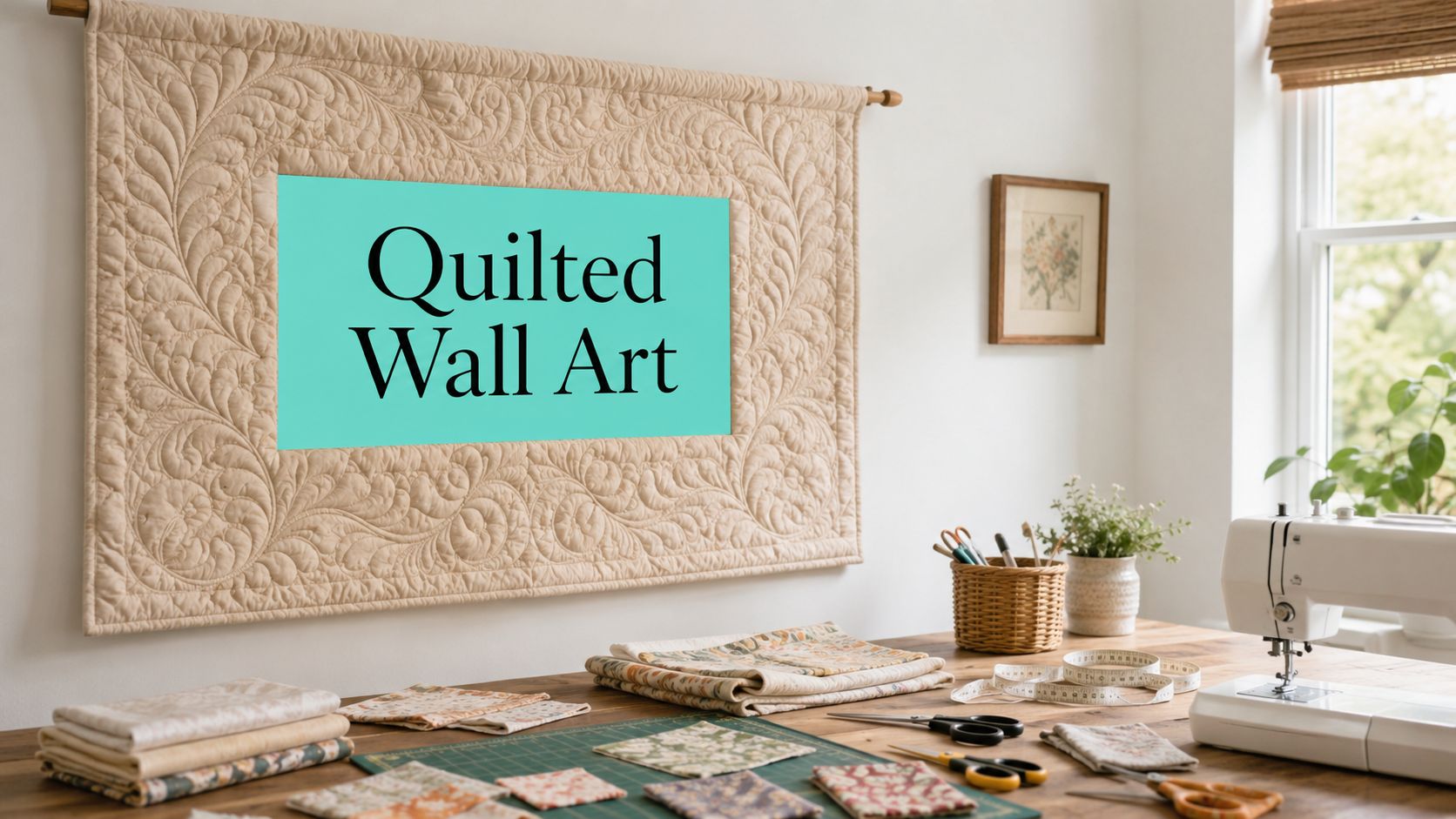
Creating a quilted wall hanging usually starts at 30 inches by 42 inches as a practical benchmark, but the process works just as well at larger sizes when you plan the scale, choose the right minky, build a stable quilt top, have it professionally quilted, and use a secure hanging method. If you're staring at a blank wall and wondering whether a plush backing like Shannon Luxe Cuddle belongs in wall art, the answer is yes. It can turn a simple hanging into a high-end textile piece with real depth.
The short answer is that hangings quilted wall projects look better and hold up better when you treat them like finished decor, not leftover scrap quilts. That means choosing texture on purpose, avoiding unnecessary backing seams, preparing minky correctly before quilting, and hanging the finished piece with hardware that matches its weight.
Meta description: Hangings quilted wall projects look better with premium minky, smart prep, and secure hanging. Get 15% off your first order and free shipping over $70!
URL slug: /hangings-quilted-wall
Why Choose Minky for Your Wall Art Project
A lot of quilt guides still treat wall hangings like tiny weekend projects. That works for a lightweight cotton mini quilt, but it falls short when you want the piece to read like real room decor with texture, softness, and presence.
Minky changes the mood immediately. Instead of a flat backing that disappears, you get a surface that adds loft, shadow, and a finished look from the side and back.
What makes minky different on the wall
For wall art, the biggest advantage isn't just softness. It's the way texture catches light and gives the quilt a more dimensional look.
Shannon textures like Hide, Snowy Owl, and Fawn do that especially well. Luxe Cuddle Fawn Beige has a 10mm pile depth and an embossed animal hide design, which creates texture without adding bulk to the project, according to Shannon's Luxe Cuddle Fawn Beige product details.
If you want to understand why quilters are so devoted to these plush backings, this overview of what Cuddle minky fabric is is a useful starting point.
Practical rule: If the quilt is meant to be seen every day, choose backing for appearance as much as function.
Why extra-wide minky matters more than most tutorials admit
Many wall hanging tutorials fall short. They assume every wall quilt is small enough for standard-width fabric and simple enough that piecing the back doesn't matter.
But many guides overlook large-format wall art, even though a video discussing wide-width backing for wall art notes that 92% of DIY tutorials fail to mention the durability benefit of heavyweight, wide-width backing for preventing sagging and stretching over time. That's one reason extra-wide minky makes sense for a more polished result.
For a hangings quilted wall piece, fewer seams in the back usually means:
- A smoother finish that doesn't distract from the quilt design
- Less bulk where the hanging folds around a sleeve or support
- Better drape control for larger pieces
- A cleaner longarm setup because there are fewer seam junctions shifting under tension
Cotton can still be the right choice if you want crispness and very sharp stitch definition. Minky wins when the goal is warmth, richness, and a more luxurious textile-art look.
Which rooms benefit most from a plush backing
Some spaces naturally suit minky-backed wall art better than others.
- Bedrooms: Plush texture softens the room quickly.
- Nurseries: Snowy Owl and similar textures add visual comfort without busy prints.
- Reading nooks: A textured quilt reads almost like upholstered art.
- Modern living rooms: A minimal pieced top paired with embossed minky keeps the look clean but not cold.
A good wall quilt doesn't just fill empty space. It changes how the room feels.
How Do You Plan Your Quilted Wall Hanging
Most quilters start with the pattern. For wall art, start with the wall.
The average wall hanging is 30 inches wide and 42 inches long, which gives you a reliable benchmark for a display-sized quilt, as noted by The Quilt Show's definition of a wall hanging. That's a helpful starting point, not a limit.

Start with the finished footprint
Before cutting anything, measure the width and height of the wall area you want to fill. Then decide whether you want the quilt to read as an accent piece or a dominant focal point.
I like to answer three planning questions first:
- What size will look intentional on this wall?
- Will the room benefit from a seam-free backing?
- Do I want the quilting to show strongly, or do I want the fabric texture to dominate?
If you're still working out fabric amounts, this guide to calculating yardage for quilts helps translate finished size into a realistic cut plan.
Match the quilt to the room, not just the stash
A wall hanging behaves more like decor than bedding. Color, scale, and texture matter more because the quilt sits at eye level.
If you're designing for a blue room, I like the color guidance in this article on expert advice on blue wall aesthetics. It can help you decide whether your quilt should contrast the wall, blend into it, or add a warm neutral layer.
Choose the room first, then the pattern. You'll get a better piece than if you force a favorite block into the wrong space.
Plan differently when you're using minky
Minky asks for a bit more forethought than quilting cotton.
Here are the planning points that matter most:
- Think bigger when the wall allows it. Extra-wide backing gives you room to create a more dramatic piece without interrupting the back with seams.
- Keep the top balanced. Busy piecing plus high texture can compete. A simpler top often lets Luxe Cuddle do its job.
- Choose quilting motifs early. Dense quilting changes how plush backing reads from the front.
- Decide on the hanging method before binding. Sleeve placement and edge treatment affect the finish.
One of the nicest things about larger wall pieces is that they don't need to pretend to be bed quilts. They can be bold, vertical, textural, and made to suit a specific room.
What Minky Textures Work Best for Wall Hangings
Texture changes the whole job on a wall hanging. At bed size, backing often reads as a finishing choice. On the wall, especially with a larger piece made from premium extra-wide minky, texture becomes part of the decor. It affects how light hits the quilt, how formal the piece feels, and how much of the quilting shows from the front.
For wall art, I sort minky into three useful categories. Low-profile minky keeps the focus on piecing and stitch definition. Embossed minky adds pattern and depth without asking for a complicated quilt top. Plush, high-loft minky makes the fabric itself a design feature, which works beautifully when you want the hanging to feel more like upholstered art than a small scrap project.
How I choose texture for wall art
I start with the viewing distance.
If the quilt will hang across the room, stronger texture usually reads better. Fawn, Hide, and other embossed Luxe Cuddle styles catch light and shadow in a way flat backing never will. If the piece will hang in a hallway or over a crib where people see it up close, a lower-profile surface often gives a cleaner result because the quilting lines stay easier to read.
The quilt top matters too. Simple patchwork pairs well with richer texture. Busy piecing plus deep pile can compete for attention, and the finished piece can feel visually crowded. For a polished wall hanging, I want one clear star: the patchwork, the quilting, or the minky.
Minky Texture Comparison for Wall Hangings
| Texture | Surface Character | Best For | Where to Shop |
|---|---|---|---|
| Luxe Cuddle Fawn Beige | Embossed, medium loft | Organic, rustic, sophisticated neutral wall art | Shop OPN's minky collection |
| Luxe Cuddle Snowy Owl | Plush, dimensional texture | Nurseries, soft winter palettes, cozy statement pieces | See collection above |
| Luxe Cuddle Hide | Embossed, stronger visual texture | Modern rooms that need depth and a more dramatic finish | See collection above |
| Cuddle 3 | Lower profile, smoother surface | Quilts where stitch definition matters more than loft | See collection above |
One product detail that helps set expectations is Shannon's listing for Luxe Cuddle Fawn Cappuccino. It is sold as an embossed Luxe Cuddle fabric with a substantial hand, which matches what quilters notice in the studio. It hangs with more body than basic minky and gives wall pieces a fuller, more finished look.
What works best for different styles
- For modern wall quilts: Choose Hide or Fawn with a simple top. The texture gives you depth without adding more piecing.
- For nursery wall art: Snowy Owl has a soft, inviting surface that feels warm and special.
- For heirloom-style gifts: Embossed Luxe Cuddle adds richness and helps the piece feel more substantial on the wall.
- For quilting that needs to show: Cuddle 3 or another lower-profile minky is usually the safer choice.
I use embossed Luxe Cuddle most often for wall hangings because it solves a common problem. Cotton-backed wall quilts can look flat once they are hung in a larger room. Extra-wide minky gives the piece more presence, and you can do that without piecing the back, which keeps the finish cleaner and more professional.
If you want to compare how different surfaces read in finished projects, this guide to textured minky fabric for baby blankets is useful. The same texture choices show up in wall art, even though the scale and purpose are different.
The trade-off to decide early
Higher pile gives you more drama. It also softens fine quilting detail.
That trade-off is not a flaw. It is just a design choice. If you want viewers to notice the overall shape, softness, and richness of the piece first, Luxe Cuddle is a strong option. If you want the quilting motif to do more of the talking, choose a flatter minky and let the stitching stay in the spotlight.
How Do You Prepare Minky for Longarm Quilting
This is the step that saves the project. Minky can produce gorgeous results on a wall hanging, but it won't forgive casual prep.
The biggest issue is squareness. For longarm quilting success, minky backing needs perfect 90-degree corners and 4 to 6 inches of extra fabric on all four sides, as explained in these tips for using minky as a quilt back. That extra allowance matters because minky stretches more than cotton.

Square the backing before you do anything else
Don't trust the cut straight off the bolt. Lay the minky out flat on a large surface, match the selvedges carefully, and use a gridded ruler and cutting mat to establish a true edge.
That one step prevents a lot of headaches later:
- Distortion on the frame
- Uneven loading
- Pulled corners
- A finished quilt that won't hang straight
I treat this as a strict rule with every minky-backed wall piece.
A prep checklist that actually helps
The basic process is simple, but each part matters.
- Square the fabric first. Make the backing rectangular before trimming anything else.
- Leave enough extra. Minky needs more allowance than cotton because it shifts and stretches more easily on the frame.
- Clean the surface. A lint roller helps remove loose fibers before loading.
- Stabilize edges if needed. This can make handling easier, especially on a large backing.
- Test tension on a scrap. Thread and tension that look fine on cotton may behave differently on plush backing.
As professional longarm quilters with hundreds of verified reviews, we've perfected this process so you don't have to. If you'd rather skip the trial and error, our guide to longarm quilting for minky-backed quilts is a good next read before sending a quilt out.
Minky isn't difficult because it's bad fabric. It's difficult because it moves differently, and the prep has to respect that.
Why mail-in quilting makes sense for wall pieces
Wall hangings are visible at close range. Small distortions, drag lines, and loading mistakes show up faster than they do on a bed quilt.
A professionally quilted finish can be especially worthwhile when:
- The backing is plush or embossed
- The piece is large enough to strain a domestic setup
- You want the hanging to stay square on display
- The quilt is a gift or a room focal point
There's also a real cost comparison to keep in mind. One publicly shared example showed a 60 by 82 inch wedding gift quilt professionally quilted for $215 including shipping, using Luxe Cuddle Snowy Owl Natural with Encore Sand, in this shared quilting example. That won't price every project, but it does show how reasonable mail-in longarm quilting can be for a finished piece.
What Are the Best Ways to Hang a Heavy Quilt
A beautiful quilt can still fail as wall art if the hanging method is wrong. This is the part too many tutorials skip.
Interior design coverage points out that quilts are popular for adding warmth and texture to walls, yet a Decorilla article on fabric wall art ideas notes that 78% of DIY tutorials omit specifications for weight-bearing hardware. That's a real problem when the quilt has batting, dense quilting, and a heavier backing.

Sleeve and rod for classic support
This is still the most reliable method for many quilts.
Sew a sleeve across the back near the top edge. Then slide in a rod that is sturdy enough for the quilt's width and weight.
Pros
- Even weight distribution
- Easy to remove for cleaning or seasonal rotation
- Familiar finish for traditional quilts
Cons
- A thin rod can bow
- The sleeve has to be sewn accurately
- Very heavy pieces may still need more support across the width
For many hangings quilted wall pieces, this is my default recommendation because it protects the quilt and looks clean.
A good understanding of batting also helps here, since bulk affects how the quilt hangs. This quick read on what quilt batting is is useful if you're deciding how thick the finished piece will be.
Clips and clamps for a modern look
Quilt clips or hanger clamps can work well for lighter pieces or for temporary displays. They also suit a more minimal style.
But they concentrate pressure at a few points. On a minky-backed quilt, that pressure can create drag or distortion over time if the quilt is heavy.
The cleaner the display method looks, the more carefully you need to check where the weight is actually landing.
Cleat or batten systems for larger art quilts
For substantial wall quilts, a cleat-style support or framed batten system is often the strongest choice. It spreads support across the width and helps preserve the shape of the quilt over time.
If you're installing a very large textile piece, this guide to installing large artwork securely offers solid framing and wall-anchoring context that carries over well to quilt display.
Here's the video version if you want to see hanging methods in action.
A simple decision guide
- Choose a sleeve and rod if the quilt is medium to large and you want traditional support.
- Choose clips if the piece is lighter and you want easy installation.
- Choose a cleat or batten if the quilt is large, dense, or intended as permanent textile art.
- Avoid undersized hardware even if the quilt itself isn't huge. Plush backing and batting add more weight than many people expect.
The goal isn't only to get the quilt on the wall. It's to hang it in a way that keeps it square, smooth, and undamaged.
How Do You Care for Your Finished Wall Hanging
Once the quilt is finished and mounted, care is mostly about preserving texture and shape. Minky is durable, but it does best when you treat it gently.
For Shannon Cuddle fabrics, the recommended care is to wash in cool water and dry on low heat, according to this Shannon Cuddle fabric care guide. That's the simplest way to protect the plush feel and softness over time.
Day-to-day care that works
Most wall hangings don't need frequent washing. They need light maintenance and sensible placement.
- Keep it out of direct sun when possible, especially in rooms with strong afternoon light.
- Dust gently with a lint roller or soft tool if the texture holds surface fibers.
- Store flat or rolled carefully if the quilt rotates seasonally.
- Wash only when needed and follow the cool-water, low-heat rule.
If you want a fuller care routine for plush fabrics, this article on how to wash mink blankets gives practical handling tips that also apply well to minky-backed quilts.
What keeps a wall hanging looking professional
The longest-lasting results usually come from getting four things right:
- Texture choice: pick a minky that suits the room and the design
- Planning: size the piece for the wall, not just the pattern
- Prep: square the backing and allow enough extra fabric for quilting
- Display: use hardware that supports the actual weight of the quilt
That's the significant difference between a quick decorative quilt and a finished hangings quilted wall piece that looks intentional year after year.
Good wall quilts aren't only sewn well. They're planned well, quilted well, and hung well.
If you're ready to turn your idea into a finished piece, On Pins & Needles Quilting Co. is a smart place to start for premium Shannon Cuddle and Luxe Cuddle textures, extra-wide backing options, and mail-in longarm quilting support. Browse fabrics for your next wall hanging, use the 15% first-order discount, and remember that free U.S. shipping starts at $70+. Book Your Longarm Service Today