
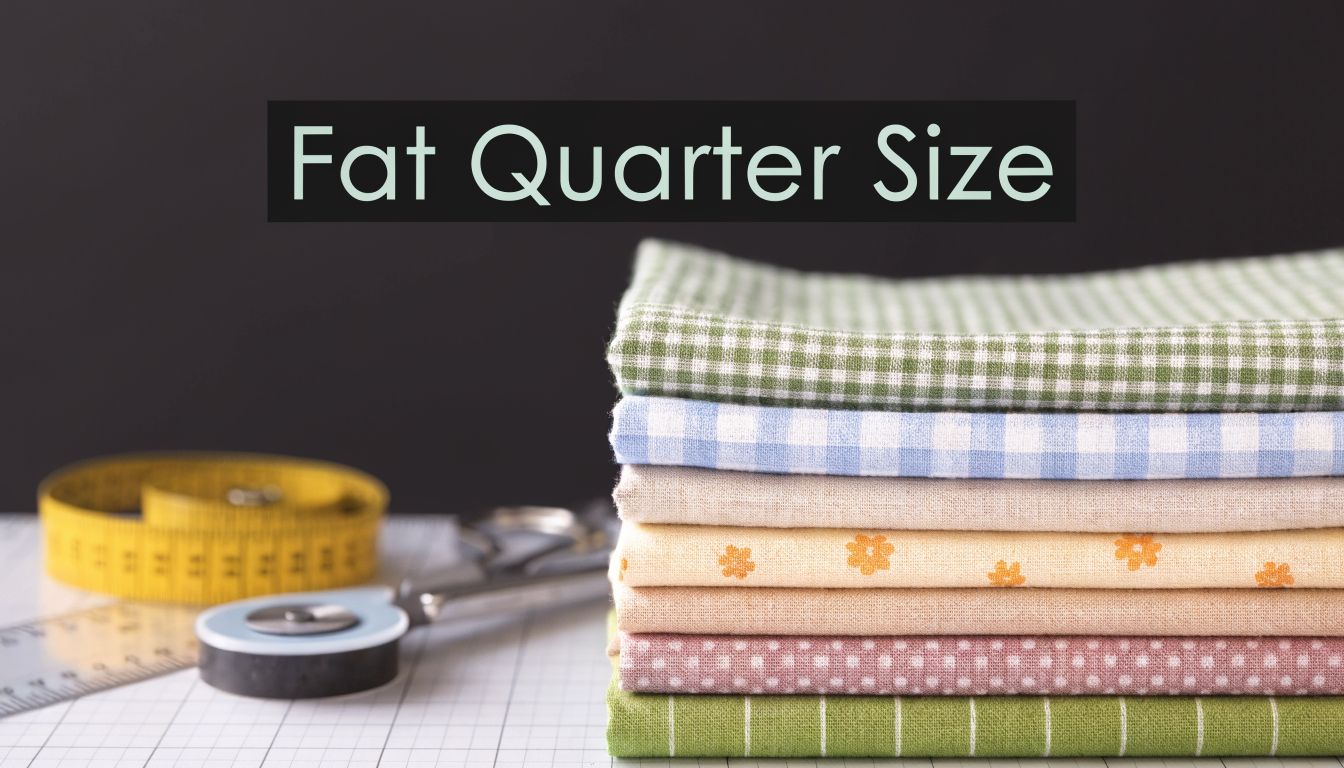
A standard fat quarter of fabric measures approximately 18 inches by 21-22 inches, and many quilters round that to 18 inches by 22 inches. It’s designed to give you a squarer, more usable cut than a traditional quarter-yard, which is long and narrow.
If you’ve ever stood in a quilt shop holding a pattern and wondering why it asks for fat quarters instead of yardage, you’re in good company. This is one of those quilting terms that sounds odd at first, but once it clicks, a lot of fabric math gets easier.
The short version is simple. A fat quarter is still one-quarter yard of fabric by area, but it’s cut differently so you get a shape that works better for quilt blocks, small projects, and feature prints. If you’ve been curious about what size is a fat quarter of fabric, this is the measurement most beginners need to know first: about 18" x 21-22".
What is a Fat Quarter of Fabric Anyway
You are in a fabric shop with a beginner pattern in one hand and a stack of soft prints in the other. The pattern asks for fat quarters, and the name makes it sound more complicated than it really is.
A fat quarter is a pre-cut piece of fabric that usually measures about 18 inches by 21-22 inches. Quilters often say 18" x 22" as a quick, everyday shorthand.
The name trips up a lot of newer sewists because it sounds like it should describe extra fabric. It does not. A fat quarter is still one-quarter yard by total area. The difference is the shape. Instead of a long, narrow strip, you get a piece that is shorter and wider, which makes it much easier to cut patchwork pieces, fussy-cut prints, and small project parts.
Paper works like a good comparison here. If you cut a sheet into a long strip, you still have part of the sheet, but the shape limits what you can cut from it. If you cut a broader rectangle, you have more usable room. That is why quilters love fat quarters.
This matters even more with plush fabrics like minky and Shannon Cuddle. With a softer, higher-loft fabric, shape affects waste in a very real way. A wider cut gives you more flexibility for baby bibs, loveys, quilt blocks, plush accents, and other smaller projects without buying more than you need. At OPN Quilting, we see this all the time. A smart cut can make a premium fabric feel more approachable, because you can enjoy the softness and richness without committing to a large piece.
You will also see fat quarters sold in coordinated sets. These fat quarter bundles make it easy to mix colors and prints that already work well together.
A fat quarter gives you the same amount of fabric as a quarter yard, in a shape that is easier to use.
How is a Fat Quarter Cut From a Yard of Fabric
You are at the cutting table with one yard of fabric in front of you, and the pattern asks for a fat quarter. The part that confuses many newer sewists is that you do not measure off a skinny 9-inch strip and stop there. You start with the full yard, then change the shape of the cut so the fabric is easier to use.
A standard yard is 36 inches long. Most quilting fabric is around 42 to 44 inches wide before the selvedges are trimmed away, so a fat quarter usually ends up close to 18 by 21 to 22 inches.

The simple cutting sequence
- Start with a full yard of fabric.
- Cut it in half lengthwise to create two half-yard pieces.
- Take one half-yard piece, which is roughly 18 inches by the full fabric width.
- Cut that piece in half across the width.
- Each resulting piece is a fat quarter, usually about 18 inches by 21 to 22 inches.
A baking-pan comparison helps here. If you divide the pan into four long strips, each piece is still one quarter of the total. If you divide it into broader rectangles, you still have one quarter by area, but the shape is much more useful for serving. Fabric works the same way.
The advantage of a squarer shape
That broader rectangle gives you more practical cutting room. It is easier to center a motif, cut chunkier patchwork pieces, or trim parts for a small project without running into the limits of a long, narrow strip.
This becomes even more helpful with plush fabrics. Minky and cuddle have pile, stretch, and more visual texture, so layout matters. A smarter cut often means less waste and fewer awkward leftovers, especially when you are working with premium options like Shannon Fabrics 2-yard Luxe Minky fabric cuddle cuts. At OPN Quilting, we see this often. The right cut lets you enjoy a luxurious fabric for bibs, loveys, accents, and baby gifts without buying more than the project needs.
Practical rule: If your pattern calls for a fat quarter, use a fat quarter-shaped cut, not a regular quarter-yard.
What's the Difference Between a Fat Quarter and a Quarter Yard
A lot of beginners buy a quarter-yard, open it on the cutting mat, and wonder why it feels so limiting. The fabric amount is correct. The shape is the problem.
A fat quarter and a quarter-yard use the same total fabric area, but they are cut differently. That one difference changes which pieces you can cut comfortably, how much fabric you waste, and whether a project feels easy or fussy.
Fat Quarter vs. Quarter Yard at a Glance
| Attribute | Fat Quarter | Quarter Yard ('Skinny Quarter') |
|---|---|---|
| Typical dimensions | 18" x 21-22" | 9" x 42-44" |
| Shape | Shorter and wider | Long and narrow |
| Best for | Blocks, appliqué, small projects | Strips, narrow accents |
| 10" square cutting potential | Up to four 10" squares | Limited to two 10" squares |
| 4" square cutting potential | Twenty 4" squares | Less efficient for square cuts |
| Overall usability | Better for modern patchwork | Better only when you need length |
The easiest way to understand it is to look at the cutting mat, not the receipt. A quarter-yard gives you a long strip. A fat quarter gives you a wider rectangle. If your pattern needs squares, small panels, or room to center a print, that wider shape is usually much easier to work with.
Here’s a simple example. If you want to cut a larger square, the total area of fabric may be enough in either cut, but the long, narrow shape of a quarter-yard can stop you from fitting that square at all. New quilters notice this fast because patchwork is full of shapes that need width, not just total inches.
That matters even more with premium fabrics. Minky and cuddle are soft, plush, and directional, so layout matters. A fat quarter often gives you better placement for a lovey front, baby bib panel, or small accent piece, with fewer awkward leftovers. At OPN Quilting, we see this regularly. The cut you choose affects how well you can use a beautiful fabric, especially when you want the softness of Shannon Cuddle to show without piecing together narrow scraps.
Precuts help for the same reason. If you’ve ever wondered why some cuts feel more beginner-friendly than yardage, this guide to a Moda charm pack and how it compares to other precuts makes that easier to see.
Why Do Quilters and Sewists Prefer Fat Quarters
You feel this preference the first time you try to cut a quilt block from a long, skinny piece and keep running out of width. A fat quarter behaves more like the shapes many sewists need.
That is why quilters reach for fat quarters so often. The cut is easier to use for blocks, easier to audition in a fabric pull, and easier to fit into small, satisfying projects without buying more yardage than the project calls for.
They match the way quilt projects are built
Many quilt patterns are made from squares, rectangles, and trimmed units. A wider cut gives you more freedom to place your ruler, straighten an edge, and cut with less fuss. Newer quilters usually notice this right away when they move from garment yardage to patchwork.
It also makes fabric selection more fun. You can bring in several prints, keep the quilt interesting, and avoid committing to full cuts of every fabric. That is one reason fat quarter bundles are so popular for scrappy quilts, table toppers, and beginner-friendly layouts like rail fence quilt patterns.
They leave leftovers you will actually use
Leftovers from a fat quarter tend to be friendly leftovers. Instead of narrow strips that sit in a bin for months, you often end up with pieces that still work for patchwork, appliqué, pocket linings, or small accent blocks.
That matters in a real sewing room. Useful leftovers help a stash grow in a way that supports future projects rather than cluttering them.
Good stash building comes from cuts that leave fabric you can recognize a use for later.
They make premium fabrics less intimidating
The benefit of smaller cuts is also apparent with softer specialty fabrics. If you have been curious about minky or cuddle, a fat quarter lets you test how the fabric feels under the presser foot, how much stretch or loft it has, and which side you want to feature.
At OPN Quilting, we see this often with Shannon Cuddle. A maker may not be ready to buy yardage for a full quilt, but a smaller cut is enough to try a lovey, a soft accent panel, or a trim detail on a baby gift. That approach reduces hesitation and helps you choose with more confidence.
Premium plush fabrics also deserve thoughtful placement. With prints and textured surfaces like Hide, Snowy Owl, or Fawn, a fat quarter gives you room to showcase the fabric itself instead of chopping it into awkward, narrow pieces. For sewists who want softness, beauty, and less waste, that is a very practical reason to start here.
What Can You Make With a Fat Quarter
A fat quarter looks small until you start cutting into it. Then you realize how many projects fit into that one piece.

Good beginner projects for one fat quarter
Here are some of the most approachable uses:
-
Zipper pouches
A fat quarter gives you enough room for the outer panel, and sometimes accent pieces too. -
Mug rugs and mini quilts
These are great when you want fast practice with piecing and quilting. -
Pincushions
A small project, but a satisfying one. Fat quarter leftovers are perfect for them. -
Baby bib fronts or burp cloth accents
A single print can become a gift project quickly. -
Patchwork pillow fronts
This is especially fun when you combine several fat quarters in a coordinated palette. -
Appliqué shapes
The wider cut gives you room to position motifs cleanly before trimming.
Fat quarters shine in simple block quilts
Many beginner quilt patterns are built around fat quarter-friendly cuts because the layout is straightforward and the fabric choices stay interesting. If you like strip-based quilts but want a little more visual variety, these rail fence quilt patterns are a good place to browse for inspiration.
Video tutorials can also help you see how quickly a small cut turns into a real project.
Why plush fabrics make these projects feel special
A simple project can look much more polished when the fabric has beautiful texture. That’s where premium plush options stand out. A small pillow front, nursery accessory, or soft gift made from a quality cuddle fabric often feels more refined than the same project in a flat basic textile.
You don’t need a huge amount of fabric to make something memorable. Sometimes one carefully chosen cut does the job better than a stack of random leftovers.
How Do You Calculate Fat Quarters Per Yard
If you are standing at the cutting table with one yard of fabric and wondering how many fat quarters that gives you, the short answer is four.
Here is the easiest way to picture it. A yard is 36 inches long. Cut that yard in half, and you have two pieces that are each 18 inches long. Cut each of those halves across the width, and you get four broader pieces instead of four skinny strips. That broader shape is what makes a fat quarter so useful.
With standard quilting cotton, those pieces are usually about 18" x 21-22". The exact width can vary a little from bolt to bolt, which is why one fat quarter may look slightly wider than another even when both were cut correctly.
Calculating for different fabric widths
The “four fat quarters per yard” rule works best for standard quilting fabric. Once you start using plush fabric, wide backing, or specialty cuts, the math is still possible, but the result may not be a neat, shop-style fat quarter.
That matters with soft fabrics such as cuddle and minky fabric. At OPN Quilting, we often remind newer sewists that width is only part of the story with plush fabric. Stretch, pile, and nap can affect how usable that cut feels once it is on your table. A technically correct cut is not always the most practical cut for the project.
For extra-wide backing fabric, many quilters stop converting yardage into fat quarters at all. They buy for the finished quilt back instead, because fewer seams usually mean easier prep and a cleaner result.
A rule you can keep in your head
- 1 yard of standard quilting cotton = 4 fat quarters
- Wider or specialty fabric = check the usable width before assuming the count
- Backing fabric = buy for the project size, not for fat-quarter math
A good way to remember it is this. Fat quarter math is most helpful for cutting fabric you plan to piece. For plush and extra-wide fabrics, the better question is often, “What cut gives me the cleanest, least wasteful piece for this project?”
Can You Cut Minky and Cuddle Fabric into Fat Quarters
Yes, you can cut minky and cuddle fabric into fat quarters. You just need to handle them a little differently than quilting cotton.
That’s because plush fabrics can stretch and shift while you cut. With minky fabrics like Shannon Cuddle, it’s smart to verify the piece after cutting because the fabric’s stretch can change the dimensions by 0.5-1 inch, and Missouri Star Quilt Co. notes that squaring the edges before piecing is important for accuracy.

What makes plush fabric different
Cotton tends to stay where you put it. Minky doesn’t always. It has loft, a soft pile, and often a directional nap. That means two pieces that look even at first glance may need a careful trim before sewing.
A few habits help:
- Square each piece before piecing so your cuts are consistent
- Watch the nap direction if you want all pieces to reflect light the same way
- Use a large ruler and sharp blade so the fabric stays flatter during cutting
- Handle it gently instead of stretching it to fit your ruler
Which textures are easier to start with
If you’re new to plush sewing, choose a texture with visible surface interest but manageable handling. Quilters often enjoy starting with styles like Snowy Owl, Fawn, or Hide because they add richness without needing a huge project to show off the texture.
For a broader explanation of how these fabrics behave, this article on what cuddle minky fabric is helps clarify the differences in feel and use.
Accuracy matters more with plush fabric because small cutting inconsistencies show up fast when the pile shifts at the seam.
Your Go-To Cut for Creative Projects
If you’ve been asking what size is a fat quarter of fabric, the answer is simple once you see it in context. It’s usually about 18 inches by 21-22 inches, and that shape is what makes it so useful. You get the same quarter-yard of fabric, but in a cut that works better for blocks, gifts, patchwork, and feature prints.
That’s why fat quarters stay popular with beginners and experienced quilters alike. They make fabric easier to use, easier to mix, and easier to enjoy, especially when you’re working with beautiful textures and want every cut to count.
If you're ready to sew with softer, more luxurious textures, explore On Pins & Needles Quilting Co. for premium Shannon Cuddle, Luxe Cuddle favorites like Hide, Snowy Owl, and Fawn, plus mail-in longarm quilting backed by hundreds of verified reviews. New customers can get 15% off a first order, and U.S. orders over $70 qualify for free shipping. Shop the Luxe Cuddle Collection