
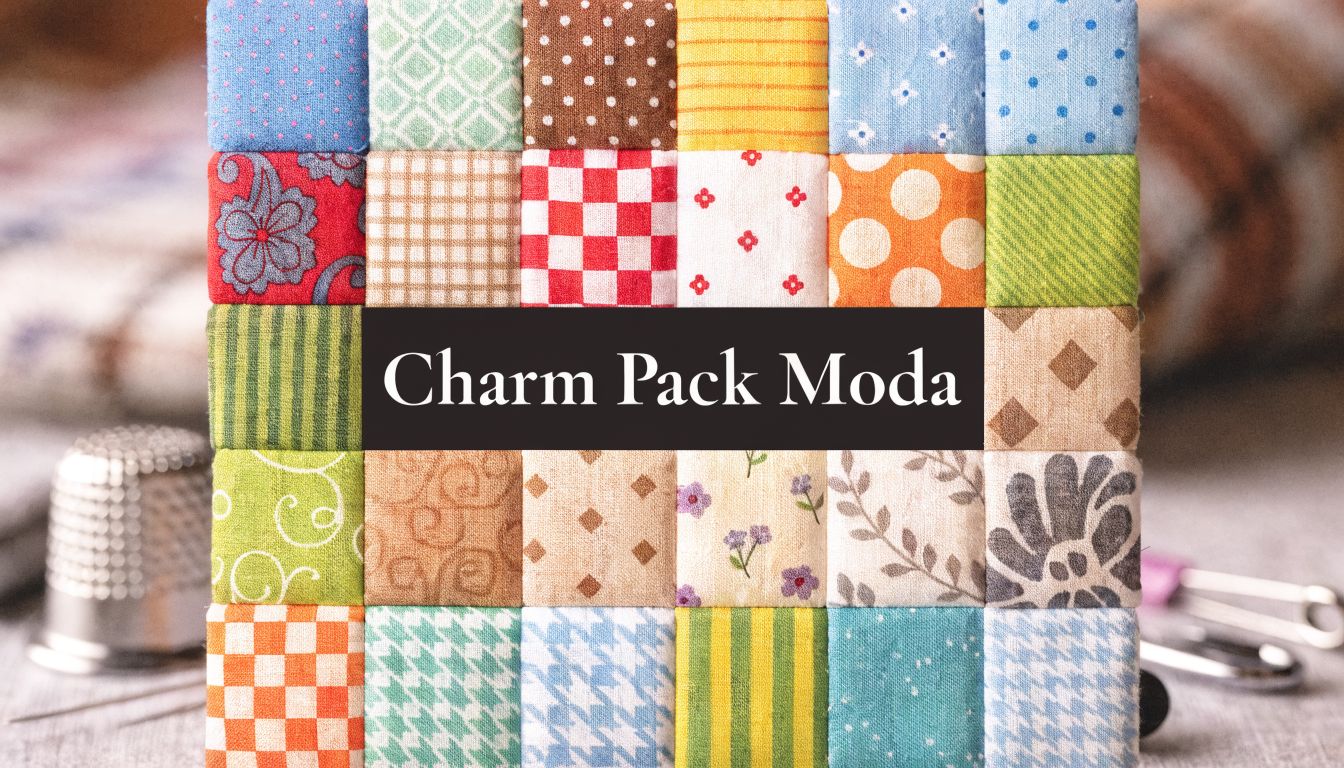
TL;DR: A Moda charm pack is a curated bundle of 42 pre-cut 5-inch squares of coordinating quilting cotton from one fabric collection. It’s designed to make patchwork faster, easier, and better matched, so you can move from fabric choice to finished top with less cutting and less second-guessing.
You’ve probably been there. You found a fabric line you love, you want to start sewing tonight, and the last thing you want is to spend your whole evening cutting squares and trying to balance prints.
That’s where charm pack moda shines. It gives you a ready-to-piece stack of coordinated prints that works especially well for baby quilts, table runners, pillows, and small tops that are begging for a soft minky back once the piecing is done.
What Exactly Is a Moda Charm Pack?
You pick up a fabric collection you love, get home ready to sew, and realize the project can stall before the first seam if you still have to choose prints, cut squares, and second-guess the mix. A Moda charm pack solves that early bottleneck. It gives you 42 pre-cut 5-inch squares from one coordinated quilting cotton collection, so you can move from fabric choice to piecing much faster.

Why do quilters reach for charm packs so often?
Because they remove friction at the start of a project.
The prints are already coordinated, and the cutting is mostly done. That matters more than it sounds. For baby quilts, gifts, weekend sewing, and pattern testing, a charm pack helps you get to the fun part quickly without ending up with a top that feels random or overplanned.
I see this all the time with customer quilts. A charm pack project often gets finished because the quilter made fewer decisions up front, not because the project was less creative. Good fabric editing helps patchwork look polished, especially when the collection includes a mix of scale, contrast, and a few quiet prints to give the eye a place to rest.
Moda charm packs also fit the way many modern patterns are written. Designers often expect you to start with precuts, which means less prep work and fewer math adjustments on your end.
Practical rule: If fabric selection is slowing you down, a charm pack is usually the fastest path to a quilt top.
What do they solve that yardage doesn’t?
Charm packs save time and reduce decision fatigue. Yardage gives you more control over repeat, placement, and exact color balance. Both are useful. The better choice depends on how you like to work.
If you enjoy planning every block and fussy-cutting specific motifs, yardage is the stronger option. If you want a coordinated project on the design wall tonight, a charm pack is often the smarter buy. Quilters who like variety but do not want to purchase a stack of individual cuts usually do well with charm packs. Quilters who want larger print areas or exact repeats usually do better with fat quarters or yardage, and a fat quarter bundle gives you more flexibility for larger cuts and feature fabrics.
A few buying notes help:
- Start with the finished unit in mind: A 5-inch square is versatile, but seam allowances shrink it quickly once you cut or piece it.
- Expect coordinated variety: Most packs include a balanced mix of the collection, which makes layout easier.
- Check for duplicate prints or close colorways: That can help the quilt feel cohesive, but it also affects contrast if your pattern needs every square to read differently.
- Match the precut to the project scale: Small prints usually shine in charm-pack quilts. Large florals and wide scenic prints often need bigger cuts to show properly.
Charm packs are also a practical starting point if the finished project will be backed in minky. Small, cheerful patchwork on the front pairs beautifully with a soft backing for baby quilts, cuddle quilts, pillows, and gift projects. That is where their special value is demonstrated. You are not only buying a neat stack of fabric. You are buying a faster path from cute collection to finished quilt.
How Do Charm Packs Compare to Other Precuts?
If you’re standing in front of a stack of precuts and wondering what suits your project, this is the fast answer. Charm packs are usually the easiest entry point because the pieces are useful right out of the pack and don’t commit you to a huge quilt.

Moda precut comparison
| Precut Name | Fabric Size | Quantity Per Pack | Best For |
|---|---|---|---|
| Charm Pack | 5" x 5" | 42 | Small projects, borders, quick block assembly |
| Jelly Roll | 2.5" x 44" approx. | 40 | Strip piecing, binding, sashing |
| Layer Cake | 10" x 10" | 42 | Large blocks, bigger projects |
Which one works best in real sewing?
A charm pack is the most forgiving when you want flexibility. You can sew the squares whole, cut them into triangles, combine them with background fabric, or use them as accents in a larger design. It’s a good choice when you haven’t fully committed to a pattern yet.
A jelly roll is faster when the design is strip-based. It’s efficient, but it also pushes you toward a certain style of construction. If you don’t enjoy long seams or repetitive strip units, it can feel limiting.
A layer cake gives prints more room to breathe. It’s often the better pick when the collection includes larger motifs that would get chopped into tiny fragments in a charm pack.
The best precut isn’t the fanciest one. It’s the one that matches the unit size your pattern wants.
If you like the idea of coordinated fabric but want more cutting flexibility than a charm pack offers, fat quarter bundles are often the next logical step. They ask more from you at the cutting table, but they open up a wider range of block sizes and borders.
When should you not choose a charm pack?
Skip it when your pattern depends on big uninterrupted print areas, fussy cutting, or strong directional fabric. A 5-inch square doesn’t leave much room for adjustment, and directional prints can end up spinning in different ways unless that look is intentional.
Charm packs also aren’t always the cheapest route per piece compared with yardage. They’re a convenience product. That convenience is worth it when speed and coordination matter more than squeezing every possible cut from a larger piece of fabric.
What Are the Best Projects for a Charm Pack?
A charm pack earns its keep when you want to get from a pretty stack of squares to a finished project without a lot of extra cutting. I see that payoff most often in smaller quilts and gift projects, especially the kind you actually want to finish, bind, and use instead of folding into a closet.

Which projects give the best payoff?
Baby quilts are hard to beat. A charm pack gives you built-in variety, the scale suits 5-inch squares, and the finished top comes together fast enough that you still have energy left for quilting and binding. That matters.
Table runners are another strong choice, especially for seasonal Moda collections. You get coordinated prints without committing to a full quilt, and a charm pack usually gives you enough repeat and contrast to make the runner look intentional rather than scrappy.
A few other projects use charm packs well:
- Patchwork pillows: Good for leftovers, or for testing a collection before you buy backing and border fabric for a larger quilt.
- Tote bags and zip pouches: Useful when you want to try piecing, interfacing, and topstitching on a smaller scale.
- Mini quilts and wall hangings: Great practice for matching points and pressing well.
- Lap quilts with background fabric added: A practical step up once you want more size without cutting every piece from yardage.
What’s a solid first pattern to try?
A simple half-square triangle or patchwork layout is usually the best first win. It uses the charm pack as intended, teaches accurate seam allowances, and gives you enough repetition to improve without feeling stuck in assembly-line sewing.
Moda’s Love quilt is a familiar example, but the lesson is broader than one pattern. One charm pack plus a background fabric can make a small quilt top, and that size is useful. It works for a baby gift, a wall piece, or a comfort quilt for a stroller or car seat.
If you prefer a more traditional patchwork look, rail fence quilt patterns that work well with precuts are a smart next project. They pair charm squares nicely with strips or companion cuts and give busy prints a little structure.
Start with a project size you can finish while you still like the fabric. Finished quilts teach more than unfinished tops.
That finishing step is where many charm pack projects either become favorites or stall out. A small patchwork top can look cute on the ironing board and still feel flimsy in real use. Add a minky backing, and the project has weight, softness, and a more gift-ready feel. For baby quilts and throw-size projects, that change is immediate.
Here’s a helpful walkthrough if you want to see the format in action:
What usually works better than expected?
A charm pack almost always benefits from some visual breathing room.
Quilters new to precuts often sew every square together edge to edge. That can work, especially with calmer collections. With busier prints, the top usually improves when you add a background, sashing, or a framing unit around some of the squares. The eye needs a place to rest.
I recommend that approach often in the shop because it solves two problems at once. It makes the piecing look more polished, and it gives the quilting room to show. If you plan to finish the quilt with one of our plush minky backings and longarm quilting, that extra structure in the top helps the whole project read as finished rather than just assembled.
How Do I Choose the Perfect Minky Backing?
A charm pack quilt top is usually light, pieced, and visually active. The backing choice should support that, not fight it. That’s why minky can be such a smart pairing. It adds warmth, softness, and a finished feel that plain quilting cotton doesn’t always deliver.

What texture works best for different quilt tops?
The answer depends on how busy the top is.
If the charm pack top already has a lot of print movement, a more restrained plush texture often balances it better. If the piecing is simple, you can choose a backing with more surface interest and let the contrast between front and back become part of the appeal.
A practical way to choose:
| Quilt Top Style | Better Minky Choice | Why It Works |
|---|---|---|
| Busy floral or novelty charm pack | Smoother plush or low-visual texture | Keeps the finished quilt from feeling overdesigned |
| Simple patchwork squares | Richer texture like Hide or Fawn | Adds depth without changing the piecing |
| Nursery or baby quilt | Soft, cozy texture like Snowy Owl | Makes the quilt feel gift-ready and comforting |
| Large throw or bed project | Extra-wide minky | Avoids pieced seams across the back |
Specific textures matter here. Hide, Snowy Owl, and Fawn all give different visual effects even when the color family is similar. Hide tends to read a little more dimensional. Snowy Owl feels soft and lofty. Fawn adds a plush finish that suits cuddly, giftable quilts.
What problems does minky solve, and what does it complicate?
It solves comfort fast. It can also solve the headache of a pieced backing if you use extra-wide options for larger projects.
The trade-off is handling. Minky is more slippery than quilting cotton, and it shows every shortcut. If the top isn’t pressed well, if the backing isn’t loaded smoothly, or if the quilt sandwich has drag, the finished result won’t look as crisp.
That’s why it helps to understand the material before you commit. A good primer on the basics is what cuddle minky fabric is and how it behaves.
Worth doing: Match the backing texture to the role of the quilt. A baby quilt can lean extra soft. A wall piece or highly pieced show top often benefits from a quieter backing.
Offer note: If you’re planning fabric and backing together, it’s a good time to use a 15% first-order coupon and build past the free shipping on $70+ threshold so you can get the whole project in one order.
What tends to work and what doesn’t?
What works:
- Pairing a lively charm pack with a backing color pulled from one of the quieter prints
- Using extra-wide minky when the quilt is large enough that a backing seam would be bulky
- Choosing texture intentionally rather than grabbing the softest option without considering the top
What doesn’t:
- Backing a very delicate, low-contrast top with an aggressively busy plush texture
- Ignoring seam bulk on larger backings
- Treating minky exactly like quilting cotton during prep and quilting
How Many Charm Packs Do I Need for My Quilt?
A charm pack quilt usually feels simple right up until you start planning size. You have a stack of 5-inch squares on the table, a project in mind, and one practical question: will one pack get you there, or are you about to come up short?
Start with the pattern, not the package.
A charm pack can make anything from a small baby quilt to part of a larger throw, but the square count only tells part of the story. The actual answer depends on how much cutting the pattern does, how much background fabric it uses, and whether you want a print-heavy look or more breathing room between prints.
What’s the safest way to estimate?
Use a tested pattern whenever you can. A pattern written for charm packs has already worked through block count, trim loss, and layout. That matters more than rough quilt-shop math scribbled on the back of an envelope.
If you are estimating on your own, check these four things first:
- How many squares stay whole Whole-square layouts stretch a charm pack much farther than designs that cut each square into half-square triangles, flying geese, or multiple subunits.
- How much background the design requires Some charm pack quilts are mostly prints. Others use charm squares as accents with a lot of background fabric doing the heavy lifting.
- What finished size you want A stroller quilt, baby quilt, lap quilt, and throw all eat up charm squares at different rates. Small changes in width and length can mean another pack once borders and extra rows get involved.
- How much layout freedom you want If you like to move blocks around, remove duplicates, or control color balance, an extra pack or a few coordinating yardage cuts can save a lot of frustration.
What does that look like in real projects?
For a baby quilt, one charm pack is often enough if the pattern uses background fabric well. For a throw, two or more packs usually give you better scale and a fuller print story.
That trade-off is worth paying attention to. A quilt made with too few charm squares can end up looking patchy, with the background taking over. A quilt made with too many prints and not enough resting space can feel busy, especially once it is quilted and bound.
I usually tell customers to decide the look before they buy the second pack. If they want the charm fabrics to be the star, add more printed squares. If they want a calmer finish, keep the charm pack as the accent and let solids or low-volume prints support it.
What should you buy besides the charm packs?
Plan the whole quilt, not just the top. Most charm pack projects still need background, binding, and backing. If you are finishing it yourself, it also helps to review a solid beginner quilt binding tutorial before you cut binding strips too narrow for a plush-backed quilt.
One more practical note. If the quilt is headed for a minky backing, leave yourself room in the plan for a slightly cozier finished look rather than chasing exact top dimensions too aggressively. Charm pack quilts do best when the project is planned as a complete quilt from the start, not as a top that gets figured out later.
Buy for the quilt you want to finish, not just the charm pack you want to use. That one decision prevents a lot of stalled projects.
How Can I Get a Professional Finish for My Charm Pack Quilt?
Piecing the top is the fun part for quilters. Finishing is where projects stall.
A charm pack quilt may be smaller and faster to sew, but it still deserves clean quilting, smooth backing, and binding that doesn’t look rushed. If your tops tend to pile up after the piecing is done, professional quilting is often what gets them into actual use.
What makes the final finish look polished?
Three things matter most:
- A flat, square quilt top with seams pressed consistently
- A backing choice that suits the project, especially if you’re using plush fabric
- Quilting design and thread choices that support the piecing instead of overpowering it
That last part is where many home-finished quilts go off track. Dense piecing plus dense quilting can make a small charm pack project feel stiff. On the other hand, quilting that’s too loose can leave a minky-backed quilt feeling under-structured.
When is mail-in longarm quilting the better option?
It’s the better option when you want the quilt finished well and finished soon.
For many quilters, the sticking points are basting, maneuvering bulk, and choosing a quilting path that won’t distort the top. Sending it out removes those hurdles. It also helps when the backing is minky, because plush fabrics reward even tension and confident machine handling.
If you’re still finishing the edges yourself, brushing up on how to bind a quilt for beginners can make the final step much less stressful.
A beautiful top folded in a closet isn’t finished inventory. It’s a delayed gift, a delayed keepsake, or a delayed comfort quilt.
Shops that specialize in quilting services also tend to have clearer prep standards, steadier turnaround systems, and better support if you’re mailing your work. That matters. Trust is a real factor when you’re handing over a top you spent hours piecing. It also helps when a business has hundreds of verified reviews, because that usually reflects consistency, not just a pretty website.
What Are Some Pro Tips for Sewing with Charm Packs?
Charm packs are convenient, but precision still matters. A precut doesn’t fix a wandering seam allowance or a rushed pressing job.
What small habits improve the result most?
-
Sort by value before sewing
Put squares into light, medium, and dark groups. Even a simple alternating layout improves when the contrast is intentional. -
Use a consistent quarter-inch seam
Small squares exaggerate errors. A slightly fat seam repeated across many units will shrink the block more than you expect. -
Press with purpose
Don’t iron back and forth. Lift, press, and set seams so the units stay square. -
Check for print direction early
If the pack includes directional motifs, decide up front whether random rotation is fine or whether orientation matters.
What helps when points and intersections won’t cooperate?
Starch or pressing spray can help stabilize the fabric before cutting units from the squares. That’s especially useful if the pattern uses diagonals and half-square triangles.
Thread choice matters, too. If you’re matching piecing thread across varied prints, a dependable middle-ground neutral often works better than chasing every exact color. If you need a refresher on pairing thread sizes to tasks, a thread weight chart is handy to keep nearby.
One last tip. Open the pack and lay out more squares than you think you need before stitching the first seam. Most charm pack mistakes happen at the layout stage, not under the needle.
Your Next Charming Project Awaits
A charm pack earns its keep when it becomes a quilt that gets used. The fun part is opening that stack of 5-inch squares. The satisfying part is finishing it well, with a backing that feels as good as the front looks and quilting that holds up to real life.
That’s the gap many quilters run into. The top goes together quickly, then the project stalls at backing, basting, or quilting. I see it all the time with charm pack quilts, especially baby quilts, throw quilts, and quick gifts. A soft minky backing solves one problem right away by adding warmth, drape, and a more finished feel. Professional longarm quilting solves the next one by getting the quilt off the pile and onto the couch, crib, or guest bed.
If you want a plush finish, browse the Luxe Cuddle collection or compare extra-wide minky backing options for larger projects with fewer seams on the back.
If your quilt top is ready and you want clean, reliable quilting without wrestling it through a domestic machine, the mail-in longarm quilting service is a practical next step. For quilters who like a specific texture, Luxe Cuddle Hide gives a rich, dimensional look, while Luxe Cuddle Snowy Owl is a favorite for soft, cozy finishes.
Book Your Longarm Service Today.