
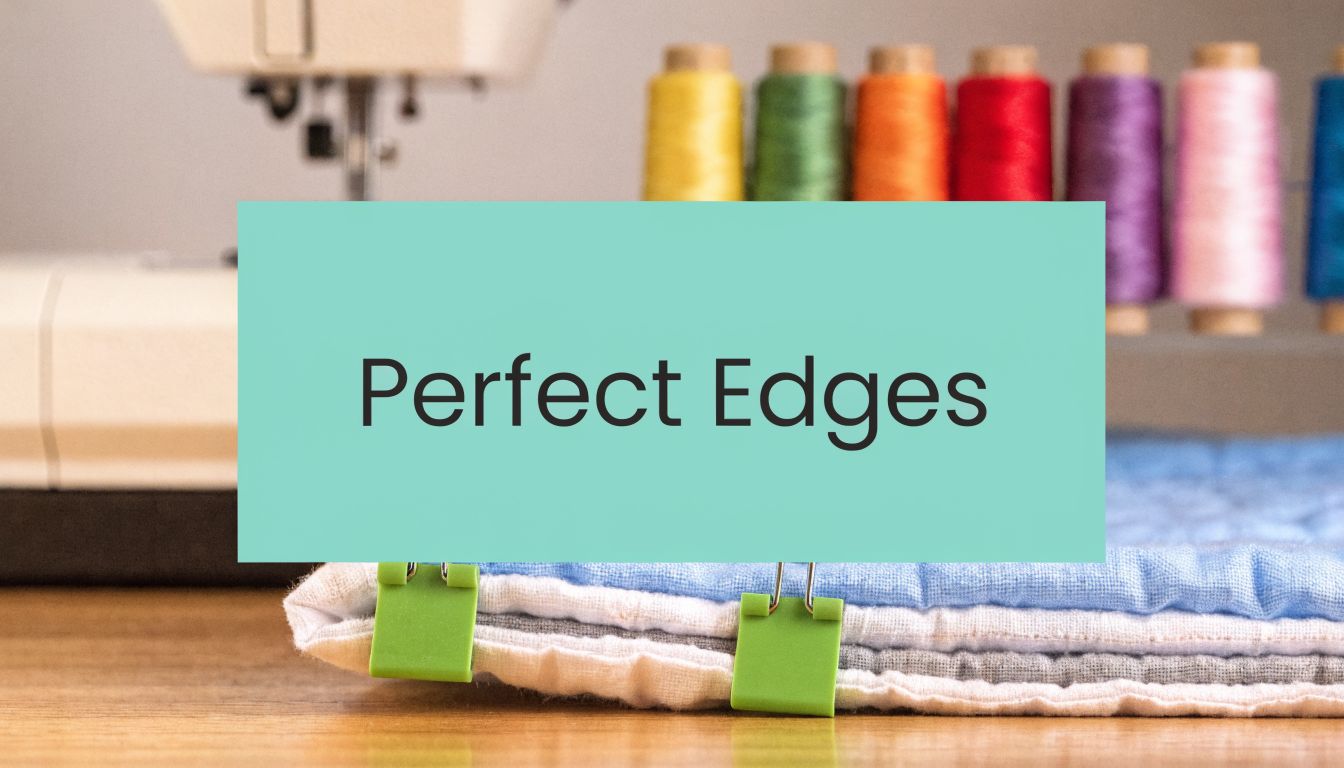
Quilting binding clips work best when you’re binding thick layers, especially minky, because they hold firmly without piercing the fabric. Place them every 2 to 3 inches, leave a 10 to 12 inch tail to start, sew with a 3/8 inch seam, and stop 3/8 inch from each corner for a clean miter.
That matters most when you’re standing at the machine with a bulky quilt under your hands and the edge keeps creeping, stretching, or popping loose. A good binding finish isn’t only about neat stitching. It starts with controlling the quilt sandwich so the edge stays flat, the corners fold cleanly, and the fabric comes through unscarred.
Quilting binding clips solve that problem better than pins on most bulky projects. They’re especially useful on Shannon Cuddle and Luxe Cuddle textures where pile, weight, and slipperiness can make a simple binding job feel much harder than it should.
Why Should You Switch from Pins to Binding Clips?
You feel the difference fastest on a heavy quilt. The binding is pressed and ready, the quilt is piled up beside the machine, and one pin after another starts twisting the edge or catching your hand as you turn the bulk. Clips keep that part of the job under control.
I still keep pins on my table. They help with precise piecing and occasional spot marking. For binding, especially on quilts with loft, flannel, cuddle, or minky, clips are usually the more reliable choice because they hold the edge in place without punching through the fabric.
What problems do pins create on bulky quilts?
Pins work best on flatter, lighter layers. As the quilt edge gets thicker, they tend to shift the fold, distort the binding placement, and work themselves loose while the quilt is moving through your hands. On plush fabrics, they can also leave visible holes or flatten the surface in spots you just spent time smoothing.
I see that regularly on minky-backed quilts in the studio. The fabric has weight, stretch, and pile. A pin can secure it, but it also creates one more place for the layers to creep apart.

How do quilting binding clips compare to pins?
| Feature | Quilting Binding Clips | Traditional Pins |
|---|---|---|
| Fabric hold | Strong grip on thick layers | Less stable on bulky edges |
| Fabric protection | Holds without piercing | Pierces fabric and can leave holes |
| Hand safety | No pricks while positioning | Easy to jab fingers during binding |
| Ease of use | Fast to place and remove | Slower on thick edges |
| Best use case | Minky, plush, layered bindings | Flat cotton and light seams |
A simple rule works well at the machine. If the edge feels thick enough that you have to compress it with your fingers, clips will usually give you better control than pins.
Cost matters too. In a long-running comparison at Sew Fearless, April Rhodes points out that office binder clips can be a low-cost substitute for branded sewing clips. I agree with the bigger lesson there. Quilters use what works. For occasional binding, binder clips can get the job done. For regular quilt finishing, purpose-made binding clips are easier to open, less clunky on the edge, and less tiring over the course of a full throw or bed quilt.
When are clips the better choice?
Clips earn their spot quickly on projects that fight back:
- Bulky quilt sandwiches that are hard to keep aligned near the edge
- Minky or cuddle backings where pinholes and shifting are more likely
- Large quilts where repeated pinning slows the whole job down
- Machine binding where even spacing and steady edge control matter
For beginners, clips also remove one common frustration. You spend less time repinning and more time watching the fold and seam allowance. If you want a clear walkthrough of the full process, this beginner guide to binding a quilt is a good place to start.
How Do You Prepare Your Quilt for Binding?
A binding job usually goes wrong before the first stitch. The quilt edge is a little wavy, the batting peeks past the top, or the binding strip was pressed in a hurry. Then the clips get blamed for problems they cannot fix.
I see this a lot on longarm quilts, especially minky-backed throws. Soft backing can stretch while you handle it, and thick edges hide small trimming mistakes until you start wrapping the binding around the quilt. Clean prep saves far more time than extra clipping later.
How do you square the quilt before binding?
Lay the quilt on a large flat surface and check the perimeter before you trim anything. I start by smoothing the quilt from the center out, then I look for places where the backing or batting has crept beyond the quilt top. Trim those in small passes so all three layers stay even.
Corners deserve extra attention. If one corner is off, the binding has to absorb that error, and you usually see it as a lumpy miter or a corner that twists after washing.
Here is the routine I use:
- Smooth the quilt flat before measuring or trimming
- Trim batting and backing flush with the quilt top
- Square each corner carefully so the edges meet at a clean right angle
- Check for stretched sections on soft or slippery fabrics and relax them before cutting
- Trim a little at a time to avoid cutting past the edge you need
Good binding starts with a stable edge.
If you want a solid reference for the same standards I use before loading customer quilts, read these longarm quilting top 10 quilt prep tips.
How should you prepare the binding strips?
For most quilts with straight sides, cut binding strips 2.5 inches wide, join them on a 45 degree angle, and press the strip lengthwise with raw edges together. That pressed fold acts like a guide when you wrap the binding to the back, and it helps you keep the finished width even.
Press the joining seams open if the quilt has any bulk at all. On cotton wall quilts, a thick seam in the binding is mildly annoying. On a minky-backed quilt, that same seam can create a hard lump that fights the presser foot and shows in the finished edge.
I also check where those seam joins will land. If a bulky join is heading straight for a corner, I move it. Corners are cleaner when the binding there is just one continuous folded strip.
What should you check before clipping anything?
Do one last pass before you start attaching binding. This is the point where small corrections are still easy.
- The quilt edge is trimmed cleanly with no batting or backing extending past the top
- The binding is fully pressed and folded evenly from end to end
- The joining seams are flat and not stacked on top of each other
- The machine is set up with the needle, thread, and stitch length you plan to use
- The clips are close at hand so you can work steadily without stopping to hunt for them
On minky quilts, I make one more judgment call here. If the edge feels spongy, slippery, or thicker than usual, I plan for closer clip spacing later and handle the quilt more gently while attaching the binding. That one decision prevents a lot of shifting.
What Is the Correct Way to Attach Binding with Clips?
A binding job usually goes wrong in the same two places. The edge starts to creep before you notice, or the corners look fine from the front and bulky from the back. Clips help because they hold the fold exactly where you want it without distorting the quilt sandwich, which matters even more on thick quilts and anything with minky in the mix.
The method itself is straightforward. Start in the middle of one side, leave a 10 to 12 inch tail, clip the binding every 2 to 3 inches, sew with a 3/8 inch seam, and stop 3/8 inch from each corner so you can form a clean 45 degree miter. In my longarm shop, that spacing works well on standard cotton quilts. On heavier quilts, I tighten the clip spacing before the problem starts.

How do you start the binding neatly?
Begin on a straight side, not at a corner. That gives you room to join the tails later and keeps the bulkiest part of the job away from the turn.
Use this sequence:
- Position the binding right sides together along the raw edge
- Leave the opening tail at 10 to 12 inches
- Place clips evenly every 2 to 3 inches
- Sew with a 3/8 inch seam
- Remove clips just before the needle instead of sewing into them
Keep your hands relaxed while you stitch. If you pull the binding to make it behave, the edge can ripple after the quilt settles. Clips are there to hold alignment, not to let you force the fabric into place.
How do you turn the corners cleanly?
Corners decide whether the binding looks crisp or homemade in the best way.
Sew until you are 3/8 inch from the corner, stop, and secure the seam if that fits your usual method. Fold the binding up to create the angle, then fold it back down along the next side. Clip that fold so the miter stays put while you start the next seam.
On bulky quilts, I finger-press the fold before clipping it. That small pause saves time because you can see right away whether the corner will close neatly on the back. I also avoid stacking too many clips at the turn. One well-placed clip usually gives better control than three crowded ones.
A visual demo helps here, especially if you’re more hands-on than diagram-oriented.
How do you join the tails without a lump?
The tail join is the spot many quilters rush, and it shows.
A flatter finish comes from joining the tails with a 45 degree seam, trimming the excess, and pressing that seam open if the fabric allows. Straight joins stack too much bulk in one spot, especially on thicker quilts. If you bind a lot of plush projects, understanding what cuddle minky fabric is and how it behaves helps you predict where that extra thickness will fight you.
Here’s the rhythm I use at the machine:
- Test the overlap first before stitching the final join
- Trim the seam allowance so the layers do not stack heavily
- Press the seam open when the fabric can handle it
- Refold the binding and finish the last section with the same seam width
If the join feels bulky in your fingers before you sew it down, it will feel bulky in the finished quilt too. Fix it then.
What tends to go wrong?
A few problems show up again and again, and each one has a practical fix.
| Problem | What usually causes it | What works better |
|---|---|---|
| Ripples along the edge | Pulling the binding as you sew | Let the layers feed naturally |
| Bulky tail join | Straight seam or too much overlap | Use a 45 degree join and trim well |
| Messy corners | Stopping too late or folding unevenly | Stop at the marked seam point and finger-press first |
| Binding drift | Too few clips on a soft or thick edge | Keep clip spacing consistent |
For everyday cotton, this method is forgiving. For minky-backed quilts, the same steps matter more because the fabric has more loft, more slip, and less patience for shortcuts.
How Do You Use Binding Clips on Tricky Minky Fabric?
A minky-backed quilt can look perfectly under control on the table, then start creeping the minute you fold the binding over. The loft hides bulk, the pile shifts, and one slightly stretched area turns into a wavy edge fast.
That is why I clip minky more aggressively than cotton.

Why does minky need denser clipping?
On plush quilts, I usually place clips closer together than I would on a standard cotton binding. A softer, loftier edge wants to roll, spread, or slip out of the fold, especially if the backing has a tall pile or the quilt has a heavier batting.
In the longarm studio, this shows up most often on baby quilts and throw quilts with Luxe Cuddle backs. The quilt feels stable until you reach the edge. Then the backing starts fighting for space inside the binding. Close clip spacing keeps that edge disciplined so you can sew instead of correcting.
I would rather spend an extra minute clipping than unpick a stretched binding on minky.
How many clips do you need?
The answer is enough to keep the next stretch of edge flat without forcing it. For a larger quilt, that usually means having a generous pile of clips beside the machine so you can keep moving them ahead as you sew.
A few habits help on minky projects:
- Clip closer near corners because bulk builds quickly where folds overlap
- Brush or smooth the pile first so the fabric is not puffing against the binding
- Feel every seam join with your fingers because texture can hide a lump that will show later
- Keep the binding fold even instead of letting the minky side creep wider than the quilt top
- Use more clips on curves or rounded corners where the edge is more likely to shift
What works best on Luxe Cuddle textures?
Different minky textures behave differently at the edge. Hide has more body. Snowy Owl usually feels loftier. Fawn can be easier to flatten visually than it is physically. They all sew, but they do not all clip the same way.
That is one reason clips beat pins on plush fabrics. Pins can distort the fold, flatten the nap in one spot, and still let the layers slide between pin points. Clips hold a wider section of the edge, which gives you better control without punching extra holes into a fabric that already moves around enough.
If you want a clearer sense of why these plush backings act so differently, this guide on what cuddle minky fabric is and how it behaves will help you choose your spacing and approach before you start binding.
What about extra-wide minky backs?
Extra-wide backing removes a seam from the middle of the quilt, which I like. It also puts more plush weight on the outer edge, and that weight can tug against the binding while you sew.
That is where careful clipping pays off. Support the quilt well, keep the edge relaxed, and do not let the backing hang off the table pulling downward. If you are choosing backing for a larger project, options like extra-wide minky backing can reduce seam bulk in the body of the quilt, but the binding still needs patient handling at the perimeter.
What Other Sewing Projects Are Perfect for Binding Clips?
Once you start using clips regularly, you’ll reach for them outside quilt binding without thinking about it.
They’re useful anywhere you need a temporary hold without puncturing soft fabric or fighting shifting layers.

Which small projects benefit most?
A few stand out right away:
- Minky pillow projects where a plush front and backing like to slide apart before stitching. Kits such as minky pillow kits are easier to keep aligned with clips than pins.
- Infinity scarves made from soft cuddle fabrics, where clips hold long edges neatly while you sew the tube. A project like minky infinity scarf kits is a natural fit.
- Quilted pouches and bags where clips can hold layered seams, tabs, or gussets while you test placement.
Where else do they save frustration?
I also like them for keeping cut bundles together, controlling rolled-up binding strips, and holding stacked pieces for a small batch project. That’s not glamorous, but it keeps a worktable from turning into a fabric avalanche.
If you’re looking for a straightforward project to practice edge control before binding a full quilt, rail fence quilt patterns free gives you an approachable place to build confidence.
A clip is one of those tools that quietly becomes part of your routine. You buy it for one problem. Then it ends up solving six others.
Ready to Finish Your Quilts Like a Professional?
You get to the last step of a quilt, and that is where rushed work shows. Binding clips help you keep control when the edge is bulky, the backing is minky, and one bad fold can throw off the whole finish.
After years of quilting customer tops, especially quilts with plush backings, I have learned that clean binding comes from steady handling more than speed. Clips hold the layers where you want them without distorting the edge, which matters on thick quilts and slippery fabrics that shift under your hands. They also make it easier to spot a problem before it reaches the needle.
That matters even more with minky. A neat edge on minky comes from good prep, sensible clip spacing, accurate corner folds, and taking your time on the tail join. Skip any one of those, and the binding usually tells on you.
If you want help before the binding stage, our mail-in longarm quilting services take the bulk and wrestling out of finishing large quilts.
Fabric choice plays a part too. Plush options like Luxe Cuddle Snowy Owl and Luxe Cuddle Fawn make a beautiful finished quilt, but they reward careful edge control.
Meta description: Quilting binding clips make binding easier on thick quilts and minky. Learn the right method, plus get 15% off your first order and free shipping over $70!
URL slug: /blog/quilting-binding-clips