
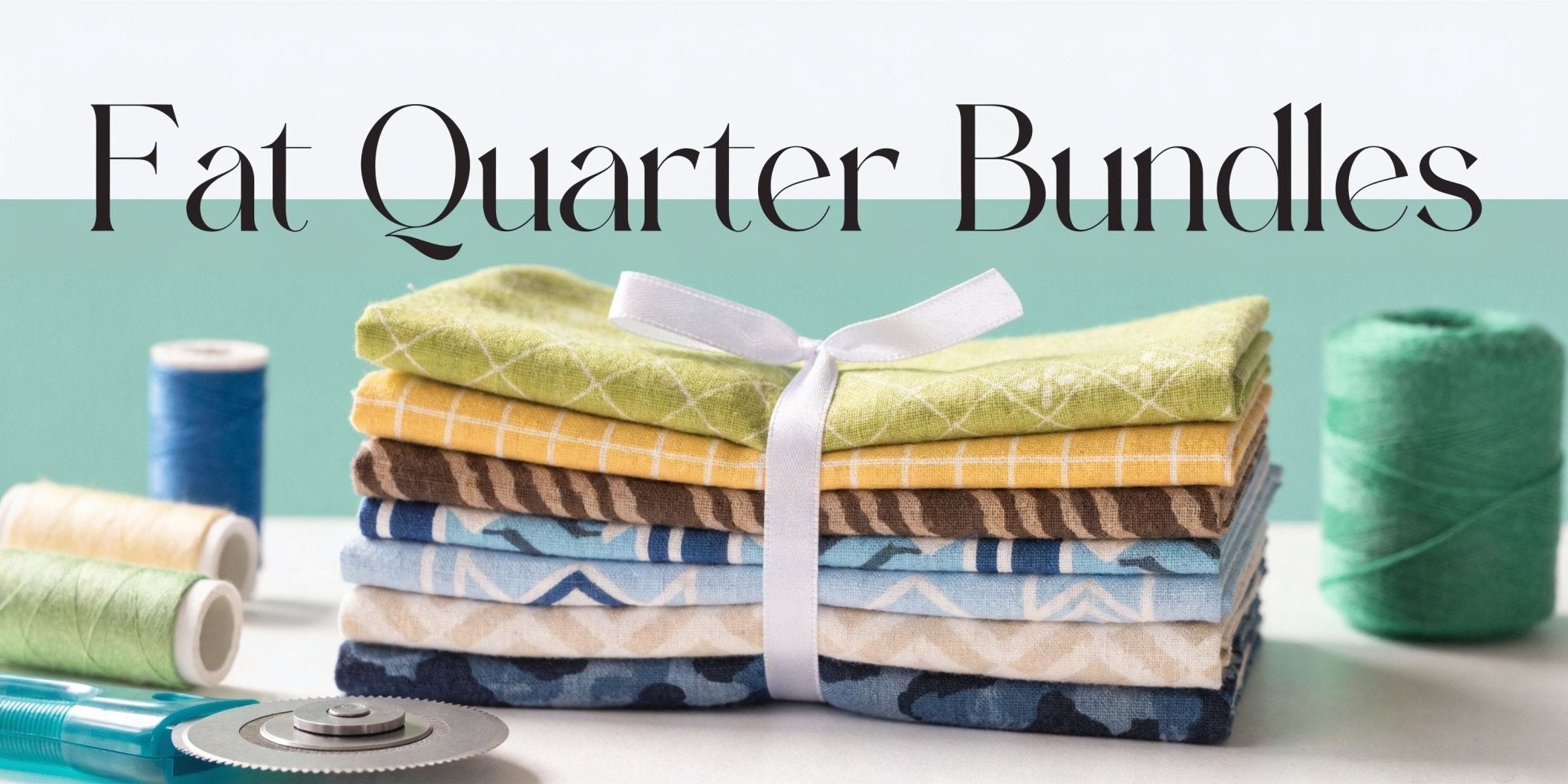
Fat quarter bundles are pre-cut fabric pieces, usually 18 x 22 inches, that give you the same fabric area as a traditional quarter yard in a shape that’s far more useful for quilting and small sewn projects (Missouri Star Quilting fat quarter guide). If you’ve been eyeing a pretty stack and wondering whether it’s practical or just tempting, the short answer is both.
Fat quarter bundles solve a real problem. You get coordinated variety, less cutting guesswork, and a format that works especially well for patchwork, appliqué, and soft projects where a long skinny cut would be awkward.
URL Slug: /blog/fat-quarter-bundles
Meta Description: Fat quarter bundles explained for quilts and minky projects. Learn sizing, project planning, storage tips, plus 15% off your first order.
Why Are Fat Quarter Bundles So Popular?
Most quilters have had the same moment. You see a stack of fabrics that already looks like a finished idea, and you want it, but you also want to know whether it will make something useful.
That’s where fat quarter bundles earn their keep. They give you variety without forcing you to buy full yardage of every print, and they remove a lot of the friction from fabric selection.

Why do quilters reach for bundles first?
A good bundle does three jobs at once.
- It gives you coordination: Many bundles are pulled from one collection, so the fabrics already relate well in scale, color, and mood.
- It lowers commitment: You can try a range of prints without buying yard cuts of each one.
- It speeds up the start: Instead of standing over bolts comparing ten options, you can begin cutting.
There’s also a simple practical point. A fat quarter is easier to use for common quilt units than a narrow quarter-yard strip, especially when you want block pieces rather than long bands.
What works well and what doesn’t?
Bundles work best when you want a scrappy but controlled look. They’re also great for gift sewing, stash building, and beginner-friendly projects where color matching can feel harder than the sewing itself.
What doesn’t work is buying a bundle before checking scale and purpose. One bundle may be perfect for a baby quilt, pillows, or a scarf set. Another may lean heavily on large prints that are better as accents than as the entire project.
Bundles save time when the curation is doing real work. They’re less helpful when every print fights for attention.
That trade-off matters even more with plush fabrics. In cotton, you can often improvise. In minky, texture, nap, and print scale need a little more intention.
What Exactly is a Fat Quarter and How is It Cut?
A fat quarter solves a cutting problem quilters run into fast. Quarter-yard fabric from the bolt is long and narrow, which works for strips but limits what you can cut for blocks, appliqué, and motif placement.

How is a fat quarter different from a quarter yard?
The amount of fabric is similar. The shape is what changes how useful it feels on the cutting table.
A standard quarter yard is usually cut as a long strip from the bolt. A fat quarter is cut by taking a half-yard piece and cutting it once across the width, which gives you a more balanced rectangle, typically about 18 x 22 inches. That shape gives quilters more room for block parts, small motifs, and cleaner subcuts without fighting a skinny strip.
Here’s the practical difference:
| Cut type | Typical size | Best use |
|---|---|---|
| Skinny quarter | 9 x 44 inches | Borders, strips, binding-style cuts |
| Fat quarter | 18 x 22 inches | Blocks, appliqué, fussy cutting, mixed projects |
Why does the shape matter so much?
Because most quilt patterns are built from units, not just long bands of fabric.
With a fat quarter, you can cut squares and rectangles more efficiently, rotate pieces to fit around a print, and fussy cut without wasting as much usable area. We see this matter even more with plush fabrics. Minky prints and embossed textures often need a little breathing room so you can place the prettiest part of the fabric where it will show.
Practical rule: If a pattern uses block pieces, a fat quarter is usually more useful than a standard quarter-yard strip.
How many fat quarters equal a yard?
Four fat quarters generally add up to about one yard of fabric in total area. That helps when you’re deciding whether to buy one larger cut or a bundle with more variety.
The trade-off is simple. Yardage gives you longer uninterrupted cuts. Fat quarters give you flexibility across multiple prints or textures. For patchwork, nursery quilts, and mixed-coordinate projects, that flexibility is often the better fit.
A coordinated Shannon Fabrics Quilting Cuddle Minky Fabric Fat Quarter Pack Meet Me in the Garden is a good example. You get manageable cuts, coordinated color, and enough variety to build interest without buying several larger pieces.
Is the cut the same for cotton and minky?
The geometry is the same. The handling is different.
Cotton stays crisp under a ruler, so the benefit of a fat quarter is mostly about cutting options. With Shannon Cuddle® and Luxe Cuddle®, the same cut size becomes a control advantage too. Smaller pieces are easier to straighten, easier to keep with the nap running the right way, and less likely to shift around while you mark and cut.
That is one reason we like fat quarter bundles for minky projects. The format is familiar to quilters, but the benefit is even more practical in plush fabric than many cotton-first guides ever mention.
How Many Fat Quarters Do I Need for My Quilt?
Here, many people want a straight answer. For a standard lap or throw quilt measuring about 70 x 82 inches, you’ll typically need 12 to 16 fat quarters for the top (Lazy Girl Designs on fat quarter bundles).
That range matters because pattern style changes everything. Big blocks, heavy background use, borders, and negative space all shift the requirement.
Fat quarter quilt size guide
| Quilt Size | Approx. Dimensions | Fat Quarters Needed |
|---|---|---|
| Baby | Small baby quilt size | Use the pattern requirements |
| Throw | 70 x 82 inches | 12 to 16 |
| Twin | Larger than a throw | Use the pattern requirements |
| Queen | Large bed quilt | Use the pattern requirements |
| King | Largest bed quilt range | Use the pattern requirements |
Only the throw estimate above is verified in the supplied source, so for other sizes the safest move is to follow the pattern exactly rather than rely on generic quilt math.
Why does one pattern need more than another?
Two quilts can finish at a similar size and use very different amounts of fabric.
A few common reasons:
- Large background areas: These reduce the number of print fat quarters needed, but add yardage elsewhere.
- Dense patchwork: Small repeated units often use more variety and more cuts.
- Directional fabrics: These can limit how efficiently you cut.
- Borders and sashing: These usually aren’t the best use of fat quarter cuts.
What’s the easiest way to estimate?
Start with the pattern, then compare its block structure to your bundle.
If the quilt is clearly labeled fat quarter friendly, that’s the safest lane. If it isn’t, check whether the pieces needed can fit into an 18 x 22 inch cut without awkward leftovers.
A few signs the pattern and bundle are a good match:
- Blocks repeat consistently
- Print pieces aren’t extra long
- Background is separate from the bundle
- The design benefits from variety
If you’re planning to send the finished top out for quilting, keep prep in mind while you piece. Clean seams, trimmed threads, and a square top make finishing much easier. These quilt prep instructions are useful if you plan to use a mail-in longarm service later.
Get more value from your fabric planning. New customers can use the first-order discount, and orders over $70 qualify for free U.S. shipping.
What usually goes wrong?
The most common mistake is assuming the bundle covers the whole project without checking background, binding, or backing. The next mistake is using a bundle for a pattern that needs longer cuts than a fat quarter can give cleanly.
That’s not a bundle problem. It’s a project-match problem.
When the pattern is written for fat quarter bundles, the sewing usually feels smoother from the first cut onward.
Are All Fat Quarter Bundles The Same?
Not even close. Two bundles can have the same format and feel completely different on the cutting table.
Some are balanced and thoughtful. Others are pretty in the stack but awkward in an actual quilt. That’s why buying by appearance alone can disappoint you.

What kinds of bundles will you see?
Designer collection bundles
These are pulled from a single line or release. They usually offer the best built-in harmony because the prints were designed to live together.
The upside is ease. The downside is that some collection bundles can become too uniform if the print scale doesn’t vary enough.
Colorway bundles
These focus more on hue than collection identity. Think cool blues, earthy neutrals, nursery pastels, or holiday reds and greens.
These are useful when the pattern needs contrast control more than matching prints. They’re also easier to mix with stash fabrics.
Theme bundles
These are built around a mood or purpose. Seasonal prints, florals, juvenile motifs, woodland styles, or luxe texture stories fall into this bucket.
Theme bundles can be wonderful for gift sewing. They can also box you in if you buy them without a specific project in mind.
What should you look for before buying?
Fabric quality matters as much as the curation. When choosing bundles, selecting 100% cotton or minky with a high thread count of at least 60 threads per inch and a tight weave is important for durability and stitch integrity (Mrs. Quilty on choosing fat quarter bundles).
Here’s a quick buying lens:
- Check substrate first: Cotton and minky do not behave the same.
- Look at print scale: A bundle full of large focal prints may need solids or quieter companions.
- Scan value range: You want some visual contrast, not one flat band of medium tones.
- Think about finish use: A quilt, pillow, scarf, and baby blanket all ask different things from the same bundle.
How do digital prints fit in?
Digital print bundles can be beautiful, especially when you want image clarity or standout motifs. They’re often stronger as feature cuts than as full scrappy mixes, depending on the design.
If you like that cleaner print style, browsing Shannon Cuddle digital prints minky fabric can give you a good sense of how print personality changes the final project.
A bundle should give you options, not create extra problem solving after you get home.
What doesn’t work well?
A bundle full of similar medium-scale prints in similar values often looks better folded than sewn. The quilt can end up flat, muddy, or busy all at once.
That’s why experienced quilters don’t just ask, “Is this pretty?” They ask, “Can I cut this into useful pieces, and will those pieces still read clearly once they’re sewn together?”
Can I Use Fat Quarter Bundles with Minky Fabric?
Yes, you can. In fact, fat quarter bundles can be one of the easiest ways to start sewing with minky if full yardage feels intimidating.
That’s especially true when you want to make pillows, baby gifts, stroller quilts, soft patchwork, or mixed-texture projects rather than a traditional cotton-only quilt top.

Why does the fat quarter size make sense for minky?
For premium minky fabrics like Shannon Cuddle®, an 18 x 22 inch fat quarter cut is ideal because it avoids the excessive shearing that can disrupt the 3 to 5 mm pile height and create nap-direction problems that show up in poorly cut yardage (My Favorite Quilt Store on fat quarter bundles).
That matters in real sewing. Minky has loft, drape, and surface direction. A manageable cut helps you control all three.
What are the trade-offs with minky bundles?
Minky is forgiving in comfort and less forgiving in handling.
What works well:
- Small projects: Pillows, loveys, baby blankets, scarf accents
- Texture mixing: Pairing a smooth print with Luxe Cuddle textures
- Beginner confidence: Smaller cuts are less slippery to manage
What takes more care:
- Nap direction: Every piece needs consistent orientation
- Stretch control: Pinning or clipping matters more
- Bulk at seams: Plush seams stack up quickly
Which textures are easiest to use?
Some quilters prefer starting with flatter quilting cuddle styles before moving into higher-loft textures. Others go straight to Luxe Cuddle because the tactile payoff is worth the extra handling.
Textures like Hide, Snowy Owl, and Fawn are beautiful, but they aren’t interchangeable in a pieced project. Higher texture can be stunning for one side of a pillow or as a backing panel, while flatter minky often behaves better for detailed patchwork.
If you’re still getting familiar with the fabric itself, this guide on what Cuddle minky fabric is is a helpful primer.
What can you make from minky fat quarter bundles?
A strong minky bundle can go in several directions.
- Patchwork baby blankets: Soft on both sides, especially when paired with a simple layout
- Accent pillows: Great for showcasing one hero print plus a coordinating plush texture
- Nursery gifts: Bundles help keep the color story unified
- Scarves and accessories: Small cuts are easier to test before buying larger yardage
- Mixed-media quilts: Cotton piecing on the front, minky blocks or borders for softness
Later in the project, a quick visual demo helps if you’re deciding whether minky piecing feels manageable:
If you’re nervous about sewing minky, start with fewer seams and larger pieces. The fabric is easier to enjoy when you don’t ask it to do tiny, fussy work on day one.
What usually causes trouble?
The biggest issue is treating minky exactly like quilting cotton. It isn’t.
Use a walking foot if your machine handles it well. Keep nap direction consistent. Reduce unnecessary seam intersections. And don’t choose a highly intricate pieced pattern just because the bundle is cute.
With minky, simpler planning often gives the best finish.
How Should I Buy and Store Fat Quarter Bundles?
A bundle can look perfect on the shelf and still be the wrong buy for the project. We see that most often with minky. Shoppers fall in love with the softness or the print, then realize later the pile is too lofty for the piecing they had in mind, or the backing plan got expensive because they did not think through width early.
Buy with the finished use in mind. A baby quilt, stroller blanket, accent pillow, and cuddle quilt all ask different things from a fat quarter bundle. If you are planning a simple plush gift, an easy minky baby blanket tutorial can help you decide whether fat quarters are the right cut or whether larger panels will serve you better.
How should you buy them?
Start by checking three things. Fiber, loft, and scale.
- Match the fabric to the job: Cotton fat quarters work well for detailed piecing. Minky fat quarters are better for simpler patchwork, color blocking, appliqué, trims, and small plush projects.
- Check the pile height: Shannon Cuddle and Luxe Cuddle do not behave the same way in a quilt top. Lower-pile minky is usually easier to cut accurately and sew cleanly.
- Look at print size: Large-scale prints can get chopped up fast on a fat quarter. Small to medium motifs usually give you more usable pieces.
- Buy enough at the start: If the bundle is part of a coordinated collection, waiting can leave you short on a matching print or texture later.
- Plan the back with the front: For larger projects, extra-wide backing can save you from piecing a bulky back. For a smooth finish, browse extra-wide minky backing options while you plan the top.
Reliable cutting matters. On cotton, a slight trimming difference is annoying. On minky, it can throw off alignment fast because the fabric has more body and more movement under the presser foot.
How should you store cotton versus minky?
Storage affects cotton and minky differently. Cotton forgives tight folding. Plush fabrics do not.
For cotton bundles
- Stack flat on a shelf or in a bin: This keeps edges tidy and easy to sort.
- Keep them out of direct sunlight: It helps protect color over time.
- Refold once in a while: That helps prevent one hard crease from setting in for months.
For minky bundles
- Do not pack them tight: Crushed pile can stay flat, especially on deeper Luxe Cuddle textures.
- Store flat whenever possible: Folded is fine, but stuffed into a crowded bin is where the problems start.
- Group similar textures together: Smooth Cuddle, embossed textures, and high-loft plush are easier to shop and protect when they are not all pressed into one stack.
- Keep the sewing cuts clean: Minky attracts lint and stray threads, so closed bins or clean shelving help more than open baskets.
We usually tell customers to store the minky they plan to use soon in the best spot, not the deepest spot. If you can see it, you are more likely to use it before the project plan goes cold.
Should you prewash them?
Usually, no.
Fat quarters are already small cuts, so prewashing can cost you usable size through fraying and distortion. That matters on cotton, and it matters even more on minky because the edges can get messy fast. Most quilters get better results by pressing cotton if needed, then cutting carefully. With minky, focus on accurate cutting, consistent nap direction, and clean handling instead of prewashing.
What buying mistake shows up most often?
The most common mistake is buying a bundle before deciding what role it will play. Top fabric, border, backing accent, binding substitute, or gift sewing are all different jobs.
We recommend labeling bundles as soon as they come in. Add a note with the intended project, any matching solids, and whether the bundle is cotton or minky. That small habit saves a lot of second-guessing later, especially if you keep both quilting cotton and plush fabrics in the same stash.
Start Your Next Project with Fat Quarter Bundles
You pull out a fat quarter bundle for a baby gift, then stop and wonder whether those cuts will work in plush fabric. That is the point where many quilters set minky aside and go back to cotton. We do not think you need to.
Fat quarter bundles are one of the easiest ways to start sewing with Shannon Cuddle® and Luxe Cuddle® because they let you test color, texture, and scale without buying more yardage than the project needs. They are especially useful for baby blankets, loveys, stroller quilts, small pieced tops with plush accents, and backing details where softness matters as much as the look.
The trade-off is simple. Minky asks for more intention than cotton. You need to watch nap direction, keep bulk under control, and choose patterns that suit a plush fabric instead of fighting it. Once you account for that, fat quarter bundles become a practical tool, not just a pretty stack on the shelf.
If you want a fast first project, our guide on how to make a minky baby blanket is a good place to start.
We always encourage quilters to begin with a real job in mind. Pick a bundle, decide where each cut will go, and let the texture do some of the design work. That approach leads to better results with premium plush fabrics and far fewer leftovers that never find a project.