
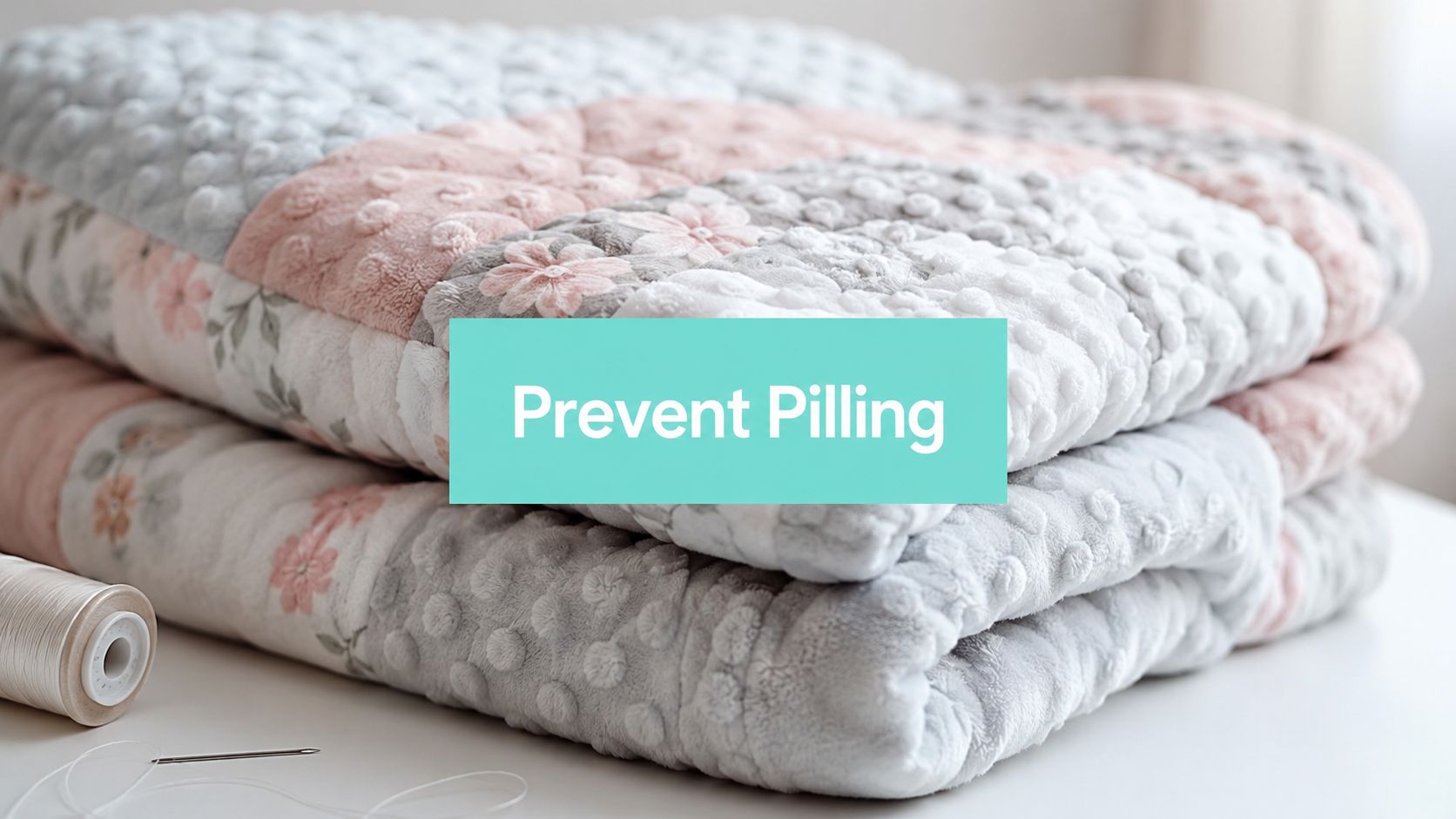
You pulled your favorite minky quilt out of the wash, smoothed the nap, and found tiny pills staring back at you. How to prevent fabric pilling starts with reducing friction at every stage, from cutting and sewing to washing, drying, storage, and daily use. If you treat plush fabric like a delicate surface instead of a tough utility textile, it stays softer longer and keeps its clean hand.
For quilters working with Shannon Cuddle, Luxe Cuddle, and other brushed textures, that means the fix is mostly mechanical, not magical. The right wash routine, a gentler sewing approach, and smart finishing can make a noticeable difference, and if you're shopping for a new project, OPN Quilting's Cuddle and Minky collection gives you a better starting point than trying to rescue a fabric that was stressed from day one. If you want a visual prompt for your own care content, ShortGenius AI ad generator is also useful for building quick fabric-care graphics without reinventing the wheel.

Why Minky and Cuddle Fabrics Pill and How to Stop It
Pilling on plush quilt fabrics usually starts when short or loose fibers are rubbed free, then tangle into little balls on the surface. That's why the first rule is simple, reduce friction everywhere you can, not just in the washer. This matters even more with minky and Cuddle because the soft brushed surface that makes them appealing also gives surface fibers more opportunity to move.
The real cause is abrasion, not bad luck
I've tested enough minky textures to say this plainly. A lot of what people call “bad fabric” is really fabric that's been overhandled, overwashed, or dried too aggressively. Appliance and care guidance consistently points to the same prevention pattern, turn items inside out, close zippers and buttons on companion items, use gentle or delicate cycles, and keep the washer from getting packed too tightly so the fabric can move with less rubbing, as noted in the French laundering guide from Armand Hammer.
That same source gives a concrete loading benchmark I like using in practice, 75% maximum drum capacity, because it leaves room for movement and lowers garment-to-garment abrasion. It also notes delicate cycles at 30 °C and slower spin speeds of 400 to 600 rpm as lower-abrasion options, which lines up with what I see in plush fabric care.
Practical rule: if a minky quilt is treated like a heavy towel load, it's more likely to pill.
For a deeper fabric background before you cut into yardage, this overview of Cuddle and minky construction helps explain why the surface behaves the way it does.
What Causes Pilling on Plush Quilt Fabrics
Pilling risk shifts with construction. Tightly woven or tightly twisted yarns hold fibers more securely, while brushed knits and high-pile surfaces release loose fibers more easily under stress. That does not mean plush fabric is defective. It means the surface is built with more movement from the start, which is part of why premium minky can feel so different from ordinary quilt cotton.
Construction matters more than price alone
A lot of shoppers assume a higher-priced fabric will not pill. That is not how this works. The more useful question is whether the fiber structure is tight, brushed, or intentionally lofty, because those choices determine how much abrasion the surface can tolerate before pills appear. The laundering guide at Speed Queen France also points out that pilling is a mechanical phenomenon, which matches what I see in the sewing room after years of handling Shannon Cuddle, Luxe Cuddle, and other plush quilt backs.
Here is how I would rank common fabric structures for pill risk in real quilt use.
| Fabric Type | Construction | Pilling Risk | Key Prevention Focus |
|---|---|---|---|
| Tightly woven fabrics | Firmly locked yarns | Lower | Limit surface rubbing and aggressive wash cycles |
| Brushed knits | Looser surface fibers | Moderate | Gentle laundering and reduced abrasion |
| Plush piles | Raised, soft surface fibers | Higher | Protect the face from friction during sewing, washing, and use |
Textures also behave differently even within the same family. Hide, Snowy Owl, and Fawn all have the premium softness buyers want, but the way the pile stands up changes how easily it shows wear. On a quilt that will be used often, the safer choice is usually the most stable construction, not the fluffiest one. If you want a visual comparison before you cut into yardage, this high-quality faux-fur fabric guide shows why pile structure changes how a fabric handles friction.
Fiber shedding and care damage are not the same
There is an important distinction here. Some fabrics naturally release a little loose fiber early in their life, especially brushed synthetics and plush blends. That is normal surface release. Actual pilling, though, usually grows faster when the fabric is exposed to repeated abrasion from overloads, rough wash companions, backpacks, seat belts, or dryers.
The difference matters in the quilt room. A little fuzz at the start can be part of the fabric's normal behavior, while pills that form later often point to friction from use, handling, or laundry that was too harsh for a plush surface.
Pre-Sewing Preparation That Prevents Pilling Later
The easiest pills to prevent are the ones that never get a chance to start. Before I sew with minky, I treat the yardage like a finished surface, not just raw material. That means I'm trying to release loose fibers early, protect the pile from unnecessary abrasion, and avoid edge damage that becomes visible later.
Start with gentle prep, not aggressive cleanup
A practical anti-pilling wash protocol is to sort by abrasion risk, turn garments inside out, use mesh laundry bags for smaller or pill-prone pieces, and keep the load below full capacity so the fabric can move instead of grind. The laundry guidance from Moda Material and the French guide above both point to the same logic, and in my experience it's especially important with cut minky because raw yardage has more exposed surface to scuff.
For pre-washing, I prefer a gentle cycle and low friction handling. If I'm preparing a quilt back, throw, or baby blanket, I don't want the pile knocked flat before I even start stitching. That's one reason I'll choose curated cuts from 2, 2.5, and 3 yard minky options when I'm making a project that needs cleaner edges and less waste.
Choose tools that protect the pile
Needle choice matters more than many beginners expect. A ballpoint or stretch needle slips between fibers more cleanly than a sharp needle that can pierce and break them. Sharp rotary blades matter too, because ragged edges can fray faster under use.
Good habit: if the fabric is already plush, don't add extra trauma with dull blades or a rough wash cycle.
For cutting tips that keep the sewing room cleaner and the fabric surface safer, this guide to cutting minky without the mess is a solid companion read.
Sewing and Longarm Techniques That Protect Fibers
Construction choices decide how much a finished quilt will pill over time. If the top, batting, and backing can shift against each other every time the quilt is used, the inside friction eventually shows on the outside. That's why I think about minky quilts as systems, not just fabrics.
Use settings that feed, don't fight, the pile
A walking foot helps feed minky evenly so the layers don't stretch against each other. Lower presser foot pressure helps avoid crushing the nap, and a longer stitch length reduces the number of needle holes per inch, which is kinder to soft surfaces. Those are small adjustments, but plush fabrics often reward small adjustments more than dramatic ones.

Professional finishing helps too. Mail-in longarm quilting secures the layers with consistent stitch patterns, which limits internal shifting that can turn into surface abrasion over time. That's one reason I like edge-to-edge quilting on plush-backed quilts, especially when the pattern fits the fabric instead of crowding it.
Seam placement is a friction decision
If you're backing a large quilt, extra-wide 90-inch or 110-inch minky avoids seam lines, and seam lines can become wear points. For backs that need to stay smooth, fewer joins usually mean fewer places for repeated rubbing to start.
Best practice: pick a quilting pattern that supports the fabric's use, not just the top's decoration.
The pattern gallery matters here too. Modern, floral, juvenile, holiday, and nature motifs can all work well on plush backings when the stitch density and flow suit the quilt's purpose.
Offer note: OPN Quilting's first-order coupon gives 15% off, and orders over $70 qualify for free U.S. shipping. That's handy when you're testing a new backing or building out a larger project.
Washing and Drying Protocols for Pill-Free Minky Quilts
A lot of pilling starts in the washer and dryer, not in the closet. I treat wash day as the point where plush fabric either stays smooth or gets abraded again, and that matters even more with Shannon Cuddle and Luxe Cuddle than with ordinary quilt cotton. The goal is straightforward, reduce rubbing, reduce heat, and keep the pile from being battered by the load itself.
Compare the high-risk and low-friction choices
The laundering guidance from Whirlpool and the care notes in how to wash Luxe Cuddle blankets correctly point in the same direction. Plush fabrics do best with gentle handling, lower heat, and less time tumbling against other textiles.
| Care Step | High-Risk Practice | Low-Friction Alternative | Why It Matters |
|---|---|---|---|
| Sorting | Mixing heavy, rough items with plush quilts | Sort by abrasion risk | Less rubbing from incompatible fabrics |
| Washer load | Overfilling the drum | Keep loads below full capacity, around 75% maximum where possible | More room means less garment-to-garment friction |
| Cycle choice | Aggressive or regular wash | Gentle or delicate cycle at 30 °C | Lower mechanical stress on loose fibers |
| Spin speed | Fast spin | Reduced spin around 400 to 600 rpm | Less movement and less fiber disturbance |
| Drying | High heat and long tumble time | Remove while slightly damp, then air-dry or use the lowest dryer setting | Heat and tumble motion increase wear on fibers |
Turning the quilt inside out helps protect the face, especially on those dense, silky minky surfaces that show wear early. Close zippers and buttons on anything that shares the load, and keep plush quilts away from rough towels, denim, and heavy hardware whenever you can. That small bit of sorting prevents a lot of surface scuffing.
Use less heat than you think
With minky, over-drying causes more trouble than people expect. I prefer to pull the quilt while it is still slightly damp, then let it finish flat or on a clean drying rack, because hot, extended tumbling is hard on the pile and can leave the surface feeling tired before the quilt has even been used much. A gentle dryer cycle still has a place when time is tight, but lower heat and shorter exposure always give the fabric a better chance of staying smooth.
The same idea applies between wash days. Letting a quilt rest after use cuts down on repeated compression and rubbing, which helps the pile recover instead of staying flattened. Plush fabrics tolerate real life well, but they look best when they are not being scrubbed, overheated, and overhandled every time they leave the bed or couch.
Long-Term Care Storage and Safe Pill Removal
Even with good prep and careful laundering, some surface fuzz can still show up. That's not a failure. It's just the reality of a soft, brushed textile living a real life on couches, beds, and in laundry baskets.
Store it where friction can't reach it
Folding with acid-free tissue paper helps reduce crease-line rubbing in storage. Plastic bags are a bad long-term choice because they trap moisture, and moisture plus pressure can weaken delicate fibers over time. I also avoid wicker baskets, unfinished wood shelves, and anything else that can scrape the pile.
For everyday use, keep rough contact in mind. Backpacks, pet claws, and textured furniture arms all create the kind of repeated rubbing that starts surface wear. The upholstery advice from Style Meets Comfort translates well here, tight weave and reduced friction win.

Remove pills gently, not by force
When pills do appear, use a battery-operated fabric shaver on low, a fine-tooth comb for delicate Luxe Cuddle textures, or a manual pill razor with light pressure. Pulling pills by hand tears surrounding fibers and makes the next round of pilling worse.
The maintenance habits matter too. A quick fabric check before washing, a low-friction storage setup, and a light touch during cleaning keep the fabric face from getting scraped down over and over.
Video guide:
For machine upkeep that protects fabric quality in the long run, this sewing machine maintenance note is a useful companion to the care habits above.
Pilling is manageable when you treat it as a friction problem instead of a mystery. How to prevent fabric pilling is really about respecting the surface at every stage, from the first cut to the last wash. OPN Quilting's hundreds of verified reviews reflect what seasoned makers already know, good materials and careful handling save time, money, and frustration.
On Pins & Needles Quilting Co. carries premium minky fabrics, ready-made blankets, and longarm finishing that fit the care principles in this guide. If you're ready to build a softer quilt that holds up better in real life, visit On Pins & Needles Quilting Co. and choose the fabric or service that matches your next project.