
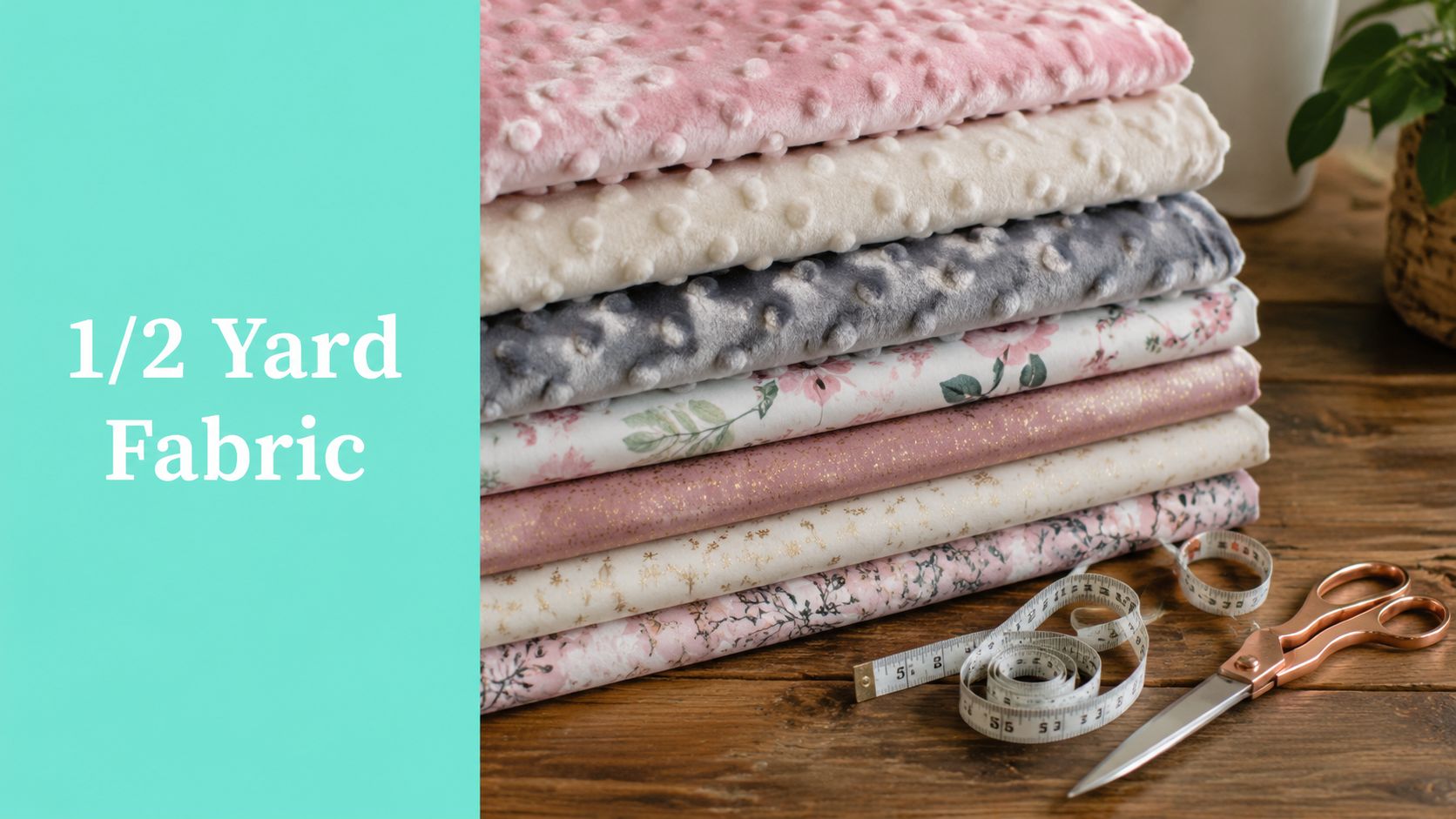
A half yard of fabric is exactly 18 inches long, and the width depends on the bolt it comes from. On a common quilting cotton bolt, that usually means an 18 by 44 inch cut, while minky is often much wider, which changes what you can realistically make.
If you're standing at your cutting table wondering whether a 1/2 yard of fabric will be enough, the answer is usually yes for small projects, accents, and gift sewing, but not always for minky. That's where people get tripped up. Quilting cotton and Luxe Cuddle don't behave the same way, and the extra width of minky helps, but the stretch and pile can work against you.
What Exactly Is a Half Yard of Fabric?
A half yard of fabric is a standardized cut measuring exactly 18 inches, or 1.5 feet, in length. On the most common 44 to 45 inch quilting bolts, that cut gives you a rectangle measuring 18 by 44 inches, for a total of 792 square inches of fabric, as outlined in this fabric yardage guide.
That sounds simple, but the practical question isn't just length. It's width, fiber, stretch, and finish. An 18 inch cut from quilting cotton behaves like a crisp, stable rectangle. An 18 inch cut from minky can be wider, softer, and more prone to shifting while you sew.
Why the width matters immediately
A half yard is always measured along the length of the fabric off the bolt. The width stays whatever the manufacturer made it. So your 1/2 yard of fabric might feel modest in cotton and surprisingly generous in a plush fabric.
That difference matters for:
- Pillow sewing because width can give you enough room for front and back pieces
- Appliqué or trim work because stable fabrics cut more predictably
- Pattern matching because short cuts leave less room for repeats
- Texture testing when you want to try a new plush surface before buying more
For sewists comparing fibers, material content also affects drape, heat retention, and wear. If you're evaluating rayon blends or trying to understand viscose composition and impact, that bigger fabric conversation helps explain why equal yardage can behave very differently once it's on your table.
A half yard tells you the cut length. It does not tell you whether the fabric will suit the project.
How Do Different Fabric Widths Affect a Half Yard?
If you're buying soft fabric for quilting, gifts, or backing, width changes the whole calculation. The same 18 inch length can feel small or generous depending on whether you're cutting from a 44 inch bolt or an extra-wide minky backing.

A standard 1/2-yard cut of 44 to 45 inch Quilting Cuddle measures 18 inches by 44 to 45 inches and yields 792 to 810 square inches, which is enough material for a single 18-inch throw pillow kit or a small baby blanket project without seams, as noted qualitatively from common yardage guidance.
Half Yard Dimensions by Fabric Width
| Fabric Type (Width) | Dimensions (Inches) | Metric Equivalent (cm) | Total Area (sq. inches) |
|---|---|---|---|
| Quilting Cuddle (44") | 18 x 44 | 45.7 x 111.8 | 792 |
| Home Dec or Apparel (54") | 18 x 54 | 45.7 x 137.2 | 972 |
| Luxe Cuddle or Minky (60") | 18 x 60 | 45.7 x 152.4 | 1080 |
| Mirage (80") | 18 x 80 | 45.7 x 203.2 | qualitatively much more surface area |
| Extra-Wide Backing (90") | 18 x 90 | 45.7 x 228.6 | qualitatively much more surface area |
| Extra-Wide Backing (110") | 18 x 110 | 45.7 x 279.4 | qualitatively much more surface area |
The biggest practical jump happens when you move from quilting width to wide minky. That extra width can save a project that would be impossible in cotton.
Where wider cuts help most
A wider half yard is useful when you want:
- One-piece panels for cushion fronts or nursery accents
- Less piecing in soft fabrics that don't press flat the way cotton does
- Cleaner backing choices for quilts headed to longarm finishing
- More flexibility for directional textures like Hide or Fawn
If quilt backing is your end goal, the most useful next read is this guide to 110-inch extra-wide minky fabric. It explains why width often matters more than length once you start planning a full quilt back.
Practical rule: When fabric gets plush, width becomes part of the project plan, not just a nice bonus.
What Can You Make with a 1/2 Yard of Minky?
A half yard of minky works best when the project is small, plush, and forgiving. It's a smart cut for gift sewing, texture accents, and simple home décor pieces, but it's not the right answer for every idea that works in quilting cotton.

A typical minky cut is 58 to 60 inches wide, so 0.5 yards provides about 1,044 square inches of surface area, and that's generally enough for one standard 14-inch throw pillow if you cut carefully with minimal seam allowance. It's also often too short for adult-sized garments, according to this minky project guidance.
Good uses for a half yard of minky
These are the projects that usually make sense:
- Pillow covers or pillow fronts. Plush textures like Hide, Snowy Owl, and Fawn shine here because the project is compact and lets the texture be the star.
- Baby accessories. Bib trims, lovey accents, burp cloth backs, stuffed animal details, and stroller touches are all realistic.
- Small scarf components. Some scarf styles work if the pattern is simple and the nap direction is planned from the start.
- Appliqué and patch accents. Minky adds contrast to quilted gifts when used in controlled pieces instead of full yardage builds.
If you're sewing for gifting season, this roundup of handmade minky baby shower gift ideas is a practical place to start.
What usually does not work
It is honest planning that saves money.
- Adult garments usually need more length than an 18 inch cut provides
- Large repeat layouts become frustrating because short cuts don't leave much room for correction
- Structured outdoor cushions often need more planning, tougher fabrics, and a different construction approach than plush indoor minky
If you're branching into seating projects, this guide on how to cover outdoor furniture cushions is useful because it highlights the fit and durability issues that matter long before you cut.
Buying minky by the half yard works best when you already know the finished piece can stay small.
Offer to use strategically: first orders can use a 15% coupon, and orders over $70 qualify for free shipping. If you're close to the threshold, bundling several small cuts or moving up to a larger cut often makes more sense than placing a second order later.
A better buying mindset for minky
Many people treat 1/2 yard of fabric as a generic beginner cut. With minky, it's better to treat it as a special-purpose cut. Use it to sample a texture, make a plush accent, or complete a quick gift.
If you need more than one matching item, larger cuts are usually easier to plan around than several separate small pieces.
How Do You Sew a Half Yard of Luxe Cuddle Fabric?
Sewing a small cut of Luxe Cuddle is manageable if you respect the nap and control the stretch from the first cut. Most frustration comes from treating minky like quilting cotton.

One of the biggest planning mistakes is assuming a half yard of minky yields the same way cotton does. In practice, stretch and pile direction can waste 15% to 20% more material, and a small cut may not be enough for even one infinity scarf if the pattern needs strict straight-grain alignment, as explained in the minky project guidance linked earlier in this article.
The sewing habits that help most
From years of handling plush fabrics, these steps matter more than fancy tools:
-
Mark the nap before cutting
Run your hand across the fabric and note which direction feels smooth. Mark the wrong side so every piece runs the same way. -
Cut one layer at a time
Folded minky likes to creep. Single-layer cutting is slower, but your shapes stay true. -
Use clips freely
Pins can work, but clips usually manage bulk better on thick textures. -
Keep the stitch length moderate
Tiny stitches can disappear into the pile and make seams harder to read. -
Test on scraps first
A short seam tells you quickly whether the layers are feeding evenly.
For stitch and setup details, this guide on the best needle size for Shannon Cuddle fabric is worth keeping open beside your machine.
What customers struggle with most
We've seen the same pattern repeatedly in shops and sewing rooms. The cut looks generous on the table, then the pile direction, seam allowance, and trimming take more room than expected. That's why hundreds of verified reviews matter when you're choosing where to buy plush fabric. Experienced sellers usually cut more accurately and understand what sewists encounter.
A walking foot helps. So does resisting the urge to tug the top layer.
Here's a visual walkthrough if you prefer to see fabric handling in motion:
Small cuts demand better planning, not less planning.
Is It Better to Buy Half Yards or Curated Bundles?
That depends on what problem you're solving. A half yard is great for testing a texture or finishing one small item. Bundles and larger cuts are better when you already know the fabric will be part of a larger project.

Premium Shannon Cuddle fabrics average $25 to $35 per yard, so a 1/2 yard cut costs about $12.50 to $17.50. That often falls below common free-shipping thresholds like $70, which is one reason larger curated cuts can be the more economical buy, especially when you're already planning multiple pieces, as shown on this Cuddle minky fabric collection.
When half yards make sense
Choose a half yard if you're:
- Trying a texture for the first time, like Snowy Owl or Fawn
- Making one pillow or a small accent
- Building a stash slowly without committing to a full project quantity
- Adding plush detail to a mixed-fabric piece
When bundles make more sense
Go bigger when:
- You need repeatability across several gifts
- You want enough fabric for mistakes and recuts
- You're trying to hit a shipping threshold in one order
- Your quilt back would benefit from fewer seams
Quilters who enjoy coordinated cuts may also like reading about fat quarter bundles, especially if they work in both cotton and plush textures and want better stash strategy.
If you already know you need multiple cuts, buying several half yards can be the least efficient route.
For quilts headed to Mail-in Longarm, this choice matters even more. Extra-wide minky solves a very specific headache. It reduces piecing and keeps the backing smoother for finishing.
Where Can You Find the Best Minky Textures?
The best minky texture depends on the job. Hide gives you visible texture and depth. Snowy Owl reads plush and cozy. Fawn has a soft, luxe finish that works beautifully in baby gifts, pillows, and cuddle-forward projects.
When people ask whether a 1/2 yard of fabric is enough, the better question is usually this: enough for what kind of texture, finish, and sewing margin? That's why choosing the right plush style matters just as much as choosing the cut size.
What to look for before you buy
A good selection should include:
- Multiple widths so you're not forcing a small-width solution onto a large quilt
- Consistent branded textures if you want repeatable softness and color
- Project-specific options for pillows, scarves, nursery sewing, and quilt backs
- Helpful education so you can match the cut to the project
If you compare textiles across categories, resources on selecting ideal fabric weight for brands can help frame how weight and hand affect the final result, especially when you're deciding between decorative use and practical daily use.
For anyone focused on nursery sewing and soft gift-making, this article on textured minky fabric for baby blankets is a useful next read.
If you want premium Shannon Cuddle, Luxe Cuddle Hide, Snowy Owl, Fawn, wide backing options, or Mail-in Longarm support from a shop with hundreds of verified reviews, shop with On Pins & Needles Quilting Co.. Browse the soft textures you desire, build your order to receive free shipping over $70, and use the 15% first-order discount to get started. Shop the Luxe Cuddle Collection