
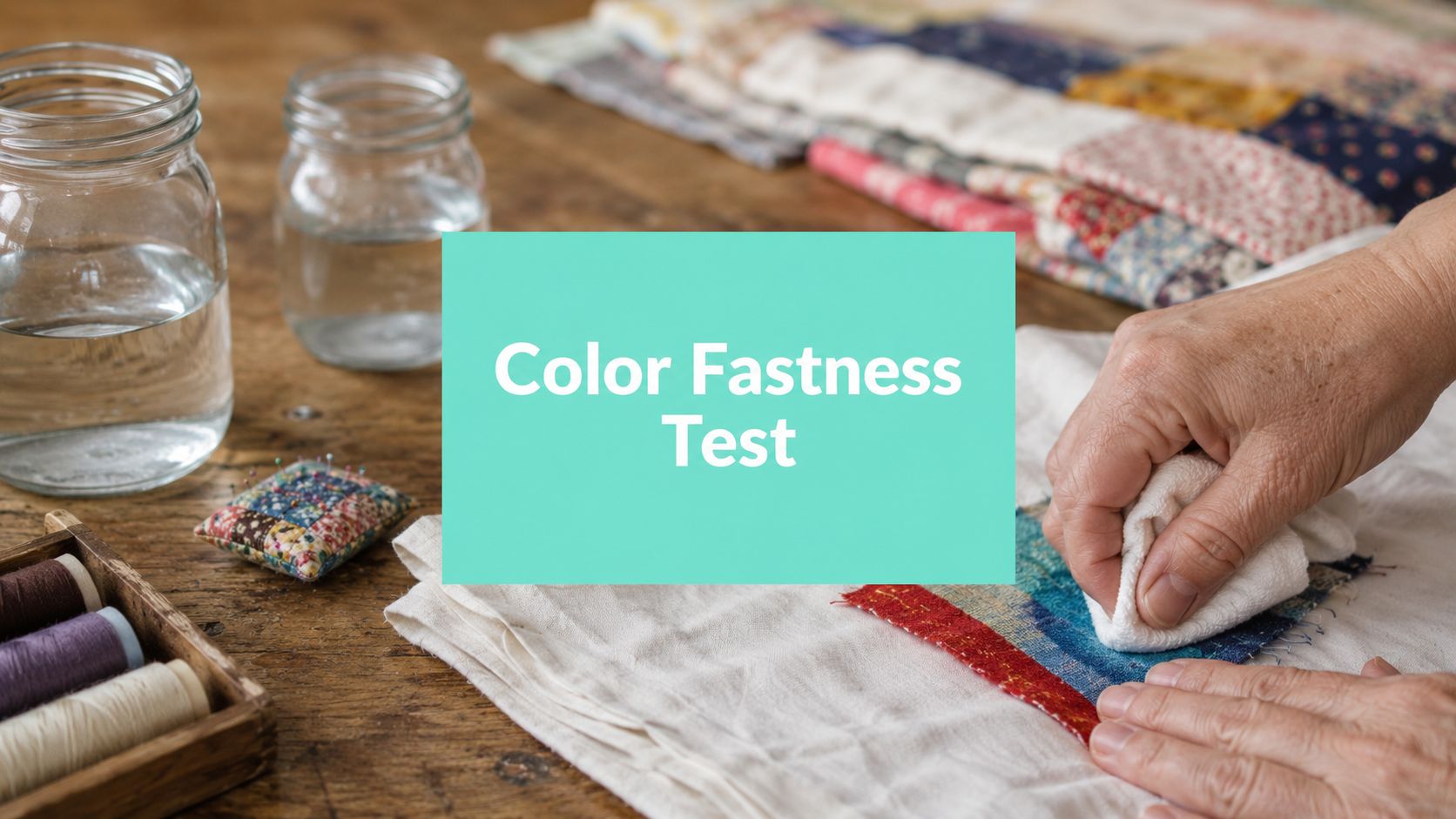
Color fastness testing is a series of standardized tests used to see whether fabric dye will bleed or fade, and the usual wash benchmarks for home textiles are Grade 4 for color change and Grade 3 to 4 for staining. That matters in quilting because one unstable fabric can turn a careful patchwork top into a blotchy mess after the first wash.
You know the fear. The quilt is pieced, pressed, quilted, and bound. Then one rich red print or one deep navy backing decides to share its color with the white sashing.
That's the quilter's nightmare, and it's a practical problem, not a theoretical one. Color fastness testing exists to answer a simple question before disaster happens. Will this fabric hold onto its dye when it meets water, friction, or light?
Among quilters, this comes up constantly with mixed-fiber projects, high-contrast patchwork, and plush backings. It also matters when you're combining cotton piecing with soft fabric favorites like Shannon Cuddle, or when you're getting a top ready for longarm quilting services and want confidence that the finish will last.
At OPN Quilting, we've worked with Shannon Fabrics for years, and our experience finishing quilts is backed by hundreds of verified reviews. We've learned that stable dye matters just as much as good piecing, good batting, and good quilting design. If a fabric can't behave in the wash, the rest of the workmanship can't save it.
Introduction The Quilter's Nightmare of Bleeding Colors
A quilt usually doesn't fail all at once. It fails in a specific spot. A red corner square feathers into a cream border. A dark backing haze creeps into pale thread highlights. A baby quilt that looked perfect on the table suddenly looks tired after one wash.
That's why color fastness belongs in the same category as seam allowance and grain line. It's not fancy lab trivia. It's basic project insurance.
Why quilters should care before quilting starts
If you've ever hesitated before combining a deep jewel tone with white, your instincts were good. Quilts put fabrics into close contact, then ask them to survive laundering together. That combination exposes both kinds of failure that matter most:
- Color change means the fabric itself fades or dulls.
- Color staining means dye transfers onto nearby fabric.
Those are different problems, and they don't always show up together. A fabric can keep its own color reasonably well and still stain something lighter next to it.
Practical rule: The higher the contrast in your quilt, the less room you have for dye instability.
This gets even more important with gift quilts, baby quilts, and show pieces. People use them, wash them, drag them across couches, and leave them in sunlit rooms. The quilt doesn't live in ideal conditions, so your fabric choices can't depend on hope.
Where this becomes practical for minky lovers
Minky and cuddle fans often focus first on softness, pile, and width. That makes sense. Texture is the whole point. But color stability deserves equal attention, especially when the backing is dark and the top includes light piecing.
For many quilters, the easiest risk reduction starts before the quilt ever reaches the frame. If you're mailing out a project for quilting, it helps to think about dye stability as part of prep, right alongside backing size and loose threads.
What Does Color Fastness Mean for Your Quilt
Color fastness sounds technical, but the idea is simple. It describes how well dye stays where it belongs.
A fabric with good fastness behaves like paint that has fully cured into the surface. A fabric with poor fastness behaves more like watercolor that can wake back up when moisture or friction hits it.

What are the two failures you're actually watching for
When quilters talk about “bleeding,” they often bundle several issues together. It helps to separate them.
- Fading happens when the fabric loses some of its original vibrancy.
- Bleeding happens when wet dye migrates into another fabric.
- Crocking means color rubs off from friction, either dry or damp.
- Dulling is a softer version of visible change, where a fabric no longer looks crisp and clear.
If you're choosing between plush backings, the fiber and finish matter too. That's part of why many sewists compare textures before they buy, especially when sorting out the difference between minky and cuddle fabric.
Why this isn't just a quilting issue
This topic matters far beyond our sewing rooms. The global colorfastness testing market was valued at $856 million in 2025 and is projected to reach $1,481 million by 2034, growing at a compound annual growth rate of 6.2%, which shows how central this testing is to textile quality and market access according to Dataintelo's colorfastness testing market report.
That same report notes that compliance is tied closely to the ISO 105 series, the standard family used to assess resistance to washing, rubbing, and light. In plain language, mills, brands, and labs don't treat color fastness as optional. They treat it as a pass-fail quality issue.
What this means for quilt materials
For a quilter, the takeaway is straightforward. Softness alone doesn't tell you whether a fabric is dependable. A silky hand, a gorgeous nap, or a dramatic saturated color can still leave open questions about wash behavior.
That's why premium ranges such as the Shannon Luxe Cuddle® Collection matter in practice. The fabrics people return to again and again usually combine touch, consistency, and dye performance in a way that lowers risk for real projects.
Good fabric should do two things at once. Feel beautiful in the sewing room and stay trustworthy in the wash.
How Do Professional Labs Measure Color Performance
Professional labs test color the way quilters wish every fabric source would. They put fabric through controlled washing, rubbing, and light exposure so the results can be compared from one material to the next. That matters because a fabric can feel beautiful on the bolt and still behave poorly after the first wash.

For quilters, the useful question is simple. What are labs checking, and what kind of result should make you feel comfortable cutting into premium minky or Cuddle?
What are the main tests labs use
Labs usually focus on three checks that line up closely with real quilt use.
-
Wash fastness
This measures whether the color changes or bleeds during laundering. Standards in the ISO 105 family and common lab practice use a controlled wash bath, set temperature, detergent, and test fabric pairing so the lab can assess both color change in the sample and staining on adjacent fabric. A textile testing overview for importers summarizes these methods and common rating systems in one place in this color fastness testing reference. -
Rubbing fastness
Often called crocking, this checks whether dye transfers when fabric is rubbed dry or wet. For quilts, this matters most with dark shades, high-contrast projects, and plush fabrics that may sit against light binding, backing, or pillowcases. -
Light fastness
This measures fading under controlled light exposure. It matters less for a quilt stored in a cabinet and much more for a nursery throw, a bed quilt near a sunny window, or anything used in bright rooms every day.
We pay close attention to wash and rub performance with Shannon Fabrics because softness is only half the story. A premium plush backing needs to stay attractive after quilting, washing, and daily use.
If you want a plain-English explanation of why outside verification matters, this piece on Defacto Labs on product quality is a helpful read.
How do the grading scales work
Most wash and rubbing tests use a Grade 1 to Grade 5 scale. Grade 5 means little to no visible change or transfer. Grade 1 means severe change, staining, or both.
Light fastness usually uses a different scale. It runs from 1 to 8, with higher numbers showing better resistance to fading.
Labs also compare samples against standard tools such as the Grey Scale for Color Change and Grey Scale for Staining. That sounds technical, but the point is practical. The lab is judging color in a consistent way instead of relying on personal opinion or showroom lighting.
What counts as acceptable for quilts and home textiles
For many home textile uses, Grade 4 is a solid benchmark for wash fastness. That is the level many buyers look for when they want fabric that performs well under normal care rather than fabric that only looks good before washing.
That benchmark still needs context. A decorative quilt that sees light use has a different risk profile than a child's blanket washed every week. Light fastness also deserves more attention if the quilt will live on a sofa in full sun. Lab numbers offer assistance in such scenarios. They turn vague claims like “good quality” into something you can evaluate.
In the quilting room, that translation matters. We are not trying to speak like a lab technician. We are trying to answer a practical question before we sew premium yardage together. Will this fabric hold its color in the ways my quilt will be used?
For anyone weighing performance alongside material safety, our guide to non-toxic fabric dyes adds helpful context.
Can You Test for Dye Bleeding at Home Before You Sew
Yes, you can, and for quilters that's often the most useful step of all. Home checks won't replace a lab report, but they can catch obvious trouble before you cut into a special yardage or bind a finished quilt.
That matters most when the project includes bright contrast, dark backing, or a fabric source you haven't used before.

Which home tests are actually worth doing
You don't need specialty equipment. Two simple checks tell you a lot.
1. The wet rub test
This is the fast screening test. It's especially handy for dark solids, rich prints, and fabrics that feel like they may have extra surface dye.
- Cut a small scrap: Use an offcut from the actual fabric you plan to sew.
- Dampen a white cloth: White quilting cotton works well because transfer shows clearly.
- Rub firmly: Press the damp white cloth against the fabric and rub back and forth.
- Inspect immediately: If color appears on the white cloth, you've found transfer risk.
A faint shadow doesn't always mean the fabric is unusable. A strong, obvious smear is a warning sign.
2. The mason jar test
This is slower, but more revealing for wash behavior.
- Use two scraps: One piece of the colored fabric, one white scrap.
- Add warm water: Put both in a jar or bowl with enough water to soak them.
- Let them sit: Leave them together for about 30 minutes.
- Check both the water and the white scrap: Dye in the water matters less than staining on the white fabric.
This test mirrors the core question quilters care about. Will dye migrate onto something lighter?
How should you read the results
Interpretation matters. Some fabrics release a little loose dye at first without causing serious long-term trouble. What matters most is whether that dye attaches itself to the neighboring white fabric.
Use this quick guide:
| Result | What it usually means | Best next step |
|---|---|---|
| No transfer at all | Low immediate concern | Proceed normally |
| Light tint in water only | Possible excess surface dye | Consider pre-washing if the quilt has strong contrast |
| Visible staining on white scrap | Meaningful bleeding risk | Pre-wash, re-test, or avoid pairing with white |
| Heavy rubbing transfer | Surface crocking risk | Wash before use and be cautious with dark colors |
New to OPN? We're so glad you're here! To help you get started with high-quality fabrics you can trust, enjoy 15% off your first order. Plus, all orders over $70 ship free in the U.S.
When swatching is smarter than guessing
If you're deciding between several shades or textures, ordering small cuts first can save a lot of frustration. A swatch lets you test the exact hand, pile, and color you're considering before committing to yardage. That's especially helpful for deep jewel tones or nursery projects where trust matters more than speed.
A practical starting point is a Shannon Cuddle minky fabric swatch sample, because it lets you compare color and feel under your own lighting and then run a quick home check if you're cautious.
What home testing cannot tell you
Home tests are for confidence, not certification. They won't tell you whether the fabric came from an accredited lab process, whether the report was tied to your exact production batch, or whether a supplier tested a development sample instead of the goods you're buying.
That gap matters. Public guidance often skips over the difference between a formal accredited report and an in-house check, and that leaves many small buyers making trust decisions with limited verification. For quilters, the practical answer is simple. Test what you can, buy from sources you trust, and be more cautious with very dark shades.
How Do You Interpret Test Results for Minky and Cuddle Fabrics
Minky doesn't behave exactly like quilting cotton, so the same concern can show up differently. That's where a lot of confusion starts.
Shannon Cuddle® and similar plush polyester fabrics often perform differently in use because the fabric structure, pile, and dye method aren't the same as a woven cotton print. Still, quilters care about the same bottom-line question. Will it stay clean and stable next to the rest of the quilt?
Why plush polyester often feels safer in real use
With minky, rubbing transfer is often less dramatic than people expect because the plush pile changes the contact surface. The fabric feels soft and cushioned, so dry friction isn't always the main issue quilters should watch first.
Wash behavior tends to matter more. If there's any excess surface dye on a very dark or highly saturated shade, water is more likely to reveal it than casual handling on the sewing table.
That's why shade depth matters. Industry benchmarks for most home textiles require a minimum Grade 4 for washing color change and Grade 3 to 4 for staining. Dark-colored goods are often held to stricter expectations because their heavier dye concentration can make them more vulnerable to fading and bleeding, as noted in this InTouch Quality discussion of color fastness benchmarks.
Which colors deserve more caution
If a customer asks me what to test first, I don't start with ivory or pale blush. I start with:
- Deep red
- Black
- Navy
- Very saturated jewel tones
Those shades can be beautiful on the bolt and still deserve a quick check before they touch a white binding, pale backing accent, or cream sashing.
For anyone newer to plush sewing, this primer on what cuddle minky fabric is helps explain why the feel and use case differ from standard quilting cotton.
Minky fabric vs quilting cotton color fastness concerns
| Concern | Quilting Cotton | Shannon Cuddle® Minky |
|---|---|---|
| Most common worry | Print bleeding into light patchwork | Dark backing or saturated plush transferring in wash |
| Rubbing concern | Can show crocking on some dark prints | Usually less of a day-to-day issue because of the soft pile |
| Wash concern | Pre-wash decisions vary by quilter and print | Worth checking on very dark or rich shades |
| Light exposure concern | Window display can fade some fabrics over time | Bright-room exposure still matters, especially for bold shades |
| Best caution move | Test suspect prints before mixing with white | Test deep shades and consider pre-washing when contrast is high |
Specific textures can also affect how a quilter shops, even if the core fastness question stays the same. People choosing plush favorites such as Luxe Cuddle Hide 2-yard cut, Snowy Owl, or Fawn often care first about drape and softness, then want reassurance that the color is as dependable as the hand.
If a plush fabric is both dark and saturated, a quick home test is wise even when the brand reputation is strong.
How Can You Prevent Fading and Dye Transfer in Your Quilts
A quilt can look perfect on the machine and still give you trouble in the first wash. The usual cause is not mystery fabric behavior. It is one skipped precaution with a dark backing, a saturated binding, or a plush fabric that never got tested before it touched a light print.
The best prevention starts before the first cut and continues through the first few washes. At OPN, when we help quilters choose Shannon Fabrics and prep quilts for longarm work, we focus on habits that reduce risk without making the project feel like a lab exercise.

What works best before you sew
Start by treating dark, rich fabrics as higher-risk pairings when they will sit next to white, ivory, blush, or other pale patchwork. That does not mean avoiding bold color. It means giving suspect fabrics a quick check before they become the backing, binding, or border on a finished quilt.
Sampling helps. A small swatch test is much cheaper than rewashing a king quilt and hoping the transfer lifts out.
Keep the whole project in mind, not just the feature fabric. We see fewer problems when quilters compare all the high-contrast pieces together before sewing, especially with deep navy, red, black, and jewel tones.
Which care habits protect a finished quilt
Routine care does most of the heavy lifting.
- Wash in cold water. Cooler water is gentler on dye and on plush pile.
- Use a gentle cycle. Hard agitation adds wear without giving you a cleaner quilt.
- Add a color catcher sheet for the first washes. It is simple insurance when dark and light fabrics share the same load.
- Choose a mild detergent. Stronger is not better for regular quilt care.
- Dry on low heat. Lower heat helps preserve both softness and color.
Laundry additives need the same caution as fabric choices. If you use boosters or stain products, check whether they are appropriate for dyed textiles first. This article on protecting garment colors with OxiClean is a useful example of the kind of label-specific guidance worth reading before you experiment on a finished quilt.
Habits that create avoidable problems
A few shortcuts cause more trouble than they save.
| Avoid this | Why it causes problems |
|---|---|
| Hot water as the default | Heat can push loose dye into lighter areas and can be rough on plush fibers |
| High heat drying | It stresses texture and does nothing to improve color retention |
| Washing a new dark quilt with other items | If dye releases, it has more fabric to migrate into |
| Skipping first-wash precautions | Early washes are the most likely time for extra dye to show up |
| Assuming softness means stability | Hand feel says nothing definite about wash performance |
Storage matters too. Keep finished quilts out of prolonged direct sunlight if they are displayed in a bright room. Even well-made fabrics can fade over time under steady light exposure.
For plush projects, care technique matters as much as detergent choice. Our guide on how to wash Luxe Cuddle blankets correctly gives the same advice we share in the shop when softness and color both need protection.
The practical rule is simple. If a fabric is dark, saturated, and headed into a high-contrast quilt, test first, wash gently, and treat the first few cleanings as the period where you pay closest attention. That approach brings lab-style caution into real quilting work without making the process complicated.