
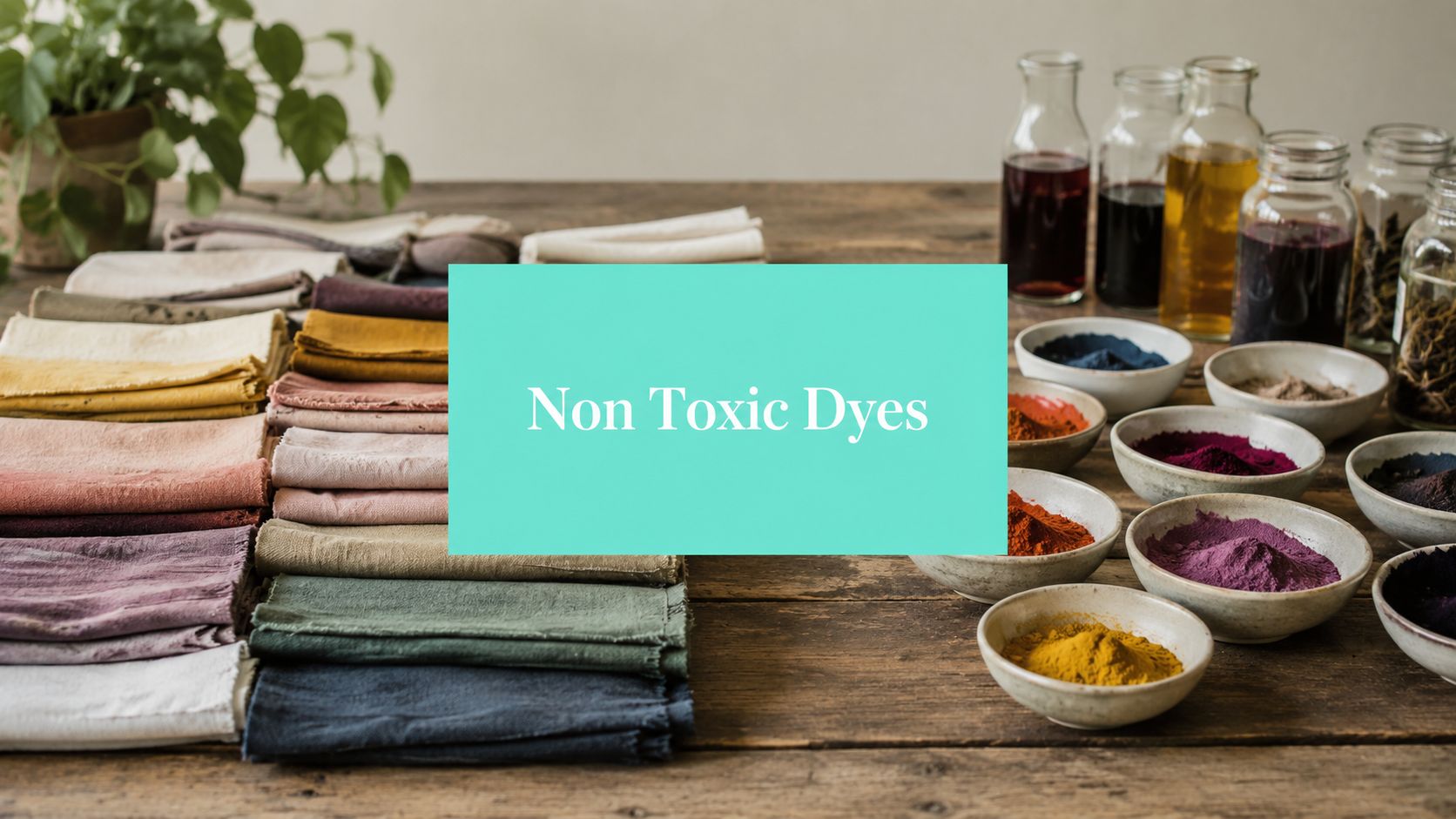
Non toxic fabric dyes matter because fabric dyeing and treatment account for roughly 20% of wastewater worldwide, and the fashion industry produces about 10% of annual global carbon emissions. For crafters, the safest practical definition is simple: non-toxic fabric dyes are dyes used on textiles that have been tested and certified free from harmful substances like heavy metals and certain carcinogenic colorants, with OEKO-TEX Standard 100 being one of the clearest safety markers to look for.
Often, the first question posed is incorrect. It concerns whether a dye is natural.
The better question is whether the finished fabric has been screened for the substances you want off a quilt, baby blanket, pillowcase, or garment. That's where good decisions start.
What Does Non Toxic Mean for Fabric Dyes
In quilting and sewing, non toxic fabric dyes doesn't mean "made from plants" or "marketed as eco-friendly." It means the dyed textile has been evaluated for harmful substances that matter in real use, especially when the fabric will sit against skin.
For safety-focused coloration, OEKO-TEX Standard 100 is widely used as a benchmark, and it screens for substances including azo colorants, formaldehyde, pentachlorophenol, cadmium, nickel, and lead according to this overview of earth-friendly dyes and OEKO-TEX screening. That matters more to most sewists than a romantic story about flowers in a dye pot.

What should you look for on a fabric listing
When I'm evaluating fabric for quilts, children's projects, or wearable sewing, I look for evidence in this order:
- Third-party testing: A recognized certification tells you someone checked the finished textile for restricted substances.
- Skin-contact suitability: A fabric used for apparel, baby items, pillow covers, or backing should be treated like a skin-contact material, not just a decorative surface.
- Clear vendor information: If a seller can't tell you how safety is documented, that's a warning sign.
Practical rule: A fabric can be beautifully dyed and still be the wrong choice if no one can tell you what was screened out of it.
Why the term natural can mislead buyers
Natural can describe the source of color. It doesn't automatically describe the safety of the whole process or the finished cloth.
That's especially important with azo dyes, because some azo colorants have faced regulatory restriction for serious safety reasons. If you want to understand how that looks in law rather than marketing, the EU azocolourant regulations are a useful reference point.
A practical takeaway for crafters is this: buy fabric the way you'd buy batting for a baby quilt or backing for a throw that's used every day. Start with what has been tested, not what sounds wholesome.
What does this mean at the cutting table
It changes how you shop.
Instead of asking, "Is this dye natural?" ask:
| Better question | Why it matters |
|---|---|
| Has the finished textile been certified? | Certification is the clearest consumer-facing safety check. |
| Is it intended for skin contact? | Quilts, blankets, and apparel all spend time against the body. |
| Will the color hold up in washing and light? | Safety and usability both matter in a finished project. |
Good fabric choices start with safety, but they don't stop there. A quilt should still wash well, wear well, and stay beautiful.
Are Natural Dyes Always the Safest Choice
No. That's the part many crafters need to hear plainly.
A lot of articles treat natural dyes as if they're automatically the safest route. In practice, the more useful distinction is certification, exposure route, and end-use, not whether the color came from a plant or a lab. As noted in this discussion of fibre-reactive low-impact dyes, low-impact or fiber-reactive dyes can be classified as non-toxic under OEKO-TEX-style standards, bond directly to fibers, and often use less rinse water than many natural-dye methods.
Where natural dyeing gets complicated
Natural dyeing can be lovely work. It can also be less simple than it looks on social media.
Many natural dyes need a mordant or fixative so the color will attach to the fabric and last. Once you add mordants, assistants, and after-treatments, the process stops being a simple plant-to-fabric story.
That doesn't make natural dyeing bad. It means you have to evaluate the whole dye system, not just the original source material.
If you're new to fabric selection and project planning, this beginner-friendly guide to quilting for beginners helps with the bigger decisions that affect results long before binding day.
What works better in real projects
For many everyday quilting uses, certified low-impact dyed fabric is the steadier choice because it balances safety, consistency, and predictable color.
Natural dye methods can be rewarding when you want:
- A one-of-a-kind look: Variation is part of the appeal.
- A slower process: Some makers enjoy the experimentation as much as the result.
- A studio practice: If dyeing itself is the hobby, the extra steps may be worth it.
Professionally dyed, certified fabrics usually work better when you want:
- Repeatable color: Helpful for quilt borders, backing, and coordinated gifts.
- Less guesswork: You're not troubleshooting mordants, runoff, or uneven uptake.
- Reliable care: Especially important for baby quilts, throws, and household sewing.
The question that matters most
Ask what the fabric will do in your life.
A wall hanging and a baby blanket don't have the same requirements. A decorative swatch can tolerate quirks that would be frustrating in a crib quilt or cuddle throw. That's why I don't treat "natural" as a final answer. I treat it as one piece of the process.
Which Fabrics Work Best with Non Toxic Dyes
Fiber content changes everything.
If you're dyeing cotton, linen, hemp, rayon, or wool, you have a much more realistic home-dye path. These fibers generally accept dye more willingly, and many dye systems were designed with them in mind.
If you're working with plush polyester fabrics, the conversation changes fast.

Why cotton behaves differently than minky
Cotton is usually forgiving. It absorbs water-based dye systems far more readily than polyester does.
Minky and many cuddle-style plush fabrics are typically polyester-based, and polyester doesn't behave like quilting cotton. It resists the kinds of dye methods most home sewists assume will work.
That catches people off guard when they want to custom-color a soft backing or baby gift.
For a good overview of how this fabric behaves before you ever think about dyeing it, read what cuddle minky fabric is and how it differs from standard quilting fabric.
Why home dyeing minky usually disappoints
The trouble isn't just color. It's process control.
Polyester usually needs specialized dye chemistry and higher heat than most crafters want to manage at home, especially around kitchen tools, family laundry equipment, or fabrics intended for babies. On top of that, plush pile can show unevenness, pressure marks, and texture changes more readily than flat woven cloth.
That means the project risk is doubled. You can end up with a color problem and a hand-feel problem.
Choose your fiber first, then choose your dye plan. A beautiful dye idea can still be the wrong choice for the fabric on your cutting table.
When professionally dyed fabric is the smarter move
The environmental side matters too. The fashion industry is responsible for about 10% of annual global carbon emissions, and roughly 20% of wastewater worldwide comes from fabric dyeing and treatment processes, according to this discussion of the ecological impact of naturally dyed clothing. For a home crafter, that supports a simple habit: choose fabrics that were dyed efficiently and responsibly instead of running repeated trial batches yourself.
For specialty fabrics such as Luxe Cuddle textures, that's often the best answer. If you want the softness of Hide, Snowy Owl, or Fawn without gambling on uneven home results, start with fabric that was already dyed well.
Don't forget! New OPN Quilting customers get 15% off their first order. Plus, enjoy Free Shipping on all U.S. orders over $70!
A quick fabric-by-fabric reality check
| Fabric type | DIY dyeing outlook | Practical note |
|---|---|---|
| Quilting cotton | Good | Best starting point for home experiments. |
| Linen | Good | Beautiful results, often with some natural variation. |
| Wool | Moderate | Lovely color, but needs careful handling. |
| Polyester minky | Poor for most home sewists | Harder chemistry, harder heat control, higher risk. |
| Plush cuddle textures | Poor for most home sewists | Color and texture both need protection. |
How Can I Ensure My Dyed Projects Are Baby Safe
Baby projects need stricter standards, not softer language.
If a fabric will touch a baby's skin, cheeks, hands, or mouth-adjacent area, the cleanest approach is to start with a fabric that has already been tested for restricted substances. That's not fear talking. It's just good material selection.

Why baby items deserve extra caution
The dye industry has a long safety history behind today's caution. Scientists observed increased bladder-cancer rates in dye-manufacturing workers as far back as 1895, and some restricted azo dyes remain a serious issue. A 2023 review notes that azo dyes account for 60 to 70% of all dyes used in cotton production, and certain azo dyes are restricted because they are considered carcinogenic and allergenic, as summarized in this review of sustainable natural dyes and dye safety history.
For baby quilts and nursery sewing, I wouldn't treat that as background trivia. I'd treat it as a reason to eliminate uncertainty where you can.
If you're setting up a nursery more broadly, this guide on how to select a non toxic crib mattress is a useful companion read because it approaches safety the same practical way: start with tested materials.
If you still want to dye fabric at home
Home dyeing for baby projects calls for extra discipline.
- Use dedicated tools: Keep dye pots, spoons, tubs, and measuring tools separate from food prep items.
- Work with ventilation: Airflow matters when you're mixing and rinsing.
- Rinse thoroughly: Leftover particles and residues don't belong in a baby quilt.
- Prewash after dyeing: A careful wash cycle helps remove anything loose before cutting and sewing.
- Reserve experimentation for adult projects: If you're trying a new process, don't make the first test piece a baby blanket.
For a practical discussion of comfort and use in baby sewing, this article on whether minky fabric is breathable for baby quilts helps frame fabric choice beyond dye alone.
A short visual can also help if you're planning a nursery gift project:
The safest shortcut
For most gift makers, the safest shortcut is also the least stressful one. Use finished fabrics that were professionally dyed, tested for skin-contact use, and proven to wash well.
That gives you more energy for the sewing itself, which is where the joy should be.
What Are Practical Alternatives to DIY Dyeing
DIY dyeing isn't the only way to get custom-looking fabric.
Sometimes the better move is to skip the dye pot and choose a method that protects both the fabric and your time. That's especially true when the project uses plush, pile, or specialty backing fabrics where mistakes are expensive.

Which alternatives are actually worth using
Some alternatives are decorative. Some are structural choices.
-
Start with professionally colored fabric
This is the most reliable alternative when you want a polished result. You get even color, known hand-feel, and less uncertainty about wash behavior. -
Use fabric paint for accents, not whole-yardage transformation
Paint can work for motifs, lettering, or art quilts. It doesn't replace a well-dyed base cloth for drape-heavy projects. -
Appliqué for color placement
If your goal is contrast or imagery, appliqué often gives a cleaner finish than trying to custom dye a full piece. -
Piece with prints and solids
A thoughtful fabric pull usually beats a risky dye experiment. This is particularly true in minky quilting, where texture already adds visual interest.
Why mill-dyed fabric tends to outperform home batches
Professional dyeing can be more efficient. Low-impact fabric dyes used in mills are designed for high efficiency, with some reaching an absorption rate of about 70% into the fabric, which reduces dye waste in water and lowers the need for extensive rinsing according to technical data on low-impact dye uptake.
For crafters, that translates into a simple truth. Professionally dyed fabric is often the cleaner, more predictable option, especially when compared with repeated home experiments that use extra water and still may not deliver stable color.
Buying pre-dyed fabric isn't "cheating." It's choosing the part of the process you want to master.
The best option for plush and minky projects
If your project is about softness, texture, and a dependable finish, pre-dyed specialty fabric is usually the right call.
That includes:
- Luxury quilt backs where consistent color matters.
- Baby blankets where softness and reliability matter.
- Gift sewing where you don't want surprises after the first wash.
- Home décor where consistent color across yardage matters.
If you're planning a sewn gift rather than a dye project, this tutorial on how to make a minky baby blanket is a better use of time than trying to force polyester plush through a home dye workflow.
Where professional finishing fits in
The same logic applies at the quilting stage. If you've chosen premium fabrics for safety, softness, and appearance, professional finishing protects that investment.
Mail-in Longarm services make sense for larger quilts, dense plush backings, or projects where you want the finish to match the quality of the materials.
Our Final Recommendation on Non Toxic Fabric Dyes
The best working definition of non toxic fabric dyes is not "natural" or "artisan." It's tested, certified, and appropriate for the way the finished textile will be used.
For cotton and other dye-friendly fibers, home dyeing can still be a satisfying craft. But for projects that need predictable color, reliable care, and confidence around skin contact, certified professionally dyed fabric is usually the better choice.
That matters even more with minky, cuddle, and other plush specialty fabrics. They aren't forgiving in the dye pot, and they don't reward guesswork.
What I'd tell a fellow quilter
If the project is meant for a baby, a gift, or a heavily used quilt, simplify the risk.
- Choose certified fabrics first
- Avoid treating natural as an automatic safety label
- Match the dye plan to the fiber
- Let professionals handle difficult coloration when the fabric is expensive or fussy
For care after sewing, this guide on how to wash mink blankets is worth bookmarking because dye safety and fabric longevity both depend on good maintenance.
Hundreds of verified reviews tell you something important about a fabric shop or finishing service. Consistency matters. In quilting, safe and beautiful usually comes from choosing dependable materials early, not fixing preventable problems late.
If you want the shortest version, it's this: when in doubt, buy certified dyed fabric instead of trying to make a specialty fabric become something it doesn't want to be.
If you'd rather skip the uncertainty and start with fabrics chosen for softness, performance, and dependable color, browse On Pins & Needles Quilting Co.. You can shop premium cuddle and minky options, explore specialty textures like Hide, Snowy Owl, and Fawn, use their Mail-in Longarm service for a polished finish, and take advantage of 15% off your first order plus free U.S. shipping over $70. Get 15% Off Your First Order