
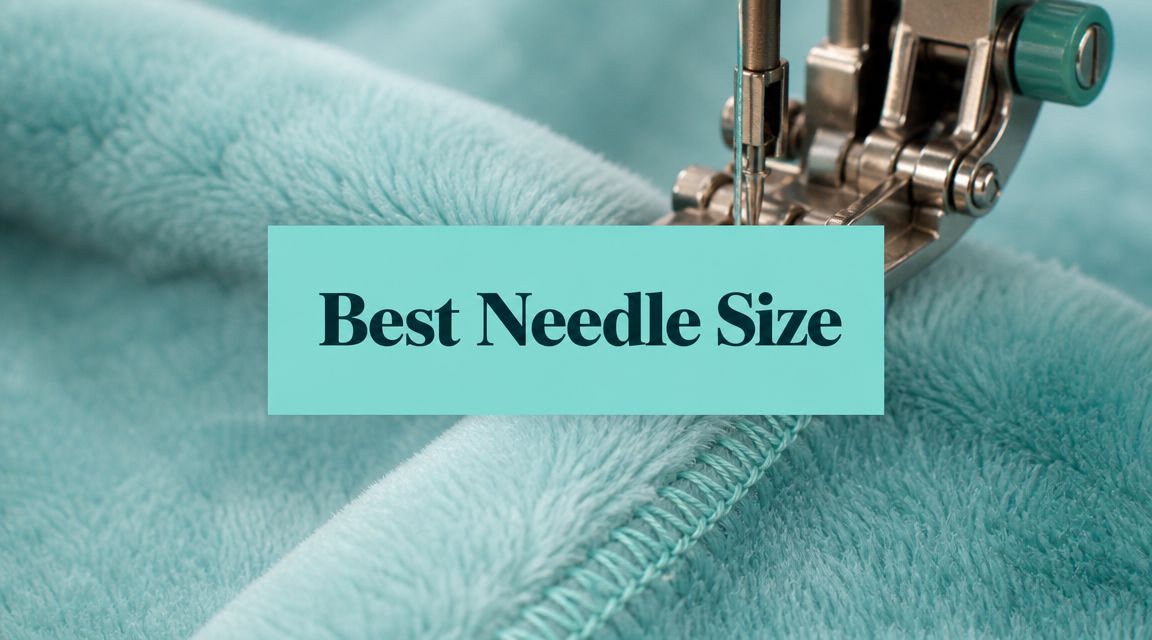
The best needle size for most Shannon Cuddle projects is a 90/14 Stretch needle. It helps prevent skipped stitches and protects the fabric's knit structure from damage, which is exactly why so many sewists struggle when they start with a universal needle instead.
If your machine has ever chewed up a beautiful piece of Cuddle, you already know this fabric plays by different rules. Shannon Cuddle looks soft and forgiving, but the wrong needle can leave holes, wavy seams, or maddening stitch gaps. At our shop, we see the same pattern again and again. Once the needle, thread, and machine setup are working together, Cuddle becomes much easier to sew cleanly. That's one reason quilters keep coming back to us and why our team has earned hundreds of verified reviews from makers who want real minky guidance, not guesses. If you need a primer on the fabric itself before choosing supplies, start with what Cuddle minky fabric is and how it behaves.
Introduction
You cut into a gorgeous piece of Shannon Cuddle, stitch the first seam, and your machine starts skipping, dragging, or bunching the backing. That usually means the fabric is being treated like quilting cotton, and Cuddle does not sew well that way.
For most projects, I start with a 90/14 Stretch needle. That is the baseline. Clean results, though, come from a full setup: the right needle, thread that feeds consistently, a stitch length that does not tunnel into the pile, and prep that keeps the layers from shifting before they ever reach the presser foot.
That is the part many sewists miss.
A good minky seam is rarely the result of one smart supply choice. It comes from a system. Once those parts are working together, Shannon Cuddle becomes far more predictable, whether you are making a baby quilt, a binding, or a plush backing. If you want a quick refresher on the fabric itself, start with how Cuddle minky fabric behaves and why it sews differently.
Why Does Your Needle Choice Matter So Much for Cuddle Fabric?
Shannon Cuddle isn't a woven quilting cotton. It's a plush knit fabric with pile, and that changes how the needle needs to enter the fabric.
A sharp universal needle tends to pierce more aggressively. On woven cotton, that's fine. On a knit-backed plush fabric, it can create friction, push fibers out of place, and contribute to skipped stitches or visible damage.
What goes wrong with the wrong needle
If you've fought Cuddle before, the symptoms are usually familiar:
- Skipped stitches happen when the needle doesn't form a reliable stitch through the knit structure.
- Tiny holes or stressed spots can show up when the tip is too sharp for the fabric.
- Wavy seams often get worse when the fabric is dragged or stretched during sewing.
- Needle deflection becomes more likely once the pile and backing start resisting the needle.
Consider the difference between pushing a sharp pin through a sweater and sliding a rounded tool between loops. Cuddle responds better when the needle parts fibers rather than attacks them.
Why stretch and ballpoint styles work better
A Stretch or Ballpoint needle has a more fabric-friendly point for knits. Instead of punching through the structure the way a sharp universal can, it's designed to move between fibers more cleanly.
That's why this choice matters so much before you even touch your tension dial. If the point geometry is wrong, the rest of your setup has to work harder to compensate, and often it still won't sew well.
Here's the practical takeaway we use in the studio:
- Use Stretch first if your machine has been skipping stitches on Cuddle.
- Use Ballpoint as a backup if that's what you have on hand and your project is straightforward.
- Avoid assuming cotton rules apply just because the project looks simple.
Practical rule: When a plush knit fabric misbehaves, change the needle before changing everything else.
What Is the Best Needle Size and Type for Shannon Cuddle?
A 90/14 Stretch needle is the starting point I trust for Shannon Cuddle. It handles the knit backing cleanly, forms more reliable stitches through the pile, and gives you the widest margin for error on a home machine. Shannon Fabrics recommends that same setup in Shannon Fabrics' Cuddle sewing tutorial, and it lines up with what works at the machine when Cuddle is under the presser foot.
The key is to treat the needle as part of a system, not a one-piece fix. Needle size has to match the fabric thickness, the thread, and the amount of bulk in the seam. A good needle with thread that is too heavy, or a perfect needle trying to punch through four plush layers, can still give you messy results.
Needle Comparison for Sewing Shannon Cuddle Fabric
| Needle Type | Best For | Why It Works (or Doesn't) | Recommended Size |
|---|---|---|---|
| Universal | Basic woven fabrics, not ideal for Cuddle | Sharp point can irritate the knit backing and lead to more skipped stitches or rougher seams. | Not my first choice |
| Ballpoint | Simple Cuddle sewing when Stretch isn't available | Gentler on knit fibers and often workable for light, uncomplicated projects. | 90/14 |
| Stretch | Most Shannon Cuddle projects | Built to handle knit structure more reliably, especially when stitch formation is inconsistent. | 90/14 |
| Stretch, heavier size | Very thick layered minky assemblies | Helps once pile, batting, topstitching, or multiple seam allowances create real bulk. | 100/16 for extra-thick use |
When 90/14 is the right answer
Use a 90/14 Stretch for most Shannon Cuddle sewing:
- Baby blankets
- Quilt backs
- Pillow covers
- Scarves
- Simple plush gifts
- Standard Luxe Cuddle seams without heavy layering
This is the needle I would install first, test first, and keep in the machine unless the project gives me a clear reason to change.
If you want cleaner results, match that needle to the thread instead of choosing each one separately. This thread weight chart for matching thread to fabric and needle choice is a useful reference once you start sewing thicker Luxe Cuddle textures or switching between construction seams and topstitching.
When to move up to 100/16
A 100/16 Stretch needle earns its place when the project gets bulky. That usually means multiple Cuddle layers, a thick binding area, dense seam intersections, or a plush texture that resists feeding.
Going bigger too soon is a mistake. A heavier needle can punch a larger hole than you need and make the seam feel less refined on lighter projects. I only move up when the 90/14 is deflecting, struggling to penetrate cleanly, or producing inconsistent stitches through bulk.
What usually causes trouble
A universal needle may sew a short test seam and still disappoint in the actual project. Cuddle has a way of exposing small setup problems once you hit curves, corners, or layered spots. If the seam looks uneven, the machine sounds labored, or stitch quality changes halfway through, reassess the needle before blaming the fabric.
That one choice affects everything that follows. Get the needle right first, then the rest of your Cuddle setup starts working with you instead of against you.
How Should I Set Up My Sewing Machine for Cuddle Fabric?
You can have the right needle installed and still end up with wavy seams, shifting layers, or stitches that disappear into the pile. Cuddle behaves best when the whole machine is set up as a system. Needle, thread, presser foot, stitch length, and fabric prep all need to agree with each other.
A good starting setup is the one Shannon recommends for Cuddle sewing: a 90/14 stretch needle, a walking foot, a slightly longer stitch length, and tension that is not overly tight, as outlined in Shannon's Cuddle 101 recommendations. In practice, I usually start around 3.0 to 3.5 mm and adjust only if the seam still looks compact or the layers are creeping.

Which settings matter most
The settings that solve the biggest Cuddle problems are usually simple:
- Needle. Start with a 90/14 Stretch.
- Stitch length. Set it to 3.0 to 3.5 mm so the stitches stay visible and the seam is not packed too tightly into the plush.
- Walking foot. Use one if your machine allows it. It helps the top and bottom layers feed at the same rate.
- Tension. Back off slightly if the seam is tunneling, drawing up, or looking strained.
The walking foot makes a bigger difference than many sewists expect. Cuddle has drag, and the nap creates resistance. Without even feeding, the top layer can arrive at the end of the seam longer than the bottom one.
What about thread
Thread choice is part of the machine setup, not a separate decision. For Quilting Cuddle, Shannon Fabrics recommends a 90/14 stretch needle paired with polyester thread in 40 or 50 wt. plus a woven fusible stabilizer such as Pellon SF101 in Shannon's Quilting Cuddle tip sheet. That combination works well because polyester thread has a little give, holds up to handling, and plays nicely with a knit plush backing.
If the fabric is still shifting, the problem is often handling more than tension. I get better results by reducing bulk at the seam allowance, clipping generously on curves, and using techniques for sewing minky fabric without it sliding.
New to minky supplies or planning a bigger fabric order? OPN Quilting offers a 15% first-order coupon, and U.S. orders over $70 qualify for free shipping. If you're shopping by texture, browse the collection section on the site.
Do Different Luxe Cuddle Textures Need Different Needles?
Sometimes, yes. The texture itself is only part of the story. What really changes needle choice is how much pile, loft, and seam bulk you are asking the machine to punch through in one pass.
A 90/14 stretch needle is still the starting point for most Shannon Cuddle sewing. I stay there for the majority of blankets, quilt backs, and simple seams because a smaller needle often leaves a cleaner stitch path in plush fabric. Going bigger too soon can create a more visible hole, especially on flatter or medium-pile textures.
The decision changes once the fabric stack gets tall. High-pile Luxe Cuddle can behave very differently from smoother textures, even if both are technically minky. Dense nap adds drag. Thick seam allowances push the needle off course. That is when skipped stitches, deflection, or a thudding sound at the needle plate usually start showing up.
When to stay with 90/14
Keep the 90/14 if the seam is sewing cleanly and the layers are reasonable:
- standard Cuddle or lower-pile Luxe Cuddle
- two-layer blanket seams
- simple garment or nursery accessories
- projects where stitch appearance matters more than punching power
That last point matters. A heavier needle is not an upgrade by default. It is a problem-solver for bulk.
When 100/16 makes sense
Move to a 100/16 when the machine needs more penetration strength than finesse:
- multiple layers of high-pile Luxe Cuddle
- thick seam intersections
- boxed corners, bags, and other structural projects
- lofty textures where the needle starts bending or missing stitches
I see this most often with heavily textured fabrics such as Hide, embossed styles, and other plush surfaces with a lot of loft. For soft nursery makes, textured minky fabrics for baby blankets are beautiful, but they often need a little more planning at the machine than flatter Cuddle.
Here is the system I use. I do not change the needle based on the fabric name alone. I change it when the texture affects the seam stack, and then I check the whole setup with it: polyester thread, feeding, presser foot choice, and whether the seam allowance needs trimming before I sew across it.
Choose the needle for the seam you are sewing, not just the texture you are holding.
How Do I Prep Cuddle Fabric for Different Projects?
A lot of Cuddle frustration starts before the first stitch. The fabric is soft, stretchy, and a little bulky, so prep has to match the project. A quilt back, a scarf, and a pillow do not ask the machine to do the same job.

I treat prep as part of the sewing system, not a separate chore. The needle only performs well if the fabric is cut accurately, the nap is planned, the bulk is controlled, and the project itself is realistic for your machine.
Quilts and quilt backs
Large Cuddle projects punish rushed prep. If a quilt back is off grain, poorly squared, or pieced with too many unnecessary seams, that shows up later when you baste, quilt, or bind it.
For quilt backs, I recommend a few habits:
- Square the fabric before cutting so the backing does not twist as you sew or load it.
- Check nap direction first and keep it consistent across the whole back.
- Use stabilizer only where the project needs support, especially in pieced areas or spots that will be quilted heavily.
- Trim seam bulk early if several layers will meet in one area.
- Choose the widest backing you can to reduce seam management on a plush fabric.
As noted earlier, Shannon's official quilting guidance pairs Cuddle with a 90/14 stretch needle, polyester thread, and woven fusible stabilizer for quilt-related work. That combination works because each part supports the others. The needle handles the knit base, the polyester thread has the right give, and stabilizer helps where the fabric would otherwise shift.
Smaller projects and first-time Cuddle sewing
If you are new to minky, start with a project that lets you practice feeding and seam control without a lot of bulk. That usually means simple shapes and short seams.
Good choices include:
- Infinity scarves
- Simple pillows
- Baby blankets with straight seams
- Small gifts with gentle curves or minimal corners
A quick win builds skill fast. You learn how the nap behaves, how much lint to expect, and whether your machine prefers clips, pins, or a walking foot before you commit to something larger.
A quick visual walkthrough can also help before your first cut:
Projects with bulk, corners, or structure
Bags, boxed corners, floor cushions, and heavily textured Luxe Cuddle projects need different prep than a flat blanket. The challenge is not just softness. It is seam buildup.
For those projects, reduce surprises before you sew:
- Make a test seam with the exact layers
- Mark corners clearly so you are not guessing through the pile
- Grade or trim seam allowances where bulk stacks up
- Use clips instead of overpinning thick layers
- Keep pattern pieces simple and accurate
In this context, preparation saves needles, thread, and patience. If the seam stack is thick, prep the seam like it matters, because it does.
When you'd rather not quilt the minky yourself
Some sewists love piecing and still dislike quilting a large Cuddle-backed project on a domestic machine. That is a practical call, not a shortcut.
If your top is finished and the quilting stage is the part you do not want to handle, Mail-in Longarm Quilting Service is one way to avoid forcing a bulky plush quilt through a small throat space. It also helps to decide that early, because backing prep, seam placement, and overall project size can be planned with longarm quilting in mind from the start.
What Are Common Problems When Sewing Cuddle and How Do I Fix Them?
Most Cuddle problems look dramatic, but the fix is usually simple once you identify the root cause.

Why are my seams wavy
Usually, the fabric stretched while you sewed it. Cuddle shouldn't be pulled through the machine.
Try this:
- Use a walking foot so both layers feed together.
- Support the fabric's weight instead of letting it drag off the table.
- Don't push or pull from the front or back of the machine.
Why is my machine skipping stitches
This is the classic wrong-needle symptom. If you're using a universal needle, change it first.
The fastest correction is usually:
- Install a 90/14 Stretch needle.
- Rethread the machine.
- Test on a scrap with the same layers as the project.
If stitches skip on Cuddle, I suspect the needle before I blame the machine.
What do I do about fluff everywhere
Cuddle sheds cut fibers. That isn't a defect. It's part of working with plush fabric.
A few practical habits help:
- Shake out cut pieces outside or over a hard floor
- Use a lint roller on the cut edges
- Run pieces through a low dryer cycle carefully if that suits your workflow
- Clean the bobbin area after sewing
Small maintenance matters more with minky than with cotton because loose fibers build up fast.
Can I Use a Serger with Shannon Cuddle Fabric?
Yes, and for some projects it's an excellent tool. Sergers can give Cuddle a clean, durable edge finish that works especially well for blankets, apparel, and quick gift sewing.
The two things that matter most are needle choice and differential feed. Use the serger needle system your machine requires, but keep the same logic you'd use on a sewing machine. Knit-friendly needles are the safer choice for plush fabric.
Differential feed is what keeps the seam from stretching out while the machine works. If your serger tends to ripple knit fabrics, increase the differential feed until the seam lies flatter.
For quilts that are already pieced and just need finishing help, longarm quilting for minky backed quilts covers the next stage of handling plush backings without distortion.
A serger won't replace good prep. It just gives you another clean way to finish edges once your fabric is under control.
Start Your Perfect Cuddle Project Today
A good Cuddle project usually starts the same way. You cut into that plush fabric, sew a test seam, and within a few inches you know whether your setup is working or fighting you.
For Shannon Cuddle, the most reliable starting point is a 90/14 Stretch needle. Use it as part of a full setup: polyester thread, a walking foot, a slightly longer stitch length, and careful prep before the first seam. That combination solves far more problems than changing the needle alone.
That is the part many sewists miss. Beautiful minky sewing comes from a system, not a single supply choice. Once that system is in place, plush textures such as Hide, Snowy Owl, and Fawn become much more predictable to handle, even though each one feeds a little differently under the presser foot.
If you are gathering materials, it helps to choose fabric with the project in mind, whether you need a silky luxe texture, extra-wide backing, or a simple starter project to practice your settings before cutting into a larger piece. On Pins & Needles Quilting Co. also offers free U.S. shipping on orders over $70, and first-time shoppers can get 15% off.
Ready to sew Cuddle with fewer skipped stitches and less shifting? Shop the curated Shannon Cuddle selection and get 15% off your first order.