
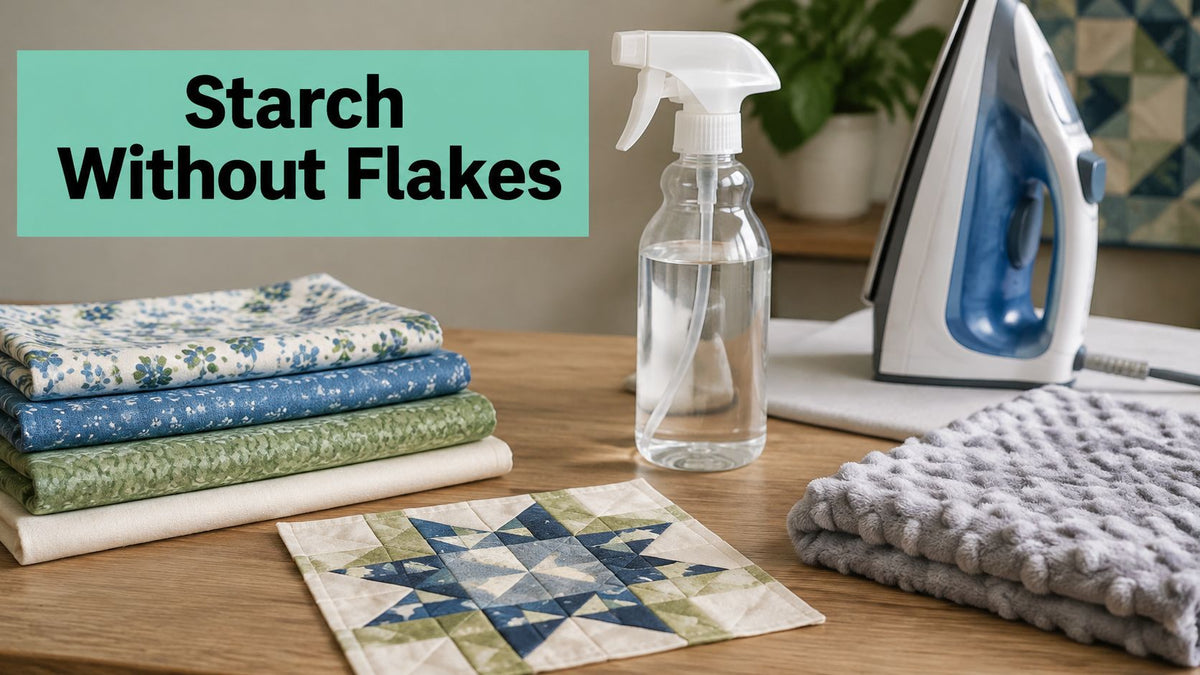
Spray starch for quilting is a light, temporary film that helps quilting cotton stay square for cutting and piecing, not a soak you put on every layer of the sandwich. Minky and Shannon Cuddle should not be starched, because pile and coatings do not take a sizing film the way woven cotton does. We starch only the cotton piecing and leave the plush backing soft and untouched.
A common tip online is to drench the whole sandwich and trust a later rinse. We push back on that at the longarm bench. Cotton piecing can take a sheer coat, a plush back cannot, and a splash of water does not guarantee the film left the seams.
It works like wash-away hair spray for a haircut. It holds the shape until the next real wash, then it should be gone. Treat any leftover film as a storage decision, since an unwashed quilt keeps that residue in the fibers until you choose to wash.
Which Spray Starch Fits Cotton Piecing
A light household spray is temporary sizing for woven quilting cotton. It is not a finish for the quilt sandwich, the batting, or the back. If the cotton row of your project is floppy on the bias, a sheer film can steady it. If the back is minky, Shannon Cuddle, or Luxe Cuddle, skip the can.
The closest everyday picture is hairspray on a cut that only has to last until shampoo. You want hold for cutting and seams, not a shell that cracks. Several light coats beat one soaking. Dark cotton shows white droplets first, so a heavy pass is the mistake we see most often on black prints.
Our mail-in longarm loads more smoothly when the cotton top arrives pressed and stable, with threads clipped and the plush left soft. If you are still deciding how the layers will sit before they ship, the notes on 505 basting spray cover a different job: holding layers, not stiffening yardage.
| Product | Best job | How it behaves | Main watch-out |
|---|---|---|---|
| Aerosol spray starch | Everyday cotton piecing | Light temporary film from about 6-10 inches | Propellant is flammable; keep cans under 120°F (49°C) and away from flame |
| Pump spray starch | Indoor cotton pressing without propellant | Same film with easier mist control | A clogged nozzle can spit visible droplets |
| Liquid starch | Extra-crisp cotton blocks | Stronger body and more stiffness | Higher chance of flakes and white marks |
| Sizing | Light body with a softer hand | Less crisp than starch | Weaker hold on bias edges |
| Homemade cornstarch mix | Budget cotton yardage | Cooked mix, recipe in the homemade section | Dries white on dark fabric; do not store it in a quilt |
| No starch | Minky, Shannon Cuddle, Luxe Cuddle, laminates | Leaves pile and coatings alone | Starch mats plush and can leave a film |
How to read the cotton row
Aerosol is the everyday choice when you want a fine mist and you can spray away from flame. Pump starch is the indoor stand-in when a flammable propellant is unwelcome, though a clogged tip can spit spots. Liquid starch buys extra crispness and also raises the flake risk. Sizing is the softer hand when a sharp crease matters less than drape.
A cooked cornstarch mix is a budget option for cotton yardage only. No product on this list belongs on minky, Shannon Cuddle, Luxe Cuddle, laminates, or napped plush. The film that makes the cotton row work is temporary body between the fibers, and that is the part worth getting right before you cut.
How Do You Spray and Press Cotton Yardage?
Spray starch works when the cotton is still flat yardage, not after it becomes blocks. The mist leaves a light temporary film around the fibers. That film steadies the weave so the ruler and rotary cutter meet cloth that holds still, which is the accuracy gain described by Fabric Company.
The idea reaches back to mill sizing. A 1977 Canadian assessment put textiles third among industrial starch outlets, after paper-related uses, and estimated textile starch sales in Canada at approximately 275 million pounds in 1972, with typical warp-sizing pastes at about 9% starch product by weight, as recorded in the government starch assessment. Mills sized yarn so it would survive the loom. We borrow a small amount of that body so cotton patchwork stays flat while we cut and piece.
Household spray goes on finished cloth, so heat and moisture can change color or hand on a specialty cotton. Test first. Treat leftover starch as a storage decision too, since a quick rinse does not always clear seams and folds.
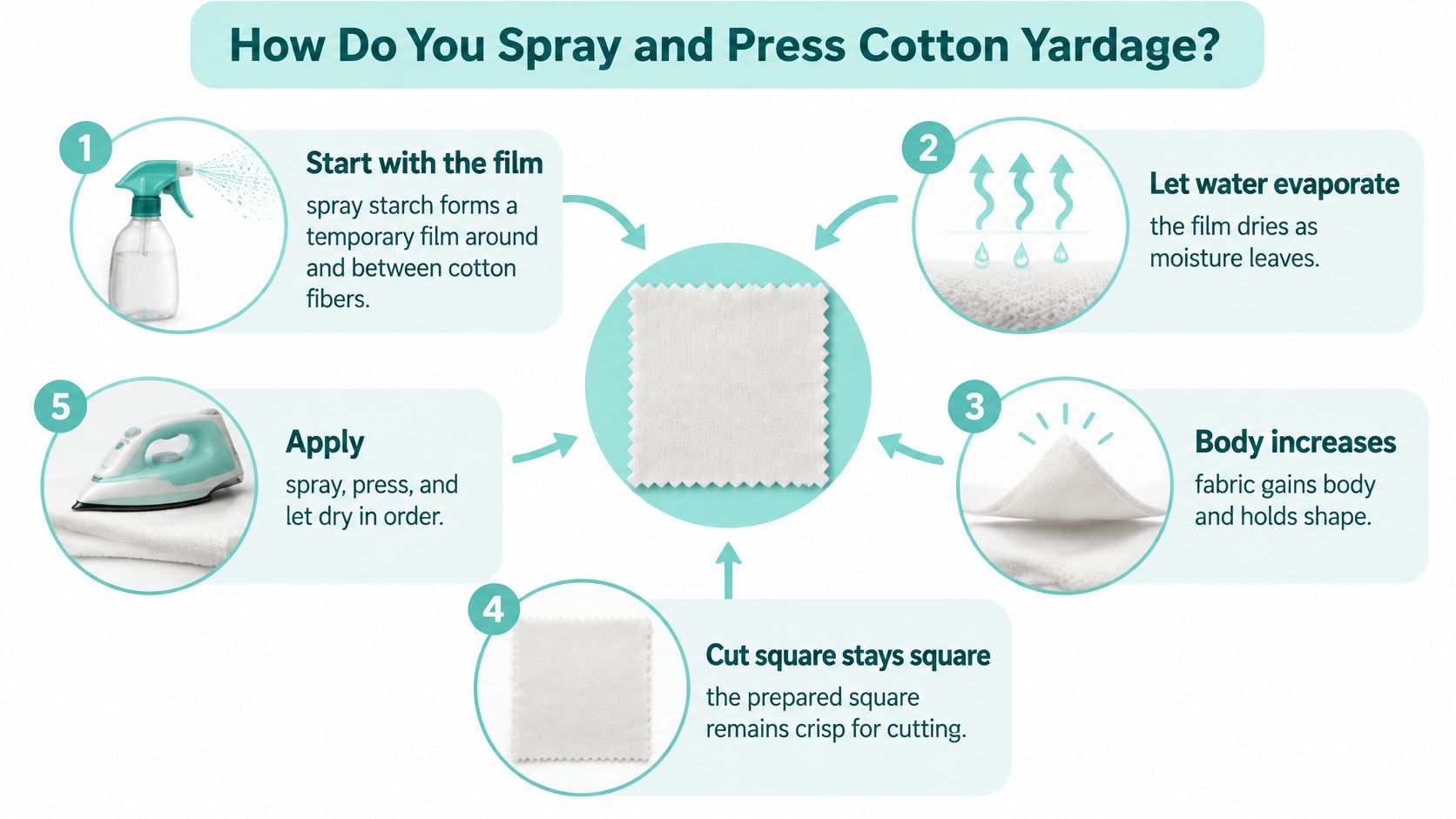
Starch the cotton piecing only. Never spray the plush backing, since the same film that crisps cotton mats pile and leaves a coating that pressing cannot fix. Cut backing later, after the pressed top measures true.
Press all the cottons in the quilt, not only the background. Two prints from the same shelf can shrink at different rates under heat. When one piece is stiff and the neighbor stays soft, seams pull and points miss.
Press the cotton, then stop
- Test a scrap from the same dye lot. A 6-inch square shows scorch and spotting before three yards do.
- Shake, then mist the reverse. Hold the can 6 to 10 inches away until the cloth feels damp, not dripping.
- Let it absorb. Pressing a puddle bakes droplets into white specks.
- Press from the face. Use a dry iron on a medium cotton setting. Set the iron down and lift straight up, since sliding walks bias edges out of square.
- Add a second sheer coat only if the first still feels floppy. Stop when the cloth has body. More coats add flakes, not accuracy.
- Cut and piece while the body holds. That short window is the whole reason for the film.
- Clip stray threads before a top comes to the longarm. Loose threads catch under the needle and shadow through light fabric.
Saturation causes tack, brittle flakes, white deposits, and soleplate buildup. A pressing cloth keeps the soleplate cleaner and shields dark prints from direct heat. If the iron already drags, read the shop notes on choosing an iron for sewing before blaming the cotton.
Keep the can away from heat
Aerosol starch is a quilting tool and a chemical can. The starch contents are nonflammable while the propellant is highly flammable, so keep cans away from open flame and do not expose them above 120°F (49°C), per the Faultless spray starch safety data sheet.pdf). The same sheet advises against breathing vapor, mist, or spray and against unnecessary exposure.
Spray where air moves. Do not fog a closed sewing room. Do not set the can on a heater, near the iron, or in a hot car.
First orders at the shop take 15% off, and U.S. shipping is free over $70. If you are pairing a pressed cotton top with a soft back, start at On Pins & Needles before the layers are cut.
Starch on cotton is a temporary finish. It generally softens or washes out in a full laundry cycle, so do not count on it for the permanent hand of the quilt. Plan that wash on purpose.
Residue Flakes and Unwashed Quilt Storage
Heavy spray in one pass leaves white dust. The droplets dry pale on dark cotton, and they sit up on finishes that resist moisture. We keep coats sheer, misted on the back and pressed from the face, so spotting stays temporary and the plate stays cleaner.
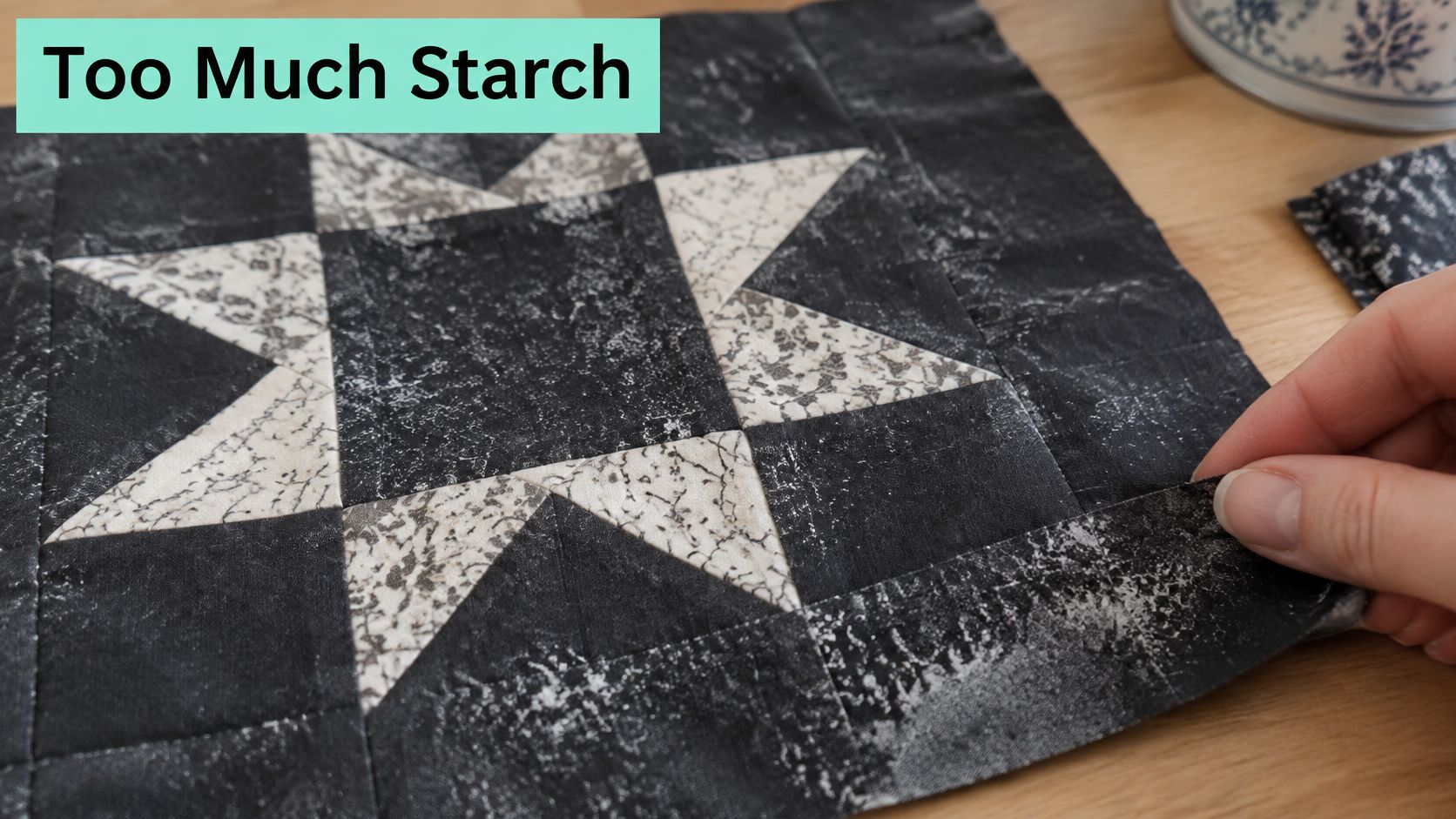
When flakes appear, stop adding starch. Let the iron cool, wipe the soleplate, then wash the test piece before you judge the fabric. A cool iron and a wiped plate protect more soles than scraping a hot surface ever will.
If buildup keeps returning, residue is baking on instead of pressing out. Our rule is to clean the tool before changing the cotton, and an iron soleplate cleaner is the maintenance step that restores glide without another coat of starch.
Water-soluble is not the same as gone
Water-soluble means the film can wash out, not that a quick rinse pulled it from the seams. Starch hides in the ditch, around dense stitching, and under pressed allowances. That leftover film works like light grit under the needle, so it can drag, skip, or leave a visible skin on the finished top.
We treat leftover starch as a storage decision. Corn-based starch and fragrance can attract pests, so launder the quilt before long-term storage when the care label allows. Store only clean, fully dry cotton, never damp or scented yardage sealed in plastic.
| Quilt use | What to do | Why it matters |
|---|---|---|
| Used, care label allows washing | Launder to clear starch | Starch softens and washes out |
| Displayed, cannot be washed | Use the least starch that still pieces; skip scented products | Film can dust, spot, or stiffen over time |
| Stored unwashed | Wash first; store only clean, fully dry cotton | Corn starch and fragrance can attract silverfish and rodents |
Use, display, or archive
A quilt headed for the bed gets a full wash when the label allows, and that wash clears the piecing starch. A wall piece that cannot be washed gets the lightest starch that still permits accurate cutting. Skip fragrance-heavy sprays there, since dust and stiffness show fast under display light.
An archived quilt needs the same clean start. Wash first when the label allows, dry it completely, then fold it into breathable storage. Starch only the cotton piecing, never the plush backing, and a washed cotton top stores with less risk than a starched, unwashed bundle.
The short version is on screen here if you want the motion of a lift-and-press, not a slide.
Why Minky and Shannon Cuddle Stay Unstarched
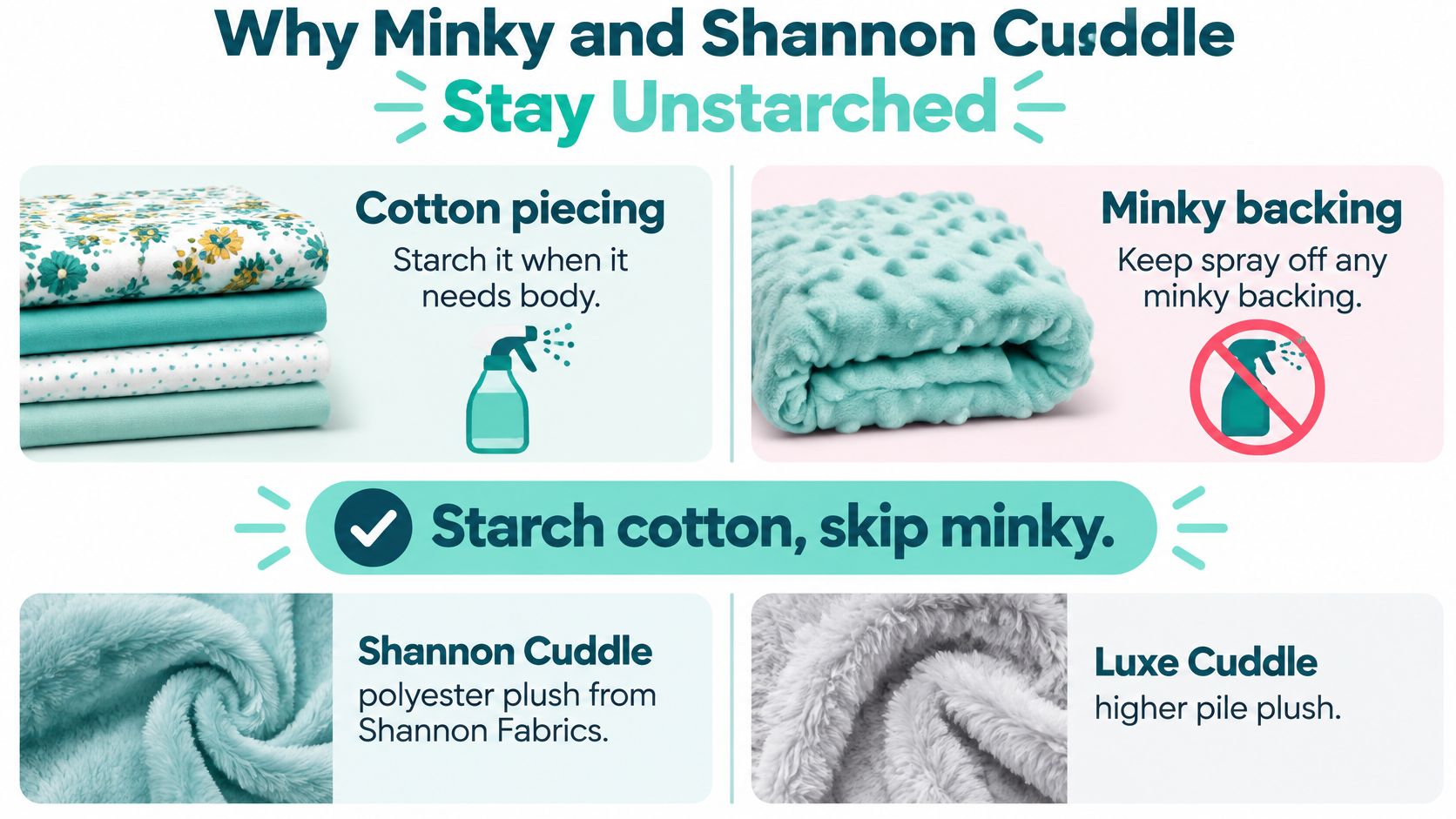
Starch the cotton piecing when it needs body. Keep spray off any minky backing. That split is the rule we use when a top and a plush back arrive in the same box.
Shannon Cuddle is Shannon Fabrics polyester plush. Luxe Cuddle is the higher pile. Textures such as Hide, Snowy Owl, and Fawn have a nap that a starch film can mat, spot, or stiffen. Heat plus moisture press them differently from woven cotton. Wide goods, including extra-wide backs that remove bulky seams, are chosen for softness, not for a crisp crease.
| Fabric | Starch | What goes wrong | Instead |
|---|---|---|---|
| Quilting cotton | Yes, light coats before cutting | Over-wetting flakes and spots | Mist the back, press from the face |
| Batik | Test a scrap | Dense dye can take uneven spots | Light reverse-side coats only |
| Dark prints | Caution | Dried droplets look like white dust | Several sheer coats, not one heavy spray |
| Flannel | Light test only | Nap can stiffen | Stop if the hand turns boardy |
| Minky, Shannon Cuddle, Luxe Cuddle | No | Film mats pile and can leave shiny residue | Low heat from the reverse, pressing cloth, no spray |
| Laminated or coated fabric | No | Heat and water can damage the coating | Cut and clip; do not starch |
Guidance aimed at specialty cloth reports shiny or opaque white residue, tackiness, or too much stiffness, and it ties leftover buildup to needle drag when the film is never washed out, which is the fabric-by-fabric caution from PYB Designs. Cotton can be in the yes column. Plush and laminates stay in the no column. A minky-focused quilter is not looking at the same surface as a quilter pressing Kona.
One scrap protocol before you commit
If you are unsure about a cotton, a batik, or a flannel, run one test and then stop.
- Hidden scrap: Use a piece from the same cut, not a leftover from another line.
- Dry fully: Judge the hand after the water is gone, not while it is still cool and damp.
- Press with a cloth: Keep the iron off the sprayed face.
- Angled light: White film and shine show up when you tip the cloth.
- Sew a seam: If the needle drags or the seam boards up, that is your answer.
- Launder the sample: Check the hand after a real wash before you treat yardage.
If the scrap shines, flakes, or feels boardy, skip the product. For plush, finger-press seams or use low heat from the reverse with a cloth and no spray. Steam is not a substitute starch, and it can still flatten a nap if you linger.
Our shop cuts Shannon Cuddle and Luxe Cuddle in Hide, Snowy Owl, and Fawn. Shoppers can browse the textures at On Pins & Needles, where hundreds of verified reviews sit behind the minky yardage and the mail-in longarm work. If you want the plain-language version of how this plush differs from quilting cotton, what Cuddle minky fabric is is the page we point customers to before they starch a back by habit.
Practical rule: Starch cotton when the pieces skew. Never starch the plush backing, even a small test in the middle of a queen back.
Can You Make Homemade Cornstarch Spray?
Homemade spray belongs on cotton piecing only. It works like a thin cooked film that stiffens plain weave for cutting, and it never belongs on plush backing. We treat any leftover mixture as a storage decision, since a sugary film kept inside a stored quilt invites trouble.
Mix 1.5 tablespoons of cornstarch with 2 cups of cold water. Heat in one-minute bursts, stirring each time, until the liquid turns somewhat translucent and holds suspension longer, which is the cook described by Quilting Chemistry. Cool the batch, strain out lumps, and pour it into a clean spray bottle. Label the bottle with contents and date, refrigerate leftovers only briefly, and discard anything that smells off.
Why the cook has to finish
Cold cornstarch settles fast, so one pass sprays mostly water and the next pass sprays paste. Short heats keep more starch suspended in the liquid. Stop heating when the milkiness fades. A glue-thick batch sits on cotton and spots dark fabric.
Mist the cotton in several light, even passes until it feels damp but not dripping. Let it rest about 30 to 60 minutes, then press from the reverse with a pressing cloth or old sheet. Give every cotton in the top the same light treatment, because uneven shrinking pulls seams out of line. Saturation is what leaves flakes and white spots, so several thin coats beat one soak.
When to abandon the jar
Homemade spray costs little and skips aerosol propellant. It still spots dark fabric more readily, and it adds food-based residue a stored quilt must carry. Sizing gives a little body with less crackle when full starch feels too stiff. Commercial starch from a quilt shop can reduce white residue, although it still needs the same scrap test on dark cloth.
Grainline care and pinning still do the stabilizing work. When softness matters more than crisp patches, choose unstarched plush yardage for the back rather than a milder spray. Ready cuts and extra-wide Shannon options at On Pins & Needles let a queen or king back skip bulky seams. Use homemade spray as an optional cotton technique, not a requirement for a finished quilt.
Send a Stable Top to the Longarm
Starch cotton yardage lightly if the pieces are skewing. Wash the finished cotton quilt when the care label allows. Never starch minky, Shannon Cuddle, or Luxe Cuddle backs. That is the decision you can make today, before the top is rolled for shipping.
For mail-in edge-to-edge quilting, the basics we already use are simple. Backing should be at least 4 inches longer and wider than the top. If you send batting, make it at least 3 inches longer and wider. Seams should be pressed, threads clipped, and pins or basting left out, because the three layers load separately. Embellishments and thick spots should stay off the top. That prep, not a heavy can, is what lets a longarm reach the edge. The checklist lives in our quilt prep tips.
Book mail-in longarm service at On Pins & Needles, and choose a plush back such as Hide, Snowy Owl, or Fawn from the same shop if you want softness without starching the pile. Get 15% Off Your First Order. Free U.S. shipping kicks in over $70. Treat spray starch for quilting as the optional cotton step, not the method for the whole quilt.
On Pins & Needles Quilting Co. finishes mail-in tops and cuts Shannon Cuddle and Luxe Cuddle, including Hide, Snowy Owl, and Fawn, for quilters who want a soft back without a starch film on the pile. Bring us a pressed cotton top and an unstarched plush back, and we will load the layers for edge-to-edge quilting. Visit On Pins & Needles Quilting Co. to book the longarm or to choose the backing before you press.