
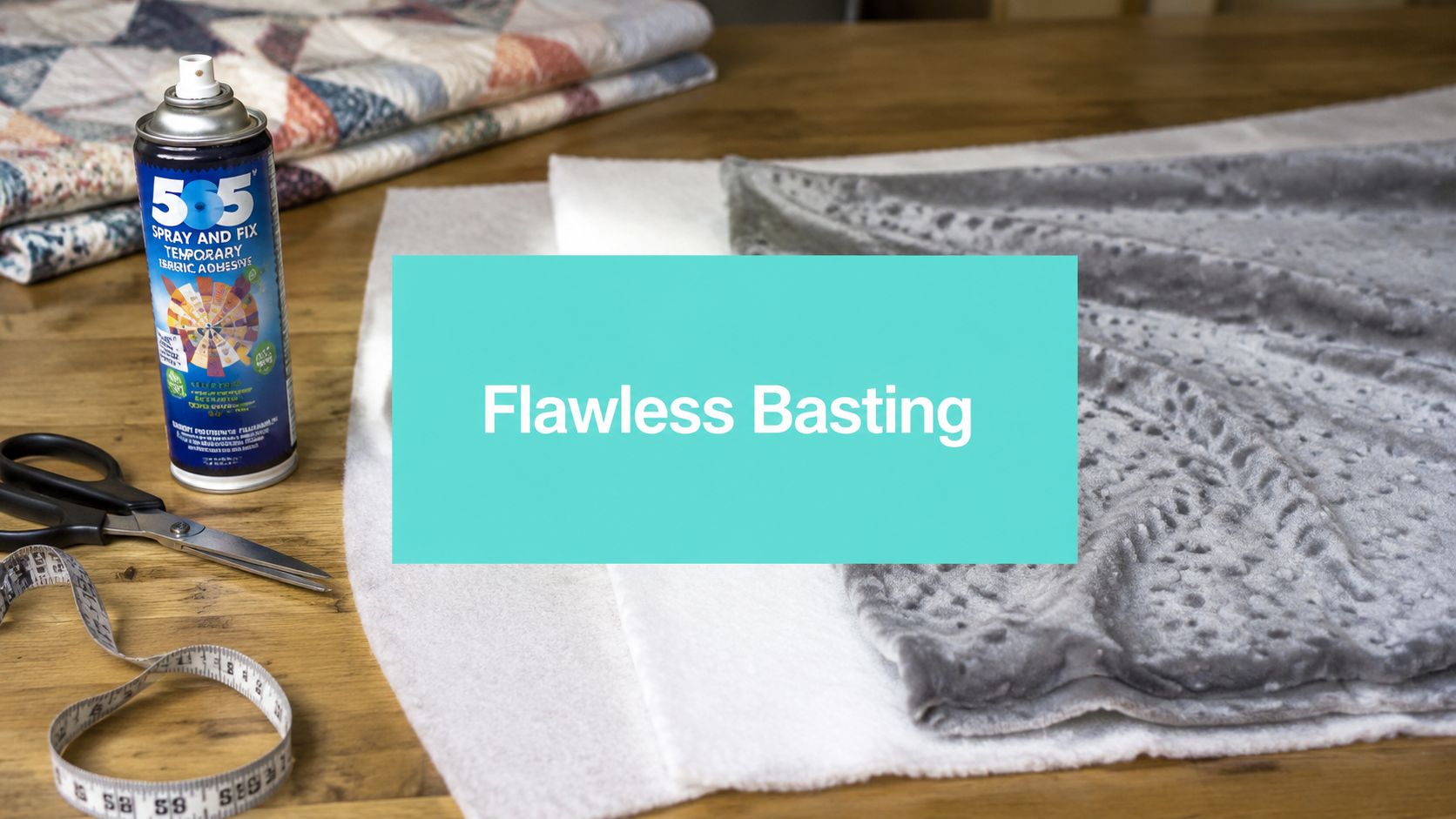
505 Basting Spray is used by layering your quilt sandwich on a flat surface, applying a light, even mist to the batting, and smoothing each fabric layer in place to eliminate wrinkles and the need for pins. A single 13-ounce can has been demonstrated to cover about 26,765 total square inches, which is enough for roughly 22 baby quilts, 14 crib quilts, 8 throws, 4 twins, or 2 queen-size quilts when used carefully.
If you're standing over a quilt top right now wondering whether spray basting is worth it, the short answer is yes. For slippery backs, plush textures, and any project headed to a longarm, good basting is often the difference between a quilt that glides through the machine and one that fights you the whole way.
505 Basting Spray has earned its place because it solves a very specific quilting problem. It holds layers evenly without the poke, drag, and distortion that come with dense pinning. That matters even more when you're working with soft fabric that shifts easily, like Shannon Cuddle or a lofty batting that wants to creep.
URL slug: opnquilting.com/blog/505-basting-spray
Why Do Quilters Trust 505 Basting Spray?
A quilt can look perfectly flat on the table, then shift the minute it goes under a longarm. We see that all the time with mail-in quilts, especially ones backed in Shannon Cuddle or other plush fabrics. Quilters trust 505 because it helps the quilt stay the way it was smoothed, which is exactly what gives you a cleaner, more professional result at quilting time.

Why has 505 stayed popular for so long?
Quilters keep using 505 for one simple reason. It behaves predictably.
That matters more than brand familiarity. A temporary adhesive made for quilting needs to hold layers together while you smooth, fold, transport, and load the quilt, then release cleanly later without leaving the project stiff or messy. 505 has earned trust because it does that job well on real quilts, not just in a quick demo.
In our experience, that steady performance is what keeps it in sewing rooms year after year. Quilters recommend the products that save time, reduce frustration, and do not create new problems down the line.
What problem does 505 basting spray solve?
Pin basting can still get the job done, but it holds the quilt at intervals. Spray basting gives you a light bond across the area you are smoothing, which cuts down on shifting between those anchor points.
| Method | What works | What tends to go wrong |
|---|---|---|
| Pin basting | Familiar, no aerosol, easy to reposition | Pins can pull layers out of alignment, create drag, and slow quilting |
| 505 Basting Spray | Fast setup, even hold, fewer interruptions while quilting | Heavy application can leave tacky spots or make the quilt feel stiff |
That even hold is a big reason professionals and experienced home quilters keep reaching for it. With slick backings, lofty battings, or stretchy plush fabrics, small shifts during basting often turn into puckers, pleats, or backing tension problems once the quilt is on the frame.
Minky makes those trade-offs more obvious. Shannon Cuddle has weight, stretch, and nap, so if the backing is not stabilized well at the start, it can creep enough to affect stitch quality and registration across the quilt. For mail-in longarm quilting, good spray basting also helps the quilt travel better. A carefully basted quilt is easier to fold, ship, unfold, and load without losing the alignment you worked hard to set.
505 is also popular because it is made for fabric use and offers a temporary, repositionable hold. It is designed to wash out, which is what quilters want when the goal is control during construction, not a permanent bond.
Batting still changes how the whole sandwich behaves. Cotton, poly, wool, and blends each grip and relax a little differently, so it helps to understand your materials before you spray. If you want a quick refresher, our guide on what quilt batting is lays out the differences that affect basting and quilting.
What Should I Do Before I Start Spraying?
A lot of basting problems start before the first pass of spray. The quilt looks smooth on the floor, then a longarm needle finds every hidden ripple, stretched edge, and trapped bit of lint. Luxury backings like Shannon Cuddle make that even less forgiving because the nap can hide distortion until the quilt is loaded.

What should my workspace look like?
Set up on a clean, flat surface with good airflow and enough room to walk around the quilt. A table works. A hard floor works. What matters is being able to smooth each layer without it hanging off the edge or folding back onto itself.
Before you spray, get everything in reach:
- Clear the surface: Plush backings grab lint, threads, and pet hair fast, and once they are trapped in the sandwich, they tend to stay there.
- Keep tools close: Painter's tape, a lint roller, scissors, and batting should be ready before the backing goes down.
- Press the quilt top first: Creases and fold lines often stay put after basting, especially under dense quilting.
How should I prep the backing and top?
Lay the backing flat and taut, but do not stretch it. That matters on any quilt, but it matters more on minky and Shannon Cuddle because those fabrics have weight, give, and nap. A backing that looks smooth while pulled too tight can relax later and create waves the moment it comes off the floor and onto a frame.
Tape the backing face down around the perimeter, smoothing from the center outward. Check between tape points as you go. If the fabric starts bowing or pulling off grain, reset it instead of tugging harder.
A few prep habits save a lot of frustration:
- Clip loose threads: Dark thread tails can shadow through light fabrics.
- Square the quilt top and backing: Spray holds layers together. It does not correct a quilt that started crooked.
- Allow enough backing all around: Longarm quilting needs proper margins, and oversized plush backings need patient alignment, not force.
A backing stretched flat isn't perfectly flat. It relaxes later, causing ripples.
If the quilt is headed to a longarm quilter, prep for the frame, not just for the floor. Our quilt prep instructions for mail-in longarm quilting spell out the details that prevent delays, from backing clearance to thread trimming.
Backing choice matters here too. Extra-wide Cuddle can reduce seams on large quilts, and fewer seams often mean less bulk, less shifting, and a smoother load on the frame.
How Do I Baste My Quilt Sandwich with 505?
Good basting shows up later, under the needle. A quilt that feels flat on the floor but was sprayed too heavily, lowered too quickly, or smoothed without direction can still shift on a longarm frame. That matters even more with plush backings, where small distortions turn into visible ripples and drag.

Lay the batting over the backing first and smooth it with open hands. Fold back one section of batting, spray a light mist from about 10 to 12 inches away, then lower the batting back down without dropping it all at once. Press from the center toward the edges so any extra air or fullness has somewhere to go.
Repeat that process across the quilt instead of trying to cover the whole backing in one pass. Small sections give better control, use less spray, and reduce the chance of trapping wrinkles that only show up once the quilt is loaded for quilting.
Then place the quilt top the same way. Fold back part of the top, spray the batting lightly, and smooth the top down from the center out. If a spot lands crooked, lift and reset it right away before the adhesive grabs more firmly.
What Does Good Spraying Look Like?
A good spray layer is light, even, and nearly invisible. The can should keep moving in a steady sweep, and the batting should feel tacky, not damp.
A few habits make a big difference:
- Work in manageable sections: Quartering a throw or dividing a larger quilt into narrower zones keeps the layers under control.
- Smooth immediately after spraying: Don't let the adhesive sit exposed while you reposition tools or fabric.
- Use your palms, not a hard scrub: Gentle pressure keeps the layers aligned without distorting the top or crushing loft.
- Watch for shine: A glossy or wet-looking patch usually means too much spray.
- Lift, don't drag, to reposition: Dragging can skew piecing lines and stretch soft backings.
Here's a visual walkthrough of the process in action:
How much can one can handle?
Coverage varies more than the label suggests. Cotton batting, a flat quilting cotton backing, and a light hand will go a long way. Plush backings, oversized quilts, and extra respraying will use up a can faster.
We plan for efficiency by aiming for temporary hold only. The spray's job is to keep the sandwich stable through handling and loading, not to glue the quilt into a stiff sheet.
Light coats beat heavy coats every time. You want temporary hold, not a crust.
If your top still needs cleanup before basting, this guide on how to square a quilt top before quilting will save trouble later.
Fabric texture changes how the same spray behaves. A smooth backing settles differently than a high-pile plush, so the right amount of adhesive and the right smoothing path matter just as much as the product itself. That extra care is one of the quiet steps behind a professional finish, especially for quilts headed out for mail-in longarm quilting.
What Are the Best Tips for Minky and Longarm Prep?
The trouble usually starts when a minky backing looks flat on the table, then shifts the minute the quilt is rolled, folded, or loaded on a longarm. Cotton often lets you get away with small prep flaws. Shannon Cuddle and Luxe Cuddle usually show every one of them.

Why does minky need a different approach?
Plush backings behave differently because they have loft, stretch, and nap. Those three traits make the fabric more likely to creep, twist, or ripple while you smooth and position it.
With minky, the goal is not just to make the quilt sandwich stick for a few minutes. The goal is to keep the layers stable enough that the backing stays true through shipping, handling, and frame loading. That matters even more for mail-in longarm quilting, where the quilt has to arrive in the same shape it had on your table.
Center-out smoothing helps because it lets the pile settle naturally instead of shoving extra fullness toward the edges. On luxury plush, that small choice can be the difference between a backing that loads cleanly and one that fights the frame.
What works best with Shannon Cuddle and Luxe Cuddle?
We keep the process simple and controlled:
- Let the backing relax flat: Give minky a little time on the table before basting so it can release fold lines and settle.
- Avoid pulling it tight: A flat backing is good. A stretched backing is trouble once the quilt is quilted and the fabric tries to recover.
- Work in narrow passes: Smaller sections give you better control over drift, especially on wide backs.
- Smooth with your hands, not force: Your palms can guide the pile without crushing it or pushing it off grain.
- Check nap direction before you commit: Textured plush can catch light differently, and drag marks show up fast if you smooth against the nap.
One more trade-off is worth knowing. High-pile minky feels wonderful in the finished quilt, but it asks for slower prep and more attention. That is normal. Soft, plush backings reward patience.
If you have to tug minky into looking square, it is not actually square.
Why does this matter for mail-in longarm quilting?
Longarm quilting makes prep choices visible. A backing that shifted during basting can load with extra fullness on one side. A top that looked smooth at home can show a diagonal wrinkle once tension is applied on the frame. By that point, the quilter is managing the problem rather than quilting at full quality.
We see the cleanest results when the quilt sandwich is stable, the backing is lying naturally, and the basting was done with control instead of speed. That is especially true for plush backings, where distortion is harder to hide and harder to correct once stitching starts.
For quilts headed to a professional frame, our guide to longarm quilting for minky-backed quilts explains the prep details that protect both the fabric and the final finish.
Extra-wide backing also helps. Fewer seams mean fewer variables during loading, which is one reason many experienced quilters choose a wide minky backing for bed-size quilts whenever they can.
How Can I Fix Common Basting Spray Mistakes?
Most basting spray problems show up later than you expect. The quilt may look flat on the floor, then develop a stiff patch, a ripple, or a skewed corner once it reaches the machine. That matters even more with Shannon Cuddle and other plush backings, because bulk and nap make small prep errors harder to hide and harder to correct on a longarm frame.
What if my quilt feels stiff?
A stiff area usually means the spray went on too heavy. Let the adhesive settle for a moment, then lift that section and smooth it back into place if it still has some give.
Use less on the next pass. A light, even mist holds the layers together without turning the quilt sandwich papery or board-like. For mail-in longarm quilting, that softer hold helps the quilt load more naturally and stitch out with fewer surprises.
What if I trapped a wrinkle?
Work small. Lift only the wrinkled section, then smooth from the center outward with your hand flat.
Pulling from a corner can stretch the top or backing off grain. We see that problem most often on quilts with minky backs, because the fabric can shift under pressure and still look fine until quilting starts. Fix the wrinkle where it started, not from the edge where the distortion ends up.
What if I sprayed too large an area at once?
That usually creates a grabby surface that locks mistakes in place. Instead of forcing it flat, peel back the portion you can still control and reset it in smaller sections.
This is one of those habits that separates an easy quilting experience from a frustrating one. Smaller sections give you time to align the top, watch for drag, and keep the backing relaxed. That control is a big reason professionally finished quilts look smoother, especially with luxury backings that show every tuck and shadow line.
What if I got residue on my iron or tools?
Clean it before heat bakes it on. If adhesive has transferred to your iron, our guide to cleaning a sticky iron soleplate is a good place to start.
Rotary rulers, tables, and even scissors can pick up overspray too. A quick cleanup now saves you from transferring that tackiness back onto the quilt later.
In our experience, basting spray rarely causes the problem by itself. Heavy application, rushed alignment, and trying to force plush fabric flat are what create the trouble.
Your Flawless Finish Awaits
A smooth quilt sandwich doesn't happen by luck. It comes from flat prep, light spraying, patient smoothing, and knowing when a fabric needs extra respect.
That's why 505 Basting Spray stays in so many sewing rooms. It gives quilters a practical way to stabilize layers without the drag of pin basting, and it becomes even more valuable when the quilt includes plush soft fabric, extra-wide backing, or a finish that needs to look polished on a longarm.
If you're quilting with Shannon Cuddle, choosing quilt textures like Hide, Snowy Owl, or Fawn, or prepping a project for Mail-in Longarm service, the basting stage is where professional results begin. Done well, it keeps the quilt soft, square, and far easier to stitch.
Meta description: 505 basting spray makes quilt prep faster and smoother. Learn how to baste plush backings cleanly and get 15% off your first order plus free shipping over $70.
Ready for softer backs and cleaner finishes? Browse On Pins & Needles Quilting Co. for premium Shannon Cuddle textures, extra-wide minky for smooth-looking quilt backs, and Mail-in Longarm options that help turn a well-basted quilt into a polished finished piece. Book Your Longarm Service Today