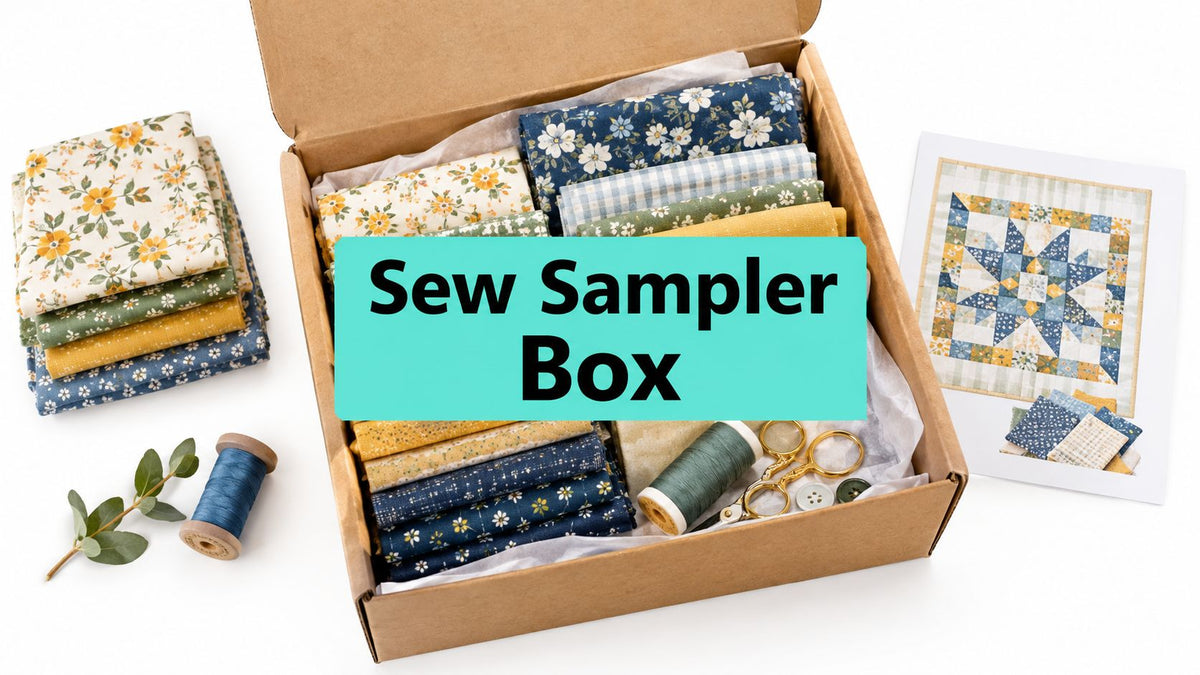
A Sew Sampler box is a monthly quilting subscription from Fat Quarter Shop, launched in April 2016, that combines fabric, notions, patterns, and project extras in one curated package. It's best treated as a source of quilting discovery, not a guarantee that you'll receive everything needed to finish a quilt.
Perhaps you've just opened a box and spread the contents beside your sewing machine. The fabric looks promising, but you're wondering whether you'll use the notions, whether the pattern suits your skills, and what you still need to buy.
Those are the right questions. The useful test isn't how impressive the contents look together, but how much of that package becomes sewing you want to do.
What Is a Sew Sampler Box and How Does It Work?
When a Sew Sampler box arrives, the practical question is what its contents can do in your sewing room. The subscription sends a coordinated assortment selected for you, rather than materials chosen from a fixed shopping list. Its appeal is partly the discovery, but usable value depends on whether the fabrics, patterns, and notions fit your skills and projects.
A project kit starts with a particular quilt and specifies its materials. A subscription starts with an assortment; you decide whether to sew the featured project, adapt the contents, or combine them with other supplies. That flexibility can be useful, though it means the box may not cover every material needed for your intended finish.
How established is the subscription?
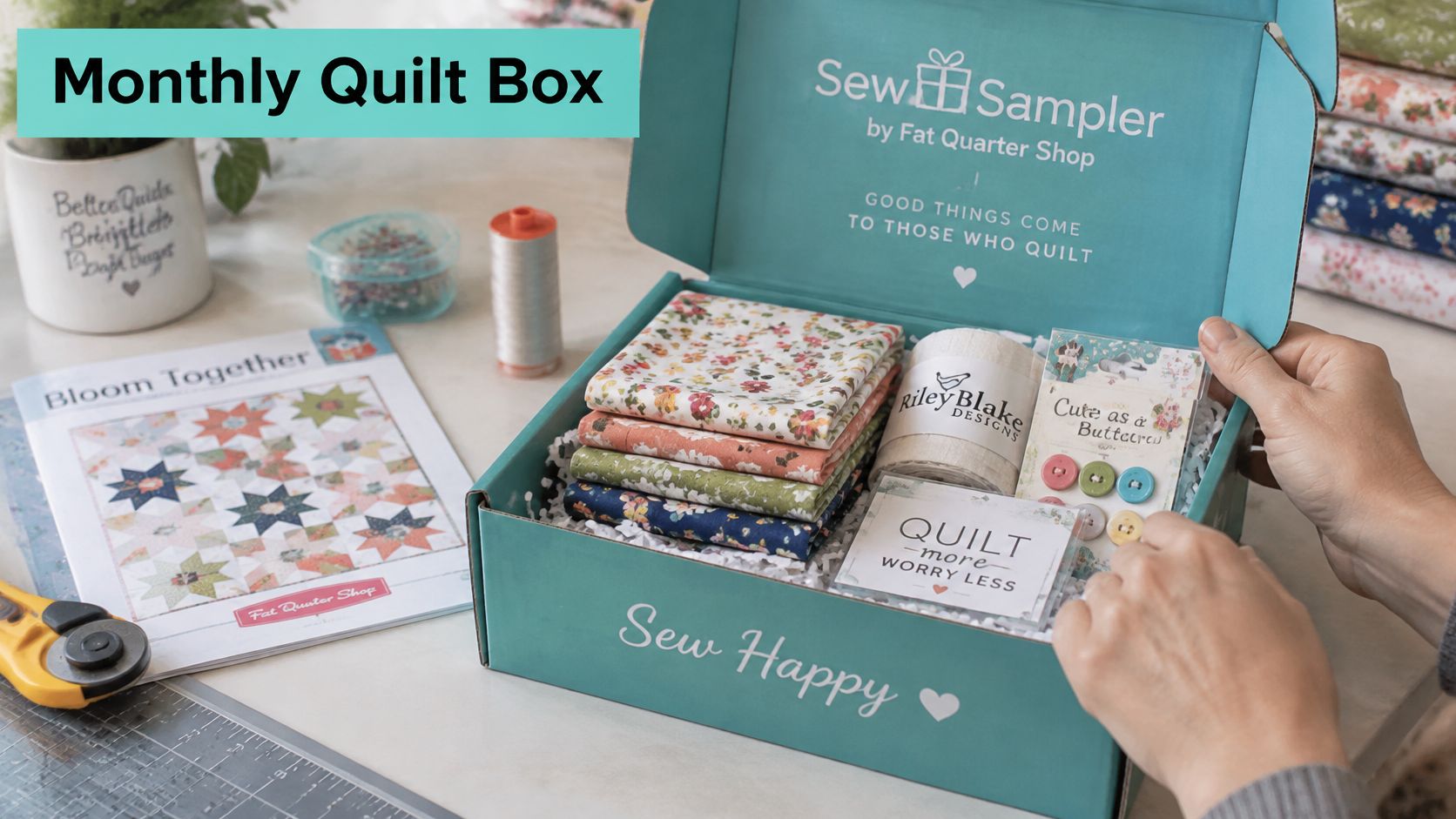
Fat Quarter Shop's anniversary account describes 120 boxes released monthly from April 2016 through March 2026, marking a decade of the program. It also outlines an anniversary schedule of 12 exclusive patterns, with one planned for each monthly shipment from April 2026 through March 2027, as an additional member benefit (Sew Sampler anniversary and release details).
The release history shows an ongoing program, rather than a one-time parcel. For subscribers, that means joining a recurring sequence of curated deliveries. It does not guarantee that every month's selection will suit your current project or that the included materials will make a complete quilt.
What commitment are you making?
Check the current billing, shipping, cancellation, and membership terms before subscribing. Keep project expectations separate from the delivery schedule: receiving a box does not require you to start its featured pattern right away. Store the pattern with its intended fabric so you can assess the combination later.
A subscription gives you a recurring invitation to sew, not an obligation to finish each project.
That distinction helps keep a pleasant delivery from turning into a backlog. If you prefer to choose every print and plan each finish before buying, surprise selections may feel limiting. If you enjoy working from a starting point chosen by someone else, the box can prompt a project you might not have selected yourself.
For beginner readiness, look beyond the appeal of the assortment. Check whether the pattern's instructions and techniques match your experience, and whether you can use the included materials as intended. For a minky project, treat the box as a source of quilting components, then pair suitable fabrics or patterns with curated minky kits or yardage as needed. Curation, not complete project fulfillment, is the defining feature.
What Comes Inside Each Sew Sampler Box?
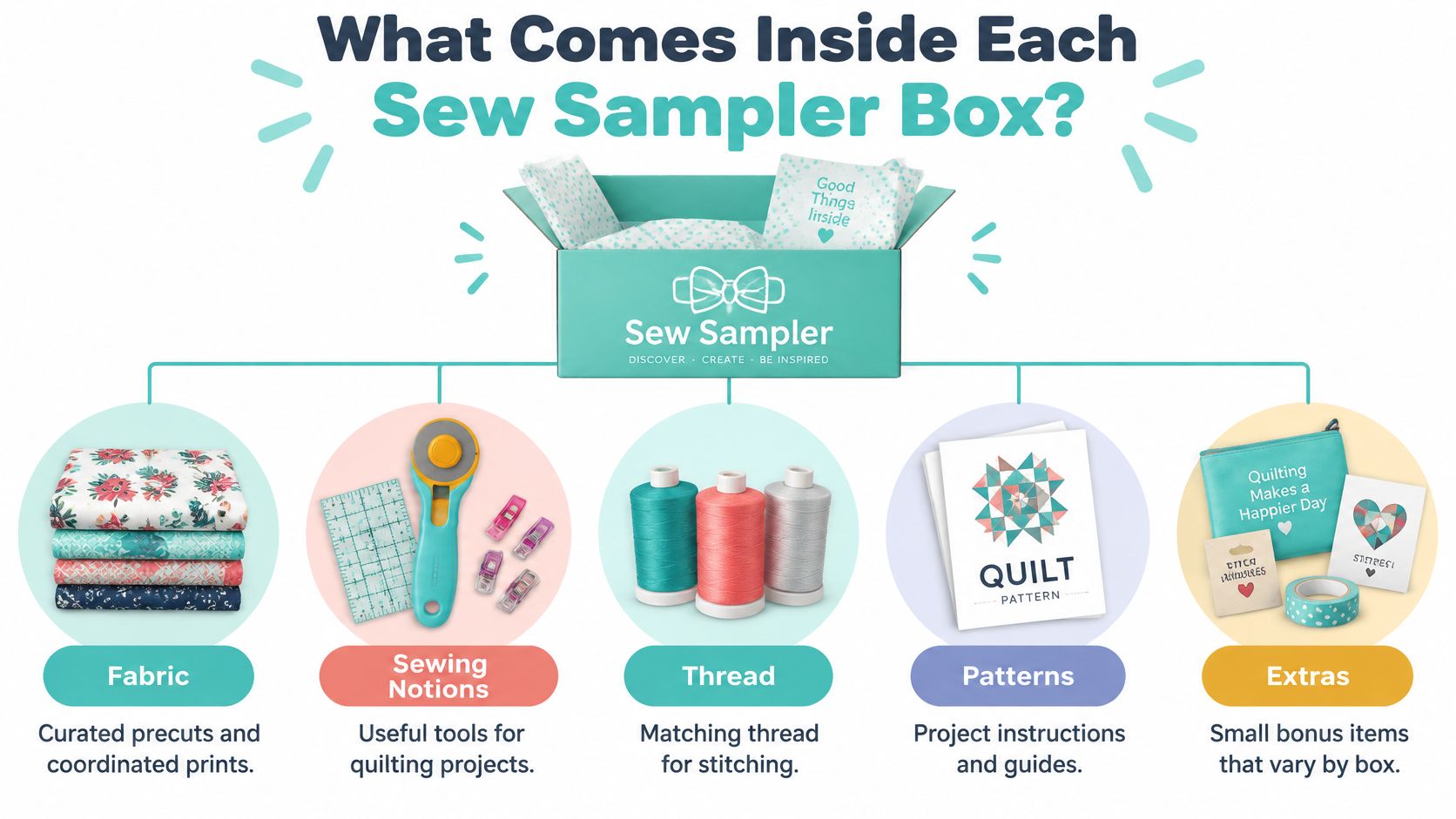
A useful audit starts with what the fabric and instructions let you make, not how many items fill the box. Contents may include fabric, sewing notions, thread, patterns, and related extras, and the mix changes between deliveries. Treat each category as a possibility, not a promise about quantity or format. The contents diagram is a handy inventory guide, not a packing guarantee.
How does the Block Recipe system work?
The monthly Block Recipe provides instructions for 8-, 12-, and 16-inch finished blocks. The overview describes twelve monthly recipes plus a bonus card as a complete collection (Sew Sampler contents and Block Recipe overview). A 16-inch block covers four times the area of an 8-inch block, before seam allowances and setting choices are considered. That affects the quilt's proportions, fabric use, and the balance between patchwork and open space.
Choose a finished block size before cutting, then use it consistently unless you're prepared to redesign the layout. Keep a simple project record as you sew:
- Seam accuracy: Use a consistent machine setup and test that units finish at the intended size.
- Pressing direction: Note whether seams are pressed open or to one side, especially where blocks will join.
- Trimming dimensions: Mark unfinished measurements clearly so you don't trim a block to its finished size.
- Fabric allocation: Set aside prints and background fabric that later blocks may need.
Small variations can make independently sewn blocks difficult to align in a row. Correct a test unit early rather than trying to disguise mismatched intersections across the quilt top.
What will you need to supply?
Read each recipe's requirements before assigning the included fabric to another project. The pattern is a design component, not confirmation that the box supplies all the materials for a finished quilt. Check background fabric, borders, binding, backing, and finishing needs separately. Coordinated prints can still leave substantial purchases beyond the subscription.
If you're deciding whether a precut stack suits the pattern, check how precut fabric squares fit your cutting plan. A stack may work for one block while lacking the shapes or quantities another requires.
For a plush finish, plan backing as its own part of the project. Minky calls for attention to width, handling, and quilting choices. Pairing box fabrics with a curated minky kit or separately chosen yardage can give you a coordinated top and a suitable backing, but check the pattern requirements and fabric amounts before cutting. A soft fabric alone doesn't guarantee a workable backing.
Is a Sew Sampler Box Worth the Price?
A box can look generous on the unboxing table and still offer little usable value if its tools duplicate what you own or its project does not fit your plans. Judge each box by what you would use, then account for the materials needed to finish the project.
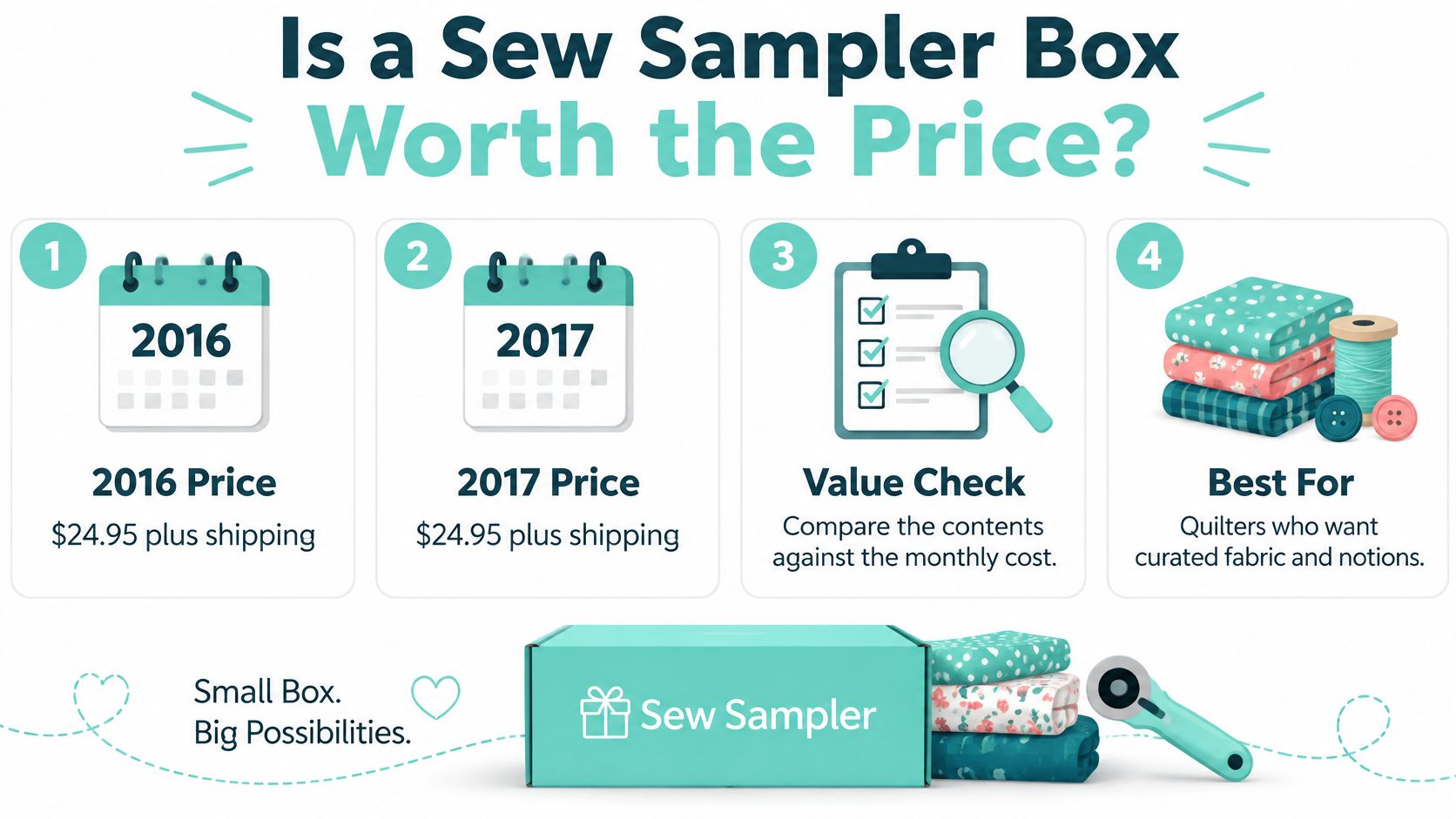
Prices change, so older reviews are historical context, not a quote for a new subscription. Use the visual as a reference, then check the current terms before deciding.
How has the price changed?
Coverage from 2016 and 2017 recorded a price of $24.95 plus shipping, with reported contents values commonly around $50 to $60. By 2023, creator coverage listed a $29.95 monthly price, an increase of $5.00, or approximately 20.0% (historical Sew Sampler pricing coverage).
The current published subscription terms list a $0.99 one-time membership fee and a $34.95 monthly charge plus shipping, usually processed approximately 3–5 business days before shipment. They describe a variable assortment and state that its aggregate retail value exceeds the subscription price (current Sew Sampler subscription terms).
Check the checkout price before subscribing. Compare the delivered cost with the materials you would otherwise buy, rather than relying on the printed retail total.
How should you audit usable value?
Apply the same checks to each box. An appealing print can make the assortment feel more useful than it is.
| Audit area | What to check | What reduces value |
|---|---|---|
| Fabric | Quantity, condition, and suitability for your plans | Prints or cuts you won't use |
| Pattern | Whether you want the finished item | A project with no practical destination |
| Notions | Compatibility with your tools and methods | Duplicates or unsuitable accessories |
| Retail comparison | Standalone prices for items you would use | Counting unwanted extras at full value |
| Delivery | Shipping and applicable import costs | A delivered total beyond your budget |
| Completion | Additional materials needed | Unplanned finishing purchases |
Historical customer commentary mentions notions viewed as unrelated to quilting, questions about tool compatibility, and decorative projects that did not suit the intended household use (customer discussion beneath a Sew Sampler reveal). These are practical fit concerns, even if another subscriber enjoys the same assortment.
For a fabric-led alternative, compare fat quarter bundles with the materials you actually need. Selecting prints yourself gives you control over the palette and cuts, while giving up the surprise of a curated box.
An unboxing shows the presentation and assortment, but your sewing plans determine whether the contents earn their place.
Who Gets the Most From a Sew Sampler Box?
A quilter who likes discovering new patterns and notions may enjoy a Sew Sampler box, provided there is room to adapt projects to existing skills and equipment. Beginners, experienced quilters, and gift buyers should assess different kinds of fit before subscribing.
Can a beginner finish the project independently?
Beginner-accessible doesn't mean beginner-proof. Precut fabric saves preparation time, but a cutting mistake can be difficult to fix when the kit includes little extra material. Read the full pattern first, then check what the project asks you to do.
- Time available: Estimate cutting, piecing, pressing, quilting, and binding from the instructions. A small package does not guarantee a quick finish.
- Tools required: Check ruler shapes, cutting equipment, presser feet, and specialty tools against what you own.
- Seam control: Sew a test unit before cutting all the supplied fabric.
- Finishing skills: Identify unfamiliar binding, quilting, or construction steps, and decide whether you can get help with them.
- Recovery options: Consider whether extra background fabric would help if a cut or seam goes wrong.
Reviews of comparable sewing boxes, rather than Sew Sampler specifically, mention difficult video tutorials, unclear written directions, and materials that were insufficient or incorrectly prepared (comparable sewing-box customer feedback). These comments don't establish a problem with every subscription. They do make an early check of the instructions and materials a sensible habit.
Use the pattern's assumed techniques to guide your preparation. Review quilting basics for beginners and look for instruction that matches the construction method, not just a similar-looking block.
What should experienced quilters and gift buyers check?
For experienced quilters, the question is whether the box adds useful fabric or patterns beyond the tools already in the sewing room. If those are the main draw, novelty notions that duplicate existing supplies may reduce the box's value.
Gift buyers should check the recipient's preferences, equipment, and interest in open-ended projects. A polished presentation may appeal, but it won't suit someone who prefers choosing every material.
International shoppers should work out the total landed cost, including applicable delivery and import charges. The merchandise value alone may not reflect the cost to the recipient.
A subscription suits someone who enjoys discovery; a specific kit is a better match for someone who has already chosen what to make.
How Can You Pair Sew Sampler Contents With Minky Kits?
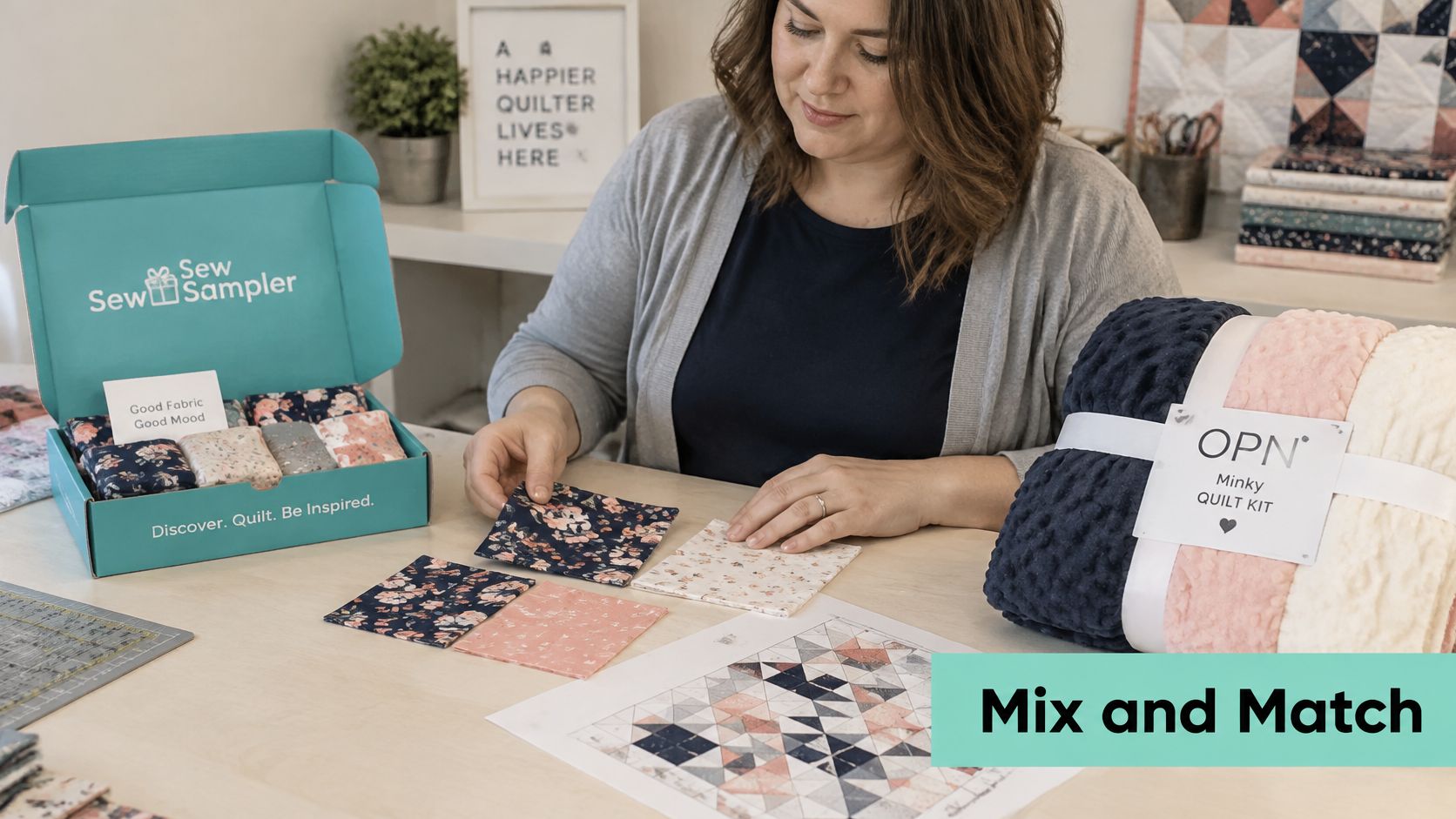
A Sew Sampler box can supply cotton, a pattern, or notions for one project, while a minky kit gives you materials for a separate plush project. Pair them by usable quilting value, not by trying to force every item into one quilt. Shared colors can tie the projects together, but cotton patchwork and plush fabric need different construction methods.
Which project makes a sensible starting point?
A minky pillow kit with a form keeps the plush project contained, giving you room to practise handling the fabric. An infinity scarf kit suits a separate gift project rather than a quilt back. Either can make better use of a box's colors or notions without requiring you to adapt its cotton pattern.
For a larger project, start with the pattern's fabric requirements and choose minky by the finish you want. Shannon Fabrics Cuddle and Luxe Cuddle come in textures such as Hide, Snowy Owl, and Fawn. Choose a texture for the project, then coordinate its color with the box fabrics.
Choose a beginner-friendly Cuddle minky blanket kit by reviewing the instructions, dimensions, and included materials before ordering. A kit is useful when its contents match your skill level and intended project.
Minky calls for a different machine setup from ordinary cotton piecing. Shannon's Cuddle reference recommends a 90/14 stretch or ball-point needle, a walking foot, 3.0 stitch length, lighter thread tension, and a 1/2-inch seam allowance. When joining Cuddle to stable quilting cotton, it recommends placing Cuddle against the feed dogs (Cuddle sewing preparation guidance). Test the setup on scraps first, and check the pattern before substituting plush fabric for cotton.
Will extra-wide backing eliminate seams?
Only if the usable width covers the quilt top and the allowance needed for quilting. Measure the top, then confirm the longarmer's margin requirements before choosing backing.
The backing guide discusses 60-, 90-, and 108-inch widths. Its example uses a 108-by-108-inch top and calls for a 116-by-116-inch back when adding 4 inches per side. Even 108-inch fabric needs a seam for that example (quilt backing width and sizing guide).
- For practice: Start with a contained plush project before handling a large back.
- For a planned quilt: Measure the top and choose texture and usable width to match.
- For fewer seams: Confirm the required quilting allowance before buying.
Choose the project first, then Shop the Luxe Cuddle Collection through the shop invitation below. Measuring before purchase helps prevent an attractive backing from turning into fabric that is too narrow.
What Are the Alternatives to a Sew Sampler Box?
If you want one finished project, a recurring box may bring materials you don't need. If you enjoy monthly discovery, that changing assortment may be part of the appeal. Choose based on the work you plan to sew.
Which buying format fits your goal?
Sew Sampler Box Versus Other Ways to Buy Minky and Quilting Supplies
| Option | Commitment | What You Get | Best For |
|---|---|---|---|
| Sew Sampler subscription | Recurring monthly purchase | Variable curated quilting assortment | Makers who enjoy discovery |
| One-off beginner kit | Single purchase | Materials and instructions specified by the kit | A defined project without recurring deliveries |
| Curated minky pillow or infinity scarf kit | Single purchase | Plush project components according to the listing | Focused practice or gift-making |
| Selected minky yardage | Project-based purchase | Fabric chosen for your requirements | Planned quilts and particular textures |
For a practical comparison, audit each box's contents for usable quilting value: separate consumables, reusable tools, and components for a specific project. Then check whether those items match your skill level and next project. A box can offer variety, but a one-off kit or selected yardage gives you more control over what you buy.
Compare easy quilt kits for a defined project when you want instructions and materials selected around one outcome. Read the listing closely. “Kit” does not guarantee that backing, binding, or batting is included.
How do you make a fair comparison?
Compare like with like. A mixed subscription assortment is different from a fabric-only order, and a larger item count does not necessarily mean more useful quilting value.
- Choose the subscription when you value discovery and can use its varied contents.
- Choose a one-off kit when you want materials and instructions for a specific finished item.
- Choose yardage when you already know which fabric, texture, or backing you need.
For a minky project, pair the purchase with the work ahead. A curated pillow or infinity scarf kit can give a beginner a contained way to practise handling plush fabric. For a planned quilt, selected minky yardage can match the desired texture and project dimensions, while a kit may still supply other components. Check what is included before ordering, and don't assume subscription contents will suit a specific project.
Supplier support matters when you need help confirming fabric compatibility or preparing materials. Look for clear product details, accessible contact options, and credible customer feedback, not photography alone.
The right alternative leaves you with materials suited to your project and a clear route to finishing it.
Where Should You Start Your Next Minky Project?
If your quilt top is still in progress, concentrate on accurate construction and decide how you'll handle the backing. If the top is finished, measure it and confirm the finishing requirements before purchasing more fabric or booking quilting. This audit helps identify what the box already provides and what the project still needs.
What should you prepare for mail-in quilting?
Measure the completed top, not the pattern's intended dimensions. Your sewn quilt determines the size the longarm finisher needs to load.
Longarm University recommends backing 6–12 inches larger than the top in both dimensions, leaving about 3–6 inches on each side, and batting at least 10 inches larger than the top (longarm loading and material allowance guidance). Check the receiving service's instructions before cutting or shipping, since its requirements determine how to prepare the quilt.
- Measure the actual top: Record its length and width.
- Confirm who supplies batting: Avoid buying or shipping batting the service will provide.
- Check backing suitability: Ask about plush fabric and seams before sending the quilt.
- Choose a quilting design: Look for a motif that complements the patchwork.
Book your longarm service once the top, backing, and preparation details are settled. If any of those are still uncertain, clarify them first to reduce avoidable changes.
How should you care for the finished quilt?
Keep the care instructions with the project, especially if you're giving the quilt as a gift. Shannon Fabrics recommends washing Cuddle in cool water without fabric softener, drying on low or no heat, and avoiding overdrying. Follow the specific texture's care label as the final authority (Shannon Fabrics Cuddle care guidance).
A Sew Sampler box can spark a project, but the box alone may not provide the backing, plush fabric, or finishing support you need. Check its contents against the project before choosing curated minky kits, additional yardage, or professional quilting.
On Pins & Needles Quilting Co. offers Shannon Cuddle and Luxe Cuddle fabrics, curated minky kits, and mail-in longarm quilting with batting, thread, and free return shipping. Its service includes phone and email help, and the company reports hundreds of verified reviews. Browse On Pins & Needles Quilting Co. for project materials or professional finishing. U.S. orders over $70 ship free. Get 15% Off Your First Order.