
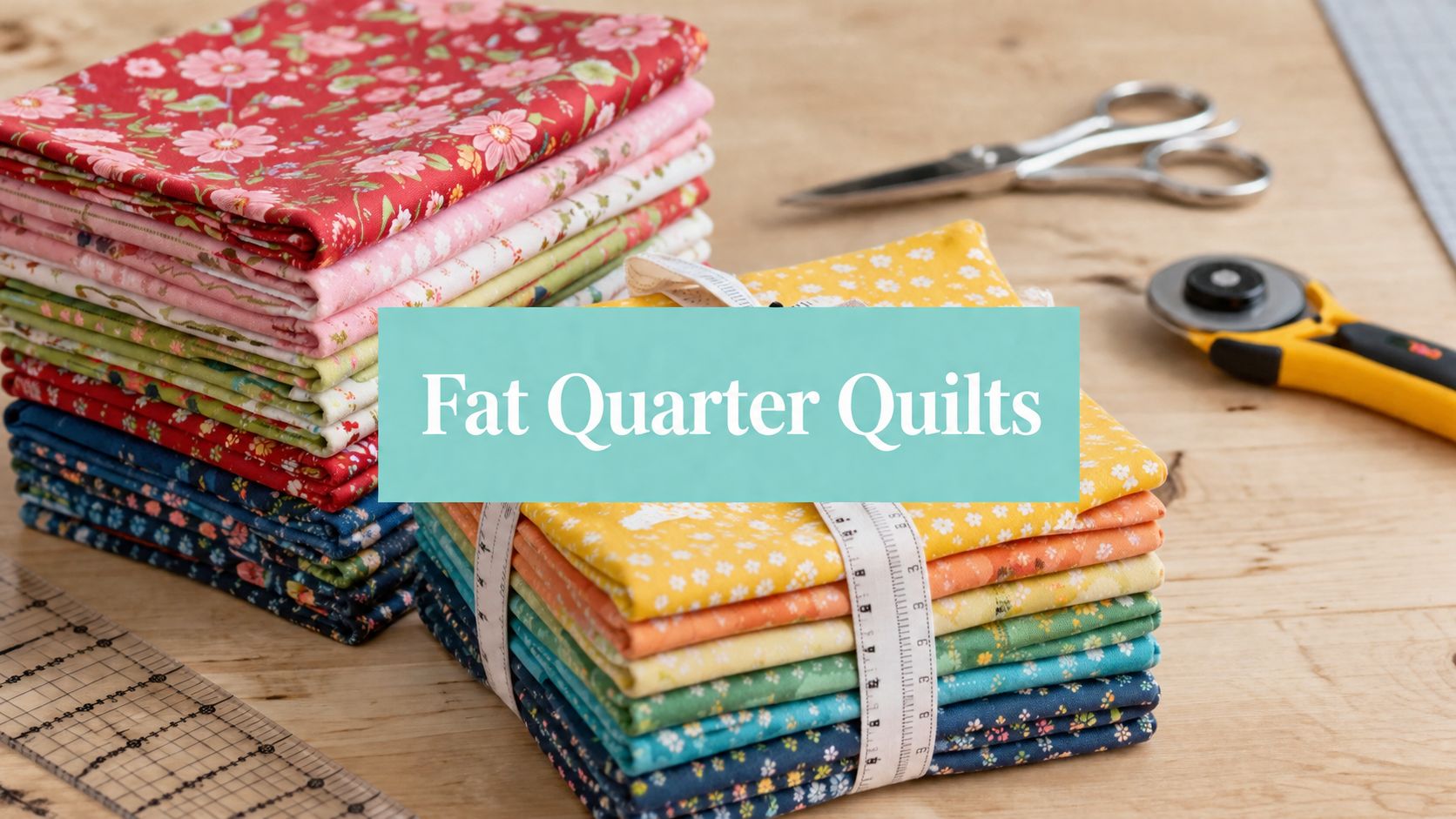
A fat quarter quilt pattern is a design made to use 18 x 22 inch fabric cuts, so you can turn pre-cut bundles into varied quilt blocks with minimal waste. The best fat quarter quilt patterns work because they respect that shape, instead of forcing long-strip cutting that belongs to regular yardage.
Fat quarter quilt patterns sound simple until you're standing at the cutting mat wondering why a pattern that looked perfect on paper suddenly needs extra background fabric, extra seams, or extra math. That gap between inspiration and execution is where most frustration starts.
The short answer is this: choose patterns designed for fat quarter geometry, cut conservatively, and plan your background and backing before the first slice. That's what keeps a bundle from becoming an expensive pile of oddly shaped scraps.
Need a project image for the top of your inspiration board? Use an OPN product photo only, not a generic stock shot, so the texture and scale match what you'll sew.
What Exactly Is a Fat Quarter
A fat quarter is a piece of quilting fabric measuring approximately 18 inches by 22 inches, created by cutting a half-yard of fabric and then slicing it along its width, which gives quilters a wider shape for larger blocks, appliqué pieces, and motifs than a standard quarter-yard cut offers, as explained in this fat quarter FAQ.

Why is it called fat
The name makes more sense once you compare it to a regular quarter yard. A traditional quarter yard is long and narrow, often described as a "skinny" quarter. A fat quarter is squarer.
It's like a brownie. If someone gives you the same amount of brownie batter in a long, thin strip, you can't cut a big square from it. Put that same amount into a squarer pan, and suddenly you can cut shapes that fit your project.
Why quilters prefer this cut
That wider format is the whole reason fat quarters became a quilting staple. You can cut larger block parts without piecing smaller scraps together first, and that usually means less waste and cleaner construction.
A standard yard of fabric contains exactly four fat quarters, and while the cut can vary slightly depending on fabric width, the industry standard remains 18 x 22 inches in the same source above. In practice, that means fat quarters are ideal for:
- Patchwork blocks that need width more than length
- Appliqué motifs that won't fit inside a narrow strip
- Small projects like table toppers, pillows, baby quilts, and coordinated stash sewing
Fat quarters aren't magical because they're smaller. They're useful because their shape matches the way quilters actually cut blocks.
If you want a visual explanation of sizing before buying a bundle, this guide to what size is a fat quarter of fabric is a handy reference.
How Do You Choose a Fat Quarter-Friendly Pattern
Not every pretty quilt pattern is a fat quarter pattern. That's the mistake that burns through bundles fast.
A true fat quarter-friendly design is built around the near-square shape of the cut. According to this explanation of fat quarter quilt patterns, that geometry offers a 40% larger usable surface area for cutting complex shapes than a traditional 9 x 44 inch quarter-yard strip. That's why some blocks feel effortless in a fat quarter and awkward in regular yardage.
What should you look for in the pattern listing
The first thing to check is how the designer writes the fabric requirements. Good fat quarter quilt patterns usually assign cuts by fat quarter, not by vague total yardage.
That matters because it tells you the designer tested the block shapes against the width of the cut. It also keeps you from translating a strip-based pattern into a bundle-based project by guesswork.
Look for these signals:
- Per-fat-quarter cutting instructions rather than only total fabric yardage
- Block pieces with room to rotate inside a squarer cut
- Minimal long-strip dependence, especially for major design elements
- Clear background requirements, if the design isn't a zero-background style
What usually doesn't work well
Patterns that depend on long continuous strips can fight the fabric. You can sometimes make them work, but you're usually adding seams or changing the layout.
That's where quilters end up saying, "I thought I had enough fabric." The issue often isn't the bundle. It's the mismatch between the pattern's geometry and the cut.
Here's a quick way to judge fit before buying:
| Pattern trait | Usually works with fat quarters | Usually causes trouble |
|---|---|---|
| Large patchwork units | Yes | Sometimes |
| Big motifs or appliqué | Yes | Rarely |
| Strip-heavy layouts | Sometimes | Often |
| Precise per-bundle cuts | Yes | No |
| Background-light designs | Yes | No |
If you're shopping for ideas, explore curated quilt patterns and look closely at how the fabric requirements are written, not just how the finished quilt looks.
Practical rule: If a pattern needs you to "convert" most of the cutting plan yourself, it's not really fat quarter-friendly.
For quilters who also like ultra-soft finishes, it helps to pair a piecing plan with backing choices early, especially if you're already considering Shannon Cuddle or another plush fabric for the final quilt.
What Are the Best Patterns for a First Fat Quarter Quilt
For a first project, simple wins. Not boring. Simple.
The best beginner fat quarter quilt patterns let the fabric do the heavy lifting. A patchwork square quilt, brick layout, or oversized block design shows off the variety in the bundle without asking a new quilter to manage complicated angles, fussy cutting, and too many background calculations at once.
Which beginner styles tend to sew smoothly
A patchwork layout is forgiving because each fat quarter can become a family of squares or rectangles. If one print runs directional or one cut comes up a bit tighter than expected, the quilt still works.
A brick quilt is another strong first choice. The repeated shape gives the top rhythm, and the fabric variety keeps it from looking repetitive.
Many beginner-friendly options are made specifically for precuts. As noted in this collection of fat quarter quilt patterns, accessible patterns like Thrive by Suzy Quilts and collections by Gudrun Erla are designed to use precut bundles without requiring cutting from full yardage.
What a successful first project usually looks like
The smoothest first finishes I've seen usually follow a pattern like this:
- Choose a bundle with contrast so blocks don't blur together.
- Use a layout with repeated units such as squares or bricks.
- Keep background demands low unless you already enjoy fabric math.
- Save specialty techniques for quilt number two, not the first one.
That approach gives beginners a real finish, not a stalled UFO.
If you want a little extra confidence before committing to a full quilt, browse these easy quilt blocks patterns. Testing one or two blocks first can tell you very quickly whether a bundle and pattern are going to play nicely together.
A first fat quarter quilt should teach rhythm, not rescue work. If you're fixing every cut, the pattern is asking too much.
A soft entry point for gift sewing is a simple pillow or mini quilt, especially if you want to enjoy the piecing process without tackling a bed-size finish right away.
How Do I Calculate Fabric Needs for My Quilt
Fabric math gets messy when quilters take the nominal fat quarter size at face value. The safer move is to calculate from a smaller guaranteed size.
According to these tips for writing fat quarter-friendly quilt patterns, patterns should be engineered using a conservative maximum of 18 x 21 inches rather than the nominal 18 x 22 inches. That buffer accounts for width inconsistencies and keeps cutting instructions from assuming fabric that may not be there.
Why conservative math saves quilts
This is one of those quiet professional habits that prevents loud beginner frustration. If you assume every fat quarter is a full 18 x 22, you're building the project on the best-case version of the cut.
If the selvedge trims away more than expected, or the fabric is slightly narrower, a block piece can fail late in the process. That's why conservative math matters more than optimistic math.
Use this order when estimating:
- Start with finished quilt size and block size
- Convert the pattern into units per fat quarter
- Base your sketch on 18 x 21 inches, not the nominal size
- Add breathing room if the print is directional or the blocks need careful placement
A simple reference chart
The exact number will vary by block design, but this kind of chart helps you avoid buying too little.
| Quilt Size | Approx. Dimensions | Fat Quarters Needed |
|---|---|---|
| Baby | Varies by pattern | Check block yield from each fat quarter |
| Lap | Varies by pattern | Check block yield from each fat quarter |
| Throw | Varies by pattern | Check block yield from each fat quarter |
| Twin | 64 x 88 inches | Approximately 24 to 30 fat quarters for 35 blocks, based on the same source above |
| Bed sizes beyond twin | Varies by pattern | Calculate from tested block yield |
That twin-size example is especially useful because it shows how bundle math connects to block count, not just finished dimensions.
For quilters who want more practice with layout math, this guide on calculating yardage for quilts is worth bookmarking.
Ready to build your stash? Get 15% off your first order and enjoy FREE shipping on all U.S. orders over $70. Let's get quilting.
When should you buy extra
Buy extra when the pattern includes large motifs, directional prints, or high-contrast placement that you won't want to compromise. Don't buy extra just because the math feels scary.
If the pattern is written clearly and you've checked yield conservatively, you'll make better decisions than if you panic-order backup fabric and change the design halfway through.
What Is the Secret to Cutting Fat Quarters Efficiently
The cutting secret isn't speed. It's sequencing.
Most tutorials still assume you'll happily add background yardage to solve layout problems. But one of the biggest frustrations with fat quarter quilting is wanting to use the bundle you already own, not turning it into a partial project that still needs a shopping trip.
A notable gap in common tutorials is background fabric optimization. According to this discussion of patterns using fat quarters, 68% of quilters on forums ask for "no background" or "thin-line" patterns because they want better use of their fat quarter bundles.
How do you cut for maximum yield
Start with the largest piece first. Always.
If you cut the easy little units first, you can trap yourself into corners and lose the only area large enough for the critical shape. Good fat quarter cutting feels a little like packing a suitcase. Big pieces first, smaller ones tucked around them.
Try this sequence:
- Identify the anchor piece. Find the largest shape required from each fat quarter and reserve space for it before anything else.
- Sketch the whole cut plan. A fast pencil diagram saves fabric more reliably than confidence alone.
- Nest smaller pieces around the edges. Corners and side strips are often perfect homes for squares, rectangles, and accent units.
- Separate background-thinking from print-thinking. If a design only needs thin lines of background, don't overbuy broad cuts that the pattern never uses.
How do you reduce scrap without distorting the pattern
Two habits help more than any gadget.
First, plan on paper before you press and cut. Second, assign leftovers a purpose before they become clutter.
Leftover strips and odd pieces can become:
- Pieced binding for a scrappy finish
- Mug rugs or minis that echo the quilt
- Test pieces for thread color and quilting density
- Accent blocks if you're short one print elsewhere
Scraps become waste when they have no job. Give them a job before you start cutting.
A lot of quilters believe they need broad background cuts to "make the quilt work." Often, they just need a pattern with thinner negative space and a cutting order that respects the bundle.
How Do I Finish My Quilt With a Minky Backing
Once the pieced top is done, backing choice decides whether the quilt feels ordinary or irresistible. A fat quarter top with a soft, plush back has a completely different presence in the hands.

Cotton backing has its place, especially for crisp traditional finishes. But if your goal is a quilt people reach for on the couch, plush backing solves a real problem. It softens the hand of the finished quilt and adds a cozy drape that pieced cotton alone doesn't create.
Which minky textures work best
Texture changes the personality of the quilt. A smooth plush gives one feel. A pronounced textured surface gives another.
Shannon Fabrics options such as Hide, Snowy Owl, and Fawn are popular because they add softness without making the quilt top compete visually with the back. If you're choosing among plush backings for quilts, blankets, or throws, this overview can help you explore fleece, sherpa, and wool and think through warmth and texture in practical terms.
For larger projects, width matters as much as texture. Extra-wide backing avoids the nuisance of piecing a plush back unless you want that seam.
If you're considering width options before finishing, this resource on extra-wide quilt backing is useful for understanding when a wider back can simplify the whole process.
Why wide minky changes the finishing experience
Bulky seams in a backing can interrupt the feel of an otherwise polished quilt. That's why many quilters prefer 90-inch or 110-inch plush backing when the project size allows it.
A wider back can deliver a more smooth finish, especially on bigger quilts where piecing backing fabric becomes cumbersome. That's one reason serious finishers often choose extra-wide plush for gift quilts and everyday-use quilts alike.
A few practical pairings that work well:
| Quilt style | Backing choice | Why it works |
|---|---|---|
| Modern fat quarter quilt | Luxe Cuddle Hide | Rich texture, clean visual finish |
| Baby or juvenile quilt | Luxe Cuddle Snowy Owl | Soft, playful hand |
| Nature or rustic palette | Luxe Cuddle Fawn | Warm, earthy texture |
Here's a helpful visual walkthrough for quilters thinking about backing and finishing choices:
What if you don't want to quilt it yourself
That's common, especially once the quilt gets larger and the backing gets plush. Wrestling a full quilt sandwich under a domestic machine isn't everyone's idea of fun.
A Mail-in Longarm option makes sense. Having the quilting, batting, thread, and return shipping handled in one service removes the hardest physical part of finishing. It also gives your fat quarter quilt top a polished result without asking you to manage the bulk at home.
If you're already investing time in accurate cutting and thoughtful piecing, it makes sense to finish the quilt in a way that matches that effort.
What Are Our Favorite Fabric Bundles for These Patterns
Some bundles look wonderful folded on a shelf but become awkward once you start cutting. The strongest ones for fat quarter quilt patterns have a clear spread of light, medium, dark, and print scale.

That matters more than trendiness. A bundle with variety gives you movement across the quilt. A bundle with too many similarly scaled prints can flatten even a good pattern.
Which bundle personality fits which pattern style
Here are the bundle personalities I reach for most often:
| Bundle style | Best pattern match | Why it shines |
|---|---|---|
| Modern geometric mix | Bricks, oversized blocks, clean layouts | Strong contrast and structure |
| Traditional floral mix | Patchwork, star blocks, soft vintage layouts | Gentle movement and charm |
| Juvenile or novelty mix | I spy quilts, baby quilts, simple squares | Lets prints stay readable |
A modern bundle works best when the block design gives each print room to breathe. A floral bundle often benefits from softer block transitions and less aggressive contrast. A juvenile bundle needs simple shapes so the motifs don't get chopped into confusion.
What should you check before buying a bundle
Don't stop at color. Check whether the bundle has enough contrast and enough visual rest.
A good shopping checklist looks like this:
- Contrast range so the blocks don't blur together
- Print scale variety for movement across the quilt
- A likely backing plan before you sew the top
- A pattern that matches the fabric personality, not just the color palette
If you want more ideas on how bundle style affects pattern choice, this article on fat quarter bundles is a useful companion read.
Quilters also tend to buy with more confidence from shops with hundreds of verified reviews, especially when precuts and plush backings need to arrive accurately cut and ready to use. That kind of consistency matters when you're planning a project around specific bundle counts and texture choices like Shannon Cuddle.
If you're building a finish around softness, it also helps to shop with the backing in mind. Luxe textures like Hide, Snowy Owl, and Fawn pair especially well with fat quarter tops because the pieced front stays visually lively while the back adds that soft fabric experience quilters want from a finished throw.
If you're ready to turn fat quarter quilt patterns into a finished quilt with the right bundle, the right minky backing, and expert finishing help, visit On Pins & Needles Quilting Co. and browse their curated fabrics, extra-wide Shannon Cuddle, and Mail-in Longarm options. Shop Our Complete Fat Quarter Bundle Collection Now.