
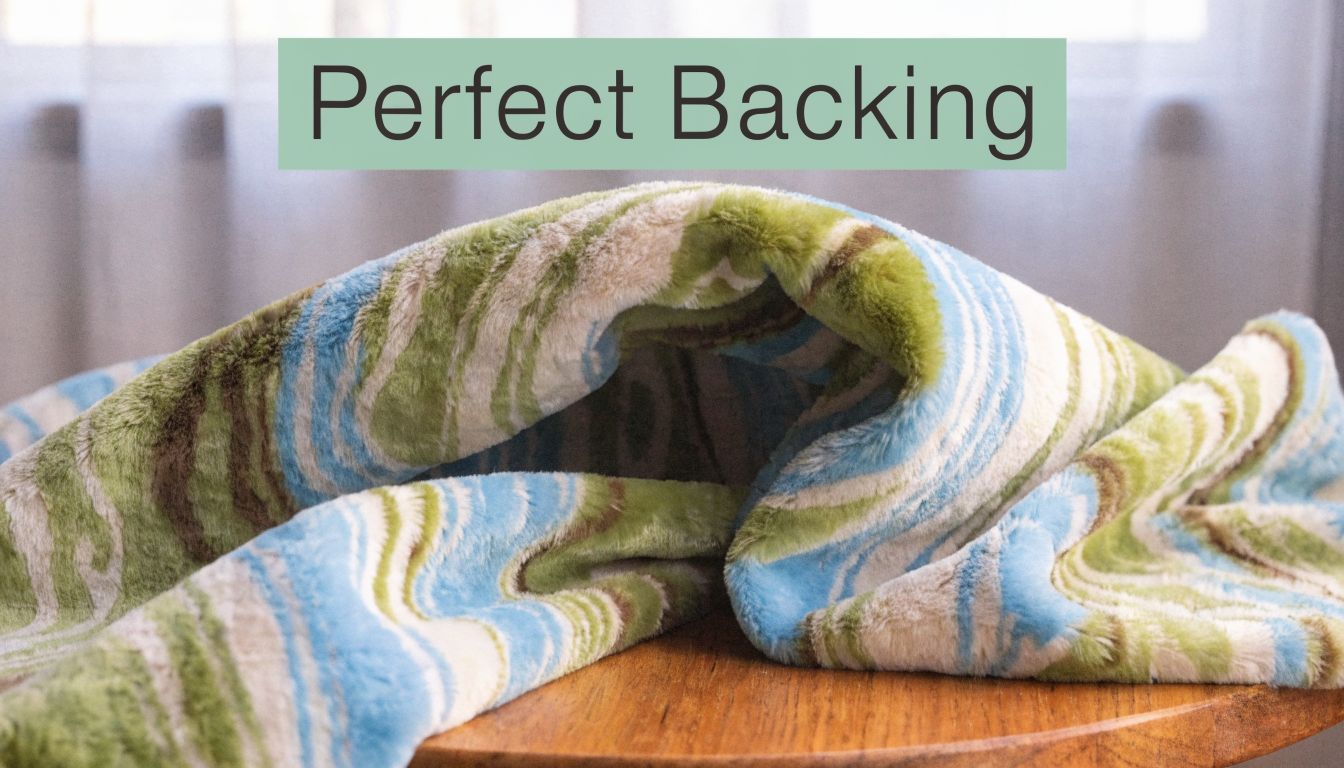
90 inch wide minky fabric for quilt backs offers a significant advantage, allowing you to finish most large quilts with a continuous backing rather than pieced joins. With the same 2-yard cut, standard 58 to 60 inch minky backs only up to 50" x 64", while 90-inch extra-wide Cuddle® can back up to 64" x 82" as a single piece.
That difference matters when you've spent hours on a quilt top and don't want the back to feel like the compromise. A pieced minky backing can add bulk, shift under the needle, and leave ridges you can both see and feel. A wide cut gives you a cleaner path to a softer, more polished finish.
What Is 90 Inch Wide Minky Fabric and Why Do You Need It
90 inch wide minky fabric for quilt backs is extra-wide plush backing designed to cover larger quilts without forcing you into a center seam. If you've only worked with standard-width minky before, the biggest change is simple. You get more usable width and fewer headaches.
Most quilters start shopping for it at the exact same moment. The quilt top is done, the layout looks right, and then the backing math turns ugly. That is usually when piecing starts to feel less like a plan and more like a penalty.
Why standard-width minky becomes a problem
Minky doesn't behave like quilting cotton. It stretches more, has pile, and shows seam bulk more clearly on the finished back.
That means the usual "I'll just seam two widths together" answer often works on paper better than it works on the table. For throw quilts, it may be manageable. For larger projects, it can become the part of the quilt you like least.
What 90-inch width solves
A wide minky backing helps with the things quilters care about most:
- A smoother finish because there's often no center seam to quilt across
- Less weight and bulk because you're not adding an extra seam allowance down the back
- Easier longarm handling since the backing behaves more like one continuous piece
- A cleaner look when the quilt is folded, gifted, or spread across a bed
If you're still deciding whether minky is the right backing choice at all, this guide on what Cuddle minky fabric is is a useful starting point.
A wide minky back usually isn't about luxury alone. It's about avoiding the one construction choice that can make a beautiful quilt harder to finish well.
For many quilters, that's the reason to buy it. You keep the softness people want from minky, but you remove one of the most frustrating parts of using it on a larger quilt.
Why Is 90 Inch Minky the Best Choice for Quilt Backs
You finish a throw-size top, lay a standard minky cut under it, and realize the numbers only work if you add a center seam. That is the point where 90-inch minky starts making practical sense, not just aesthetic sense.
90 inch wide minky fabric for quilt backs gives many quilts enough width to use a single-piece backing without stepping up to 108 or 110-inch categories. Standard minky is usually 58 to 60 inches wide, so its usable backing range runs out quickly once you add the extra inches needed for loading, quilting, and trimming. By comparison, a 90-inch extra-wide Cuddle® cut can cover much larger tops in one piece. Kitchen Table Quilting's minky backing guide also shows how much more usable width wide minky gives compared with standard cuts.

Why does a single-piece back matter so much
On minky, every seam has consequences. The pile adds bulk at the join, the nap can reflect light differently on each side of the seam, and longarm quilting over that ridge takes more control than quilting over flat backing.
That matters most on the kinds of quilts people touch constantly. Baby quilts, couch throws, memory quilts, and gift quilts all benefit from a back that feels smooth across the full width.
A single-piece backing also cuts down on prep time. There is no center seam to square, press, pin-check, or explain to your longarm quilter.
How does 90-inch minky compare with 110-inch backing
This is the width I recommend most often for throw, twin, and many full-size quilts. It covers a large range without the added cost of jumping straight to 110-inch backing.
That cost difference is real. If a quilt top fits well on 90-inch minky with proper overage, buying 110-inch width can mean paying for fabric you do not need. On the other hand, 110-inch backing earns its keep on queen and king projects, or on tops that need extra room for directional layout and generous longarm margins.
In other words, 90-inch minky sits in the middle in a very useful way. It solves the width problem that standard cuts create, but it does not push you into overspending for oversized backing unless the quilt requires it.
What changes in the finished quilt
The difference shows up after quilting.
- The back feels smoother One piece lets the plush surface stay consistent across the quilt, which is exactly what many people want from minky.
- The quilt drapes more naturally A long seam can stiffen the back, especially with denser minky textures. Removing that seam usually improves fold, hang, and cuddle factor.
- The quilting looks cleaner from the back Your stitching becomes the feature, not the join line.
Practical rule: If your quilt fits on 90-inch minky with the overage your longarm quilter requires, use the 90-inch cut before you piece narrower widths.
When is 90-inch minky the smartest buy
It is a strong choice for quilts that need to feel polished without paying for extra width you will trim away. I use it often for throws, many lap quilts, youth quilts, and a good number of bed quilts that fall short of queen width once backing allowance is added.
For quilters comparing wide-back formats, this guide to extra-wide quilt backing options helps clarify when 90-inch width is enough and when 110-inch is the better call.
For many projects, 90-inch minky is the practical middle ground. You get the softness people expect from minky, enough width for a single-piece back on many common quilt sizes, and easier prep for longarm quilting.
How Do I Calculate Yardage for My Quilt
A lot of backing mistakes happen at the cutting table, not on the longarm. A quilt top gets measured at 72 x 90, someone orders the exact yardage a generic chart suggests, and then the backing shows up with no room for clamps, squaring, or the extra take-up minky needs. With 90 inch wide minky, the math has to be a little more precise than it is with 108 or 110 inch backing.
Start with the actual finished size of the quilt top. Then add the extra your longarm quilter requires on every side. At OPN, that prep allowance matters because minky needs enough overage for loading, straightening, and clean trimming after quilting. I tell quilters to calculate backing size first, then convert that number into yardage. That order prevents expensive guessing.
What steps should you follow first
Use this sequence every time:
- Measure the quilt top after the borders are on and the top is lying flat
- Confirm the backing direction before you buy, because 90-inch width only works if the quilt and nap orientation cooperate
- Add your longarm overage on all four sides, based on your quilter's requirement
- Convert inches to yards only after you know the full backing size you need
- Round up to the next cut so you are not trying to load minky with no margin for error

What yardage should you order for common quilt sizes
Use these numbers as shopping estimates for 90-inch minky, not automatic rules. They work best for standard-size tops that still fit comfortably within the width once quilting allowance is added.
| Quilt Size | Typical Quilt Top Dimensions (Inches) | Required Backing Size (Inches) | 90-Inch Minky Yardage to Order |
|---|---|---|---|
| Lap | approx 60 x 70 | larger than quilt top with quilting allowance | 2.5 yards |
| Twin | approx 70 x 90 | larger than quilt top with quilting allowance | 3 yards |
| Full | approx 80 x 90 | larger than quilt top with quilting allowance | 3.5 yards |
| Queen | approx 90 x 108 | larger than quilt top with quilting allowance | 4 yards |
| King | approx 108 x 108 | larger than quilt top with quilting allowance | 4.5 yards |
Those cuts are practical for ordering, but they are still only a starting point. Border-heavy tops, off-square quilts, and patterns with extra length can push a project out of the safe range for 90-inch backing faster than many quilters expect.
When should you move up to a wider backing
The paths of 90-inch minky and 108 or 110-inch backing diverge. A 90-inch width can be perfect for throws, many twins, and some full or queen quilts, but once one dimension starts getting close to the fabric width before allowance is added, your options narrow quickly. You may need to rotate the backing, add more length, or switch widths entirely.
For example, a queen quilt around 90 x 100 can work on 90-inch backing only if the orientation and overage are planned carefully. Big Sky Quilts' 90-inch minky wide back guidance shows that this size can require at least 2.9 yards to reach a usable backing length, while a wider backing width may need less yardage for the same quilt. That is the trade-off. Ninety-inch minky often saves you from piecing, but 110-inch backing can give you more breathing room on larger beds.
If your quilt is edging into bed-size territory, check your measurements before you order. This guide to king size quilt measurements helps sort out whether your top is standard, oversized, or likely to need a wider back.
One practical rule keeps people out of trouble. If your quilt width is already close to the fabric width before you add longarm allowance, stop and recalculate. That is usually the point where 110-inch backing becomes the cleaner choice.
What Are the Best 90-Inch Minky Textures for Backing
A customer brings in a finished quilt top, and the first thing I ask is not the color. I ask how the quilt will be used. Couch quilt, baby gift, cabin quilt, guest bed quilt. That answer usually points us to the right minky texture faster than any swatch card.
Texture changes how the backing looks, how the quilting reads, and how forgiving the quilt will be after regular use. With 90-inch minky, that choice matters even more because this width is often used specifically to avoid piecing. If you are buying one clean cut for the whole back, make the surface do the job you need.

Which textures work best with different quilt styles
The best backing texture depends on whether you want the quilting design to stand out or the hand of the fabric to take center stage.
-
Hide for bold or rustic tops
Hide has more movement across the surface. I like it for wildlife quilts, lodge palettes, denim-and-navy combinations, and tops that already have a strong personality. It disguises daily wear nicely, but it can soften the look of intricate quilting from the back. -
Fawn for modern piecing
Fawn gives you texture without a busy finish. It pairs well with clean geometry, negative space, and sharper quilt designs because it adds dimension without pulling attention away from the piecing. -
Snowy Owl for soft, giftable quilts
Snowy Owl feels plush right away and reads softer visually. It is a strong choice for baby quilts, florals, winter color stories, and comfort quilts where touch matters as much as appearance. -
Classic Cuddle solids for clearer stitch definition
If you want feathers, edge-to-edge motifs, or custom quilting to show more clearly, solids or lower-profile textures are usually the better pick. Heavy embossing can visually compete with the quilting pattern.
What should you choose if you're unsure
Start with the quilt top and the recipient. A highly pieced top with lots of movement usually benefits from a calmer backing. A simple top can carry more texture on the back without feeling busy.
I also look at the quilting plan. Dense custom work and highly embossed minky can fight each other. For edge-to-edge quilting or utility quilts, richer textures often work beautifully because the softness becomes the main feature.
If you want to compare options side by side, the Shannon Luxe Cuddle collection makes it easier to see which textures are subtle and which have more surface pattern.
How do texture and use go together
For everyday use, I usually steer people toward textures that wear well visually and do not show handling as quickly. Hide and Fawn are dependable choices for family room quilts, teen quilts, and anything that will be washed and dragged from sofa to floor and back again.
For keepsake gifts, the decision often shifts. Snowy Owl and other plush Luxe textures give that immediate soft, sink-in feel people notice the second they touch the quilt.
One practical note from the longarm side. More texture is not always better. On a 90-inch backing, especially when you are trying to get the cleanest possible finish from one width of fabric, a slightly calmer surface can make the quilting show better and the whole quilt look more balanced.
How Do I Prepare 90-Inch Minky for Quilting
A 90-inch minky backing can save you from piecing, but it still has to be handled correctly. I see the same prep problems over and over on longarm jobs. Backings arrive stretched on the fold, cut off-grain, or trimmed too close to the top size. All three create avoidable trouble once the quilt is on the frame.

Should you pre-wash 90-inch minky
For longarm quilting, leave minky unwashed.
It stays more stable, sheds less during prep, and is easier to square accurately before loading. Once minky has been washed, the edges often curl and the cut becomes harder to true up. That adds time and can cost you backing size you needed for the frame.
If you are quilting it on your own domestic machine and have a specific reason to wash first, keep the cycle gentle and plan to re-square the edges afterward. For most quilt backs, washing after the quilt is finished gives the cleaner result.
What handling methods work best
Set up for control, not speed. Minky shifts easily, and wide cuts get heavier than quilters expect once they start hanging off the table.
A few habits help every time:
- Support the full width while cutting so the fabric weight does not pull it out of square
- Check nap direction before trimming because the same color can look lighter or darker depending on the way it lays
- Smooth the fabric flat instead of stretching it because stretched minky relaxes later and can show as waviness
- Use clips, a walking foot, or careful basting if needed since the plush surface likes to creep against cotton
- Trim lint once after cutting rather than stopping every minute to chase fuzz
If you are choosing between 90-inch and 110-inch backing widths, prep is one of the trade-offs. A 90-inch cut is usually easier to spread out on a table and manage at home. A 110-inch backing can reduce the chance of piecing on larger quilts, but it is bulkier to square and more awkward to control accurately.
What does a longarm quilter need from you
The backing must be square and large enough on all sides of the quilt top for loading. A longarm can quilt around minor top issues. It cannot correct a backing that was cut crooked or trimmed too small.
Mark the top edge of the quilt top and backing if the nap, print, or quilt design has a clear direction. That matters more with minky than many quilters expect. Once the backing is loaded upside down, the texture can read differently even if the color is the same.
The quilts that load cleanly usually arrive with clear orientation marks, a flat backing, and enough extra fabric to mount without pulling. If you want a detailed checklist before packing your quilt, use these longarm quilting prep tips.
How should you prep for mail-in longarm service
Before boxing the quilt, do a final bench check.
-
Leave extra backing on every side
The longarm frame needs room to clamp and advance the quilt safely. -
Square the backing before folding it
If one edge is off, that problem follows the quilt all the way through stitching. -
Stabilize any seams if you had to piece the backing
One reason quilters choose 90-inch minky is to avoid a center seam, but side seams still need to lie flat and hold under tension. -
Clip loose threads on the quilt top
Dark thread tails can shadow through light fabrics after quilting. -
Do not baste the quilt sandwich together
Longarm quilting works best when the top, batting, and backing are loaded separately.
On Pins & Needles Quilting Co. handles a lot of mail-in quilts, and the prep standard is the same one experienced longarmers ask for everywhere. Flat backing, enough excess, clear top edge, no surprises.
A visual walkthrough can also help before you pack up your quilt:
Good prep shows up in the finished quilt. Corners stay square, quilting stays balanced, and the backing feels smooth instead of fought with.
Where Can I Buy 90-Inch Minky Fabric with Confidence
You have the quilt top finished, the backing size figured out, and now one bad fabric order can throw the whole plan off. Wide minky is one of those purchases where the seller matters almost as much as the fabric itself.
For quilt backs, I look for shops that clearly sell 90-inch backing cuts, not general fabric listings that happen to include a few wide options. On Pins & Needles Quilting Co. is one example of a quilting-focused retailer carrying a broad range of 90-inch Cuddle styles, including standardized 2, 2.5, and 3-yard cuts, shown in this retail overview of 90-inch Cuddle availability. That matters because backing math is specific. If a shop only lists fabric by the yard without clear cut options, it is easier to order the wrong amount.
A reliable store should let you confirm a few things fast:
- True usable width for backing, not just a vague "wide fabric" label
- Cut lengths that match quilt projects so you can buy with less guesswork
- Accurate texture names and photos because Hide, embossed, and smooth solids read very differently on a finished back
- Consistent stock in backing-friendly colors instead of random single listings
- Quilting-aware customer support that understands backing overage, nap direction, and mail-in longarm needs
Reviews help, but I read them with one question in mind. Did quilters receive the cut they expected? Pretty photos are nice. Correct width, clean cuts, and fabric that arrives ready for backing use are what count.
It also pays to compare 90-inch inventory against 110-inch stock before you order. A good seller makes that distinction clear so you do not buy extra width you do not need, or get stuck piecing a backing because the listed width was unclear.
Wide minky gives you fewer seams to manage, but ordering mistakes show up quickly. The wrong width or a short cut usually means changing the backing plan, not just making a small adjustment.
If you are ordering for a gift quilt, a customer quilt, or anything headed to a longarm, buy from a shop that speaks in quilt-back terms. Width, cut length, texture, and quilting use should all be obvious before you add it to the cart. That is the difference between shopping with confidence and hoping the package works when it lands on your cutting table.
How Should I Care For My Finished Minky Quilt
A minky-backed quilt doesn't need fussy care, but it does need gentle care. The goal is to protect the softness, preserve the quilting, and avoid flattening or stressing the pile.
What washing and drying habits keep it looking good
- Wash gently in a mild cycle when the quilt needs it. Harsh agitation can rough up the backing over time.
- Use cool to warm water rather than high heat. Minky responds better to lower-stress laundering.
- Skip fabric softener because it can leave residue on plush fibers and change the hand.
- Dry on low heat or remove promptly once dry enough. Excess heat is usually what ages minky fastest.
- Don't overload the machine if the quilt is large. The backing needs room to move.
How should you store it between uses
- Fold loosely instead of compressing it hard into a tight bin
- Keep it dry and clean so the pile stays fresh
- Avoid prolonged direct sunlight if the quilt is displayed
- Refold occasionally on stored heirloom quilts so the same crease doesn't sit in one place for too long
What if the backing looks flat after washing
A little flattening is normal after use and laundering. Most minky perks back up with gentle tumble drying on low, a little air, and handling.
If the quilt is meant to be used every day, don't chase a showroom look. A well-loved minky quilt should feel inviting, not untouched.
If you're choosing 90 inch wide minky fabric for quilt backs and want the fabric, prep guidance, or quilting service in one place, browse On Pins & Needles Quilting Co.. You can Shop the Luxe Cuddle Collection, Book Your Longarm Service Today, or Get 15% Off Your First Order while also qualifying for free U.S. shipping on orders over $70.