
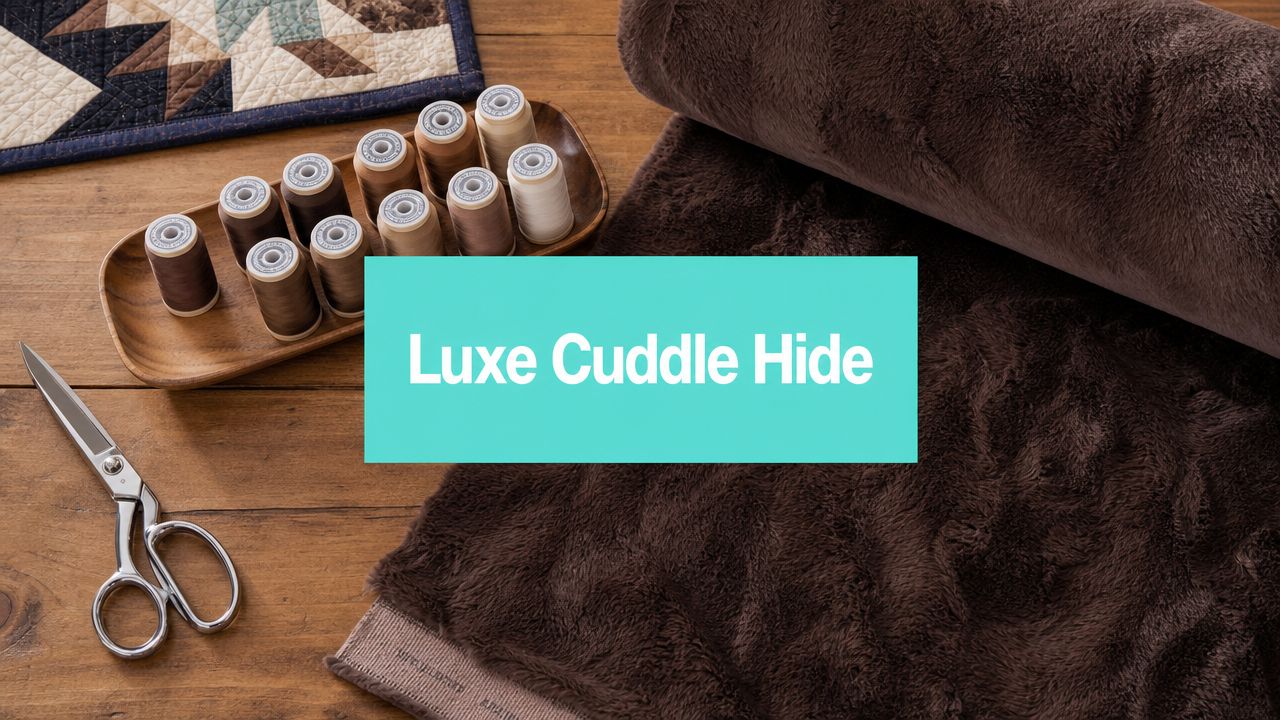
You're usually here for one reason. You want a fabric that feels special enough for a gift, polished enough for a quilt back, and forgiving enough that you won't regret ordering it. Luxe Cuddle Hide is a premium, 100% polyester minky fabric from Shannon Fabrics, prized for its dense, low-pile texture that mimics animal hide, making it a strong choice for smooth quilt backs, soft blankets, and refined apparel.
When quilters ask about Luxe Cuddle Hide fabric by the yard, they're usually not asking whether it's soft. They're asking whether it will drape well, whether the texture will fight the seam line, and whether the width will save them from piecing a backing. Those are the questions that matter at the cutting table.
At our shop, we've handled enough minky to know that small spec differences change the whole project experience. If you're deciding whether Shannon Luxe Cuddle is the right buy, Hide is one of the textures worth understanding before you order.
Introduction
Luxe Cuddle Hide earns its place by solving a very specific problem. It gives you the plush hand people expect from premium minky, but without the longer, fluffier look that can overwhelm a refined project.
That matters when you want a backing that feels luxurious but still looks clean after quilting. It also matters when you're making apparel or pillows and don't want a bulky, shaggy finish.
We've found that Luxe Cuddle Hide fabric by the yard appeals to two kinds of sewists at once. The first wants a practical wide cut for blankets and backs. The second wants texture that does some design work without adding piecing, trim, or complicated construction.
Plainly put, Hide is for projects where the fabric itself should carry part of the visual weight.
What Exactly Is Shannon Luxe Cuddle Hide Fabric
There's a lot of confusion around the Shannon lineup because people use “minky,” “Cuddle,” and “Luxe Cuddle” as if they all mean the same thing. They don't. Texture, pile, and how the fabric behaves under the presser foot vary more than most listings make clear.
Shannon Fabrics specifies Luxe Cuddle Hide as 100% polyester, with a 58/60-inch width, a 10mm pile, and a 530 grams per linear yard weight in its product video, which is why it feels substantial without reading overly fluffy on the surface (Shannon Fabrics product video).
Why does Hide feel different from other Luxe textures
Hide sits on the sleeker side of the Luxe family. The 10mm pile is long enough to feel plush, but short enough to keep the surface smoother and more refined than some more dramatic textures.
That shorter pile changes the finished look in useful ways:
- Quilting shows more clearly because the surface doesn't swallow stitch definition as much as a loftier texture can.
- Pillows and throws look less puffy and more polished.
- Apparel drapes better when you want softness without too much visual bulk.
If you want a broader primer on how Shannon's categories fit together, the article on what Cuddle minky fabric is is a helpful foundation.
Which Luxe texture should you pick
Project intent matters more than brand familiarity. Hide isn't automatically better than Snowy Owl or Fawn. It's better for certain jobs.
| Texture | Pile Height | Feel & Appearance | Best For |
|---|---|---|---|
| Luxe Cuddle Hide | 10mm | Sleek, velvety, embossed hide look | Quilt backs, throws, pillows, apparel |
| Luxe Cuddle Snowy Owl | Qualitatively plusher | Fuller, cozy, more lofty surface | Winter throws, extra-plush gifts |
| Luxe Cuddle Fawn | Qualitatively soft with gentle texture | Softer visual embossing, touchable finish | Baby gifts, nursery accents, scarves |
Here's the practical read from the sewing room:
- Choose Hide when you want texture without visual heaviness.
- Choose Snowy Owl when maximum cozy appearance matters more than a sleek finish.
- Choose Fawn when you want softness with a gentler, quieter surface.
More texture isn't always better. On a simple throw, dramatic texture can look rich. On a pieced quilt back, a calmer surface often gives you a cleaner result.
Which Projects Are Perfect for Luxe Cuddle Hide
A quilter finishes a beautiful top, flips it over, and realizes the backing choice will decide whether the quilt feels polished or bulky. That is where Luxe Cuddle Hide earns its place. It gives you a plush finish with a cleaner look, so the back supports the quilt instead of competing with it.

Is Luxe Cuddle Hide good for quilt backs
Yes, especially for quilts that need softness, drape, and a backing that looks intentional on its own. We have found that Hide works best when the quilt top already has enough visual activity and the backing needs to add comfort without adding more fuss.
It is a strong choice for baby quilts, lap quilts, and throw quilts. On those projects, the texture reads rich, but the surface still feels controlled enough for quilting and binding. That balance matters.
Width is part of the decision too. A wider cut can mean fewer backing seams, and fewer seams usually mean an easier prep day and a better-looking finish on the back. If you are planning a common throw, this guide to 50 x 60 blanket dimensions is a useful reference point before you buy yardage.
If you want to compare Hide with the other Luxe options mentioned earlier, refer back to the collection already linked in the introduction and look at the embossing and overall loft side by side.
What else can you make besides blankets
Hide is one of the more flexible Luxe textures because it brings visual interest without demanding a complicated pattern. Larger, simpler shapes tend to show it off best.
Good project matches include:
-
Self-binding throws
Hide has enough texture to carry a very simple construction. You do not need piecing or extra design work to make the project feel finished. -
Pillow covers
This fabric adds depth in a solid color, which helps when you want a room accent that feels soft and substantial without looking overstuffed. -
Vests, robes, and lounge pieces
A smoother embossed surface is usually easier to handle at seams, facings, and edges than a puffier plush fabric. The trade-off is warmth and loft. If maximum fluff is the goal, another Luxe texture may fit better. -
Scarves and gift sewing
Small projects benefit from the hand and appearance of Hide. Even a straightforward cut-and-sew gift feels considered.
Where does it struggle
Hide performs best when the fabric can stay in broader sections. It is less cooperative in projects with many tiny units, fussy piecing, or tight curved seams where every fraction of an inch matters.
That is not a flaw. It is a project match question.
For quilts, throws, pillows, and simple wearables, Hide gives you a premium finish with less visual bulk than some plusher textures. For intricate patchwork or patterns that depend on sharp precision across many seams, I would choose a fabric that behaves more like a standard quilting substrate.
How Do You Calculate Yardage for Common Projects
Yardage mistakes usually come from optimism. People measure the finished size they want, forget nap, forget trimming, and forget that minky behaves better when you give yourself room.

How much should you buy for a quilt back
For longarm quilting, the usual planning habit is to add extra backing on all sides so the quilt can load and quilt cleanly. For many quilters, that means adding 4 inches of overage on all sides before calculating yardage.
Use this simple method:
- Measure your quilt top
- Add backing overage on all sides
- Compare that total to the usable width of your minky
- Decide whether one width works or whether piecing, extra-wide backing, or another cut makes more sense
For standard throws and smaller quilts, Hide's width is often enough to keep the backing plan simple. For larger quilts, many quilters move to 90-inch and 110-inch extra-wide Cuddle and minky backing to avoid central seams.
If you're working from a common throw size, the guide to a 50 x 60 blanket size helps translate finished dimensions into practical planning.
Ready to start your project? Don't forget: New customers get 15% off their first order! Plus, all U.S. orders over $70 ship for free.
What are practical buying approaches
Some sewists love custom yardage. Others would rather skip the math and buy a cut that already fits the project category.
Here's how that decision usually shakes out:
- Buy by the yard if you're backing a specific quilt, matching nap direction carefully, or planning apparel.
- Buy a curated cut if you want a simpler throw, baby gift, or repeatable project size.
- Choose a kit if you'd rather sew than plan.
A planner usually prefers control. A beginner usually prefers certainty. Both approaches are valid. What doesn't work is guessing and hoping the fabric somehow stretches into a larger project than it was cut for.
What Are the Best Cutting and Kit Options Available
For many projects, the smartest choice isn't raw custom yardage. It's the cut that matches the thing you already know you want to make.

When do pre-cuts make more sense
Pre-cuts remove one of the most common minky mistakes, which is overbuying for simple projects and underbuying for gift sewing. If you know you want a throw, a baby blanket, or a manageable apparel cut, a curated length is often the calmer option.
We've seen a lot of quilters do well with pre-cut pieces because they can focus on layout and sewing instead of recalculating every dimension. If that's your style, these pre-cut 2-yard Luxe Cuddle bundles are a practical reference point.
For beginners, kits can be even better. A well-matched kit keeps you from pairing the wrong texture, forgetting a component, or choosing a project that asks too much from your first minky attempt.
Useful low-stress options include:
- Pillow kits for fast wins and home decor sewing
- Infinity scarf kits when you want to learn drape and seam handling
- Curated blanket cuts for giftable projects without extra planning
One option in that category is minky pillow kits, which suit sewists who want a contained project rather than open-ended yardage decisions.
Are color choices staying current
Yes, and that matters more than people think. Shannon Fabrics has noted that the Luxe Cuddle Hide line isn't static and that brand new colors were added earlier in the year, which tells you the line is being actively maintained rather than left to age on old neutrals (Shannon Fabrics color update video).
That kind of refresh helps when you're trying to coordinate with current quilt tops, nursery palettes, or seasonal gift sewing. It also means Hide stays relevant alongside other recognizable Luxe textures like Snowy Owl and Fawn.
Fresh color options matter most when the project is simple. On a solid throw or pillow, color carries half the design.
How Should You Care For and Sew Luxe Cuddle Hide
Sewing Luxe Cuddle Hide well is mostly about control. Care is mostly about restraint. Most frustrations happen when people rush one or the other.
How do you sew it without distortion
The single most useful habit is checking nap and stretch before the first cut. Independent sewing guidance for Luxe Cuddle points out that you should identify the nap direction and use the fabric's low-stretch axis for stable seams. The same guidance recommends sewing along the low-stretch axis, typically parallel to the selvage, and using a 90/14 stretch needle plus a walking foot to manage the knit base and pile (Luxe Cuddle sewing guidance).
That advice lines up with what works at the machine:
- Use a walking foot to keep layers feeding together
- Clip instead of pinning heavily when bulk starts shifting
- Test on scraps first if you're unsure how visible the seam will look in the pile
- Mark nap direction immediately on the wrong side after cutting
A lot of sewists also prefer polyester thread for minky projects because it pairs naturally with the fabric type and finished use.
What care habits protect the plush finish
Aggressive treatment can quickly undo a beautiful project. Plush polyester doesn't need aggressive treatment. It needs a gentle routine.
Good care habits include:
- Wash in cold water
- Use low heat or no heat when drying
- Skip fabric softener
- Skip dryer sheets
- Keep rough items out of the same load when possible
If you want a fuller fabric-specific routine, the guide on how to wash Luxe Cuddle blankets correctly lays out a practical approach.
Heat is where many plush fabrics lose that fresh, silky hand. Gentle washing is usually enough.
One important trade-off deserves honesty. Product listings can tell you that Hide is suitable for baby products, quilting, and apparel because it's polyester, but they don't answer every durability question cautious shoppers have. Independent standardized performance data on long-term pilling, wash wear, and abrasion isn't something most shoppers can easily find, so experienced makers still rely heavily on project fit, gentle care, and realistic expectations.
How Can You Professionally Finish Your Cuddle-Backed Quilt
A beautiful minky backing can become the hardest part of the quilt if you try to wrestle it through a domestic machine that doesn't have the throat space or feeding control for the job.

That's where a mail-in longarm service makes practical sense. Instead of fighting drag, bunching, and uneven stitch formation at home, you prep the top and backing correctly and let the machine built for the job handle the finish.
One available option is the Mail-in Longarm Quilting Service, which is set up for quilters who want edge-to-edge quilting without loading a bulky minky-backed quilt themselves.
When should you send it out instead of quilting at home
Send it out when any of these are true:
- Your quilt is physically hard to manage under a domestic machine
- You want a cleaner allover finish than your current setup can comfortably produce
- The minky backing is too nice to risk puckers and drag lines
- You'd rather spend time piecing the next top than wrestling one through quilting
A lot of avoidable problems start before the quilt even ships. Squaring, pressing, backing prep, and general readiness matter. The article on longarm quilting top 10 quilt prep tips is worth reviewing before you pack a quilt.
This short video gives a helpful visual sense of the finishing process:
Why does this matter so much with Luxe Cuddle Hide
Because Hide looks polished when it's quilted well. The smoother surface shows drag and handling issues more readily than people expect. A quilt that starts with good fabric deserves a finish that doesn't flatten the look or skew the backing.
That's also where trust matters. Shops with hundreds of verified reviews, clear prep instructions, and repeat minky customers tend to make this process less intimidating for quilters who don't want to DIY every step.
Conclusion Your Source for Premium Minky
Luxe Cuddle Hide fabric by the yard is a smart choice when you want softness with a cleaner, more refined finish than many plush fabrics offer. The specs matter, but the project fit matters more. Hide works best when you use its width, texture, and smooth pile intentionally.
Good minky buying comes down to matching the fabric to the outcome you want. If you want premium Shannon textures, practical cut options, and support for the quilting stage too, that combination makes the whole project easier from start to finish.
If you're ready to buy Luxe Cuddle Hide fabric by the yard, browse On Pins & Needles Quilting Co. for Luxe textures, curated cuts, and project-friendly options. New customers can get 15% off their first order, and U.S. orders over $70 ship free. Shop the Luxe Cuddle Collection