
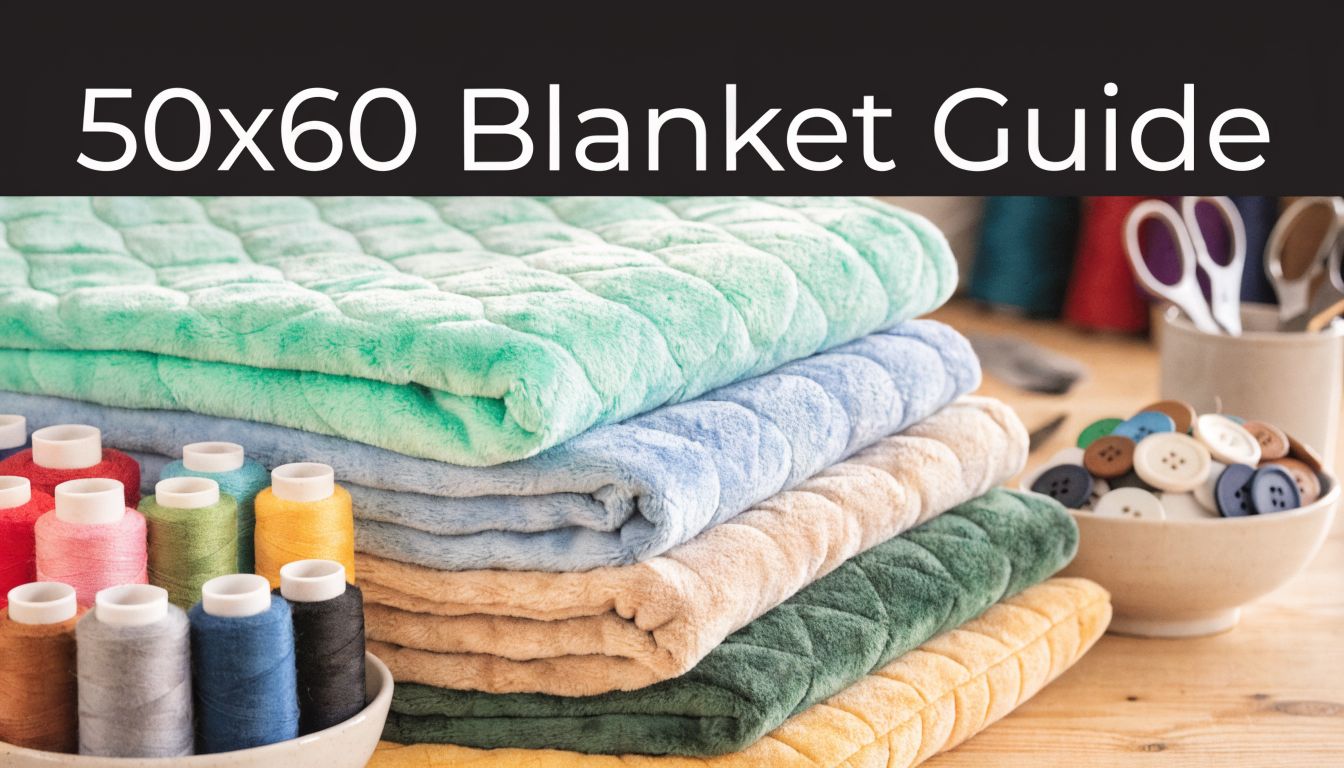
A 50x60 blanket size is a standard throw blanket that measures 50 inches by 60 inches, or 127 cm by 152 cm. It's a popular size when one needs one blanket for couch lounging, gifting, easy storage, and a manageable minky sewing project.
If you’re standing at your cutting table, wondering whether a 50x60 throw will feel generous enough or whether you should size up, this is the practical answer: for one person on a sofa or chair, this size usually works beautifully. For sharing, bed use, or full-body sleeping coverage, it usually doesn’t.
URL Slug: 50x60-blanket-size-minky-guide
What Exactly Is a 50x60 Blanket
A 50x60 blanket is the size many people reach for after dinner when the house cools off, the couch is calling, and they want one blanket that feels substantial without swallowing the whole seat. At the cutting table, it hits the same sweet spot. There is enough size to feel generous, but not so much bulk that minky starts fighting you.
A 50x60 blanket size measures 50 inches wide by 60 inches long, or 127 cm by 152 cm. In practical sewing terms, this is the standard throw size. It works for a living room blanket, a gift, or a first minky project that still looks polished and intentional.
We see this size requested constantly at On Pins & Needles Quilting Co. for one simple reason. It solves real-world problems. A 50x60 throw is easy to fold over the arm of a sofa, easy to wrap around one adult, and easy to finish without dealing with bed-sized yardage. This is especially true for minky projects.
Why this size became a standard throw
Throw blankets need to balance comfort, appearance, and manageability. A 50x60 size does that well.
- Comfortable for one person on a couch, chair, or recliner
- Large enough to drape nicely without puddling on the floor
- Small enough to store and gift without much fuss
That combination is why this size shows up so often in stores, patterns, and custom orders.
What it means at the sewing table
For quilters and minky sewists, 50x60 is a very workable size. You can spread it out on a standard cutting table, align nap with less frustration, and turn the blanket right side out without feeling like you are wrestling a giant fabric tube.
It is also a smart planning size. If you are pairing luxe Cuddle or other plush minky with coordinating backing, this dimension gives you a project that feels premium without pushing fabric cost, weight, and machine handling too far. That makes it a strong choice for gifts, charity sewing, seasonal inventory, and mail-in quilting finishes through our longarm service.
Where 50x60 sits in the size range
A 50x60 throw lands in the middle of the blanket world. It is larger than a lap blanket and smaller than anything meant for a bed. That middle position is exactly why so many customers choose it first. It covers everyday lounging well and still stays practical from fabric calculation through final binding or topstitching.
How Does a 50x60 Blanket Compare to Other Sizes
A customer shopping for a sofa throw usually wants one of two things. Enough coverage to stay comfortable in a chair, or a blanket large enough to share and stretch out under. A 50x60 sits squarely in the first camp.

Standard blanket size comparison
| Blanket Type | Typical Dimensions (Inches) | Best For |
|---|---|---|
| Crib Blanket | 30x40 | Babies, strollers, car seats |
| Lapghan | 36x48 | Legs and lap coverage while seated |
| Throw Blanket | 50x60 | One adult on a sofa, chair, or loveseat |
| Afghan | 50x65 | Slightly more length for solo lounging |
| Twin Blanket | 65x90 | Twin bed use or fuller individual coverage |
| Queen Blanket | 90x90-100 | Bed coverage for larger mattresses |
At the sewing table, those size jumps matter fast. A 36x48 lapghan is quick to cut and topstitch, but it often feels skimpy across the shoulders. A 50x60 throw gives better wrap for one adult without pushing the project into bed-blanket territory. Once you move up to twin size, the fabric weight, bulk, and drag increase enough that many home sewists start fighting the project instead of enjoying it.
Where 50x60 fits best
Choose 50x60 if your goal is:
- One-person lounging on a couch, recliner, or reading chair
- A polished decor piece for the end of a bed or arm of a sofa
- A manageable minky project that still feels generous
- A giftable blanket size that ships, stores, and washes more easily than bed sizes
For many of our customers, this is the sweet spot. It looks substantial in Luxe Cuddle, hides fewer handling mistakes than a tiny lap blanket, and still fits comfortably on a cutting table.
Where another size makes more sense
A 50x60 can feel small if you need:
- Two-person coverage on the couch
- Toe-to-shoulder coverage for a taller adult while lying down
- Real bed coverage instead of a decorative layer
- Extra wrap around the sides and feet
This highlights that the use case has changed.
We see that in minky projects all the time. A 50x60 throw is excellent for everyday comfort, but a customer who wants to tuck the blanket around their body on both sides is usually happier sizing up. On the other hand, going larger adds cost, more fabric shift, and more machine handling. That trade-off matters, especially with plush minky and satin binding.
If you are still deciding between a smaller starter project and a standard throw, our tutorial on how to make a minky baby blanket is a good place to compare scale, fabric needs, and finishing options before you cut into a full 50x60.
What Are the Best Uses for a 50x60 Blanket
A 50x60 blanket works best in the places people use throws every day. You keep one on the couch for evening TV, drape one over a reading chair, or fold one at the foot of the bed to soften the room without adding full bed coverage. In our shop, this is one of the most practical sizes to make in minky because it looks generous, feels plush, and still stays easy to live with.

A few uses stand out.
- Sofa throw: Big enough to cover your lap and torso during a movie, but not so oversized that it slides off the cushions or looks sloppy when folded back up.
- Reading chair blanket: A strong fit for one person who wants warmth across the legs and chest without a lot of extra bulk pooling on the floor.
- Bed accent: Useful at the foot of a queen or king bed when the goal is texture and color, not overnight coverage.
- Guest room or car blanket: Easy to stash, easy to grab, and much more inviting than a flat fleece throw.
- Handmade gift: Large enough to feel special, small enough that the project stays realistic on fabric cost, cutting space, and sewing time.
For minky makers, this size also hits a sweet spot in project planning. We can cut it from standard yardage without wrestling a bed-sized top, pair a printed front with a Luxe Cuddle backing, and finish it with satin binding or simple turned edges depending on the look you want. If you want a smaller practice run before committing to a throw, our tutorial on how to make a minky baby blanket is a smart place to start.
The trade-off is coverage. A 50x60 throw is great for one person sitting up or curled slightly on the couch. It is less satisfying for a tall adult who wants shoulder-to-toe coverage while stretched out, and it will not replace a real bed blanket.
That difference matters when you are choosing fabric and budget. Many sewists assume a larger blanket is always better, but with minky, upsizing means more yardage, more shifting on the cutting table, and more bulk under the machine. For everyday lounging, 50x60 often gives the best balance of comfort, appearance, and manageability.
Why Is Minky the Perfect Fabric for This Size
A 50x60 throw is large enough to show off good texture and small enough to stay pleasant to sew. That combination is why we recommend minky so often for this size. You get warmth, drape, and that plush finish people expect from a gift-quality throw, without wrestling a giant blanket under the machine.

In the shop, this is one of the most forgiving sizes for plush fabric. A larger minky blanket can start to feel hot, heavy, and hard to control at the cutting table. A smaller one does not always give the fabric enough room to shine. At 50x60, minky still feels cozy and substantial, but the project remains realistic for home sewists.
The other advantage is appearance. Cotton alone can look a little flat at throw size unless the piecing or quilting does a lot of visual work. Minky brings built-in depth. Even a simple two-layer blanket looks finished and intentional because the pile catches light and gives the surface movement.
Why minky performs so well here
Minky works especially well for throws because it bends and settles around the body instead of sitting stiff and boxy. That matters on a couch or reading chair, where a blanket gets pulled, folded, and draped more than it gets spread perfectly flat.
We also like the trade-off on sewing time. A 50x60 minky blanket can look high end without requiring a complicated pattern. Pair a smooth printed top with a plush backing, or use one textured cuddle fabric on both sides, and the blanket already has presence.
If you are still comparing plush options, our guide to what cuddle minky fabric is and how it behaves explains the difference between true cuddle and the flatter synthetics that tend to disappoint after a few washes.
The textures that work best
A few minky textures are especially good at this size:
- Luxe Cuddle Hide for a rich, refined surface with noticeable texture
- Snowy Owl for extra loft and a gift-worthy finish
- Fawn for a softer, more understated look that still feels polished
We usually steer beginners away from the wildest high-pile textures for their first blanket if they plan to bind corners tightly or do dense quilting. Those fabrics are beautiful, but they add bulk fast. For a straightforward throw, they are easiest to enjoy in a simple project plan with clean edges and minimal seams.
Cheap fleece is the common substitute, and it rarely gives the same result. It can feel soft off the bolt, then lose body after washing. Good minky keeps its hand better, which is why a 50x60 throw made with quality cuddle fabric often looks better longer and gets used more.
What works and what does not
The best builds for this size are practical:
- a two-layer self-binding or turned-edge throw
- a cotton quilt top with minky backing
- a simple luxury throw made from one featured plush texture
The trouble spots are predictable. Oversized seam-heavy piecing in slippery plush gets frustrating fast. Super cheap fabric tends to flatten. Dense quilting can also fight the softness that made you choose minky in the first place.
For many customers, this size is also the sweet spot for a full project plan. We can help you choose a texture that fits the look, calculate a clean cut from standard yardage, and if you want a more polished quilted finish, send it to our mail-in longarm service instead of forcing a bulky minky project through a domestic machine.
How Much Minky Fabric Do I Need for a 50x60 Blanket
A 50x60 blanket looks straightforward on paper. Then you put minky on the cutting table, and practical questions show up fast. Do you want the nap running top to bottom, do you need extra for quilting, and can you avoid piecing the back?

The practical yardage answer
For most 50x60 minky blankets, we recommend buying 2 yards per side if you are using standard-width plush fabric. That gives enough room to square the fabric, account for shifting during cutting, and keep your finish from coming up short after trimming.
Could you squeeze closer to the minimum? Sometimes. We usually do not advise it with minky, especially for newer sewists. A little extra fabric costs less than re-cutting an entire project because one edge drifted off grain or the nap ended up running the wrong direction.
Two common ways to build it
Simple two-sided minky blanket
This is the easiest plan for a cozy throw.
- Front: 2 yards of minky
- Back: 2 yards of coordinating minky
- Finish: turned and topstitched, bound, or self-bound if your cut allows
If you are choosing from standard-width plush, Shannon Cuddle yardage options make it easier to match texture, color, and cut length without overcomplicating the project.
Cotton quilt top with minky backing
This version needs more thought. Your quilt top may finish at 50x60, but the backing should usually be cut larger so you have room for quilting, shifting, and final trim.
If you are deciding whether to piece a back or cut one clean panel, our guide to extra-wide quilt backing options for quilting projects lays out the trade-offs clearly.
Buying tip: Buy enough to trim confidently. Minky is forgiving in use, not at the cutting stage.
How width changes your cut plan
Width matters as much as yardage.
With standard-width minky, a 50-inch width is close enough to your finished blanket width that every crooked cut shows. There is not much margin for error. Extra-wide backing gives you more working room, which means fewer seams, less bulk, and a flatter finish after quilting or turning.
We use extra-wide minky often for throw backs because it simplifies the whole project plan. It is one of the easiest ways to get a cleaner result without wrestling a pieced plush seam.
A quick visual walkthrough helps here:
A cut plan that works in real life
Before you cut, check these five points:
- Set the finished size first. Cut for the blanket you want, not the fabric piece you happen to have.
- Choose the finish before buying. Turned edges, binding, and quilting each use fabric differently.
- Mark the nap direction. This matters most on plush or patterned minky.
- Add extra for quilting. A quilted minky back needs more allowance than a simple two-layer throw.
- Square everything on the table. Do not trust the fold from the bolt.
At our shop, we usually help customers build the whole plan at once. Fabric choice, cut size, backing width, and finishing method all affect each other. That is the difference between a blanket that feels homemade in the best way and one that feels like a wrestling match from first cut to final stitch.
How Do I Professionally Finish My Minky Blanket
A 50x60 minky blanket is small enough to feel manageable at the cutting table and big enough to fight back at the finishing stage. The corners want to drift, the nap highlights every ripple, and a nice fabric choice can still look sloppy if the edge treatment is off.
The cleanest finish starts with choosing the right method for the blanket you are making. At our shop, we usually sort these projects into two lanes. An unquilted cuddle throw does well with a turned finish. A cotton top with minky backing usually looks better once it is quilted and bound, because quilting controls the stretch before you square and finish the edges.
The hardest part of a minky finish
Edge control is usually the problem, not the sewing itself. Minky shifts under the presser foot, grows as you handle it, and shows every wave along the perimeter. Pair it with quilting cotton and the difference is even more obvious because the cotton stays stable while the minky keeps moving.
That is why many quilters send a throw out for quilting once the top and backing are ready. If you want an allover design without wrestling bulk through a domestic machine, our Mail-in Longarm Quilting Service is often the most reliable way to get a flat, gift-ready result.
When longarm quilting makes sense
Longarm quilting is a practical choice if the project is built and the finish is what is holding you up.
It helps when:
- Your cotton top is complete, but quilting through minky feels unpredictable
- The backing keeps creeping and won’t stay square
- You want the blanket to wash well and keep its shape
- You want a polished finish without heavy topstitching around the whole edge
Pattern scale matters on a 50x60 throw. Small, busy quilting can make plush backing feel stiff. An open edge-to-edge design usually keeps the blanket softer and lets the minky stay plush. We guide customers toward that balance all the time because a throw should still feel good in use, not just look tidy on a hanger.
A professional-looking minky blanket usually comes down to three things: stable layers, square edges, and a finish that matches the weight of the project.
If you’re finishing it yourself
Three methods work well, and each has a trade-off.
- Birthing method: Sew right sides together, leave an opening, turn, then close and topstitch. This is our usual pick for a simple two-layer minky throw because it stays soft and avoids the extra structure of binding.
- Traditional binding: Best for a cotton quilt top with minky backing, or for any blanket that needs more edge definition. If you want a refresher, keep this guide to how to bind a quilt for beginners nearby.
- Quilt first, then bind: The best option when the layers need stabilization before trimming. This gives you more control over final squaring and cleaner corners.
One practical tip from our workroom. Trim and square after quilting, not before, if the blanket includes both cotton and minky. That single choice fixes a lot of wavy-edge problems before they start.
If the goal is a polished throw without the stress of managing plush bulk at home, sending the quilting out is often the faster path and the better-looking one too.
Frequently Asked Questions About 50x60 Minky Blankets
Is a 50x60 blanket big enough for an adult
For one seated adult, yes. It’s a strong size for lap-to-shoulder coverage on a couch, chair, or loveseat. It isn’t the best size for two people or for full bed coverage.
Can I pair a cotton quilt top with a minky back
Yes, and many quilters do. The biggest issues are shifting, stretching, and making sure the top is prepared properly before quilting. The prep guide on longarm quilting top 10 quilt prep tips is a helpful reference before you baste or send it out.
How should I wash a finished minky blanket
Use the care instructions for your specific fabric, but in general, gentle handling preserves plush texture better than aggressive heat and harsh washing habits. Avoid treating premium minky like bargain fleece.
Is this a good beginner project
Yes. A 50x60 throw is one of the most practical first large minky projects because it feels substantial without becoming oversized and frustrating.
Should I use standard width or extra-wide minky
If you want the easiest backing experience, extra-wide is usually the cleaner option. If you’re comfortable piecing or your design already includes seams, standard width can still work well.
If you’re ready to turn the 50x60 blanket size into a finished project, On Pins & Needles Quilting Co. is a strong place to start for premium Shannon Cuddle, Luxe textures like Hide and Snowy Owl, extra-wide backing, and mail-in quilting support. Browse the Luxe Cuddle collection, pick up 90-inch extra-wide Cuddle minky, explore ready-made minky blankets, or book your longarm service today. New customers can also get 15% off your first order.