
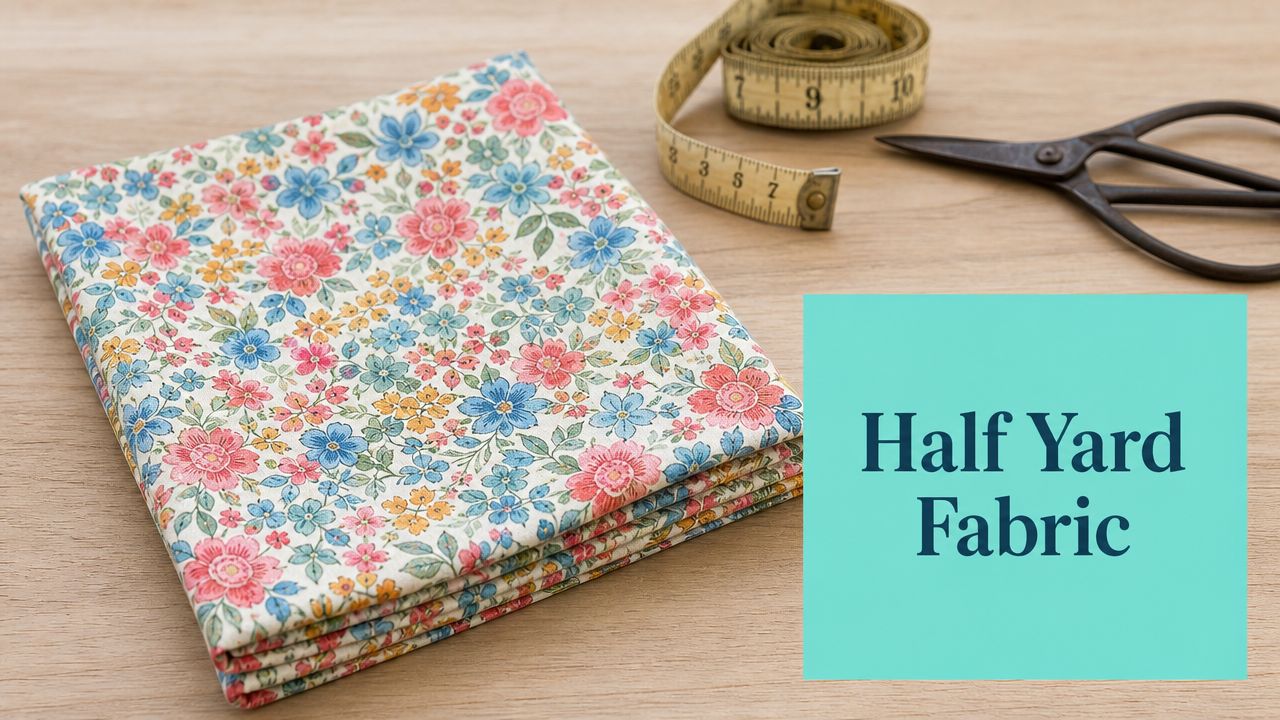
A half yard of fabric is a cut that is 18 inches long by the full width of the fabric bolt, which typically ranges from 42 to 60 inches or more depending on the material. If you're standing in a fabric aisle or staring at an online listing wondering whether that's enough for a soft baby gift, the short answer is yes, often it is, especially with wider minky.
A half yard of fabric gives you an 18-inch cut across the full fabric width, and that full width is what makes it so useful for quilting, bindings, pillows, and many minky baby projects. The confusion usually starts because not every cut shaped like “about a half yard” is the same thing.
If you've ever bought fabric online and felt unsure whether “half yard” meant a true cut, a folded piece, or something closer to a fat quarter, you're not alone. Beginners regularly run into mislabeled listings, and that's exactly why understanding shape, width, and nap matters before you buy.
Meta description: Half yard fabric explained for quilters and minky sewists. Learn dimensions, project ideas, and get 15% off your first order plus free shipping over $70.
What Exactly Is a Half Yard of Fabric?
You order a half yard for a baby blanket, the package arrives, and the piece looks shorter than you expected. That moment trips up a lot of newer sewists. The cut is not short on fabric. It is shaped differently than many people picture.
A true half yard fabric cut measures 18 inches in length by the full width of the fabric. In standard quilting cotton, that width is often 42 to 44 inches including selvages, as explained in this half-yard measurement guide. At OPN Quilting, we like to explain it as a long rectangle taken straight across the bolt. You are buying half a yard in length, while keeping the fabric's full usable span from side to side.
That shape matters more than beginners expect.

Why do people confuse half yards with fat quarters?
The confusion usually comes from shape, not quantity. A half yard and a fat quarter can both sound like small cuts, but they are built for different jobs.
A half yard stays long and wide. A fat quarter is cut and folded into a squarer piece, which makes it handy for patchwork but less useful when you need one continuous panel. If you have ever wondered why one cut works for borders and another works for blocks, that is the reason. For a side-by-side explanation, our guide on what size a fat quarter of fabric is lays it out clearly.
| Fabric Cut | Typical Dimensions | Key Advantage |
|---|---|---|
| Half Yard | 18" × full width of fabric | Keeps the full width for long strips, borders, and wider project pieces |
| Fat Quarter | 18" × 22" | Easier for small patchwork pieces and stash variety |
| Quarter Yard | 9" × full width of fabric | Useful for trims, accents, and very small cuts |
Why does the full width matter so much?
Full width gives you options. In quilting cotton, it lets you cut longer strips and wider sections with less piecing. In minky and Cuddle fabric, it can make the difference between a one-piece baby blanket and a blanket with a center seam.
That is the part many general fabric guides skip.
If you are working with plush fabric, a half yard is not just a measurement. It is a planning tool. A wider minky cut can give you enough width for a baby blanket front or back in one piece, even though the length is only 18 inches. The rectangle works a lot like wrapping paper off the roll. The width of the roll often determines what you can cover in one pass.
Practical rule: If your project needs one continuous panel, long strips, or fewer seams in plush fabric, a half yard often makes more sense than a smaller pre-cut.
How much fabric is that in real terms?
For standard quilting cotton, a half yard gives you a useful mid-size piece that feels much bigger in your hands than the phrase "half yard" suggests. For minky, the same idea becomes even more useful because the extra width can open up project options that would be impossible with a narrower cut.
That is why we always tell sewists to picture both dimensions together. Length tells you how tall the cut is. Width tells you what kind of project shape it can handle.
Why Does Fabric Width Matter for Minky?
You cut a half yard for a baby blanket, spread it on the table, and then notice the problem. The fabric is soft enough, but the shape of the cut does not match the shape of the project. With minky, that mismatch shows up fast.
A half yard always gives you 18 inches of length. What changes is the width of the fabric on the bolt, and that width has a big effect on what you can cut in one piece. Minky makes this more important than quilting cotton because the fabric has pile, stretch, and a visible surface direction.
Premium minky is often much wider than quilting cotton. Luxe Cuddle® Snowy Owl is typically 58/60 inches wide and has a 10mm pile height, according to Shannon Fabrics' Luxe Cuddle Snowy Owl specifications. That extra width can be the reason a baby blanket panel works in one piece instead of needing a join down the middle.

What is nap, and why should you care?
Nap is the direction the fibers naturally lay.
On minky, nap changes more than feel. It changes color, sheen, and how the surface catches light. Stroke it one way and it looks smooth and lighter. Stroke it the other way and it can look deeper in color and slightly shaded. That is why two pieces from the same fabric can look mismatched if one is rotated.
For a baby blanket, this matters a lot. If the front is cut as one panel, the nap flows the same direction across the whole blanket. If you piece smaller cuts together, one section can feel different against a child's hand or look darker than the section beside it. We see beginners blame the fabric, when the actual issue is usually cut direction.
Why is a half yard often better than smaller cuts for minky?
A half yard gives you the full usable width of the bolt in one continuous piece. For minky, that is often the difference between a polished result and a project that looks patched together.
The easiest way to picture it is wrapping-paper logic. The roll width decides what you can cover in one pass. With minky, the bolt width decides whether you can cut a blanket width, matching pillow faces, or a quilt accent without adding a seam that interrupts the pile.
That helps in a few practical ways:
- For baby blankets: A wide half yard may give you enough width for one smooth panel across, which is often the goal for a cuddle blanket top or backing.
- For pillows: You can cut pieces with the nap running the same way so both sides look and feel consistent.
- For quilt details: Borders, strips, and soft backing sections are easier to plan when the surface texture stays aligned.
With minky, width affects appearance, touch, and construction all at once.
That is why named textures such as Hide, Snowy Owl, and Fawn deserve a little extra planning. Their raised or embossed surfaces are part of the design. A seam can interrupt that pattern, and a rotated cut can make the texture look uneven even when your sewing is accurate.
When should you skip the half yard and go wider?
Sometimes a half yard is the right cut for trims, accents, or small nursery projects. Sometimes it is too short for the result you want.
If your goal is a one-piece blanket back or a larger project with fewer joins, wider backing fabric is usually the better path. We recommend starting with this guide to extra-wide minky fabric in 110-inch widths if you want more room to cut a large panel without piecing.
The key idea is simple. For minky, width is not just a number on the bolt. It is what decides whether your project feels smooth, looks consistent, and keeps that plush surface intact.
How Many Half Yards Do You Need for My Project?
You are standing at your cutting table with a half yard of Cuddle fabric, hoping it will be enough for a baby gift. That is the moment where many fabric guides stop too soon. They tell you the measurement, but not how that cut behaves in a real minky project.
For plush fabric, the better question is not just “How much is a half yard?” It is “What size piece can I cut without adding a seam where I do not want one?” That matters most for baby blankets, because a single smooth panel usually looks better, feels better, and keeps the plush texture uninterrupted.

What can one half yard make?
A half yard of minky is often a strong choice for small, touchable projects. It can give you enough fabric for pillows, loveys, soft accents, and other pieces where the width of the cut does most of the work. One commonly shared example is two 18-inch throw pillows from a half yard of wide minky, as shown in this half-yard project video.
For baby blankets, we need to plan more carefully.
A half yard can sometimes work for a very small baby blanket panel if your fabric is wide enough and your finished size is modest. But if your goal is a one-piece Cuddle blanket with more length, one half yard usually feels short fast. Minky is a little like wrapping a gift with a thick ribbon. The material has presence, so small changes in cut size matter more than people expect.
A practical half yard cheat sheet for minky projects
Use these as starting points, then compare them to your finished size goal.
- Two throw pillows: One half yard of wide minky can be enough for two 18-inch pillows, as mentioned in the project video above.
- One lovey or security blanket: One half yard is often enough, with some room to square up edges.
- A compact baby blanket panel: One half yard may work if the width of the fabric covers the blanket width you want and the blanket is intentionally small.
- A fuller baby blanket: You will usually need more than one half yard if you want a longer one-piece panel in Cuddle fabric.
- Appliqué, trim, or soft quilt accents: A half yard is often a very efficient cut because you get a generous continuous piece to work from.
How should you plan a baby blanket in Cuddle fabric?
This is the part many general yardage guides miss. With quilting cotton, piecing is normal. With minky, many customers want to avoid a center seam across a baby blanket because the plush surface is the feature.
So we plan from the finished blanket backward.
Start with the size you want the baby blanket to finish. Then check whether your chosen Cuddle fabric width can cover that dimension in one piece, and whether a half yard gives you enough length for the other side. If either answer is no, go up to the next cut size rather than hoping to trim your way into the right result. For a closer look at that process, our guide on how to calculate fabric yardage for a project walks through the math.
That simple check prevents the most common mistake. Buying a half yard because it sounds generous, then realizing it is generous in width but not in length for the blanket you had in mind.
What about pre-washing and final size?
If your project must finish at a specific measurement, build in a little margin before you cut. Plush fabrics and cotton pairings do not always behave the same way during prep and sewing, so exact finished dimensions are easier to hit when you give yourself trimming room.
We use a simple rule at OPN Quilting. Buy for the finished size you need, plus enough extra to square the piece cleanly and keep the nap running the direction you want.
That approach is especially helpful with Cuddle baby blankets, where one clean panel often makes the whole project look more polished.
What Are the Best Tips for Sewing with Cuddle Fabric?
You cut a half yard of Cuddle for a baby blanket, lay it on the table, and suddenly it feels like a different fabric than the cottons you are used to. It stretches a little, the pile shifts, and the top layer wants to creep while you sew. That is normal.
Cuddle behaves more like a fabric with a built-in cushion. The softness we love is also what makes it slide, shed, and feel bulky at the machine. Once we adjust for that, it gets much easier to sew cleanly, especially if your goal is one soft blanket panel without piecing extra seams.

How do you keep Cuddle fabric from sliding?
Start before the first stitch. Sliding is usually a setup problem, not a sewing-speed problem.
Keep the nap running in the same direction on every piece. If one layer is flipped, the fabrics can fight each other even if the edges look matched. We also recommend clipping generously along the edge instead of relying on a few pins. Clips hold the layers in place without pressing the plush pile flat.
Then sew with a steady pace. Fast stitching often pulls the top layer ahead of the bottom one, which is how corners drift out of alignment.
If shifting is the part you dread most, our guide on how to sew with minky fabric without it sliding explains the handling in more detail.
Which setup changes help most?
A few small machine choices usually make the biggest difference.
- Use a fresh needle: A new needle helps the stitch form more cleanly through plush fabric.
- Try a walking foot: It helps feed the layers more evenly.
- Test on a scrap first: Cuddle can vary by pile and backing, so a quick sample saves frustration later.
- Lengthen your stitch slightly: Tiny stitches can get buried in the pile and make seams harder to inspect.
This matters even more with plusher minky types. A dense Cuddle surface feels wonderful in a baby blanket, but it also adds drag under the presser foot. Slower sewing and a better feed setup usually solve more problems than extra pinning.
Here's a useful visual walkthrough if you prefer to watch the handling in action.
How do you manage lint and bulk?
Cutting Cuddle often creates a little fluff around the edges. That is part of working with plush fabric. We like to give the edges a gentle shake or quick cleanup right after cutting so the lint does not follow the project to the machine.
Bulk is the bigger challenge, especially on a baby blanket made from one half yard panel and a cotton front or binding. The plush side takes up more space in the seam allowance, so grading seams, trimming corners carefully, and avoiding overly narrow turn openings all help. If you are topstitching, keep the fabric supported on the table so the weight does not tug against the needle.
One more tip from our shop. For a simple Cuddle baby blanket, fewer seams usually means a softer finish and an easier sew. If a half yard gives you the coverage you need in one piece, that is often the most beginner-friendly way to use it well.
How Can I Order the Right Amount from OPN Quilting?
Buying half yard fabric online gets easier when the product page is clear and the cut options match real projects. That's especially important with minky, where width, texture, and nap can affect whether a cut feels generous or frustrating.
Premium plush fabrics also sit in a different price category than basic alternatives. Shannon's Luxe Cuddle line has an MSRP around $21.90 per yard, reflecting that higher-end quality, as noted in Shannon Fabrics' Luxe Cuddle Snowy Owl collection spotlight.
What should you look for before you add to cart?
Check the product width first. Then think about whether you need one continuous piece, matched nap direction, or a wider cut for fewer seams.
A few shopping habits help:
- Match the cut to the project: Pillows, baby gifts, and trim pieces often work well with half yards.
- Check if a curated cut is smarter: For larger makes, pre-planned cuts can remove a lot of guesswork.
- Stay texture-aware: Embossed and luxe fabrics behave differently from flatter plush options.
If you already know you want a larger plush cut rather than piecing multiple half yards, browse these Shannon Fabrics 2-yard Luxe minky cuddle cuts.
Orders feel easier when the cut options reflect how sewists actually build projects.
What makes ordering feel less risky?
Clarity and consistency. When a shop cuts accurately, labels dimensions clearly, and specializes in minky, you're less likely to end up with the wrong shape for the job.
That matters even more for beginners, because “half yard” confusion is common. It also matters for experienced quilters who don't want to rework a backing plan after delivery.
For shoppers balancing quality and budget, it helps that there's a 15% first-order coupon available, and free U.S. shipping on orders over $70. Those savings are most useful when you've planned your project well enough to order once.
Start Your Next Soft Project Today
Half yard fabric is one of the most useful cuts in sewing because it gives you enough length to be practical and enough width to stay flexible. For minky projects, that full-width shape matters even more because it helps you preserve nap direction, reduce seams, and cut cleaner pieces for gifts and baby projects.
If you're choosing between a small cut and a workable cut, half yard fabric is often the sweet spot. It's especially handy when you want a continuous look, a softer finish, and less piecing than smaller pre-cuts require.
For readers ready to shop by texture, these pages are a good place to start: Luxe Cuddle fabric collection, extra-wide minky fabric, minky pillow kits, and Shannon Fabrics by the yard.
If you're ready to turn half yard fabric into a soft, gift-worthy project, shop with confidence at On Pins & Needles Quilting Co.. We specialize in premium Shannon textures like Hide, Snowy Owl, and Fawn, offer Mail-in Longarm service, and we're backed by hundreds of verified reviews. Start with the cut that fits your project, use the 15% first-order coupon, check out the free shipping on orders over $70, and Get 15% Off Your First Order.