
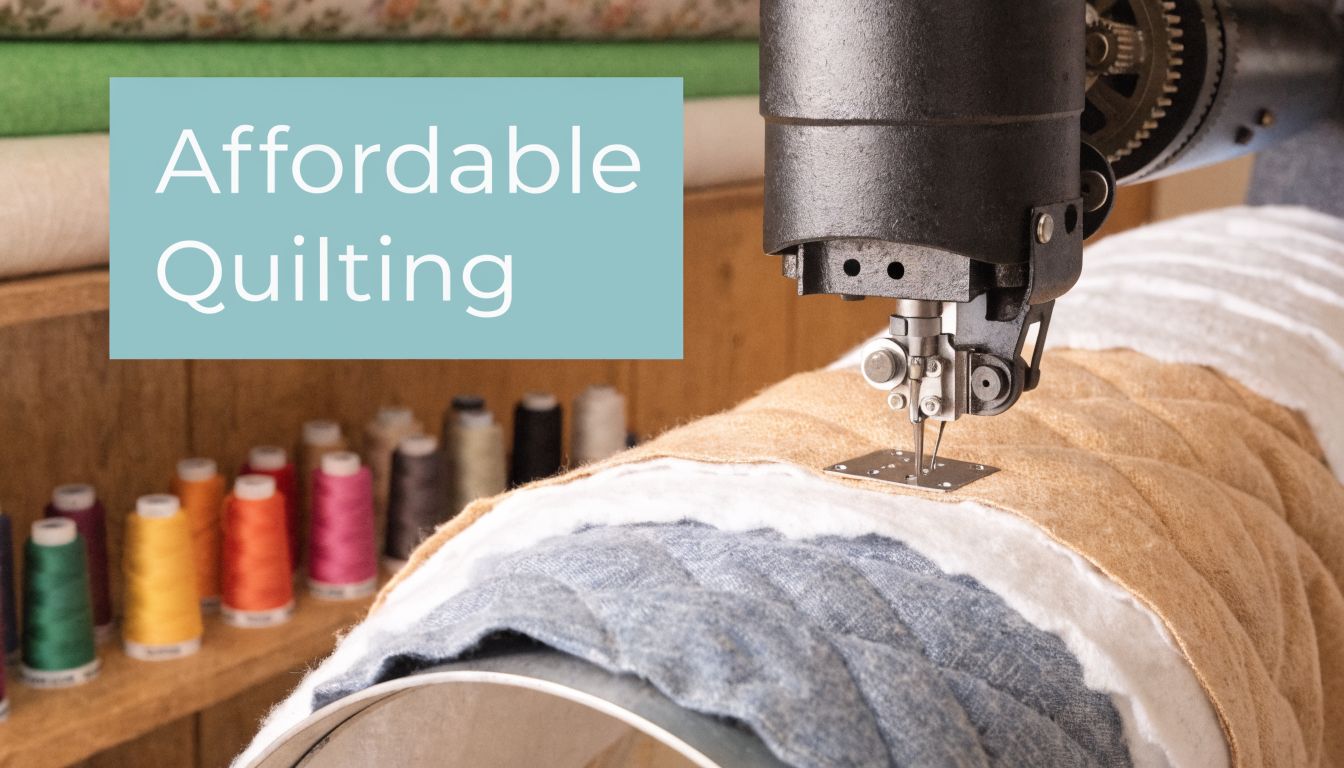
Affordable longarm quilting with batting and thread included is an all-inclusive service where one transparent price covers professional quilting, quality batting, and coordinating thread. Rates often start at 3.5¢ per square inch, and for a 60" x 80" quilt that bundled model can deliver 15% to 25% savings compared with paying separately for quilting, batting, and thread.
If you're holding a finished quilt top and wondering what the final bill will really look like, that's the appeal. A single all-in price removes the guessing, cuts down on shopping for extras, and makes it much easier to send your quilt off with confidence.
What Does All-Inclusive Longarm Quilting Actually Mean
An all-inclusive longarm quilting service bundles the three things every finished quilt needs.
- Professional quilting: Usually an edge-to-edge design stitched across the whole quilt.
- Batting included: You don't have to buy, trim, or ship your own unless you want to.
- Thread included: The quilting thread is part of the price instead of becoming a surprise add-on.
That sounds simple, but it solves one of the biggest frustrations quilters run into after piecing. Many pricing pages tell you the quilting rate, then leave batting, thread, prep fees, and return shipping outside the quote. The number that looked affordable at first doesn't always stay that way.

What is actually in the bundle
When quilters ask what "included" means, they're usually trying to avoid two problems. First, they don't want to buy supplies they may never use again. Second, they want to know their quilt won't stall because one detail was missed.
A practical all-in service covers:
| Included item | Why it matters |
|---|---|
| Edge-to-edge quilting | Gives the quilt a finished, durable texture |
| Batting | Determines loft, drape, warmth, and how the quilting shows |
| Thread | Affects stitch quality, appearance, and durability |
That bundled structure is why many quilters choose a mail-in quilting service instead of piecing together separate purchases and separate decisions.
Practical rule: If you can't tell what your finished quilt will cost before you mail it, the service isn't really simple.
Why quilters choose the all-in approach
The value isn't just convenience. It's peace of mind.
With a bundled service, you don't need to:
- Shop batting separately: No second guessing loft, fiber, or width.
- Match thread yourself: The quilter handles a thread choice that works with the top and backing.
- Do cost math from multiple vendors: One quote is easier to budget around.
That matters even more for large quilts and soft backings. If you're using plush fabrics or extra-wide backing, the fewer moving parts you have to manage, the smoother the finish tends to be.
We see this most often with quilters who want a clean result without turning the final step into another project. For them, all-inclusive quilting isn't just a package. It's the easiest path from finished top to finished quilt.
How Does OPN Make Longarm Quilting So Affordable
The short answer is transparency. Affordable longarm quilting with batting and thread included works best when the price is based on square inches, because you can calculate it before you ship.
According to Honeycomb Quilting's longarm pricing, bundled services often start at 3.5¢ per square inch, and for a 60" x 80" quilt that approach can save 15% to 25% compared with separate charges for quilting, batting, and thread. That same source notes that a 60" x 80" quilt equals 4,800 square inches, which puts quilting at $168 before tax in that pricing model.
Why the square-inch model helps
Square-inch pricing keeps the quote tied to the actual quilt size. That's easier to understand than hourly pricing, and it's much easier to compare.
For example:
- Measure the quilt top: width × length
- Calculate the area: square inches
- Apply the listed rate: one clear total for the quilting package
That makes planning much easier when you're deciding whether to finish a throw, a bed quilt, or a gift project on a budget.
Where bundled pricing saves frustration
Separate pricing can look cheaper at first glance because the base quilting rate is lower. The problem is that the base rate isn't the whole job.
Once batting and thread are added, the total often changes. Some services also handle those items separately enough that customers end up buying materials first, then mailing them in, then paying return shipping later.
A bundled model removes that stop-and-start process. You know what's covered, and you don't have to source the basic finishing materials on your own.
One option quilters can compare is the quilting services collection, which presents finishing as a single service category instead of making customers chase each component across the shop.
Save on the finish and the fabrics. New customers can get 15% off their first order, and U.S. orders over $70 ship free.
What works and what doesn't
What works:
- Clear PSI pricing
- Included batting and thread
- Simple edge-to-edge options
- Return shipping built into the service
What doesn't:
- Low headline prices with unclear extras
- Vague material policies
- Too many separate decisions for a basic finish
If your goal is a beautiful, affordable finish, the smartest price isn't always the lowest-looking rate. It's the price you can trust before the box leaves your house.
How Do I Prepare My Quilt For Mail-In Service
You finish the binding plan, fold up the quilt, and then pause at the shipping box. The usual questions show up fast. Is the backing big enough? Will the top stay square on the frame? Did you miss dark threads that could show through light fabric?
A little prep answers those questions before your quilt ever leaves home. It also helps me get your quilt loaded cleanly and quilted without avoidable delays, which is part of keeping the whole service predictable and affordable.

What should you do before shipping
Start with the basics. The quilts that travel and load the best are usually the ones that were pressed, checked, labeled, and packed with care.
-
Press the quilt top and backing
Flat seams and smooth fabric help the quilt load evenly. Creases and tucked seams can get stitched down once quilting starts. -
Trim loose threads
This step matters more than many quilters expect. Dark threads can show through light tops, and once the quilt is quilted, those shadows are much harder to ignore. -
Check the backing size
The backing needs extra fabric on all sides so it can be attached to the frame properly. If the backing is too small, quilting stops before it starts. -
Square the quilt as well as you can
Perfection is not the goal. A quilt that is reasonably square and not overly wavy at the edges gives the best chance for a smooth finish. -
Mark the top if the quilt is directional
If your print, blocks, or border have a clear top and bottom, add a note or pin a label so the quilt is oriented the way you intended.
If you want a clear packing and prep checklist, follow these quilt prep instructions for mail-in longarm service.
What makes a quilt easier to mail and quilt
Keep the quilt top, backing, and any notes together in one bag inside the shipping box. That protects the fabrics from moisture and keeps orientation notes from getting lost.
Do not baste the quilt layers together before sending them. Longarm quilting works best when the top, batting, and backing are handled separately on the frame. Since batting and thread are included in our all-in service, you also do not need to shop for those materials or guess whether what you buy will work well with your quilt.
Backing choice affects prep, too. Wide backing can make the process simpler because it often reduces piecing and bulk. Plush backings like minky or Cuddle can produce a beautiful finish, but they do need cleaner prep. I pay close attention to those quilts on the frame, and customers usually get the best result when the quilt top is well pressed, loose threads are trimmed, and the backing is cut straight and generously sized.
What if you're nervous about sending it in
That feeling is normal. Mail-in quilting asks you to hand off a project you have spent a lot of time making.
The best way to lower that stress is to treat prep as part of the quilting result, not just a shipping chore. Good prep protects your fabric choices, reduces surprises, and helps the final price stay the final price. There is less chance of last-minute fixes, extra calls, or delays because something simple was missed at the kitchen table.
A quick visual walkthrough can help before you tape the box shut:
Which Batting and Thread Options Are Included
Included materials only help if they're the right materials. That's why batting and thread choice matter so much in longarm quilting, particularly when the backing is minky or Shannon Cuddle.
Why low-loft batting is a smart included option
For plush backings, low-loft polyester batting is often the most practical fit. It gives the quilt drape without making the layers bulky, and it helps the quilting design stay visible without stiffening the project.
That matters with premium minky. According to this minky quilting video reference, using low-loft poly batting helps prevent fiber migration, often called bearding, and proper machine tension is critical to avoid matting the pile. The same source notes that pile matting is a common issue in over 40% of DIY minky quilting attempts.
Why thread choice matters more than many quilters expect
Thread does two jobs at once. It has to hold up structurally, and it has to look good on both the top and the backing.
We prefer the included-thread approach because it removes one more failure point from the process. Customers don't have to guess whether a spool they bought elsewhere will behave well on a longarm or complement a plush backing.
For minky quilts, that consistency helps. Stretch, slip, and pile can all magnify small tension issues. A thread chosen by the quilter for the machine, pattern, and backing tends to produce a smoother finish than a bring-your-own approach.
What this means for Shannon Cuddle quilts
If you're quilting with luxe textures like Hide, Snowy Owl, or Fawn, the goal usually isn't dense quilting. You want softness, drape, and enough stitch definition to secure the layers without flattening the fabric more than necessary.
That's one reason edge-to-edge quilting pairs so well with soft backings. It gives the quilt structure while still letting the fabric feel like the fabric you chose in the first place.
If you want more background on batting behavior before you decide, the quilt batting guide is a useful next read. For fabric-specific context, What is Cuddle® minky fabric? is also worth bookmarking.
How Do I Choose The Perfect Quilting Pattern
You finish a quilt top, love the piecing, and then get stuck on the pattern list. That choice matters because quilting can either frame the quilt well or pull attention away from the work you already did.

I tell customers to start with the quilt's job, not the pattern name. A baby quilt, a bed quilt with minky, and a crisp modern throw usually need different quilting even if you like the same motif on screen. The right choice balances look, softness, and how much texture you want to see once the quilt is washed.
Which pattern style fits your quilt top
These are the pattern families I use most often when helping customers choose:
-
Modern geometric
A strong choice for solids, bold contrast, and contemporary piecing. These designs add order and movement without making a busy top feel crowded. -
Classic floral
Well suited to traditional blocks, softer prints, and quilts with an heirloom feel. Floral patterns can soften sharp angles and give the whole quilt a gentler finish. -
Whimsical or juvenile
Good for baby quilts, novelty fabrics, and gifts that should feel playful from edge to edge. -
Nature-inspired motifs
Leaves, vines, and similar textures work well with rustic color palettes, wildlife prints, cabins, and outdoor themes.
What works especially well with minky backs
With Luxe Cuddle or other plush backings, I usually recommend simpler edge-to-edge designs and a bit more open spacing. That keeps the quilt soft and drapey instead of pressing the loft flat.
Dense quilting has its place. It can add strong texture and control. But on a cuddle-backed quilt, dense stitching often gives up some softness. For many customers, that is not the trade-off they want.
A good pattern supports the quilt top and the way the finished quilt should feel in everyday use.
How to narrow the choice faster
Three questions usually get you to the right answer:
| Question | What it helps you decide |
|---|---|
| Is my quilt top busy or simple? | Whether the quilting should stay quiet or stand out more |
| Is the quilt formal or playful? | Whether to choose floral, modern, or whimsical motifs |
| Is softness a top priority? | Whether to keep the design more open and less dense |
If you want to compare real designs instead of guessing from pattern names, browse the longarm quilting pattern gallery. It helps you see what reads subtle, what reads bold, and what tends to work best on quilts that need both beauty and comfort.
When customers use that approach, pattern selection gets much easier. You are not just picking a pretty design. You are choosing the finish that gives your quilt the look, feel, and final value you want.
Is All-Inclusive Longarm Quilting Worth The Cost
A quilt is almost finished, spread across the table, and the last thing anyone wants is a new round of decisions about batting, thread, add-on fees, and whether the final bill will climb after the quilt arrives. That is the moment all-inclusive quilting starts to make real sense.
The base quilting rate only tells part of the story. The full cost includes the materials inside the quilt, the thread on top of it, and the time spent sourcing, comparing, and second-guessing those choices. An all-in price works well because it gives you the number that matters most. The total to get the quilt finished.
According to Orchid Owl's quilting services comparison examples, a 60" x 72" quilt with an a la carte structure of $0.02 per square inch plus $0.43 per linear inch for batting can total over $112, excluding thread and shipping. The same source notes that an all-in service at $0.03 per square inch totals about $130, which simplifies the process because the materials are already covered.

Cost Comparison All-In vs. A La Carte Quilting 90" x 90" Queen Quilt
| Cost Item | OPN All-Inclusive Model | Typical A La Carte Model |
|---|---|---|
| Quilting labor | One bundled price based on size | Separate price based on size |
| Batting purchase | Included | Added separately |
| Thread purchase | Included | Added separately or billed later |
| Cost calculation | One quote | Multiple line items |
| Shipping impact | Simpler to budget | May require separate planning |
| Overall experience | Predictable | More moving parts |
That predictability matters even more on quilts with minky or other plush backings. Those quilts already come with extra handling considerations, so removing the batting and thread guesswork saves both money and stress. I see this often. The customers who are happiest with the final result usually wanted a clear plan from the start, not a low entry price that grew later.
What you're really paying for
You are paying for the finished result and the confidence that the parts will work together.
That includes:
- Batting and thread already accounted for in the quote
- Less time spent shopping for materials for one project
- Lower chance of ordering the wrong loft, fiber, or color
- A better fit for special cases like cuddle and minky-backed quilts
- A simpler budget from the day you mail the quilt
For many quilt tops, the cheapest-looking quote is not the lowest final cost. It can become more expensive once batting, thread, shipping, and correction time are added. OPN's all-inclusive model keeps the decision process simpler and the final bill easier to trust.
One clear price also protects your momentum. You can send the quilt, know what the finish will cost, and focus on getting it back beautifully quilted and ready for binding.
What Is The Turnaround Time and Shipping Process
You finally finish the quilt top, fold it up, and then pause at the post office counter because mailing it feels like the risky part. That hesitation is normal. A clear shipping process removes a lot of that stress, especially when you want the final cost to stay predictable from the day you send the box.
At OPN, the goal is simple. Get your quilt here safely, confirm the plan before stitching starts, and return it quilted and ready for binding without surprise add-on charges.
How to pack your quilt for shipping
A little prep makes a big difference.
- Fold the quilt top and backing neatly
- Include any required order details
- Use a sturdy box or mailer
- Protect the contents from moisture during transit
Do not compress the quilt into the smallest box possible. If a top or backing arrives tightly crammed, it usually needs extra smoothing and handling before it can be loaded well. Clean folding and a bag or liner inside the box help the quilt arrive in the same condition it left your sewing room.
What happens after it arrives
Each quilt is checked in and matched to the quilting plan that came with it. The top, backing, and notes are reviewed together so pattern choice, orientation, and any special handling points are clear before quilting begins.
That step matters even more with specialty backings like minky. Plush fabrics can shift, stretch, or show density differently than a standard cotton backing, so I like every detail confirmed up front. It saves time later and protects the finish you are paying for.
Turnaround time depends on the current queue and the needs of the quilt itself. A straightforward cotton quilt and a minky-backed quilt do not always move at the same pace because the handling is different. What customers usually care about most is knowing their quilt is in process, the plan is confirmed, and the return trip is already part of the budget.
How return shipping fits into the value
Return shipping affects the final price more than many quilters expect. A low base quilting quote can stop looking affordable once shipping is added at the end.
Including return shipping keeps the process easier to budget. You know the quilt is coming back to you, and you are not left guessing about one last charge after the quilting is done. That is part of the peace of mind behind an all-inclusive service. The box goes out, the quilt comes back finished, and the final bill stays much closer to what you expected.
Common Questions About Our Longarm Service
Is edge-to-edge quilting the most common choice
Yes. According to Needle Bright's longarm rate overview, 70% of longarm service demand is for cost-effective edge-to-edge designs. That lines up with what many customers want: a good-looking finish that keeps the process simple.
Why do some services have a minimum charge
Small projects still take setup time, loading time, thread, and machine time. The same source notes that minimum charges are often around $50, which helps keep the service workable for smaller items.
Is longarm quilting still a growing category
Yes. The same source states that the global quilting market was valued at $5.2 billion in 2023 and is projected to grow 6.2% annually through 2030. More quilters are piecing at home and sending tops out for finishing, especially when they want a clean edge-to-edge result without buying a longarm setup.
Can you quilt minky-backed tops
Yes, with the right batting, tension, and pattern density. That's where specialist handling matters most.
Do reviews matter when choosing a mail-in quilter
Absolutely. We encourage customers to look for consistency, clear prep instructions, and real feedback from quilters who have sent in projects like theirs. Our hundreds of verified reviews tell us that trust usually starts with communication and clear expectations.
If you'd like a simpler way to finish your next quilt, book your longarm service today with On Pins & Needles Quilting Co.. You can also shop 90-inch Cuddle® backing, browse the Luxe Cuddle collection, explore the pattern gallery, or get 15% off your first order while planning your next finish.