
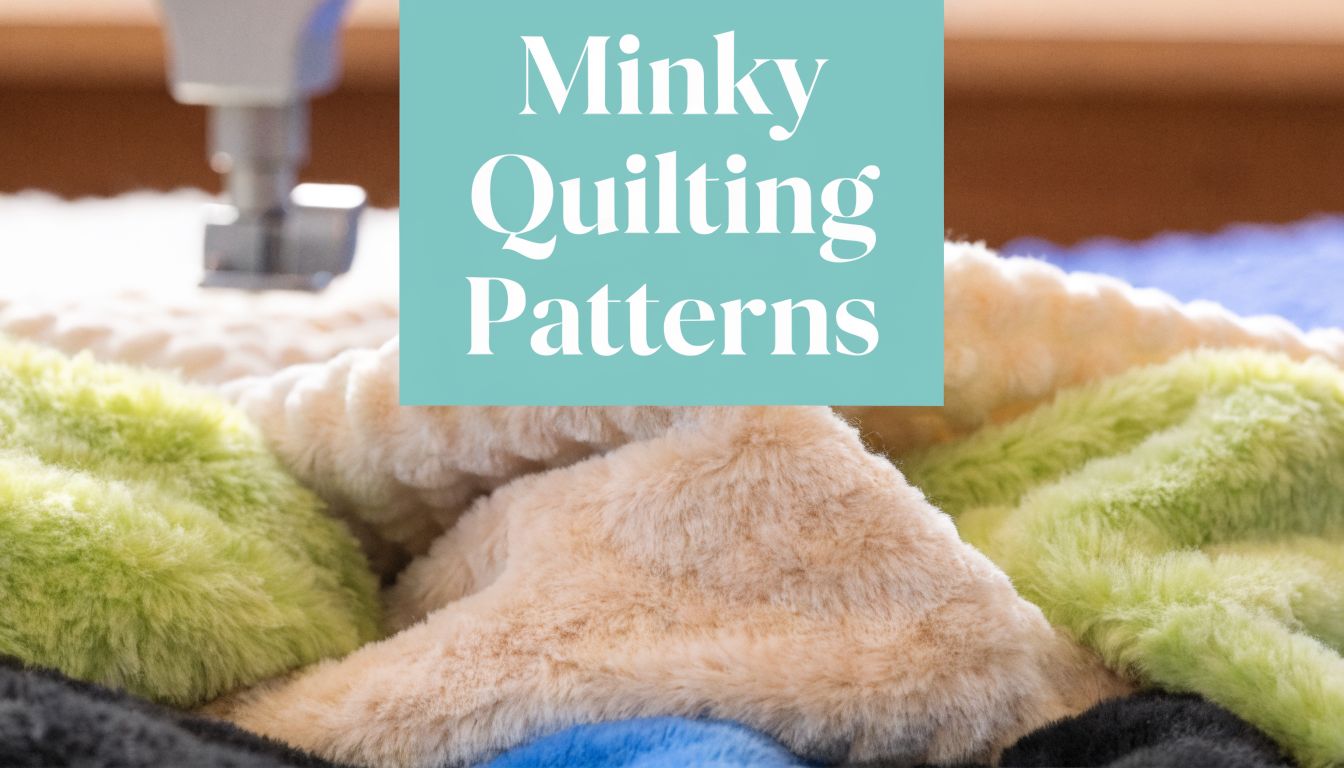
You've pieced the top, chosen a soft backing, and now you're staring at the pattern options wondering which edge-to-edge quilting patterns for minky will work. The short answer is this: minky quilts usually look and feel best with open, flowing edge-to-edge designs sized to the fabric's stretch, nap, and loft, especially when the pattern is matched to the specific Shannon Cuddle texture.
That's where many quilts either stay buttery soft or end up flatter and fussier than you hoped. I've learned that the pattern itself matters, but the key is how that pattern behaves on smooth Cuddle, textured Dimple, or plush Luxe Cuddle like Hide, Snowy Owl, and Fawn.
Meta description: Edge-to-edge quilting patterns for minky made simple. Learn texture pairings, prep tips, and get 15% off your first order plus free shipping over $70.
URL slug: /blog/edge-to-edge-quilting-patterns-for-minky
What Makes Quilting on Minky Fabric Different?
Minky doesn't act like quilting cotton, and that's why so many quilters feel confident right up until the backing starts shifting. The fabric is soft and forgiving in use, but not especially forgiving during quilting.
Three things matter most. Stretch, nap, and loft.

Why does stretch cause so many problems?
Minky fabric exhibits significant perpendicular stretch to the selvage, and improper tension during basting can cause fabric misalignment of 0.5 to 2 inches over a 60-inch quilt width, which can break the continuous look edge-to-edge designs depend on, as noted in this minky backing guide.
That sounds technical, but the result is easy to recognize. Borders wave, corners creep, and a pantograph that should look smooth starts looking slightly off.
If you're newer to Shannon Cuddle, our guide to what Cuddle minky fabric is helps explain why it feels so different in your hands before it ever reaches the frame.
What is nap, and why does it matter?
Nap is the direction the pile lays. When you run your hand one way, it feels smoother. Run your hand the other way, and it pushes back a little.
That directional pile changes how light hits the backing. It also changes how quilting lines appear. A soft meander can look elegant one direction and a little busier the other, especially on embossed or textured surfaces.
Practical rule: Before you choose a pattern, stroke the minky in both directions and decide which way you want the finished quilt to “read” when it's spread out on a bed or draped over a sofa.
What does loft change?
Loft is the plush body that makes minky feel cozy in the first place. It's the part you're trying to preserve.
Dense quilting presses that pile down. Open quilting lets more of that softness stay visible and touchable.
Consider these simple factors:
- Stretch affects accuracy. If it shifts, the pattern can distort.
- Nap affects appearance. If the pile runs differently than you expect, the quilting can look uneven.
- Loft affects feel. If the quilting is too dense, the fabric can lose some of its cushy finish.
That's why edge-to-edge quilting patterns for minky aren't just about style. They're about choosing a design that works with the fabric instead of fighting it.
How Should I Prepare My Quilt for Mail-In Minky Quilting?
You've finished the quilt top, folded up that beautiful Shannon minky backing, and now the nerves hit. The usual worry is simple. “What if I pack this wrong and the minky shifts, stretches, or comes back looking off?”
Here's the reassuring part. Your job is not to make the quilt behave before it reaches the longarm. Your job is to send a clean, square top and a properly sized backing so the quilt can be loaded the way it was meant to be loaded. Minky works a lot like a knit sweater compared with a crisp quilting cotton shirt. If you tug and fuss with it too much at home, it can lose its shape before quilting even starts.
What should I do before I mail my quilt?
Start with the quilt top, because that is the part you can control most accurately.
- Clip loose threads. Dark threads can shadow through lighter fabrics, and stray bits can get caught under stitching.
- Press the top so it lies flat. The goal is an even surface, not flattened seams.
- Check your borders on a table or floor. If they wave now, quilting will not pull them square.
- Leave off buttons, thick trims, and bulky embellishments. Longarm quilting needs a clear path.
If you want the exact sizing, packing, and labeling requirements, use OPN's quilt prep instructions for mail-in quilting.
Why does minky backing need extra fabric?
A longarm frame grabs the backing outside the quilt top area. That means the backing needs enough extra width and length for loading and tensioning.
With quilting cotton, people sometimes get away with cutting it close. Minky is less forgiving. Luxe minky has loft that compresses. Hide and other embossed textures can shift visually if they are pulled unevenly. Dimple can mask small irregularities, but it still needs enough margin to load straight. Extra backing gives the quilter room to secure the layers without forcing the fabric.
One small mistake causes a lot of frustration here. Quilters sometimes smooth and stretch minky on purpose because they want to “help” it lay flat. Resist that urge. Let the frame do the holding.
Should I baste the quilt sandwich first?
Usually, no.
If you are mailing a quilt for longarm quilting, keep the top and backing separate unless the quilter specifically asks for something different. A home-basted minky sandwich can create drag, puckers, or a skewed backing direction that is harder to correct once it is loaded.
A good prep checklist looks like this:
- Square the quilt top so opposite sides are as consistent as possible.
- Cut the backing neatly and leave the extra fabric your quilter requires.
- Mark the top edge if the quilt has a directional print or a clear up-and-down layout.
- Tell your quilter which minky texture you chose. That helps with pattern planning, especially for Luxe, Hide, and Dimple because each texture shows quilting a little differently.
- Include your pattern choice or style notes if you already know them.
That texture note matters more than many quilters expect. A pattern that looks soft and flowing on Luxe may read more broken up on Hide, where the embossed surface interrupts the quilting line. On Dimple, open designs often stay readable without flattening the plush feel too much. Sharing that information up front helps OPN set up the quilt with the backing, batting, thread, and quilting approach that fits your project.
Which Edge-to-Edge Pattern Categories Should I Consider?
Choosing a pantograph gets easier when you stop thinking in terms of “pretty” and start thinking in terms of what the pattern is supposed to do on the quilt. Some patterns create movement. Some create structure. Some disappear into texture in a lovely way.
Edge-to-edge quilting became dominant for a reason. E2E designs accounted for 68% of all longarm quilting services by 2010, a 209% increase from 2000, driven by efficiency on large quilts, according to this quilting discussion summary.

If you want to browse actual design options, the pattern gallery is the easiest place to start.
Which pattern families work well on minky?
Modern and geometric
These patterns bring order. Think grids, gentle angles, linked diamonds, or clean repeated curves.
They work well when the quilt top is busy and needs a little structure. On smoother minky textures, they read crisp and intentional.
Floral and botanical
Florals soften the whole quilt. Vines, petals, leaves, and scrolling branches tend to blend beautifully with the cozy look of minky.
They're often a safe choice when you want quilting that feels decorative but not stiff.
Juvenile and playful
This family includes stars, hearts, animals, clouds, simple loops, and other whimsical motifs. They're popular for baby quilts and kid throws because the design adds personality without needing custom quilting.
These patterns work best when the motifs are large enough to stay readable on plush fabric.
Holiday and themed
Snowflakes, pumpkins, trees, hearts, and seasonal motifs can be fun on gifts and décor pieces. The trick is restraint. If the fabric already has strong texture or print, a simpler themed pattern usually works better than a packed one.
Nature-inspired and meandering
Many minky quilts shine in these designs. Meanders, loops, wind-like curves, and organic paths spread tension gently and don't ask the fabric to make abrupt direction changes.
How do I narrow it down?
Ask yourself three questions:
- Do I want the quilting to stand out or blend in?
- Is the quilt for cuddling, display, or both?
- Is the backing smooth, dimpled, embossed, or high-pile Luxe Cuddle?
If you're stuck between two designs, the one with fewer sharp turns is usually the safer minky choice.
How Do Patterns Look on Different Minky Textures?
This is the part most guides skip, and it's the part that changes the finished result the most. The same edge-to-edge quilting pattern can look polished on one minky texture and muddy on another.
Stitch length and density are part of that. Edge-to-edge quilting on minky requires longer stitch lengths of 3.5mm to 4.0mm than cotton, and quilting density above 4 stitches per linear inch on Luxe Cuddle can reduce perceived softness by 30% to 40% in tactile consumer testing, according to this guide on quilting with minky.

What changes from one texture to another?
Smooth minky gives the quilting lines the clearest stage. Dimple and embossed textures already bring surface detail, so the quilting shares attention with the fabric itself. Plush Luxe textures like Hide and Snowy Owl add even more pile, which can soften the visual impact of the stitching.
Here's the practical pairing guide we use when helping customers choose.
Minky Texture and E2E Pattern Pairing Guide
| Minky Texture (Example) | Best Pattern Category | Why It Works | Considerations |
|---|---|---|---|
| Smooth Cuddle 3 | Modern geometric, open floral, playful motifs | The lower pile lets lines read clearly and keeps motif shapes recognizable | Dense designs can still firm up the hand more than some quilters want |
| Cuddle Dimple | Open meander, simple botanical, gentle juvenile shapes | The quilting layers over the dot texture without fighting it | Tiny motifs can get visually busy against the surface texture |
| Luxe Cuddle Hide | Large-scale flowing patterns, broad botanicals | Open curves complement the plush, directional texture instead of flattening it | Tight grids and frequent turns can make the backing feel more compressed |
| Luxe Cuddle Fawn | Soft florals, nature-inspired sweeps, relaxed loops | The texture adds richness, so the quilting doesn't need to do all the visual work | Keep the design open enough that the texture still shows |
| Luxe Cuddle Snowy Owl | Sparse elegant motifs, large meanders, simple statement pantos | High loft creates a luxurious finish when the quilting is allowed to breathe | Dense or fussy motifs can disappear into the pile and reduce that cloud-soft feel |
| Embossed minky | Open flowing or thematic motifs that echo the embossed design | Quilting can add depth without clashing when the shapes are simple | Strong geometric repetition may compete with the embossed pattern |
Which Shannon textures pair best with which patterns?
If you love a smooth, polished finish, Shannon Cuddle and Luxe Cuddle options give you the widest range of surfaces to choose from.
A few pairings I like in real projects:
- Luxe Cuddle Hide: Looks beautiful with open curves and broad botanicals.
- Luxe Cuddle Fawn: Handles soft floral and meandering lines gracefully.
- Snowy Owl: Usually benefits from a pattern with breathing room so the pile stays prominent.
- Dimple: Great for playful baby quilt pantographs because the surface already feels cheerful.
If you're choosing fabric first, browsing specific textures can help. Many quilters start with Luxe Cuddle Hide, then compare it with Luxe Cuddle Snowy Owl or Cuddle Dimple fabrics depending on the feel they want.
Smooth textures show quilting. Plush textures suggest quilting. That distinction helps you decide whether you want the pattern to be graphic or subtle.
What should I avoid?
The most common mismatch is a dense geometric panto on a high-loft backing. It's not “wrong,” but it often asks the minky to behave like cotton.
Another mismatch is picking a novelty motif that's too small for the pile. The stitching may be there, but the shape won't read from a normal viewing distance.
What Is the Right Quilting Density and Scale?
Density is how close the quilting lines sit next to each other. On minky, that spacing changes both the look and the feel.
I explain it like footprints in snow. A few footprints leave the snow soft and pretty. A crowded path packs it down.
How open should edge-to-edge quilting be?
For many minky backs, less is more. Open designs help the backing stay soft, especially on plush Luxe textures.
A useful rule of thumb is to think in terms of visual breathing room:
- High-pile Luxe Cuddle: Choose larger, more open designs.
- Low-pile smooth minky: Can handle a bit more structure.
- Textured surfaces like Dimple or embossed: Usually benefit from simple quilting that doesn't compete.
This matches what many quilters see in practice. When the backing is especially plush, large-scale curves often look more natural than tightly packed detail.
Does scale matter on bigger quilts?
Yes. A design that looks charming on a baby quilt can look tiny and restless on a queen or king.
Extra-wide backings add another wrinkle. Research notes a major gap in quilting advice around how edge-to-edge designs scale on 90-inch and 110-inch minky backings, and that the lack of a vertical seam changes quilting flow, so pattern density and line spacing need recalibration for visual balance, as discussed in this video reference on extra-wide minky considerations.
That's one reason big quilts often look better with generous pattern scale. The quilt has room to let the design travel.
Worth remembering: A king-size quilt isn't just a larger baby quilt. The pattern has to be resized so it reads calmly across the whole surface.
If you want a quick refresher on how thread choice interacts with that softness, our thread weight chart is a handy companion read.
New customer note: You can use the first-order discount on fabric purchases, and orders over $70 qualify for free U.S. shipping. That's especially helpful when you're building out a backing, binding, and kit order together.
Can You Show Me Examples for Common Projects?
You finish a quilt top you love, pull out the minky backing, and then the second-guessing starts. Will a sweet baby pattern disappear into Dimple? Will a floral look muddy on Hide? Will Luxe turn your favorite detailed design into one soft blur? Those are the right questions to ask, because project type and minky texture need to work together.

What works for a baby blanket?
Baby quilts ask for a careful balance. They need to stay soft in little hands, wash well, and still look charming after the nursery theme changes.
For many baby projects, Cuddle Dimple is forgiving because the texture already brings a playful surface. That usually pairs best with pattern families that read clearly at a glance, such as clouds, loops, stars, gentle meanders, or other juvenile motifs. On Dimple, the quilting lines act a bit like writing on textured paper. Clean, open shapes stay readable. Tiny fussy detail can get lost.
A reliable combination looks like this:
- Backing choice: Cuddle Dimple or a soft printed Cuddle
- Pattern family: Juvenile motifs, clouds, loops, stars, simple meander
- Scale: Medium to open
- Best use: Baby gifts, stroller quilts, tummy-time quilts
If you want to coordinate everything without hunting through separate supplies, baby quilt kits and minky fabric by the yard make the planning stage much easier.
What works for a queen or king quilt with minky backing?
Large quilts have a different visual job. The pattern has to travel across a lot of surface area without making the back feel crowded.
On a bed-size quilt, I usually steer quilters toward larger edge-to-edge designs with clear movement, especially if the backing is Shannon Luxe Cuddle or Hide. Luxe has that rich, silky pile that softens the edges of the quilting design. Hide adds even more surface activity because of its fur-like texture. In both cases, broad botanicals, open curves, and relaxed geometric designs tend to read better than tight repeats.
Here's the simple rule. The plusher the backing, the more room the quilting needs to breathe.
A good checklist for this project type:
- Choose a pattern with long, flowing travel lines.
- Use generous scale so the quilt reads calmly across the bed.
- Keep the quilting open on Luxe and Hide so the backing still feels plush.
- Skip tiny motifs that can look choppy once they cross a large field of textured minky.
- Mark directional fabrics clearly if the nap or print matters.
A short demo can help you see how minky behaves on the frame before you send in a larger quilt. Our mail-in longarm quilting service overview also explains what to expect if you want OPN to handle the quilting for you.
What works for a luxury minky pillow?
Pillows are small, so they give you more freedom to play. You can test a design idea without committing to a full quilt.
This is often where Luxe Cuddle shines. Its smooth, elegant surface can support a bit more design presence than Dimple, especially on the front of a decorative pillow. Moderate geometrics, soft florals, and seasonal motifs all work well here. If you use Hide, keep the quilting simpler. Hide has so much personality on its own that the pattern should frame it, not fight it.
That difference matters. A floral on Luxe can look refined. The same floral on Hide may read as broken or overly busy.
Good pillow pairings include:
- Moderate geometric patterns on smooth minky
- Soft florals on Luxe textures
- Playful motifs for holiday or seasonal décor
- Quilted fronts with plush unquilted backs when you want strong texture contrast
If you want a smaller practice project first, minky pillow kits with forms cut down on decision fatigue and let you learn how each texture responds.
How do I decide if the pattern is too much?
Match the quilting to the busiest part of the project.
If the quilt top has lots of piecing, sharp contrast, or novelty prints, quieter quilting usually gives the whole piece room to settle. If the top is simple, the quilting can carry more of the design interest. Then look at the backing texture and make one more adjustment. Dimple handles playful open motifs well. Luxe can support elegant movement and moderate detail. Hide usually looks best with the fewest interruptions.
That is one of the biggest hard-won lessons with minky. The right pattern is rarely the most complicated one. It is the one that still reads clearly after the texture joins the conversation.
How Do I Order Mail-In Longarm Quilting From OPN?
If you're ready to send a quilt out, the process is straightforward.
- Choose a pattern. Start with the design style that fits your quilt and backing texture. Looking through examples first makes the order form much easier to fill out.
- Review the service details. The overview in this mail-in longarm quilting article explains what's included and how the process works.
- Prepare the quilt top and backing. Follow the prep instructions carefully, pack the quilt securely, and label anything directional.
- Submit your order and mail the quilt. Include your design choice and any notes about minky texture, nap direction, or special concerns.
- Wait for the finished quilt to come back ready to bind. This is the point where many quilters feel the true value of handing off the quilting. The backing has been managed on the frame, the design is stitched consistently, and the quilt comes back ready for the final step.
Hundreds of verified reviews help reassure first-time mail-in customers that they're not guessing their way through the process. The biggest advantage is often peace of mind. You don't have to improvise your way through a slippery minky backing on home equipment.
If you're ready to match the right fabric with the right finish, browse the Shannon Cuddle collection, explore extra-wide minky backings, or go straight to book your longarm service today.