
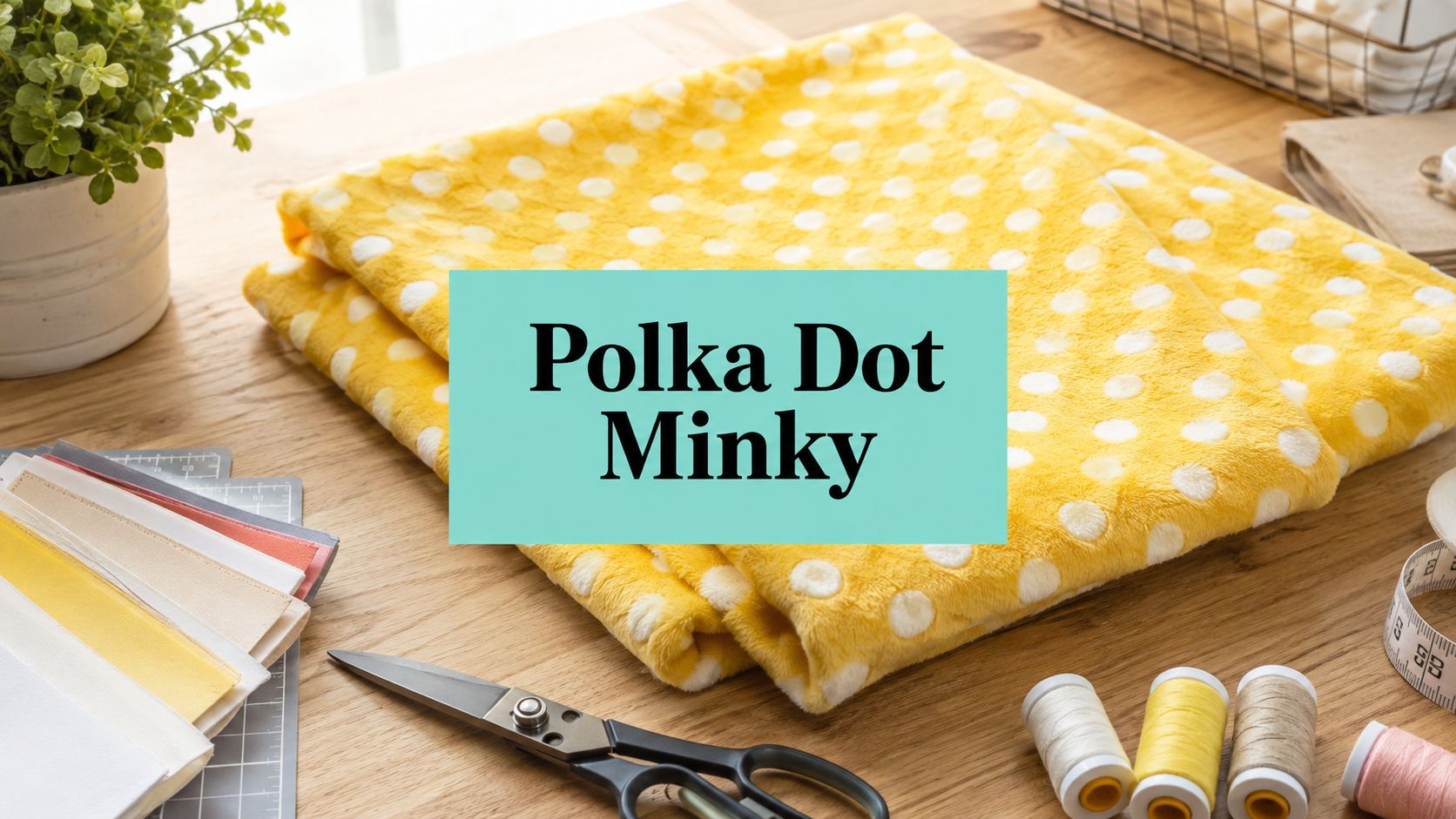
You're comparing cheerful prints for a baby blanket, quilt back, or sunny room accent, but you don't want the result to look childish or hard to sew. Yellow white polka dot minky works because dot scale, fabric width, and plush texture let the same color combination shift from playful to polished.
The right choice depends on how the fabric will be handled. A short, smooth pile can create a calm quilt back, while a raised texture adds sensory interest to a lovey or baby blanket. Width matters just as much, especially when you want to avoid bulky seams.
Why Yellow White Polka Dot Minky Is a Crafter's Favorite
Late-night fabric browsing usually starts with a specific problem. You need something bright enough for a baby shower gift, soft enough for a blanket, and flexible enough to coordinate with colors already in your sewing room. A yellow white polka dot print solves that decision without forcing the entire project into a novelty theme.
The yellow ground brings warmth, while white dots keep the pattern crisp. On a plush surface, the print becomes more tactile than a flat quilting cotton, so a simple rectangle can still feel finished and intentional. That combination works for nursery quilts, lap throws, pillow fronts, loveys, and accessories.

Why does the pattern feel familiar?
Polka dots became a recognized fashion and textile motif in the 19th century, and the modern name became associated with the polka dance craze that spread across Europe and the United States by the 1840s. Mechanized textile production and improved sewing technology made evenly spaced, round dots practical for repeatable commercial fabric rather than an unusual hand-made effect. The National reports on the history of polka dots documents that broader transition.
Yellow dots also have a long place in mass-market visual culture. In 1935, Walt Disney dressed Minnie Mouse in yellow polka dots, years before her familiar red-and-white look appeared in 1941, according to the same historical account.
Practical observation: A familiar print gives beginners more freedom to keep the construction simple. The fabric supplies much of the visual personality, so the quilting pattern and binding don't have to compete.
For a closer look at the base textile, read what Cuddle minky fabric is. The most successful projects treat yellow white polka dot as a design foundation, not as decoration that dictates every other choice.
Understanding Minky Fabric Textures and Widths
Minky is a polyester-based plush textile with a soft pile and some give. The phrase “minky” covers several surfaces, so a yellow white polka dot fabric can feel smooth, dimpled, embossed, or textured depending on its construction.

What should you check before buying?
Use these variables to judge whether a particular cut suits the project:
- Pile height: A short pile feels sleek and is easier to quilt evenly. A taller pile feels more luxurious but can hide seam alignment and require more careful handling.
- Surface texture: Dimple dots create raised circular areas, while smooth minky keeps the visual focus on the printed dots.
- Stretch: Minky can shift during cutting and stitching. A walking foot, careful basting, and reduced presser-foot pressure help keep layers from creeping.
- Width: Standard quilting minky is often sold in broad cuts, while extra-wide backing is intended to cover large quilts with fewer or no center seams.
Polka dots are generally produced as evenly spaced circles on a contrasting ground. Manufacturing guidance identifies scale as a key control, from tiny pin-dots under 3 mm to graphic dots that can exceed 10 cm, with digital, screen, and rotary printing selected according to volume and design complexity. Seamwork's guide to printing polka dots on knits also explains how spacing changes the visual density of a fabric.
A low-density layout looks lighter from a distance. Tighter spacing creates a busier field, even when the yellow and white remain unchanged. For construction details and pile terminology, this guide to Shannon Fabrics Cuddle 3 mm pile is a useful reference.
Shannon Fabrics' Luxe Cuddle line includes solids, embossed surfaces, and prints. Its Luxe Cuddle Snowy Owl is an embossed minky made from 100% polyester, with a 58/60 inch width, a 10 mm pile, and machine-wash-cold care instructions. The Snowy Owl product details show why named textures matter when a generic “soft fabric” description isn't enough.
Choosing the Right Width and Texture for Your Project
The best yellow white polka dot minky isn't automatically the widest or plushest option. Match the surface to contact, movement, and expected washing, then choose the width that leaves you enough room to square the project without creating unnecessary waste.
| Project Type | Recommended Width | Best Texture | Key Consideration |
|---|---|---|---|
| Baby blanket or lovey | 54-inch cut | Dimple dot or gentle raised texture | Tactile interest and manageable handling |
| Quilt backing | 60-inch cut when suitable | Smooth, short pile | Even surface and simpler quilting |
| Scarf or wearable accessory | Narrower cut from a 54-inch bolt | Light, short pile | Better drape and less bulk |
| Throw pillow | 54- or 60-inch cut | Smooth or dimple dot | Choose based on whether texture should lead |
| Large quilt backing | Extra-wide backing | Smooth or low texture | Reduces or eliminates center-seam piecing |
For baby items, a dimpled surface can add a pleasing hand-feel, but it also creates more visual activity. A smooth surface is usually easier to position against batting and easier to frame with a solid cotton binding.
How does dot scale change the mood?
Small dots tend to read delicate and quiet. Large dots make the fabric more graphic, especially when the yellow ground is vivid and the white contrast is strong. If the finished item already includes pieced blocks, use a calmer dot scale for the backing so the quilt top remains the focal point.
Washability should guide texture selection, too. Minky is commonly cared for with cold water and low-heat drying, but heavily handled high-pile surfaces may flatten or mat sooner than a shorter pile. Always follow the specific care label for the fabric you purchase.
Best Projects for Yellow White Polka Dot Fabric
Yellow white polka dot minky performs especially well when the project needs warmth and personality without a complicated construction plan. A simple blanket, pillow, or scarf lets the plush surface and repeating print do the visual work.

Which projects make the most of the fabric?
A baby blanket is the obvious starting point. A broad cut can create a generous crib or stroller blanket without a center seam, and the dot pattern is forgiving when a beginner's quilting lines aren't perfectly uniform. Pair it with lightweight cotton batting if you want more structure, or use the minky as a plush backing when the quilt top already supplies the warmth.
For a beginner-friendly construction sequence, use this minky baby blanket tutorial. Stabilize the fabric with a walking foot, clip or baste carefully, and bind the edges with a solid cotton that repeats a color from the quilt top.
A pillow cover gives the print a more controlled role. Place yellow white polka dot minky on the back of a neutral linen or cotton pillow, then let the white dots connect visually with the front fabric. The plush weight can provide body without adding interfacing, although a zipper or envelope opening should be tested on a scrap first.
Scarves benefit from the warmth and soft drape of a lighter pile. Keep the finish uncomplicated, with clean turned edges or a narrow cotton trim, because heavy binding can make a wearable accessory feel stiff around the neck.
How can you use it as quilt backing?
For a quilt back, smooth short-pile minky is usually easier to load and quilt than an embossed surface. If the backing is narrower than the quilt, seams may become necessary, so measure the finished top and confirm the usable fabric width before ordering.
Extra-wide backing is particularly useful for large quilts. Wide quilt backing is commonly sold in 108 to 118 inch widths, a range used to back quilts without piecing a center seam, as shown by Missouri Star Quilt Co.'s wide backing collection.
During construction, reduce presser-foot pressure where your machine allows it, keep the pile oriented consistently, and avoid stretching the fabric to make it fit. A solid cotton binding in cream, charcoal, navy, or sage can frame the yellow white polka dot without adding another competing print.
Coordinating Colors and Palette Suggestions
Yellow and white already form a high-contrast pair, so the third color determines whether the finished project feels contemporary, nautical, soft, or seasonal. Use the white dots as a bridge. Because white appears in the print, white-based stripes, florals, and small geometric patterns can usually join the palette without looking disconnected.
Which colors make yellow look more refined?
- Soft gray: This cools the yellow and suits a modern nursery or understated throw.
- Charcoal: Strong contrast makes the dots feel graphic and more mature.
- Navy and cream: A dependable nautical combination, especially for quilt borders and bindings.
- Blush pink or sage green: These soften the warmth for baby gifts while keeping the palette gender-neutral.
- Teal: A lively accent that adds depth without fighting the yellow.
- Warm gold and burnt orange: Useful for an autumn palette when applied in small amounts.
- Icy blue: Helps shift the fabric toward a winter quilt or cool-season home accent.

Thread should support the surface rather than announce itself. White thread disappears into the dots and keeps quilting quiet, while light gold can blend with the yellow ground. On a highly textured minky, a simple edge-to-edge design often looks cleaner than dense decorative stitching.
How should you test the palette?
Hold the fabric beside the intended cottons in the room where the finished item will live. Warm indoor bulbs can make yellow appear deeper, while daylight may reveal a sharper lemon tone. A small sample is more reliable than judging a screen image, especially when the project combines different fabric fibers.
For broader palette planning, these modern quilt color schemes can help you build contrast without turning every supporting fabric into another focal point.
How to Order and Prepare Your Minky Fabric
Order by finished project size, not by guesswork. Minky may be available in quarter-yard, half-yard, full-yard, curated multi-yard cuts, or continuous yardage, but the practical choice depends on whether you're making a small accessory or a smooth quilt back.
What should you do before cutting?
- Measure the finished project. Record the quilt top, blanket, pillow, or scarf dimensions, then account for seam allowances, squaring, and the direction of the print.
- Confirm usable width. Standard cuts may be around 58 to 60 inches, while extra-wide backing options can be 90 or 110 inches. Choose a width that reduces piecing rather than assuming every bolt covers the same area.
- Allow for preparation. If you prewash, add 1/8 to 1/4 yard for possible shrinkage, following the preparation guidance from this wide minky backing guide.
- Wash gently if appropriate. Use cold water and a gentle cycle, then tumble dry low. Follow the fabric's care label, particularly for embossed or high-pile textures.
- Cut from the back. Place the pile face down and use a rotary cutter so you can preserve the dot alignment and avoid crushing the plush surface.
- Stabilize without over-pinning. Pattern weights, clips, and basting spray reduce shifting. Pins can leave visible holes in some plush fabrics.
- Prepare for longarm quilting. Longarm quilters commonly request about 3 inches of overage on each side, or 6 inches total, according to the wideback preparation guidance linked above. OPN Quilting's Mail-in Longarm quilting service provides a practical route when you want professional finishing without quilting on a domestic machine.
For storage, fold the fabric loosely with the pile protected from crushing. Don't press the plush face with a hot iron. If you need to flatten a seam allowance, work from the reverse side with low heat and a pressing cloth, after testing a scrap.
Construction rule: Measure twice, cut once, and keep the pile direction consistent across every panel. A slight nap change can be more visible than a small color difference.
Start Your Next Project with OPN Quilting
Yellow white polka dot minky earns its place in a project when you treat it as a material with variables, not just a cheerful print. Select a quieter texture for a quilt back, use raised dots when tactile interest matters, and let the fabric width determine whether your finished piece needs a seam.
For named Shannon Fabrics textures, compare options such as Hide, Snowy Owl, and Fawn before choosing the surface that matches your project. The shop also carries standard and extra-wide minky categories, including 90-inch and 110-inch options, plus curated cuts and specialty kits for makers who don't need a full bolt.
If you're unsure about the yellow tone or pile, order sample swatches before committing to a larger cut. The store offers up to 5 fabric swatches, and its first-order offer provides 15% off, while U.S. orders over $70 qualify for free shipping according to the publisher information. OPN's service model also includes mail-in edge-to-edge longarm quilting, with batting, thread, and free return shipping included, and the business is supported by hundreds of verified reviews.
On Pins & Needles Quilting Co. offers premium Shannon Cuddle and Luxe Cuddle fabrics, specialty cuts, sample swatches, and mail-in longarm finishing for projects like yellow white polka dot quilts and baby blankets. Visit On Pins & Needles Quilting Co. to shop the Luxe Cuddle Collection, request the right yardage, or book your longarm service today.