
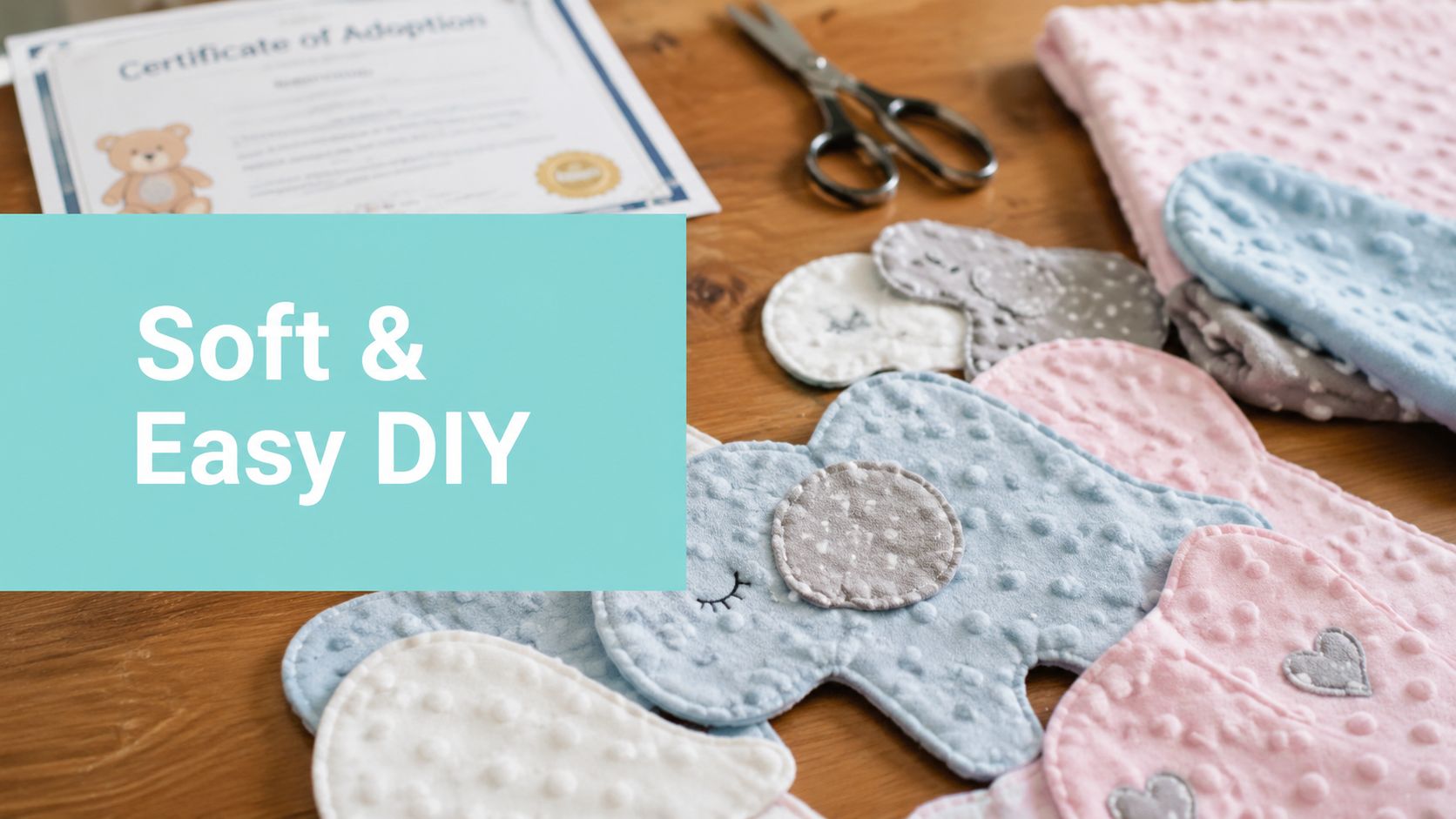
Shannon Fabrics Cuddle Critters kits are all-in-one, pre-cut sewing kits that let you create a professional-looking stuffed animal without the hassle of cutting pile fabric, making them perfect for beginners and quick gifts. Many versions are designed to make a finished plush around 19 inches tall, use 100% polyester Cuddle fabric, and some kits have an MSRP of $48.40.
If you've ever wanted to sew a plush but stalled out when you saw fuzzy fabric, shifting layers, or oddly shaped pattern pieces, this is exactly where these kits shine. Shannon Fabrics Cuddle Critters kits remove the fussiest part of plush sewing and turn it into a project that feels doable, giftable, and polished.
What Exactly Are Shannon Fabrics Cuddle Critters Kits
The simplest way to describe them is this. They are pre-cut, all-in-one stuffed-animal kits built so you can focus on sewing instead of wrestling with layout and cutting.
That matters more than many sewists expect. Plush pile fabric can shift, the nap can fool your eye, and one slightly off cut can throw off the whole shape of a stuffed animal.
Why pre-cut matters so much
Shannon Fabrics says these kits include the pre-cut Cuddle fabric pieces needed for the stuffed animal, along with an adoption certificate, original pattern, and sewing instructions, and they are ready to sew, while stuffing is not included, as shown in the official product video from Shannon Fabrics. For a beginner, that changes the experience from “I hope I cut this right” to “I can start assembling.”
When we help customers choose a first plush project, this is the sticking point almost every time. Sewing soft fabric is manageable. Cutting it accurately is where confidence often disappears.
Practical rule: If a project removes the most error-prone step, the odds of finishing it go way up.
What problem do they solve for real sewists
These kits are a strong fit when you want:
- A lower-stress first plush project because you're not drafting or cutting pile fabric
- A quick handmade gift that still looks thoughtful
- A repeatable project for classes, shop samples, or small-batch sewing
- A softer introduction to Cuddle fabric before moving into yardage, quilt backs, or blanket kits
If you're newer to the fabric itself, our guide on what Cuddle minky fabric is helps explain why it behaves differently from quilting cotton.
Are they beginner-friendly or just marketed that way
In practice, they're beginner-friendly because they reduce decisions. You're not choosing pattern scaling, tracing templates, or trying to figure out whether the fur direction should run up, down, or sideways on every body part.
That doesn't mean they're “no skill required.” You still need to sew curves carefully, pay attention to seam allowance, and take your time when turning and stuffing. But they remove the kind of frustration that makes a beginner abandon the project halfway through.
What Comes Inside Each Cuddle Critters Box
A good kit earns its shelf space by removing friction before the first stitch. That is exactly what these boxes do. Customers are not paying only for fabric. They are paying for pre-planned parts, a clear project path, and fewer chances to make a costly cutting mistake in plush fabric.
Shannon Fabrics presents Cuddle Critters as all-in-one, pre-cut kits, with recurring animal styles like Harper Rose and Barkley Blue, and includes them in a broader retailer merchandising program in its April 2025 retailer update.

What you can expect in the box
The standard contents are straightforward, which is part of the appeal. You typically get:
- Pre-cut Cuddle fabric pieces for the main body parts
- The original pattern for placement and assembly reference
- Printed sewing instructions to walk you through construction
- An adoption certificate that gives the finished project a gift-ready extra
Plan ahead for one missing supply. Stuffing is not included, so fiber fill needs to be added to your shopping list before you sit down to sew.
That detail matters more than people expect. A customer can open the box and start pinning right away, but they cannot finish the critter without stuffing. In a shop, I always mention that at the register because it prevents the most common last-minute slowdown.
Why the box format works for different kinds of sewists
For beginners, the value is simple. The hardest prep step has already been handled.
For experienced sewists, the benefit is different. A pre-cut kit shortens setup time, makes the result more repeatable, and turns the project into something you can batch for gifts, classes, or seasonal samples without re-tracing templates every time. Small business makers often appreciate that consistency because it helps them estimate time and supplies more accurately.
This boxed format also works well as the starting point for a larger handmade set. A plush animal pairs naturally with a receiving blanket, stroller blanket, or play mat in coordinating minky. If that is the direction you want to go, our guide to Cuddle minky blanket kits for beginners is a helpful next step.
Which details are worth checking before you buy
Recurring designs are a real advantage. Customers who enjoy one critter often come back for another, and collections like Harper Rose, Harper Fog, Barkley Blue, and Barkley Silver make that easy. From a shop perspective, that repeatability matters. It turns a one-time novelty purchase into a category people understand and return to.
It is also smart to look closely at what is pre-selected versus what you may still want to customize. The kit handles the plush toy itself, but if your goal is a coordinated gift set, you will still want to think through backing fabric, color matching, and whether a separate blanket should be self-bound, quilted, or finished on a serger. That is where the project can grow from a simple critter into a polished handmade bundle.
For shoppers who want to start with a specific animal, the Shannon Fabrics Cuddle Critter Harper Rose Elephant Minky Fabric Kit shows the format clearly and helps set expectations before you buy.
Who Are These Adorable Sewing Kits For
Not every cute sewing kit is practical for every customer. Shannon Fabrics Cuddle Critters kits work best for a few very specific kinds of makers.
The beginner who wants a real finish
Some first projects are technically simple but visually disappointing. A pillow with wobbly corners can feel underwhelming. A small plush animal has more charm built in, and these kits remove one of the major failure points before you even thread the machine.
That makes them a smart entry point for someone who wants to sew something giftable on a home machine. If the project turns out soft, symmetrical, and huggable, a new sewist usually wants to keep going.
The busy gift maker
This is the customer I see all the time. They want a handmade baby shower gift, a birthday present, or something sweet for a grandchild, but they don't want to spend their weekend decoding a complicated pattern.
A pre-cut plush kit fits that moment well. It still feels handmade, but the prep work has already been narrowed down. If the gift is for a baby or young child, our article on whether minky fabric is breathable for baby quilts is also worth reading when you're planning matching items.
The quilter who wants a side project
Quilters often enjoy a change of pace. After piecing tops, pressing seams, and thinking in blocks and borders, a plush project feels refreshingly different.
These kits appeal to quilters because the result is tactile and immediate. You can finish with a handmade object that doesn't require binding, backing math, or a full quilting plan. If you want to pair the critter with fabric for a small coordinated throw, the Shannon Fabrics collection is where texture choices like Hide, Snowy Owl, and Fawn become useful.
The small-batch seller
For a small business owner, consistency matters more than novelty. If every cut piece starts from the same pre-cut kit, the final animal is easier to reproduce from one make to the next.
That doesn't automatically make it a wholesale business solution, but it does make it easier to keep your process stable. The more variables you remove, the easier it is to price labor, estimate production time, and keep your finished product line visually consistent.
A kit like this works best when your biggest problem is setup time, not sewing ability.
The maker who wants a complete gift set
The kits offer more than a single project. One stuffed animal paired with a matching minky blanket, lovey, or pillow creates a more intentional handmade gift.
That approach works especially well if you like building from one focal project outward. Start with the critter, then choose a coordinating Cuddle print, a Luxe texture, or a wide backing for a blanket that carries the same soft feel into the rest of the gift.
How Do You Assemble a Cuddle Critter
The actual sewing process is straightforward, but a few habits make a big difference. With plush fabrics, neat handling matters more than speed.
Early in the process, it helps to see the sequence visually.

Start with setup, not stitching
Before you sew a single seam, lay out every piece and compare it to the instructions. Even though the fabric is pre-cut, you still want to identify body parts, ear placement, accent sections, and the opening used for turning and stuffing.
Keep your machine setup simple:
- Use a fresh needle suited for woven and knit-like plush projects
- Choose a quality polyester thread for strength
- Reduce presser foot pressure if needed if your machine tends to drag plush layers
- Test on scraps first if the kit includes any trimming bits or if you have similar minky on hand
A walking foot can help when the plush side wants to creep. If sliding is the part that worries you most, our tutorial on how to sew with minky fabric without it sliding covers the handling basics that matter here too.
Sew in stages, not in one push
The mistake I see most often is trying to complete the entire animal in one uninterrupted session. Plush projects turn out better when you pause at logical checkpoints.
A practical sequence looks like this:
- Match and pin the first body sections carefully, checking that curved edges align
- Sew slow around curves and avoid stretching one layer to force a fit
- Clip seam allowances where needed so rounded areas turn smoothly
- Attach smaller features before the body is fully closed if the pattern calls for it
- Leave the turning opening clean and accessible instead of squeezing it into a tight corner
- Turn gently and shape from the inside using your fingers or a blunt tool
- Stuff gradually so the body stays balanced
- Hand stitch the opening closed with small, secure stitches
Shop-floor advice: Don't overstuff the first side you reach. Fill the extremities first, then build the center.
A balanced stuff job gives the finished animal a cleaner silhouette. Too much fiber fill in the belly and too little in the limbs makes even a well-sewn plush look lopsided.
Here's a video view that complements the written steps:
What works and what usually doesn't
Some techniques consistently lead to a better result.
What works
- Sewing with the plush side controlled and supported
- Trimming fuzz away from seam lines if it obscures accuracy
- Checking symmetry before final closure
- Hand-finishing the last opening instead of forcing it through the machine
What usually doesn't
- Rushing curved seams
- Ignoring nap direction when positioning visible pieces
- Turning too aggressively and stressing seam junctions
- Stuffing until the seam line looks strained
How to get a more polished finish
If you want your finished critter to look more refined, focus on three things. First, keep the seam line smooth. Second, distribute stuffing evenly. Third, brush or finger-fluff the pile around the seams so the stitch line disappears into the plush.
That last step is small but effective. Plush fabrics often hide a seam beautifully once the fibers are lifted back out.
For sewists who want to branch from plush toys into matching home projects, a cut like Shannon Luxe Cuddle Fawn gives you a very different but equally giftable texture to work with.
How to Create a Matching Minky Gift Set
A Cuddle Critter on its own is charming. Add a matching blanket or lovey, and the gift feels planned instead of last-minute.
This is the point where a simple kit turns into a full project. Beginners can keep it easy with one extra cut of minky and a fast blanket. More experienced sewists can build out a coordinated set with a quilt top, plush backing, and a finished critter that ties the whole gift together. For shop customers sewing for a baby shower, a birthday, or craft fair inventory, that flexibility is a big reason these kits do so well.
What pairings make sense
The best pairing depends on who will use it.
For babies and toddlers, a critter with a small blanket or lovey usually makes the strongest set. It is soft, practical, and easy to gift. For older kids, I usually suggest a critter plus a reading blanket or bed pillow. If the project is meant for resale or a higher-end gift basket, pairing the kit with a coordinated cut of Luxe Cuddle gives the set more presence without adding much decision fatigue.
If choosing colors from individual bolts feels like too much, pre-cut 2-yard Luxe Cuddle bundles make the planning faster. They are especially useful for sewists who want a coordinated result without spending half the project matching shades and textures.
Choosing the right fabric for the matching piece
The right fabric depends on what you want the second item to do. Some gifts need easy handling and simple care. Others need more texture and visual impact.
| Fabric Type | Pile Height | Best For | Available Widths |
|---|---|---|---|
| Cuddle 3 | Short plush pile | Baby blankets, simple throws, loveys, easier sewing for newer sewists | 44-45 inch |
| Luxe Cuddle Hide | Textured plush pile | Coordinated throws, upscale gift sets, animal-inspired themes | 44-45 inch, with wider options in some Cuddle categories |
| Luxe Cuddle Seal | Dense plush pile | Extra-soft blankets and cozy statement pieces | 44-45 inch, with wider options in some Cuddle categories |
Shorter pile fabrics are easier to control, especially if the matching item is your first minky blanket. Luxe textures look richer and feel wonderful, but they add bulk and can show sewing mistakes more clearly on bindings and tight corners. That trade-off matters.
How backing width changes your plan
Backing is where many sewists either save themselves trouble or create it.
If the matching piece is a simple baby blanket, standard-width minky often works fine. If you are making a larger quilted blanket, wider backing can cut down on piecing, reduce bulk at the seam, and give the finished back a cleaner look. That matters even more if the blanket is meant as a gift, because one less backing seam often makes the whole project feel more polished.
I see this come up a lot with quilters who start with the toy, then decide they want a full set. The critter kit is the easy part. The blanket plan gets better once you choose backing width early instead of after the quilt top is finished.
Matching texture matters more than matching every color exactly.
When outside quilting help makes sense
Some sewists want the whole set fully handmade from start to finish. Others want the critter sewn in-house and the blanket quilted professionally. Both approaches are valid.
For a domestic machine, minky backing on a larger quilt can be awkward to baste, roll, and stitch evenly. That is usually the point where small business makers and busy gift sewists decide to send the blanket out for quilting while keeping the plush toy as the handmade centerpiece. It is a practical split. You still control the fabric choices, the color story, and the final presentation, but you avoid fighting a bulky quilt under a small throat space.
That approach also helps with deadlines. A customer order, baby gift, or holiday set is easier to finish on time when each part of the project is handled in the way that makes the most sense.
Texture combinations that usually work
A few combinations are consistently reliable:
- Animal critter + Hide texture blanket for a woodland or heirloom-style gift
- Pastel critter + smooth Cuddle blanket for baby gifts that wash easily and feel soft without extra bulk
- Neutral critter + one standout texture for a calmer, more refined set
- Bold critter + simple blanket backing so the toy stays the focus
The biggest mistake is overbuilding the set. If the critter already has personality, keep the blanket simpler. If the toy is soft and understated, the blanket can carry more of the visual interest. That balance is what makes a matching gift set feel well chosen instead of busy.
How Should You Wash and Care for a Finished Cuddle Project
Care matters because plush projects can look wonderful right after sewing and then lose their appeal if they're washed roughly. The good news is that everyday maintenance is simple if you stay gentle.
A practical care routine
For a finished critter or matching blanket, keep the routine uncomplicated:
- Wash in cold water on a gentle cycle
- Use a mild detergent rather than anything harsh or heavily built for stain stripping
- Tumble dry on low heat or air dry if you prefer a slower approach
- Skip high heat because heat is what most often changes the feel of plush fabrics
I also recommend washing the finished project alone the first time, or with similarly soft items, so rougher fabrics don't mash the pile flat.
What to avoid
These are the shortcuts that usually lead to disappointment:
- Don't use high heat in the dryer
- Don't iron directly on plush fabric
- Don't assume fabric softener will improve softness
- Don't over-wash before gifting
The fabric already has the soft hand people want. The goal is to preserve it, not to “improve” it with extra products.
Gentle washing preserves the texture better than aggressive cleaning ever will.
Good to know: New customers can use a 15% first-order coupon, and U.S. orders over $70 qualify for free shipping through the shop's standard offer.
How to store a finished plush or gift set
If the critter is headed for a gift closet or craft fair display, store it in a breathable, clean space and avoid crushing it under heavier stock. A quick fluff by hand before gifting usually brings the pile back to life.
For blanket sets, fold loosely rather than compressing them tightly into bins. Plush fibers recover better when they haven't been flattened for long periods.
Your Buying Guide for Cuddle Critters at OPN
A customer walks into the shop needing a baby gift by the weekend. She wants something handmade, but she does not want to spend her Friday night tracing pattern pieces onto plush fabric and cleaning lint off every surface in the room. That is exactly the kind of purchase where a Cuddle Critter kit makes sense.
The buying decision is usually less about whether the critter is cute and more about whether the kit fits the way you sew. Some sewists want a fast, low-friction project with the cutting already handled. Others are really shopping for a full gift set and need the critter to coordinate with a blanket, pillow, or quilted piece. Small business owners often look at it one more way. They want to know whether the time saved on prep makes the kit a better use of labor than cutting from yardage.
For at least some kits in the line, Shannon Fabrics lists a finished plush at about 19 inches, uses 100% polyester Cuddle fabric, gives an MSRP of $48.40, and notes that the product is assembled in the United States on the Winston E product page.
What to check before you buy
Start with the role of the finished project. A critter for a child's room, a shower gift, and a craft fair sample do not all need the same look or margin.
Check these points before you add the kit to your cart:
- Finished size so you know whether it feels like a substantial plush or a smaller accent gift
- Fabric content if washability, fiber preference, or softness is part of the decision
- Included pieces so you remember to buy fiber fill separately
- Color and texture match if you plan to build a blanket, pillow, or nursery set around it
I also recommend looking at the total project, not just the box. If you already know you want a matching blanket, choose the critter first, then pick the backing or companion fabric while that color story is still in front of you. It saves second-guessing later.
Why buying from a minky-focused shop can help
OPN is useful for sewists who want more than a single kit. The shop works heavily with minky and Cuddle products, which matters when you need practical help choosing a backing fabric, deciding between texture options, or figuring out whether your matching blanket should stay simple or go out for quilting.
That matters even more for newer sewists. A general craft listing can tell you what the item is. A minky-focused shop is more likely to help you choose what goes with it and what to avoid. For experienced makers and small shop owners, that same product knowledge helps with efficiency. You can source the critter, the companion fabric, and the finishing pieces in one order instead of piecing the project together from three places.
Smart add-ons for the same cart
A Cuddle Critter kit is often the starting point, not the whole gift.
These add-ons are the ones I see make the most sense:
- A coordinating Luxe Cuddle or other plush texture for a receiving blanket, lovey, or quilt back
- A pillow kit if you want a second project that uses similar skills and fabric handling
- A longarm service if the matching blanket is pieced and you want a polished finish without wrestling a bulky quilt at home
- One ready-to-gift item if you need a fuller present and your sewing time is limited
The project ecosystem surrounding these kits holds importance. A beginner can keep it simple with the critter and a small blanket. A confident home sewist can pair the kit with a coordinated plush backing to create a more impressive gift. A business-minded maker can use the kit as the fast finish item, then add a quilted blanket through a mail-in longarm service to round out the set.
Who should buy the kit and who should pass
Buy the kit if your least favorite part of plush sewing is prep. Pre-cut pieces remove a common frustration point and make it easier to get to the enjoyable part, which is sewing and finishing.
Buy it if you are sewing on a deadline.
Pass if your real goal is full creative control from the first cut. If you want to alter proportions, swap shapes, or build your own pattern from yardage, buying Cuddle fabric by the yard will give you more flexibility. The trade-off is time. You spend less on pre-cut convenience, but more on layout, cutting, cleanup, and testing.
That trade-off is the whole buying question. If convenience, consistency, and coordinated gift planning matter more than full customization, a Cuddle Critter kit is a smart buy.
Frequently Asked Questions About Cuddle Critter Kits
Do I need a special needle or thread
You don't need anything exotic. A fresh machine needle and a good-quality polyester thread are the practical starting point. If your machine tends to shift plush layers, a walking foot often helps.
Is the stuffing included
No. The official kit information states that the kits are ready to sew, but stuffing is not included, so plan to buy fiber fill separately.
Are these good for absolute beginners
Yes, if the beginner can sew basic seams and is willing to go slowly around curves. The pre-cut format removes a big frustration point, which is why these kits are more approachable than many plush patterns sold as templates only.
Can I make these to sell in my own shop
That depends on the pattern and brand usage permissions attached to the kit. The practical move is to review the product packaging and any included terms before producing items for sale. Don't assume every kit allows commercial use.
What should I pair with a critter if I want a fuller gift
A small minky blanket is the easiest match. If you want a more polished set, pair the critter with a coordinated Luxe Cuddle texture, a pillow, or a quilt that uses minky as the backing.
Are Shannon Fabrics Cuddle Critters kits worth it
They're worth it for sewists who value convenience and consistency. If cutting plush accurately is the part you dread, Shannon Fabrics Cuddle Critters kits solve a real problem rather than just packaging fabric in a cute box.
If you're ready to turn Shannon Fabrics Cuddle Critters kits into a finished gift, browse the soft project options at On Pins & Needles Quilting Co., add a coordinating kit or backing, and get 15% off your first order.