
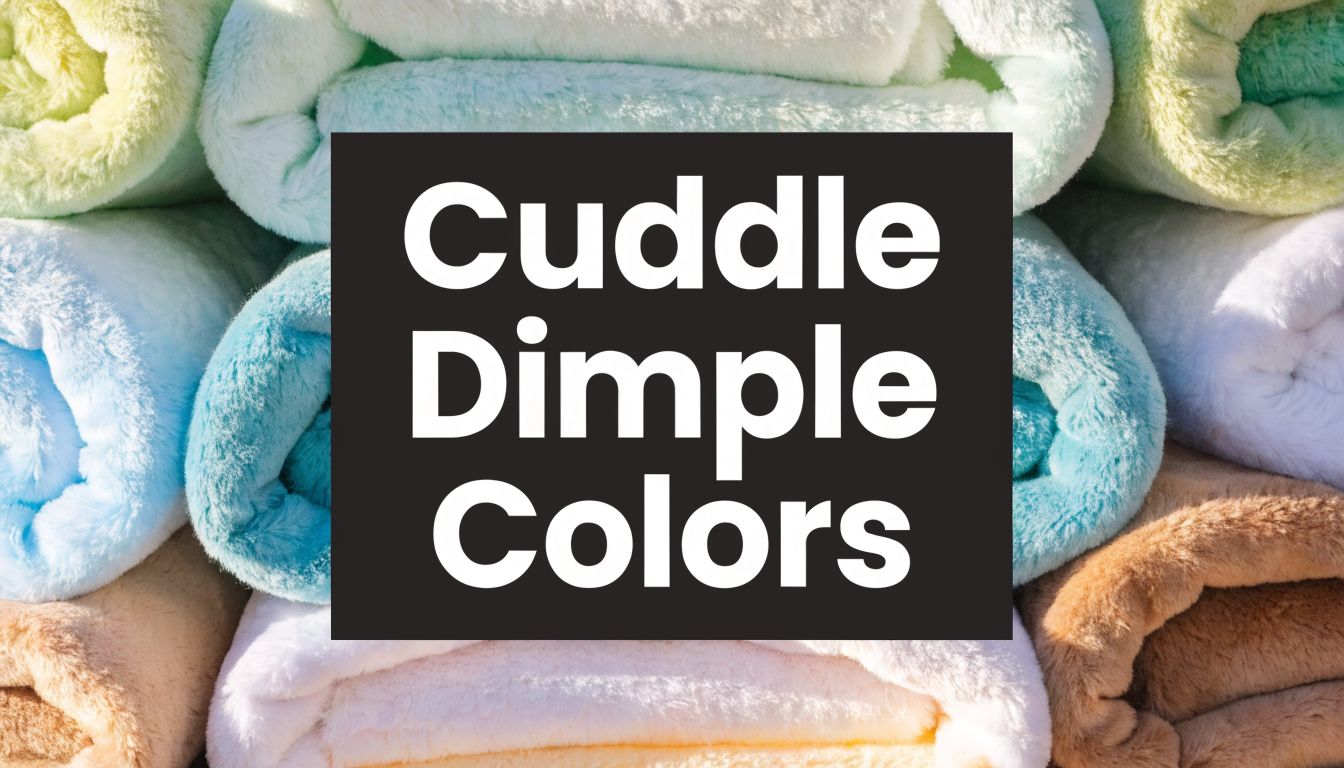
Cuddle Dimple minky fabric colors at OPN Quilting Co. offer a curated range of 6 colors, and every color keeps the same 3mm embossed texture and 58/60-inch width, which makes it a reliably soft, high-quality choice for quilt backing, blankets, and gift projects. If you're trying to choose a color without guessing how it will sew or drape, that's a key advantage.
A lot of quilters land here at the same point. The quilt top is finished, the backing choice suddenly matters more than expected, and cotton no longer sounds very exciting. When you want softness without dealing with a high, shaggy pile, Cuddle Dimple minky fabric colors are one of the easiest Shannon options to work into a practical project plan.
At our shop, we see this fabric chosen for two very different reasons. Some customers want a baby-safe, giftable neutral like White, Shell, or Blush. Others want a richer color like Dark Turquoise or Red for throws, scarves, or home decor that feels more grown-up than nursery fabric.
Practical rule: If you want texture you can see but not fight at the machine, Cuddle Dimple usually lands in the sweet spot.
If you're shopping by project instead of by swatch, you can browse our Cuddle Dimple collection, explore Luxe Cuddle textures, or look at our mail-in quilting prep guidance before you commit to yardage.
Why Choose Cuddle Dimple for Your Quilt Backing
Backing fabric can make a beautiful quilt feel ordinary, or it can make the whole quilt feel finished the second someone touches it. That’s why Cuddle Dimple stays in regular rotation for quilters who want softness, warmth, and visible texture without moving into a heavier faux-fur look.

Why quilters keep reaching for it
The embossed dimple surface gives the backing some visual life. It doesn’t read flat the way a completely smooth backing can, but it also doesn’t create the loft and movement that some higher-pile Luxe Cuddle textures bring.
That matters when you're quilting a pieced top and don’t want the backing to compete with the front. A quilt top with busy patchwork, fine piecing, or a more traditional design often benefits from a backing that feels special without stealing attention.
What works better than cotton for comfort
Cotton backing has its place. It presses crisply, it’s familiar, and many quilters already know exactly how it behaves.
But cotton doesn’t give the same cozy finish. Cuddle Dimple adds softness right away, and it gives a quilt that “grab it off the couch” feel that people tend to come back to over and over.
We also like it for projects where the quilt is meant to be used, not just admired. Lap quilts, comfort quilts, cuddle throws, and baby gifts all benefit from a backing that feels warmer and more inviting the moment it’s unfolded.
- Lower-fuss texture: The dimples add interest without a long nap.
- Better hand-feel: The surface feels plush, but not bulky.
- More forgiving finish: It helps even a simple quilt read as more substantial and gift-ready.
If your bigger issue is backing width rather than texture, our guide to 110-inch extra-wide minky fabric is the place to start before you plan seams.
Where it fits in a real stash
Cuddle Dimple sits between flat minky and more dramatic Luxe textures. That’s exactly why it’s useful. Smooth Cuddle 3 is great when you want a cleaner surface. Luxe Cuddle Hide, Snowy Owl, or Fawn are great when the texture itself is part of the statement.
Cuddle Dimple is the practical middle ground. In our workroom, that’s often the fabric we suggest when someone says, “I want it soft, but I don’t want to wrestle with it.”
It’s a backing that gives you texture without turning the quilt into a different kind of project.
The Official Cuddle Dimple Minky Fabric Colors Catalog
A customer will often send me a quilt top photo and ask the same practical question. “Which Dimple color gives me the right finish without fighting the top?” That is the right way to shop this fabric. The color matters, but the better question is how each color will behave in a real project, what it pairs with, and whether we can cut it in a way that saves you piecing.
Across the line, Cuddle Dimple keeps the same feel from color to color. The difference is visual temperature and how much the backing wants attention. That makes this a useful buying category at OPN, especially if you already know you want softness without a high-pile texture. You can browse current availability in our Cuddle Dimple fabric section.
White
White is the cleanest option in the group. I suggest it when the quilt top already has plenty going on and the backing needs to stay quiet.
It works well for baby quilts, baptism gifts, and tops with strong prints or saturated piecing. White also photographs well, which matters if you are making a gift and want that fresh, finished look.
At OPN, White is usually the safe answer for:
- nursery quilts with multicolor tops
- memory quilts where the front carries the story
- simple throws that need a crisp, gift-ready backing
The trade-off is practical. White shows lint sooner than the other colors, so it is not my first pick for high-use couch quilts in homes with pets.
Shell
Shell is the warmer neutral. If White feels bright or stark against the quilt top, Shell usually settles everything down.
I reach for it with cream backgrounds, low-volume patchwork, florals, and antique-style color palettes. It gives you softness without the cooler cast that bright white can create. For heirloom-inspired quilts, this color often looks more intentional than pure white because it matches the warmth already built into the top.
Choose Shell for:
- cream, ivory, oatmeal, and taupe-based tops
- softer floral quilts
- baby projects that need a neutral backing without a sharp contrast
If the front of the quilt includes true bright whites, Shell can read slightly warm by comparison. That is not a flaw. It is just a design choice to make on purpose.
Blush
Blush sells well for baby gifts because it reads soft without turning sugary or loud. It also works for grown-up projects, especially when the top uses dusty pinks, mauves, peach undertones, or warm neutrals.
This is one of those shades that helps a project feel finished fast. A simple quilt top can look more polished with Blush on the back because the color adds warmth without competing for attention. I also like it for small comfort projects, including pillows and stroller quilts, because it feels gentle but still refined.
Blush is a strong fit for:
- shower gifts
- muted floral quilts
- girls' room decor that needs a soft pink without a hot-pink look
If your quilt top already has several pinks, Blush usually works best as a close coordinator, not as contrast.
Dark Turquoise
Dark Turquoise changes the mood completely. This is the color I suggest when the quilt is for an adult, a teen, or a room with cooler colors and cleaner lines.
It pairs nicely with gray, navy, charcoal, black, white, and many modern prints. On the back of a geometric top, it gives the project more presence without adding a fussy texture. It is also one of the better choices for throws that live on a chair or sofa, because it looks decorative even when the quilt is folded.
Dark Turquoise works especially well for:
- modern lap quilts
- reading nook throws
- gifts for men or older kids
- home decor projects where the backing may stay visible
The trade-off here is simple. It is bolder than the neutrals, so it will influence the whole feel of the quilt.
Red
Red is the strongest statement color in this group. It fits holiday sewing, team-color gifts, winter throws, and any quilt where the backing is part of the point rather than just the finish.
I recommend Red when the project needs energy. It can make a simple quilt feel more festive, and it gives seasonal makes a clear identity right away. For Christmas quilts, it solves a common problem. The top may already be busy, but the project still needs a back that feels intentional and celebratory.
Red is a good choice for:
- holiday throws
- Valentine projects
- cabin or lodge color stories
- accent pieces that need stronger color
Use some restraint with tops that already have several loud prints and multiple reds. In that case, a neutral backing often gives the eye a better place to rest.
How to choose the right color at OPN
Start with the quilt top background. Then look at where the quilt will live.
- Choose White for bright, busy, or highly colorful tops.
- Choose Shell for warm neutrals, florals, and heirloom-style palettes.
- Choose Blush for baby gifts, soft pink families, and muted feminine projects.
- Choose Dark Turquoise for cooler palettes, modern quilts, and room decor.
- Choose Red for seasonal sewing and bold statement backs.
If you are ordering from us, do not just pick a color in isolation. Match the color to the cut you need. For baby quilts, a smaller cut may be enough and can save waste. For throw-size backings, planning width early matters more than color names. If you want the project finished without wrestling with quilting it yourself, many customers pair their backing order with our mail-in longarm quilting service so the whole plan is handled at once.
The main goal is not to memorize a color catalog. It is to buy the color that fits the top, the use, and the finish you want. That is how Cuddle Dimple becomes an easy win instead of an expensive maybe.
How Do You Prepare Cuddle Dimple for Sewing
Most problems with minky happen before the first seam. The fabric isn’t hard to sew, but it does ask for cleaner prep than quilting cotton.
Should you pre-wash it
Usually, no. Most quilters skip pre-washing minky because the fabric can become harder to manage once it’s been tumbled around before cutting.
If the goal is control, leaving it unwashed until after the project is finished usually gives you a cleaner sewing experience. The bigger win is stable cutting and less handling before assembly.
How should you cut it
Use a rotary cutter, a large mat, and a ruler you trust. Cut from the back whenever that helps you see the line more clearly and keeps the pile out of the way.
A few practical habits help:
- Square first: Don’t assume the cut edge is perfectly ready to use.
- Use weights if needed: Minky likes to shift when pulled.
- Clean as you go: Fresh cuts can release fluff, so keep a lint roller nearby.
What helps most at the machine
Wonder clips usually work better than a dense line of pins because they hold layers without crushing the pile as much. A walking foot can help feed the layers more evenly, especially if you’re joining minky to cotton.
For many home sewers, a slightly longer stitch length feels steadier than a very short one. Test on scraps first. That small test saves a lot of seam-ripping later.
A good beginner project for practicing these steps is a simple minky baby blanket. Our tutorial on how to make a minky baby blanket is a practical starting point if you want to sew before committing to a full quilt back.
- Clip more, pin less: It reduces slippage frustration.
- Handle less: Overworking minky usually makes the process harder.
- Test tension on scraps: Don’t diagnose stitch issues on your current project.
What Widths and Cuts Are Available at OPN
Width is where many backing plans fall apart. A color might be perfect, but if the cut doesn’t suit the project, you end up piecing seams you didn’t want.
The standard width to expect
Cuddle Dimple comes in a 58/60-inch width. For baby quilts, smaller throws, scarf projects, pillows, and many lap quilts, that width is often workable without much fuss.
For larger quilts, though, standard-width minky can force a seam layout that adds bulk. That doesn’t mean the project can’t be done. It just means the planning stage matters more.
When standard width is enough
Standard-width Cuddle Dimple makes sense when:
- Your project is narrow enough to avoid piecing
- You’re making pillows or scarves and don’t need wide-yardage efficiency
- You want a specific Dimple texture and are comfortable planning the backing around it
For many gift-makers, that’s exactly the right fit. A pillow cover, baby blanket, or sensory project doesn’t need extra-wide fabric to be successful.
When to move to extra-wide backing
If your real problem is avoiding a center seam on a bigger quilt, extra-wide minky is often the cleaner answer. That’s why many customers shop categories rather than one exact texture.
Our 3-yard extra-wide minky cuts are built for quilters who want more efficient backing options without doing width math from scratch. For this purpose, extra-wide Cuddle serves as a practical alternative to piecing standard-width Dimple.
A simple decision guide:
| Project type | Standard Cuddle Dimple | Extra-wide minky |
|---|---|---|
| Baby blanket | Usually a good fit | Optional |
| Pillow | Good fit | Not needed |
| Lap quilt | Sometimes enough | Often easier |
| Large quilt backing | Possible with seams | Usually the cleaner route |
If your first concern is “How do I avoid a bulky backing seam,” start with width, not color.
How Does Cuddle Dimple Compare to Other Textures
Choosing among Shannon textures gets easier when you stop thinking in brand names and start thinking in project behavior. Some textures are meant to disappear into the quilt. Others are meant to be felt and noticed right away.

What changes from one texture to another
Cuddle Dimple gives you visible dimples and a velvety hand. Smooth Cuddle 3 removes that texture and gives a flatter finish. Luxe Cuddle Hide adds a richer, more plush feel that many quilters love for throws and statement backings.
If you’ve shopped Shannon long enough, you’ve probably also seen textures like Snowy Owl and Fawn. Those can be beautiful choices, but they create a different sewing and finishing experience than Dimple.
Minky texture comparison
| Feature | Cuddle® Dimple | Smooth Cuddle® 3 | Luxe Cuddle® Hide |
|---|---|---|---|
| Texture and hand-feel | Raised dimple texture, soft and tactile | Flat, sleek, soft surface | Plush, more luxurious hand |
| Pile height | 3mm | Similar low-profile feel | Higher-feel plush texture |
| Best for | Baby blankets, quilt backs, pillows, scarves | Simple quilt backs, bindings, cleaner finishes | Throws, robes, statement backings |
| Ease of quilting | Very manageable for many quilters | Usually the simplest | More bulk to manage |
Which one works for your project
Choose Dimple when you want texture with control. It’s often the right answer for quilts that need softness but still have to move cleanly through piecing, basting, or longarm finishing.
Choose smooth Cuddle 3 when the quilt top is the star and the backing should stay visually quiet. Choose Luxe Cuddle Hide when softness and plushness are the point of the project.
A lot of buyers make the wrong call by shopping only for softness. That’s understandable, but softness alone doesn’t determine success. The better question is how much surface texture you want to see, sew, and quilt through.
- For baby gifts: Dimple or smooth usually makes the process easier.
- For couch throws: Hide can feel more dramatic.
- For mixed-use quilting and gifting: Dimple is often the middle path.
Can You Use Cuddle Dimple with Longarm Quilting
Yes. I use Cuddle Dimple on longarm-finished quilts because it gives clients the soft minky feel they want without the extra loft that can make quilting lines disappear.

Why it works on a longarm
Dimple has enough texture to look and feel plush, but it stays more controlled under the machine than deeper minky textures. That trade-off matters. You still get a cozy backing, and your quilting pattern usually reads better than it would on a higher-pile fabric.
For quilts that need to be used, washed, and loved, that balance is hard to beat. Baby quilts, lap quilts, and everyday throws are the projects where I see it perform best.
Color choice also affects the finished look. White and Blush tend to soften the quilting visually, which suits baby gifts and lighter designs. Dark Turquoise and Red show contrast more clearly and can handle a bolder allover pattern if you want the quilting to stand out.
When mail-in longarm quilting makes sense
A lot of quilters can sew with minky just fine, then get stuck at the finishing stage. The backing shifts, the quilt gets heavy, or the project sits folded on a chair for six months because basting it at home feels like a chore.
That is usually the point where sending it out saves time and frustration.
At OPN Quilting, our edge-to-edge longarm quilting service is set up for exactly that kind of project. Quilters mail in the top and backing, choose a quilting pattern, and have batting, thread, and return shipping handled in one order. If you are buying Cuddle Dimple from our shop for a quilt back, this is the easiest way to turn that fabric into a finished quilt instead of a stalled project.
What gives the best result
Keep the quilting design open enough for the backing to stay soft and flexible. Dense quilting can work, but on minky-backed quilts it often creates a firmer feel than people expect.
I usually recommend matching the finish to the job the quilt needs to do. A White or Blush baby quilt benefits from simple, usable quilting that washes well and stays cuddly. A Dark Turquoise or Red throw for the sofa can carry more visible texture and a stronger edge-to-edge design without feeling overworked.
If the quilt is a gift or has a deadline, do not save the hardest step for last. Cuddle Dimple and longarm quilting are a good combination, especially when the backing is chosen with the final use in mind and the finishing plan is set from the start.
What Are the Best Projects for Cuddle Dimple Fabric
A lot of quilters buy Cuddle Dimple for one baby blanket, then come back once they realize it solves several common project problems at once. It gives a soft finish without adding complicated piecing, it works well in simple shapes, and it comes in colors that can stay sweet, modern, or bold depending on the project.

Baby blankets
Baby blankets are still the strongest use for Dimple minky. I recommend them often at OPN because the fabric already has visual interest, so the project does not need fancy quilting or extra trims to feel finished. White, Shell, and Blush are easy gift colors, especially if the front is a printed quilting cotton and the back does the work on softness.
For newer sewists, a wholecloth blanket, self-binding blanket, or cotton-front minky-back baby quilt keeps the project manageable. Those formats avoid tight curves, reduce bulky seam intersections, and let the texture stay front and center.
A practical baby gift set usually works better than an ambitious quilt with too many moving parts. Pair the blanket with a lovey, burp cloth trim, or a small soft pillow if the recipient wants coordinated pieces.
Throw pillows and home decor
Dimple minky also earns its place in home decor. Dark Turquoise and Red read much more like accent colors than nursery colors, and the dimple texture adds softness without the heavier look of a longer plush pile.
This matters on pillows. You still get a tactile finish, but corners, topstitching, and boxed edges are easier to control than with thicker minky textures. If a customer wants a fast finish from my shop, I usually point them toward pillow projects because they use a modest cut of fabric and give quick payoff.
Mixing Dimple with cotton or another Shannon texture can work well here, but the trade-off is bulk. If the pillow pattern already has piping, zipper panels, or several seam joins, I keep Dimple as one feature panel instead of using it on every side.
Here’s a quick visual if you want to see a beginner-friendly minky project in action:
Scarves and smaller gift sewing
Smaller accessories are a smart way to use Cuddle Dimple without committing to a full quilt. Scarves, neck warmers, stroller blankets, and simple lap-sized comfort pieces all make sense because the fabric texture shows up well even in a small cut.
Blush usually makes a softer gift look. Dark Turquoise feels more current and less traditional. For holiday sewing or last-minute gifts, these small projects are often the better choice because they finish fast and do not require the yardage or setup that a quilt does.
Plush, sensory, and comfort items
The raised dot texture also suits plush sewing and sensory-friendly projects. Simple stuffed shapes, tag blankets, reading cushions, and comfort accessories all benefit from a fabric that feels interesting without needing embroidery or pieced detail.
The key is restraint. Dimple minky performs best in patterns with clear shapes and uncomplicated seams. Once a pattern gets tiny, heavily curved, or packed with topstitched details, the fabric becomes harder to control and the finish can look bulky instead of soft.
At OPN Quilting, I usually steer customers toward projects that match the cut they are buying. Pre-cuts and smaller yardage make sense for pillows, loveys, scarves, and plush items. Larger cuts are a better fit for quilt backs and generous throw blankets. That simple match between project and cut size prevents waste and makes the fabric easier to enjoy instead of fight.
How Do You Care For a Finished Cuddle Dimple Project
Care is where good fabric stays good. Minky doesn’t need complicated treatment, but it does respond better when you keep heat and additives under control.
Use these habits to preserve the softness and surface texture:
- Wash gently: Machine wash cold on a gentle cycle when possible.
- Skip fabric softener: The fabric is already soft, and added softener can leave buildup.
- Use low heat for drying: Tumble dry low if you machine dry.
- Hang dry when practical: It’s a good option for preserving texture and reducing heat exposure.
- Avoid ironing the pile: Direct heat on plush fabric is usually a bad trade.
- Store clean: Put projects away fully dry so the texture stays fresh.
If the project combines cotton and minky, care for the minky side first and let that drive your wash settings. That simple rule prevents a lot of avoidable wear.
Treat the finished quilt like a soft textile, not like a workhorse towel. Gentle care keeps the backing pleasant for the long haul.
How to Order Cuddle Dimple from OPN Quilting Co
You have the quilt top finished, the backing still undecided, and you do not want to order the wrong cut and lose a week. That is usually the point where I tell customers to make three decisions in order. Project first, color second, cut third.
Start by matching the fabric to the job. A baby blanket usually needs a smaller cut or a simple kit-friendly piece. A quilt backing needs enough width to avoid extra seams. A pillow, scarf, or nursery accent gives you more freedom to choose color for contrast instead of coverage. If you are shopping our Cuddle Dimple options at OPN Quilting Co., that order keeps the purchase practical.
Color comes next. If the quilt top already has a busy print or strong piecing, quieter shades like Shell, White, or Blush usually finish the project cleanly. If the top is simple and needs more energy, stronger colors such as Dark Turquoise or Red can carry more of the visual weight. As noted earlier, the colors in this line share the same base fabric and texture, so the choice is about appearance and project use, not about one shade sewing better than another.
Then choose the cut that fits how you work. Some quilters want straight yardage because they already know their math. Others would rather save time with pre-cuts, project kits, or wider backing options that reduce piecing. At OPN, that matters because we stock more than one way to buy minky. If you are pairing Cuddle Dimple with quilting cotton from the same order, it is easier to get the backing, front, and any kit components lined up at once.
I also suggest deciding early whether the quilt is headed straight to the longarm. If you plan to use our mail-in longarm quilting service, order enough backing and batting from the start so the project moves through in one pass instead of stopping for missing materials. That is one of the most common ordering mistakes I see, especially on larger quilts.
Customers usually want the same few things from an order. Clean cuts, accurate color selection, and fast answers if they are unsure what size to buy. That is the standard we work from at OPN Quilting Co., whether you are buying a single cut of Cuddle Dimple or building a full project order with backing, kits, and quilting services.
Ready to turn color ideas into a finished project? Browse On Pins & Needles Quilting Co. for Cuddle Dimple yardage, kits, extra-wide minky backing, and mail-in longarm quilting, then Get 15% Off Your First Order.