

Wash a Minky Couture blanket alone on a cold, gentle cycle with mild liquid detergent, then tumble it with no heat for about 10 minutes and hang it to finish drying. Skip pods, fabric softener, dryer sheets, hot water, and high heat, because minky's polyester pile is more vulnerable to residue and thermal damage than ordinary cotton.
You've probably reached this point with a blanket that still feels wonderfully soft, but now carries a stain, loose lint, or a slightly flattened patch from the last laundry cycle. The right routine protects the plush surface without turning every wash into a complicated project.
These Minky Couture washing instructions also apply well to Shannon Fabrics Cuddle and Luxe Cuddle textures such as Hide, Snowy Owl, and Fawn. At OPN Quilting, our handling of plush quilt backs and finished blankets has taught us that softness depends less on aggressive cleaning and more on controlling detergent, agitation, and heat. Our customers' hundreds of verified reviews reflect the importance of getting that finished hand feel right.
What Minky Couture Washing Instructions Really Mean for Your Blanket
Minky isn't ordinary cotton. Most minky is a polyester-based microfiber plush, so the fabric usually has little dimensional shrinkage, but its raised pile can flatten, distort, or lose softness when exposed to excess heat, softeners, or rough washing. One printed minky specification lists 1–2% lengthwise shrinkage and 0–1% widthwise shrinkage, while care guidance identifies pile degradation as the more important risk. Ice Fabrics explains the common minky care problems.
That distinction matters when you're caring for a Luxe Cuddle blanket. A Hide texture needs its surface loft preserved, while Snowy Owl and Fawn depend on their distinctive plush hand feel. Cotton can tolerate a more forceful household routine, but a synthetic pile responds better to moderate chemistry, low agitation, and limited thermal exposure.
Why the pile needs a gentler routine
Mild liquid detergent cleans without leaving the heavier residue that powders or concentrated additives can leave behind. Fabric softener can coat plush fibers, creating a sticky or dull feel instead of adding softness. Heat creates a separate problem, because microfiber-based plush fabrics are heat-sensitive, and one microfiber guide identifies a melting point of 60°C, or 140°F, with cooler laundering recommended to reduce damage risk. The minky care guidance from Kullaloo connects the practical wash routine to that material behavior.
A dependable workflow is simple:
- Wash the blanket by itself.
- Use cold water and a gentle or delicate cycle.
- Choose a small amount of mild liquid detergent.
- Dry with no heat or air-only for about 10 minutes.
- Hang the blanket until it's fully dry.
- Shake and smooth the pile before folding.
For a deeper explanation of the fabric itself, our guide to what Cuddle minky fabric is helps distinguish plush construction from standard quilting cotton.
How to Wash Minky Couture Without Flattening the Pile
Start by checking the care label, then close zippers or fasteners and turn a finished blanket so the plush surface gets less direct abrasion. Wash the item alone, especially if it's new, dark, or made from a texture that releases loose fibers. Cotton towels and fleece can transfer lint, and rougher textiles can rub against the pile during the cycle.
Set the washer for minimum stress
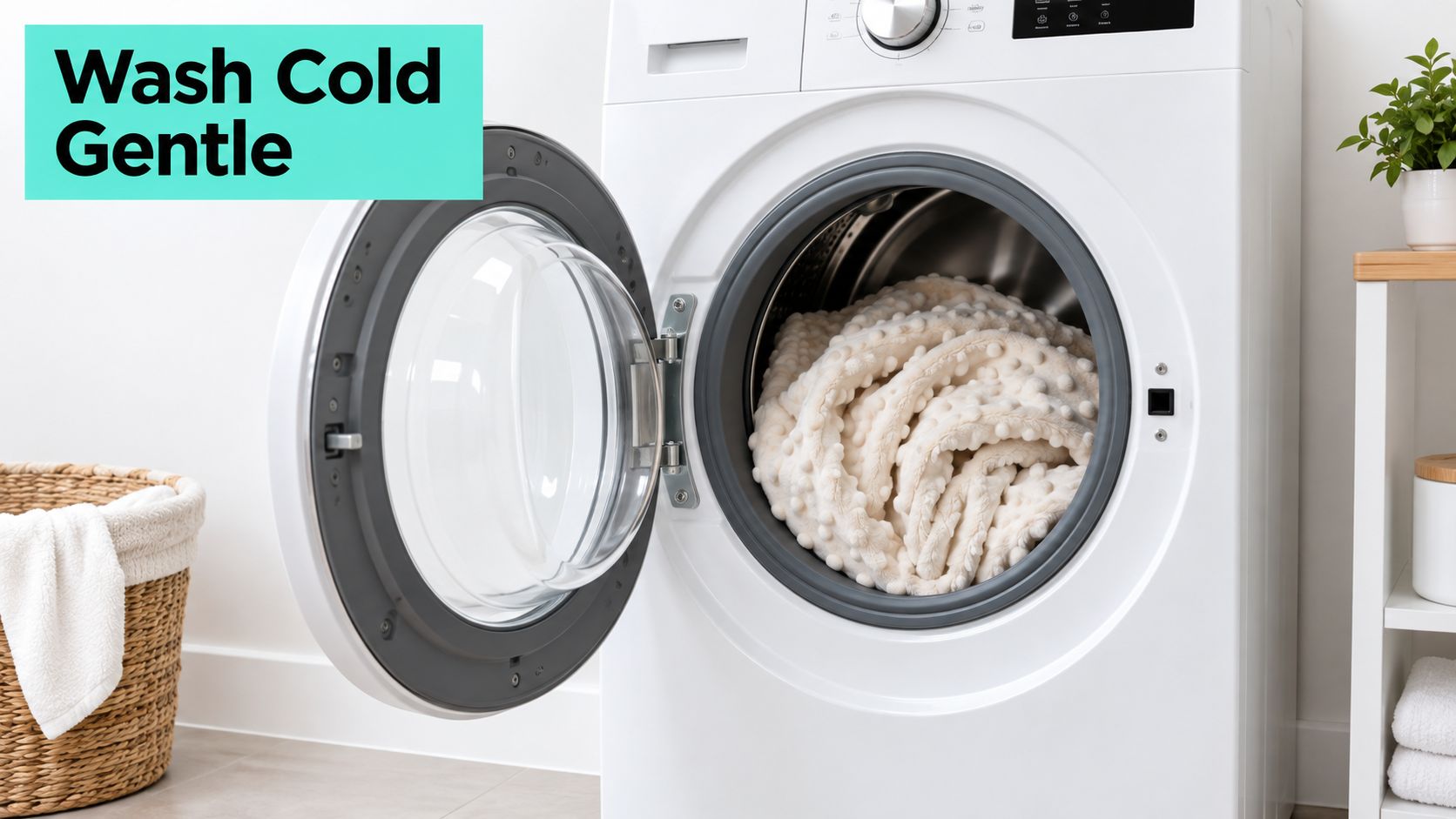
Use cold water and a gentle or delicate cycle. The aim isn't to create more mechanical action than the blanket needs. A crowded drum can prevent proper rinsing, while an oversized minky piece needs enough room to move without being packed tightly against other laundry.
For larger cuts, space becomes part of the care method. Extra-wide 90-inch and 110-inch minky backing can be bulky, so a large-capacity machine may be more suitable than a compact home washer. Don't force a quilt back or finished blanket into a drum that leaves no room for water and movement.
Choose detergent for clean fibers, not fragrance
Use a mild liquid detergent in a restrained amount. Avoid pods, powder, fabric softener, and dryer sheets. Pods can deliver concentrated additives unevenly, powder may leave residue, and softeners can gum up the fibers that create the plush feel.
A practical microfiber guide recommends using no more than half a washer drum for microfiber loads, along with 1 tablespoon of liquid detergent for a typical wash. Those figures come from microfiber care rather than a specific Minky Couture label, but they explain why low-residue liquid detergent is a sensible choice for polyester plush. This microfiber maintenance guide also addresses residue and lint transfer.
Bench rule: If the blanket feels coated after washing, change the detergent routine before increasing the wash temperature.
Makers working with plush for baby projects can also benefit from these minky baby blanket sewing tips, particularly when preparing a new piece before cutting or quilting.
For a brand-specific reference, use OPN's guide to washing Luxe Cuddle blankets correctly. Our Luxe Cuddle collection includes the textures that make this careful routine worthwhile.
Save on your first order: Use OPN's 15% first-order coupon, or build an order that qualifies for free U.S. shipping over $70.
Drying and Finishing Tips That Preserve Softness
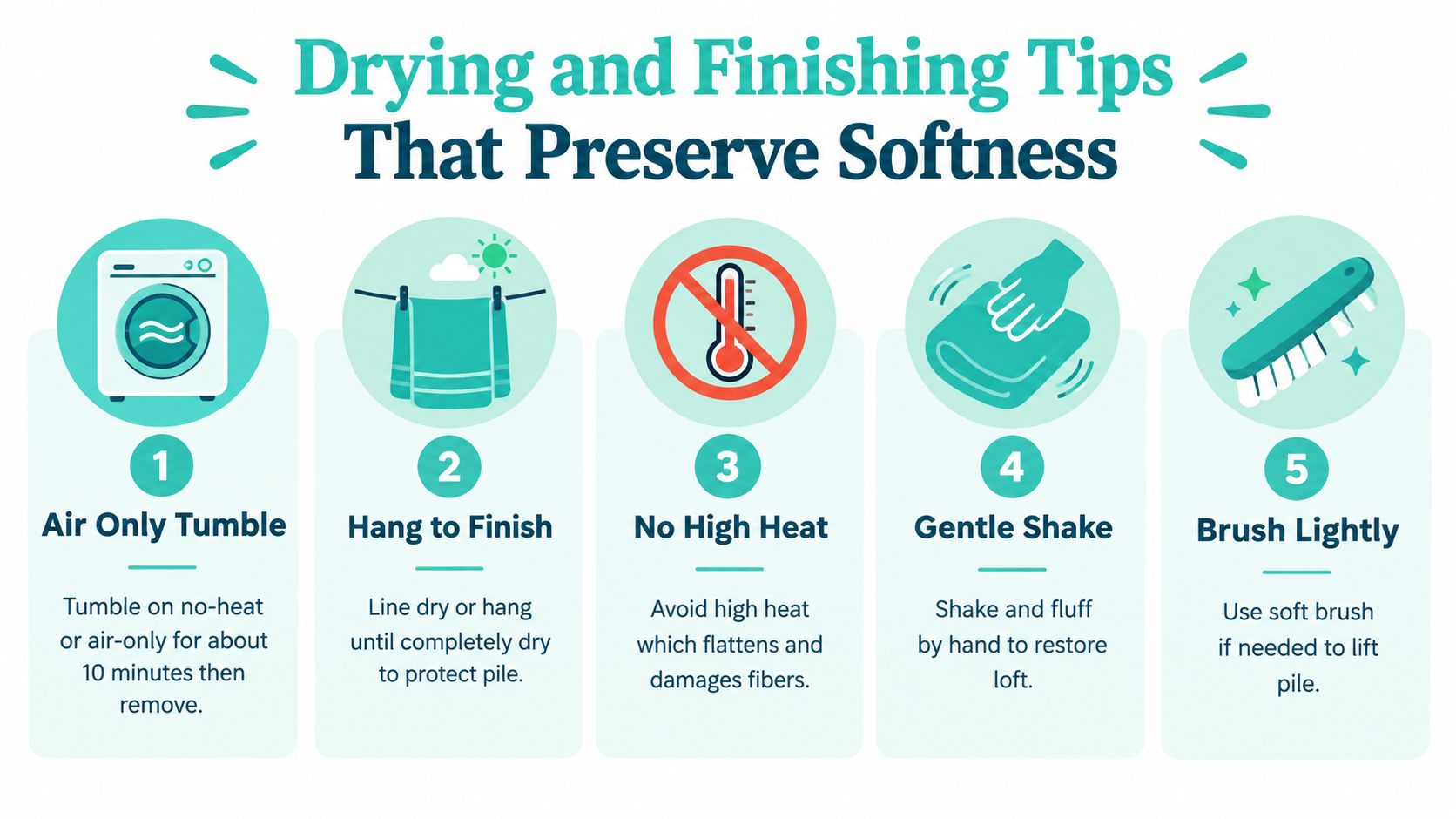
The dryer is where a careful wash can still go wrong. Minky generally doesn't shrink much, but the pile can flatten or become rough when the surface sees too much heat. Shannon Fabrics' Cuddle 101 guidance recommends line drying or low heat, and its Quilting Cuddle care sheet gives a more controlled option, tumble drying in a no-heat dryer for about 10 minutes, then hanging the item until dry. The Shannon Cuddle guidance supports that low-heat approach.
Use air movement before using heat
After the wash, lift the blanket out promptly and give it a gentle shake. This separates damp layers, releases folds, and helps the pile stand back up before drying. Smooth bulky seams by hand, especially around quilted areas where stitching can hold moisture.
You have two reliable finishing choices:
- Air-only tumble: Run the blanket in a no-heat or air-only setting for about 10 minutes, then remove it.
- Hang to finish: Line dry or hang the blanket until it's completely dry.
- Low heat only when necessary: If the care label permits it, controlled low heat is safer than high heat, but air-only remains the more conservative option.
- Fluff by hand: Shake out the dry blanket and lift compressed areas gently with your fingers.
- Light brushing: If the pile needs help, use a soft brush with a light touch rather than scraping across the surface.
Don't iron minky. Direct heat can crush the pile and leave a visible change in texture, even when the blanket's dimensions remain stable. If a seam needs flattening for sewing, our iron guidance for sewing provides a safer way to think about heat near fabric projects.
Fold Hide, Snowy Owl, and Fawn loosely rather than compressing them under heavy items. Storage that allows the pile to remain relaxed does more for long-term softness than adding a scented product to the wash.
Detergents and Additives to Use and Avoid for Minky
The laundry shelf is full of products that promise softness, freshness, or convenience. For plush minky, those promises can work against the texture you're trying to preserve.
| Product Choice | Use for Minky | Why It Matters |
|---|---|---|
| Mild liquid detergent | Yes, use a small amount | Liquid detergent leaves less powder residue and supports a cleaner pile |
| Powder detergent | Preferably no | Particles can remain in dense plush fibers |
| Laundry pods | No | Concentrated ingredients may not distribute gently through a small or bulky load |
| Fabric softener | No | It can coat or gum up the fibers and reduce softness |
| Dryer sheets | No | They leave an additive film and can affect the pile's hand feel |
| Chlorine bleach | No | Microfiber care guidance specifically warns against it |
| Vinegar | Don't make it the default | Advice varies, so it's better to follow the fabric label and avoid unnecessary additives |
A microfiber maintenance source says liquid detergent is preferred, powder can leave residue, and fabric softener gums up fibers. The same guidance recommends avoiding chlorine bleach and keeping the dryer at or below 140°F, about 60°C, when a controlled heated setting is used. The Clean Tips microfiber washing guide provides that technical context.
Why “softener” can make plush feel worse
Fabric softener doesn't rebuild a damaged pile. It coats fibers, and that coating can make a blanket feel slick, sticky, or less airy. Dryer sheets create a similar residue issue, while fragrance can mask rather than solve a detergent or odor problem.
Hard water can also complicate rinsing by leaving mineral deposits on textiles and laundry equipment. If mineral marks are affecting your broader laundry routine, this resource on how to eliminate hard water spots offers useful household context, but it doesn't replace the minky rule of using restrained detergent and a thorough gentle rinse.
For blankets that shed, our article on how to stop blankets from shedding covers handling choices that reduce loose-fiber transfer without coating the surface.
Stain Treatment and Everyday Care for Quilts and Blankets
A small spill on a minky blanket usually needs patience, not a stronger chemical. Put a little mild liquid detergent in cold water, dampen a clean white cloth, and blot the mark from the outside toward the center. Rubbing pushes the stain deeper and disturbs the pile around it.
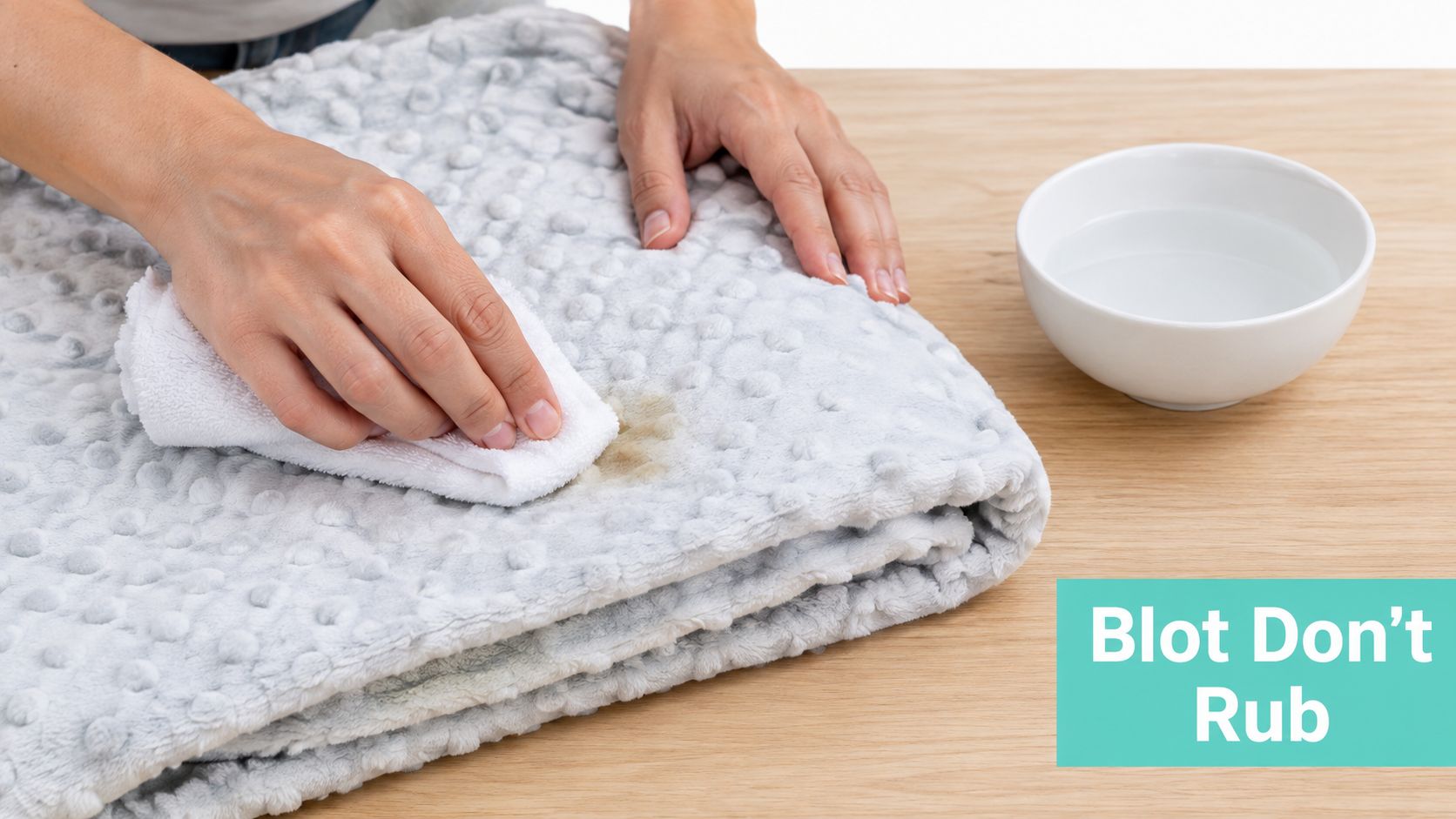
Test any cleaning mixture on an inconspicuous area first. If the mark remains, wash the entire blanket on the cold gentle setting rather than escalating to hot water, chlorine bleach, harsh scrubbing, or a stiff brush. OPN's guide to washing mink blankets follows the same pile-first approach.
New fabric and dark colors
Wash new dark minky separately until you know how much loose fiber or dye movement to expect. Keep it away from cotton towels and lint-heavy clothing, because cotton fibers can cling to plush and become difficult to remove from deep textures such as Hide.
For quilt backs, inspect the surface before mailing or quilting. A clean, dry backing lets the longarm process begin with the fabric's hand feel intact. If you're sending layers to a mail-in service, fold the top, batting, backing, and binding materials separately, place them in a plastic bag with the order sheet, and box the package for mailing. The backing should be 4–6 inches wider than the quilt top on all sides for tensioning, according to longarm preparation guidance. This longarm service preparation guide explains those handling requirements.
OPN's Mail-in Longarm service includes batting, thread, and free return shipping. Quilters can also browse the pattern gallery when choosing a finish, or select a ready-made minky blanket when the project is intended as a gift rather than a sewing session.
Keep Your Minky Soft Wash After Wash
A durable minky routine is deliberately uneventful. Wash the blanket alone in cold water on a gentle cycle, use mild liquid detergent without pods or additives, then choose no-heat or air-only tumble for about 10 minutes before hanging it to finish. Shake the blanket once it's dry, smooth the seams, and fold it without heavy compression.
That routine protects the surface where you feel the difference. It also reduces lint transfer, avoids residue buildup, and keeps plush textures such as Fawn and Snowy Owl from being exposed to unnecessary heat or abrasion.
For large quilt projects, start with the backing rather than trying to solve bulk with a seam. OPN carries 90-inch and 110-inch extra-wide minky backing, which can help you plan a quilt back around the available width. For smaller makes, pillow kits with forms offer a practical way to use plush fabric while keeping the finishing process manageable.
Order advantage: OPN offers free U.S. shipping on orders over $70, and new customers can use the 15% first-order coupon.
Keep the care card with the finished blanket, particularly if you're gifting it. A clear note to wash cold, skip softener, and dry with no heat prevents someone else from treating premium plush like ordinary cotton.
On Pins & Needles Quilting Co. offers premium Shannon Cuddle and Luxe Cuddle fabrics, extra-wide quilt backing, ready-made blankets, and Mail-in Longarm finishing with batting, thread, and free return shipping. Visit On Pins & Needles Quilting Co. to choose a soft fabric or send in your quilt, then protect the finished pile with these Minky Couture washing instructions.