
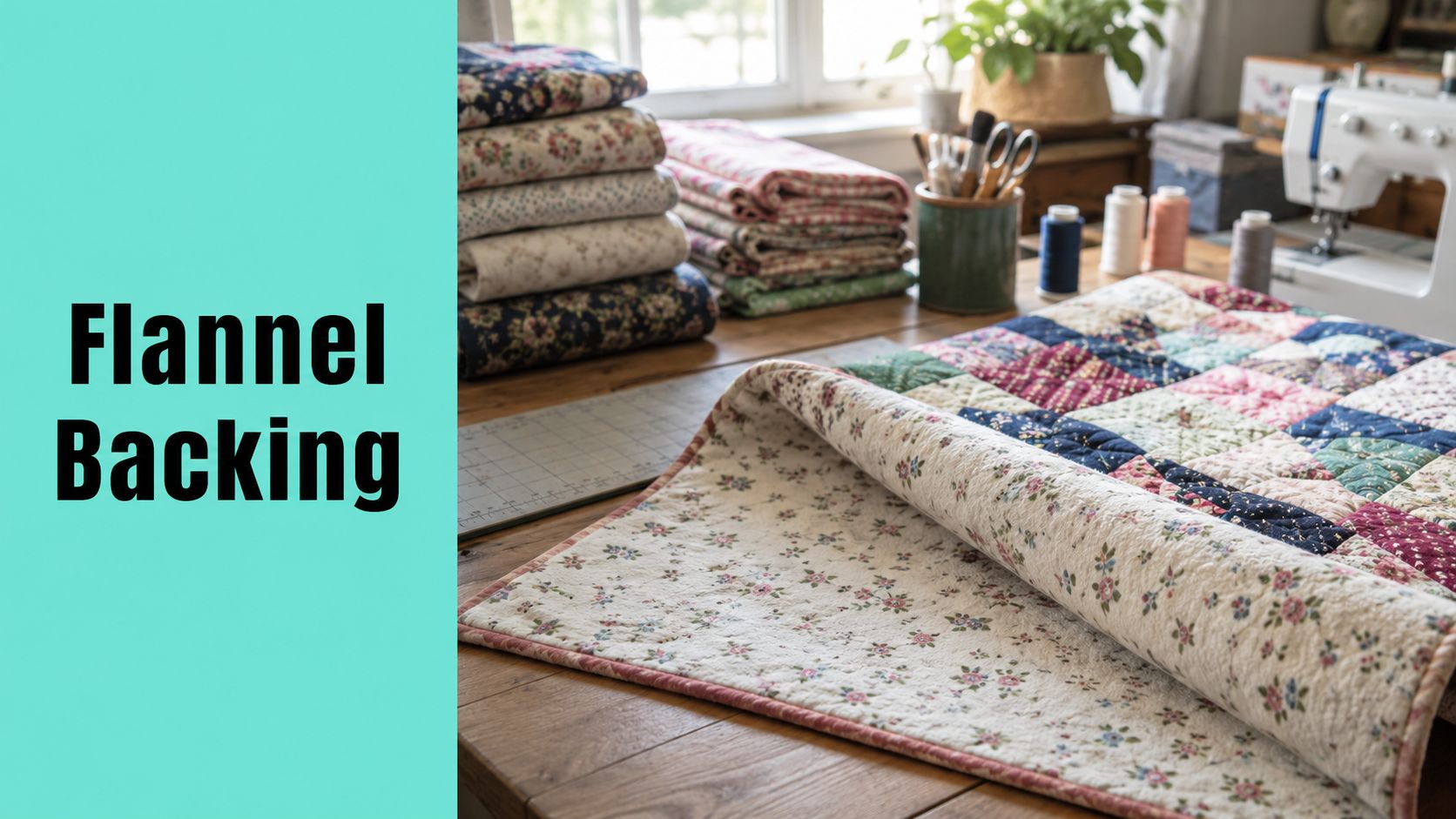
Backing a quilt with flannel is an excellent way to add warmth and softness, and the prep work matters just as much as the stitching. Flannel works beautifully as a backing, but it needs prewashing, careful handling of stretch, and a little extra construction discipline if you want a smooth, professional finish.
If you're staring at a finished quilt top and debating what to use on the back, flannel is often the cozy answer. It gives a quilt more body and warmth without adding the bulk of batting, but it doesn't behave like standard quilting cotton. That's why the difference between a lovely finish and a puckered one usually comes down to preparation.
Why Choose Flannel For Your Quilt Backing
A flannel-backed quilt feels different the moment you pick it up. It has that soft, brushed hand people want in a winter throw, a child's comfort quilt, or any project that's meant to feel inviting instead of crisp.

Flannel became a standard quilt-backing choice because it adds warmth and weight without the bulk of batting, and that's exactly why many quilters keep coming back to it for comfort-focused projects. When a quilt needs to feel cuddly from the first use, flannel makes sense.
What makes flannel appealing
The biggest advantage is tactile. Flannel has a softer finish than quilting cotton, and that changes the whole personality of the quilt.
A few situations where flannel shines:
- Lap quilts and couch quilts that need extra warmth
- Children's quilts that benefit from a softer backing
- Cabin or winter décor where a brushed texture fits the look
- Utility quilts that are meant to be used hard and washed often
Flannel is a comfort choice first. People choose it because they want the quilt to feel warmer and softer the second it touches skin.
What trade-offs come with that softness
Flannel asks more from the maker. The weave is looser than standard quilting cotton, so it tends to shrink more and fray more during construction. That's why experienced quilters treat flannel as a fabric that needs managing, not just cutting and sewing.
The trouble usually shows up in three places:
- Before quilting, when the backing shifts or stretches
- During quilting, when tension reveals every shortcut
- After washing, when uneven shrinkage can distort the finished quilt
That last point matters most. If the top and backing are treated differently before assembly, the quilt can pull against itself later.
If you're deciding between plush options, it also helps to understand how flannel differs from cuddle and minky textures. Our guide to what Cuddle minky fabric is is useful if you're comparing softness, drape, and finishing methods before you commit.
When flannel works best
Flannel is a smart choice when warmth and softness matter more than a super-crisp, lightweight finish. It's less ideal when you want the backing to stay very flat and stable with minimal prep.
We've found that quilters get the best results with flannel when they accept its personality early. It's cozy, forgiving to the touch, and not especially forgiving to rushed prep.
How Do I Choose the Right Flannel Fabric
Not all flannel behaves the same way. Some cuts feel dense and stable in your hands, while others feel airy and a little too eager to distort before they ever reach the quilt frame.
That's why selection matters. If you're backing a quilt with flannel, start by asking how the quilt will be used. A wall quilt and a nap-on-the-sofa quilt don't need the same backing feel.
What should you look for first
Start with the weave and finish. A better flannel feels brushed and soft without seeming fragile. If it sheds heavily straight off the bolt or looks thin enough to shadow through, expect more handling issues later.
Pay attention to:
- Surface feel that's soft but not limp
- Body that supports the quilt instead of dragging it down
- Consistency across the width, especially if you're piecing a large back
- Print scale that won't fight with the front of the quilt
Some quilters also care about nap and directional prints. If the flannel has a noticeable direction, double-check layout before cutting so the backing doesn't look upside down when the quilt is turned.
Fabric Backing Comparison: Flannel vs. Quilting Cotton
| Feature | Mammoth Flannel | Standard Quilting Cotton |
|---|---|---|
| Feel | Soft, brushed, warm | Smooth, crisp, lighter hand |
| Warmth | Adds extra coziness | More neutral and breathable |
| Weight | Heavier feel on the finished quilt | Lighter overall finish |
| Handling | More prone to stretch and movement | More stable during prep and quilting |
| Fraying | Usually needs more careful seam handling | Typically easier to control |
| Best use | Comfort quilts, winter quilts, soft utility quilts | Traditional pieced backs, lighter quilts |
A comparison like this helps you decide based on finish, not hype. If you want the quilt to feel classic and structured, quilting cotton is simpler. If you want it to feel snug and substantial, flannel is often worth the extra prep.
How much should you buy
With flannel, it's smart to build in breathing room before you cut. Yardage calculations need to account for prep, squaring, and a little insurance for mistakes or movement in the fabric.
If you're working out backing dimensions, our article on calculating yardage for quilts helps you plan the cut before you commit to a fabric order.
Selection rule: Choose flannel for the finished feel you want, not because it looks interchangeable with quilting cotton on the shelf. It isn't.
Where product choice overlaps with finishing
This is also the point where some quilters decide flannel isn't the right back after all. If the project needs a dramatic texture, a continuous extra-wide option, or a very plush finish, soft-back alternatives can make more sense. OPN Quilting carries Shannon Fabrics textures like Hide, Snowy Owl, and Fawn, which many quilters use when they want a different kind of softness than flannel provides.
What Is the Best Way to Prepare Flannel Backing
You can spot an unprepared flannel back the minute it comes off the frame. The top looks fine, but the backing has drawn up, the seams feel stressed, and the quilt never quite lies flat. Good prep prevents that, whether you quilt at home or send the project out to a longarm service.
Flannel changes more in the wash than standard quilting cotton, so I treat prep as part of the construction, not an optional extra. Guidance from Mix Measure Make on backing quilts with flannel recommends prewashing because flannel tends to shrink and fray more than quilting cotton. I agree with that approach. Wash and dry the backing fabric before cutting it, and buy enough yardage to allow for shrinkage, squaring, and the wider seams flannel handles better.
Why prewashing matters
If the quilt top is stable and the backing still has all its shrinking left to do, the trouble shows up after quilting. The backing can tighten, the surface can ripple, and a straight finish is harder to get.
Use a simple routine that gets the fabric settled before you cut:
- Wash hot so most of the shrinkage happens before assembly.
- Dry hot for the same reason.
- Remove lint before you move to cutting and piecing.
- Square the fabric after laundering so the backing starts true.
That sequence provides a backing you can measure accurately. For mail-in quilting, it also reduces the chance of sending a backing that changes size after the longarmer has already planned for it.
How should you piece a flannel back
Flannel backing goes together well if you allow for its bulk and looser weave. I do not piece it the same way I piece a cotton back.
What holds up better:
- Cut generously so preshrink and squaring do not leave you short.
- Use 1/2-inch seam allowances for stronger joins that resist fraying.
- Handle cut edges gently because flannel can rough up quickly.
- Press with care so the backing lies flat without being stretched out of shape.
Professional finishers notice these details right away. A backing that is prewashed, squared, and securely pieced loads more cleanly on a longarm and usually causes fewer delays. If you are packing a quilt for quilting service, our longarm quilting top prep tips will help you avoid the common prep mistakes that show up once the quilt is on the frame.
Buy with shrinkage in mind. Cut after washing if you want the backing size you planned to be the backing size you actually have.
Offer for your materials list: New customers can get 15% off a first order, and U.S. orders over $70 qualify for free shipping. That's useful when you're adding backing, thread, batting, or a few extra supplies in one purchase.
What usually goes wrong during prep
Most flannel backing trouble starts before basting:
- Cutting before preshrinking, which changes the final measurements
- Using narrow seam allowances, which can weaken pieced sections
- Letting edges fray excessively, which makes seams less dependable
- Treating flannel like quilting cotton, which usually leads to distortion
A well-prepared flannel backing looks plain on the table. That is exactly what you want. Flat, square, and stable is what gives the finished quilt a professional result.
How Should I Baste a Quilt with Flannel Backing
A flannel-backed quilt can look perfectly smooth on the floor and still shift enough during basting to leave tucks once it is quilted. That is why I treat basting as part of the finish, not just the setup. If the layers go together under control, the quilting goes faster at home and the quilt loads more predictably for a mail-in longarm service.

Flannel has a little more give and surface drag than standard quilting cotton. That combination is what causes trouble. The backing can grab in one spot, relax in another, and shift just enough to show up later.
Which basting method works best
All three common methods work with flannel. The right choice depends on how much control you need and how the quilt will be finished.
- Spray basting gives even contact across the quilt and is a good choice for home quilters working on a table or floor. Use a light, even application and smooth from the center out. If you rush this step, flannel can trap a ripple instead of letting you push it out.
- Pin basting works well if you want a reusable method and do not like adhesive. I place pins closer together with flannel than I would with a cotton backing because the extra loft between pins can let the fabric shift.
- Hand basting takes longer, but it gives the best control on a backing that wants to stretch or creep. I use it for larger quilts, pieced flannel backs, and any project that is headed to detailed domestic quilting.
For many home quilters, spray or pins are enough. For quilts with a pieced flannel backing, hand basting or very dense pinning usually gives a cleaner result.
A quick visual can help if you're deciding how to proceed.
How do I prepare my flannel-backed quilt for a longarm service
Longarm loading puts different stress on flannel than home quilting does. The backing is attached to leaders and tensioned across the frame, so small prep problems show up fast. APQS guidance for longarmers notes that fleece, flannel, and similar backings should not be stretched tight on the frame because they have more give than quilting cotton (technical guidance for flannel on a longarm).
That lines up with what I see in practice. A squared backing, secure seams, and stable edges make flannel behave much better on a frame.
Before you pack a quilt for a professional finisher, I recommend:
- Square the backing carefully so it loads straight
- Stay-stitch about 1/8 inch from the edge if the backing is pieced or loosely woven
- Keep the quilt relaxed when folding and packing instead of pulling it taut
- Mark the top edge if the backing has direction or a nap that matters
Home quilters benefit from the same habits. A well-basted flannel backing stays flatter under a walking foot, and a well-prepped flannel backing gives a longarm quilter fewer surprises.
If you're mailing a quilt out, check the posted quilt prep instructions for mail-in quilting before sealing the box. And if you want the quilting finished for you, you can book your longarm service once the backing is washed, squared, and ready.
What Are the Best Practices for Quilting and Finishing
Once the backing is prepped and basted well, quilting itself becomes much simpler. The trick is to sew in a way that supports the backing instead of fighting it.
What helps during quilting
Even feeding matters. Flannel has more texture and a little more drag than quilting cotton, so quilts usually behave better when you keep the sandwich supported and avoid forcing it through the machine.
Useful habits include:
- Start with a walking foot if you're quilting on a domestic machine
- Support the quilt's weight so the backing isn't being pulled sideways
- Choose stable quilting paths that don't over-handle one area before the rest is secured
- Pause and smooth often instead of pushing through resistance
Longarm quilting removes some of that handling burden, which is why many quilters choose it for larger flannel-backed projects.
How should you finish the edges
Trimming and binding are where bulk becomes noticeable. A flannel-backed quilt often feels thicker at the perimeter, especially if the back is pieced and the batting is lofty.

That's why it helps to think about binding as part of the backing decision, not an afterthought. Some quilters like a traditional cotton binding for a clean edge. Others prefer a softer finish that matches the hand of the quilt.
One practical option is Cuddle Strips, which can give the edge a plush finish that pairs naturally with a soft backing. If you want the quilt to feel especially cozy in use, that texture contrast can be appealing.
A flannel back changes the edge feel of the whole quilt. Test the binding against the quilt in your hands before you sew all the way around.
What if you're still choosing between flannel and a plush backing
Sometimes the right answer isn't flannel. If the project calls for a more dramatic texture or a more blanket-like finish, compare your options before you quilt.
These links help with those decisions:
- Browse the Luxe Cuddle collection if you want a high-pile soft fabric finish
- See extra-wide Cuddle backing options if you'd rather avoid piecing a large back
- Read our guide on how to bind a quilt for beginners if the final edge is where you usually get stuck
How Can I Solve Common Flannel Backing Problems
Most flannel problems are fixable. Better yet, most are preventable once you know what to watch for.
Why is my flannel back puckering
Puckering usually points to one of three issues. The backing shrank after assembly, the fabric was stretched during basting or loading, or the quilt wasn't kept flat enough during quilting.
The fix is to slow down before stitching starts. Preshrink the backing, baste for stability, and don't pull the backing tight just to make it look smooth.
How do I deal with lint
Flannel sheds more than quilting cotton. That's normal.
Clean the lint after washing, and keep your machine area tidy while sewing. A backing that starts cleaner is easier to handle and easier to inspect for folds, drag lines, or fraying edges.
What if the backing keeps stretching
Stretchy flannel isn't ruined flannel. It just needs more control.
Use a steadier basting method, avoid rough handling at the edges, and secure any pieced backing well before quilting. If the quilt is going out for professional finishing, prep it carefully and send it with complete notes.
Is backing a quilt with flannel worth it
Yes, if the finished feel matters enough to justify the prep. Backing a quilt with flannel gives you warmth, softness, and a more substantial hand than standard quilting cotton. It just rewards methodical work more than rushed work.
For many quilters, that trade-off is absolutely worth it.
If you want materials and finishing options in one place, browse On Pins & Needles Quilting Co. for soft backing alternatives, extra-wide cuddle fabrics, binding options, and mail-in quilting support. If you're ready to move from planning to finishing, Book Your Longarm Service Today.